




Inlaid Nesting Tables
Inlaid nesting tables offer a practical tiered design in mahogany, walnut, and rosewood, making them ideal for flexible entertaining and compact living.
Inlaid Nesting Tables
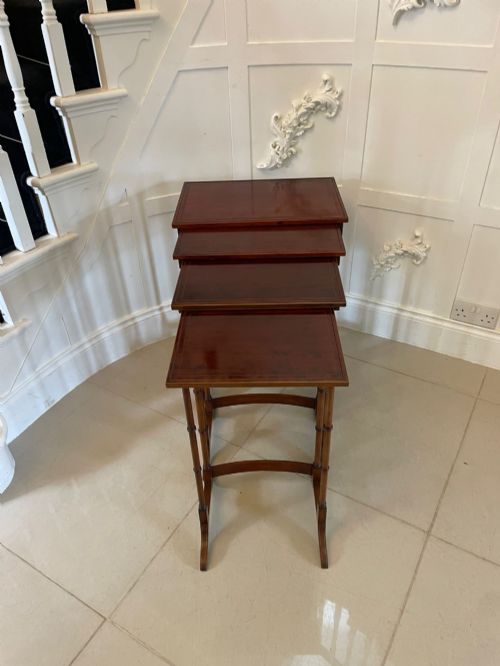
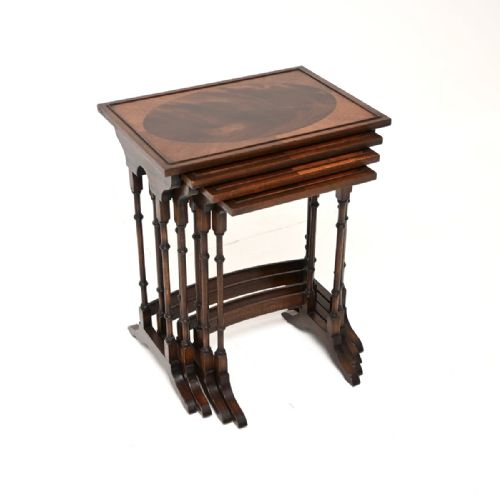
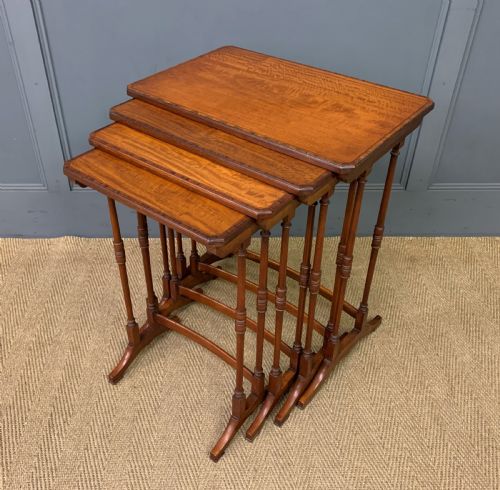
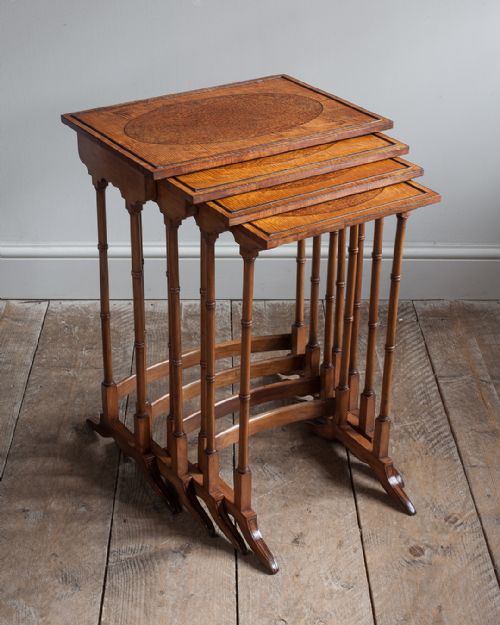
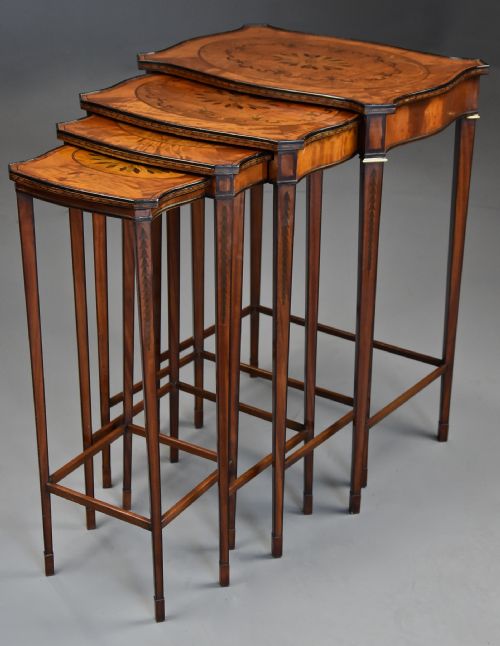
Inlaid nesting tables combine utility with decorative surface work, appearing primarily as sets of three or four stacking tables known historically as quartetto tables. These pieces emerge across several periods, with Edwardian examples appearing alongside nineteenth-century and Regency specimens.
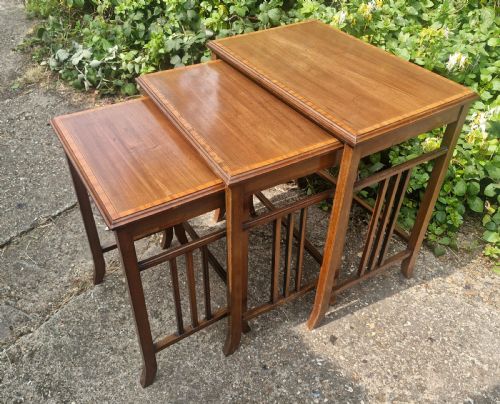
The format provides graduating surfaces that slide neatly beneath one another when floor space is at a premium. Makers configure these tables using rectangular, serpentine, or square tops supported by slender legs.
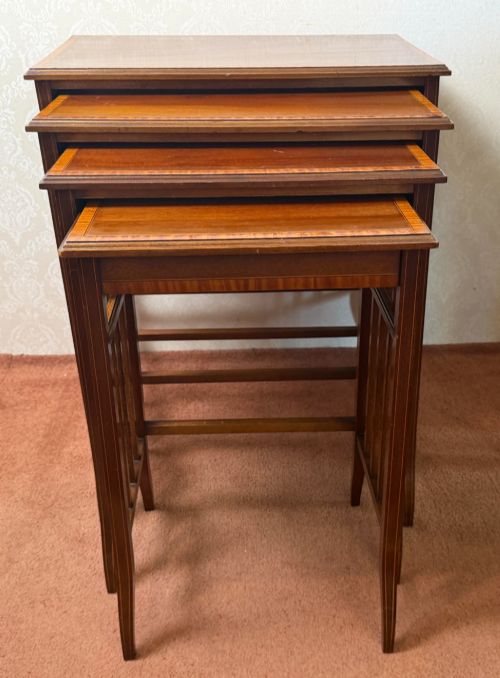
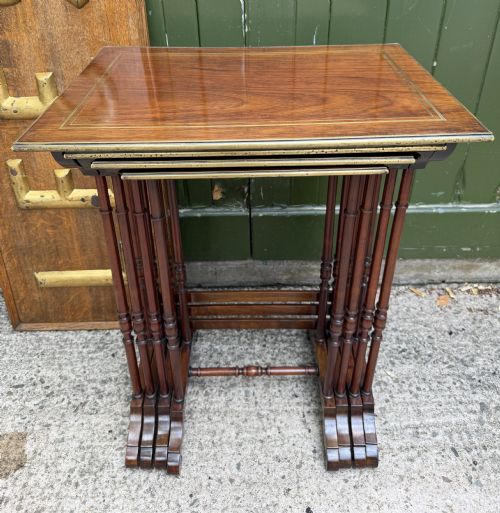
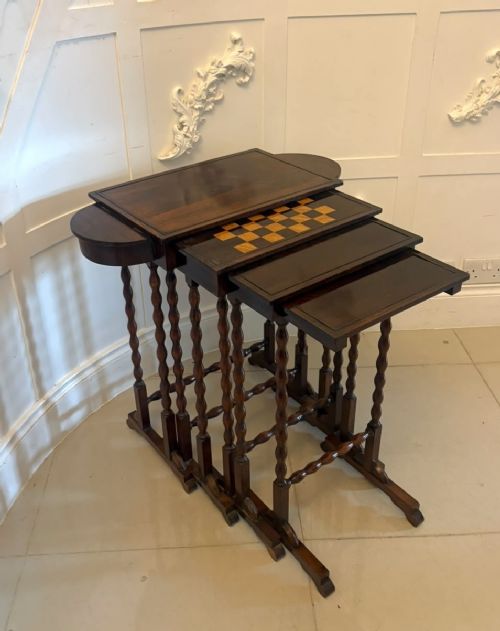
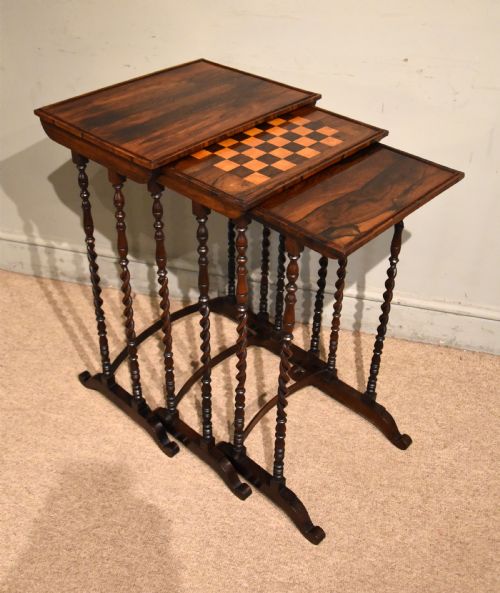
Edwardian and Victorian iterations form the bulk of available designs, constructed frequently from mahogany or satinwood with contrasting stringing. Regency periods contribute rosewood variants fitted occasionally with brass inlay or integrated game boards.
Materials and Construction
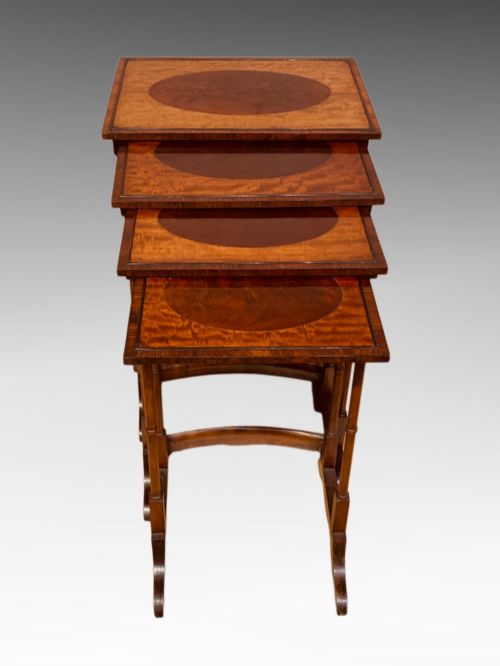
Cabinetmakers build these sets using solid hardwoods and decorative veneers, selecting mahogany, walnut, and rosewood as primary timber foundations. Satinwood, boxwood, and amboyna provide lighter contrasting surfaces and decorative banding.
Inlay techniques involve precise cutting of stringing and floral motifs, sometimes incorporating brass lines or parquetry panels into the table tops. Table frames rely on square tapered legs or slender turned supports to maintain stability while keeping the nested profile compact.
One exceptional Regency set hides a fully integrated chess table inside the nesting mechanism for impromptu parlor matches.
Gradations of Execution
Superior examples demonstrate meticulous precision in the execution of the inlay and the crispness of the cross banding. Cabinetmakers working at a higher level select finely figured timber grains for the primary surfaces, ensuring the wood retains visual depth under polish.
Structural integrity across all tiers separates standard production from finer pieces. Tables that slide smoothly without binding and maintain a level stance when separated indicate superior initial joinery and careful preservation.
Gillows·Emile Galle
The Inlaid Nesting Tables Glossary
- Quartetto
- A matched set of four stacking tables designed to graduate in size so they slide together. This term appears frequently in nineteenth-century and Edwardian catalogue records.
- Cross banding
- A border veneer applied around the perimeter of a table top with the grain running perpendicular to the centre panel. This technique frames the primary wood and highlights the inlay.
- Stringing
- Thin inlaid lines of contrasting timber or light-coloured wood used to outline panels and legs. It creates geometric definition on mahogany and walnut surfaces.
- Parquetry
- Geometric wood mosaic patterns assembled from small veneer tiles to form decorative table tops. Walnut and mixed specimen woods are often utilised for this technique.
- Killarney Ware
- Irish marquetry furniture decorated with native woods like arbutus and yew depicting local scenery or motifs. These pieces represent a distinct regional variation within Victorian production.
Inlaid Nesting Tables: Frequently Asked Questions
How were inlaid nesting tables used historically?
These tables served as versatile furniture for drawing rooms, allowing servants or hosts to quickly deploy extra surfaces for tea or writing. Once the gathering concluded, the smaller tables slid back beneath the largest frame to clear the room.
They functioned primarily as occasional furniture rather than permanent display pieces, which explains their lightweight construction and portable proportions.
What is a quartetto table set?
A quartetto set consists of four graduating tables designed to fit completely under one another. The term derives from musical quartets and became standard terminology in the nineteenth century.
Cabinetmakers utilised this format extensively during the Edwardian period to maximise domestic space in smaller drawing rooms.
How do I date an inlaid nesting table?
Dating relies on timber selection, leg profiles, and inlay styles relative to historical periods. Regency pieces typically feature rosewood with brass details, while Edwardian examples favour mahogany or satinwood with delicate stringing.
Construction methods inside the frame and the wear patterns on the feet provide further clues to the manufacturing decade.
Can these tables be used daily in modern homes?
These tables adapt well to contemporary living spaces as side tables or lamp stands. Their tiered design allows them to occupy minimal floor space until extra surface area is required.
Care should be taken to protect polished wood surfaces from excessive moisture and direct heat sources to preserve the historic finish.