
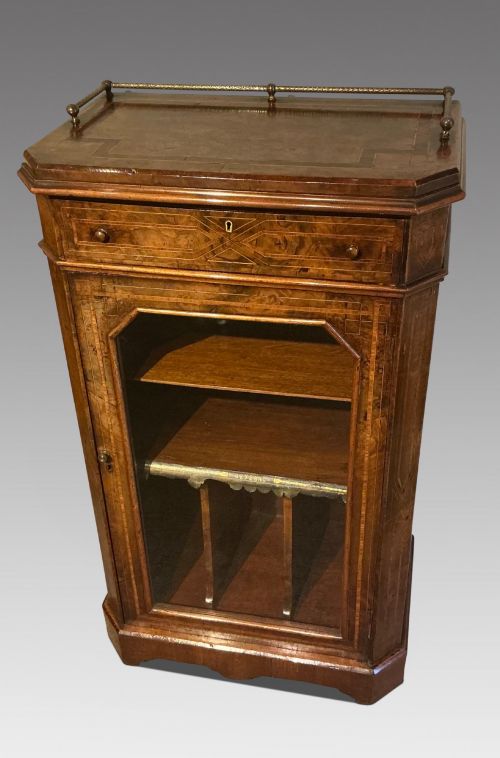


Inlaid Music Storage Cabinet
An inlaid music storage cabinet brings orderly charm to a room, offering dedicated shelving for sheets while displaying delicate marquetry work.
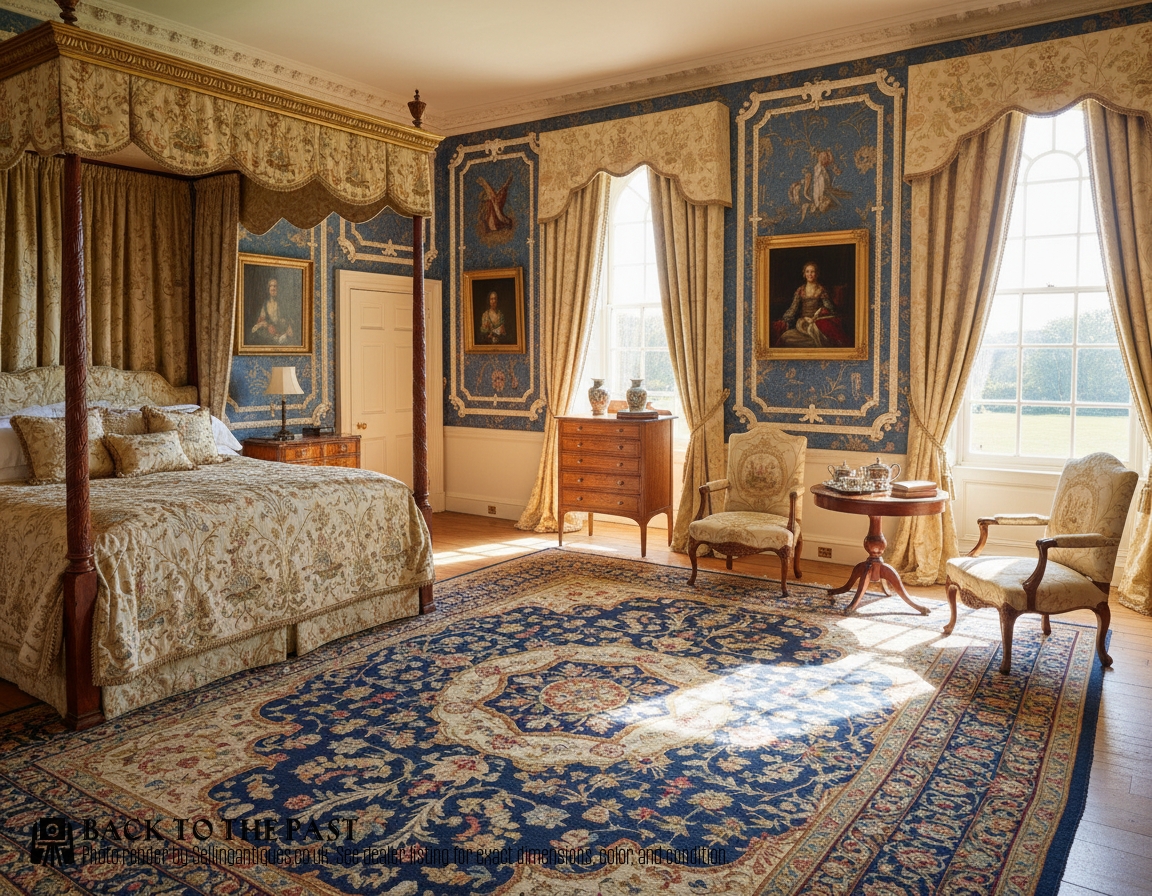
Inlaid Music Storage Cabinet
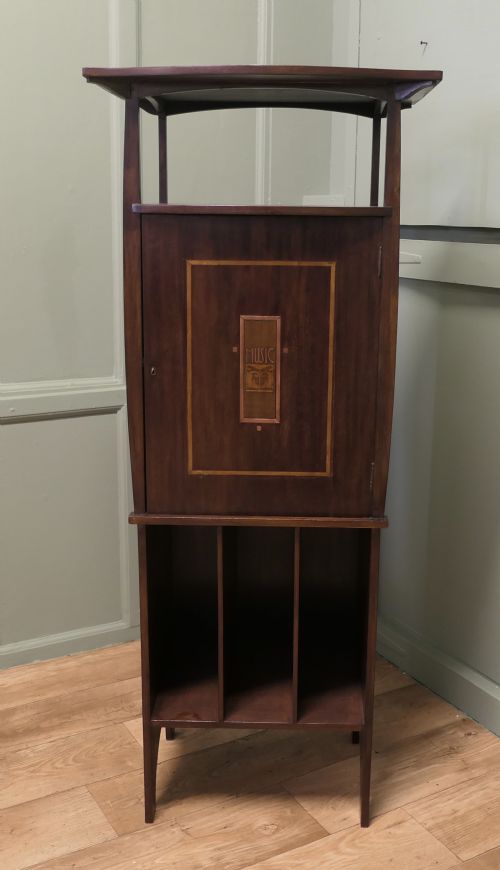
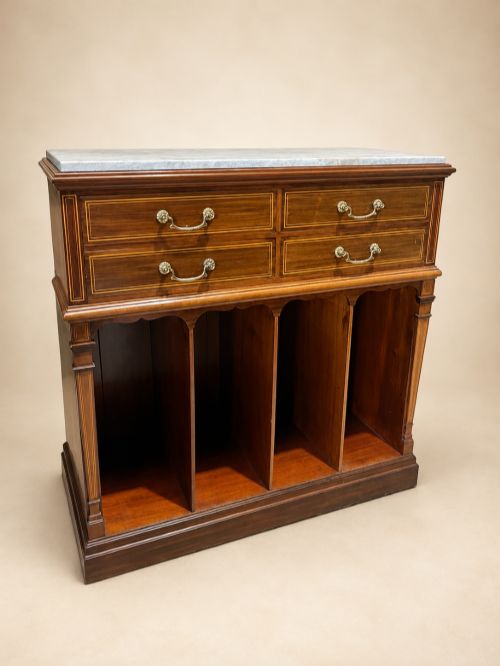
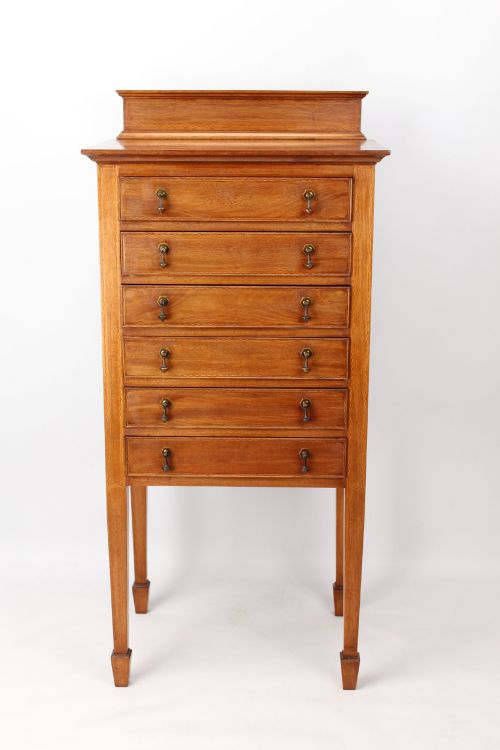
An inlaid music storage cabinet is a specialised piece designed to house sheet music, most frequently encountered in Edwardian and Victorian forms. These compact items range from narrow cupboards to multi-drawer chests, reflecting the domestic musical habits of the nineteenth and early twentieth centuries.
The materials seen in these pieces span mahogany, walnut, and rosewood, frequently enhanced with contrasting satinwood or boxwood stringing. Makers during the Edwardian and late Victorian periods favoured these timbers to create refined storage solutions for the parlour.
Beyond standard music cabinets, the selection includes related forms such as piano stools, display cabinets, and pier cabinets. Each variant retains a slender profile intended to fit domestic spaces without dominating the room.
Construction and Materials
Cabinetmakers utilised dense timbers like mahogany, walnut, and rosewood as foundational structures, often selecting burr variations for richer grain patterns. These hardwoods provided the stability necessary for narrow frames and stacking drawers.
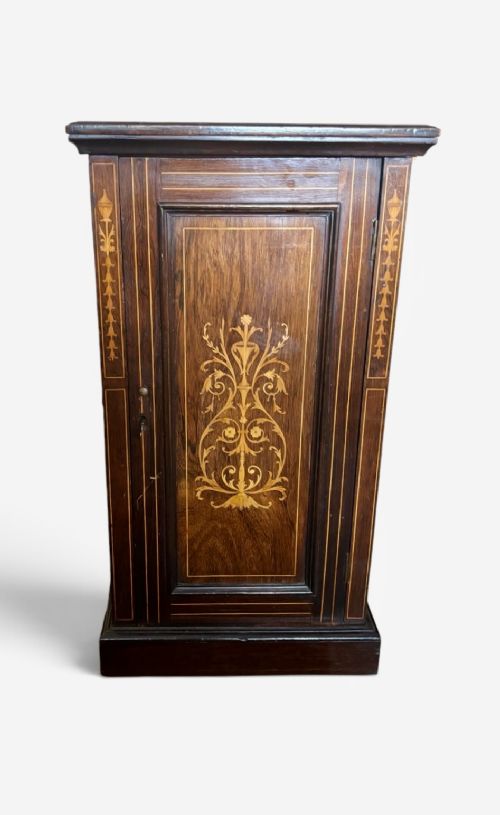
Surface decoration relied on marquetry and stringing, incorporating lighter woods such as satinwood and boxwood into darker bases. Brass hardware, including drop handles and key escutcheons, completed the functional aspects of the joinery.
Cabinetmakers occasionally forgot to lock the sheet music drawers before shipping, leaving behind century-old waltzes for the next owner to play.
Craftsmanship and Detailing
The refinement of the marquetry and the precision of the wood inlay distinguish finer examples from simpler production pieces. Crisp botanical or geometric motifs indicate a higher level of workshop skill during the Edwardian and Victorian eras.
Internal configuration and timber selection also mark the grade of a cabinet. Solid mahogany or walnut drawers with clean dovetailing show greater attention to detail than secondary softwood interiors.
GM Elwood for JS Henry·Keeble London
The Inlaid Music Storage Cabinet Glossary
- Marquetry
- Decorative veneer patterns applied to a furniture structure to create pictorial or geometric designs. This technique often employs contrasting woods like satinwood and boxwood set into a dark mahogany or walnut ground.
- Stringing
- Thin lines of contrasting timber inlaid into channels cut into the furniture surface. It defines the edges of panels and drawer fronts on Edwardian and Victorian pieces.
- Pier Cabinet
- A narrow display or storage cabinet designed specifically to stand against the wall space between windows. These pieces match the slender proportions often found in sheet music storage units.
- Burr Walnut
- Wood taken from a growth or burl on a walnut tree, yielding swirling and turbulent grain patterns. It was prized for creating highly decorative veneer panels on nineteenth-century cabinets.
Inlaid Music Storage Cabinet: Frequently Asked Questions
What is an inlaid music storage cabinet?
An inlaid music storage cabinet is a compact nineteenth or early twentieth-century piece built with drawers or shelving specifically sized for sheet music. These items feature decorative wood inlays on mahogany, walnut, or rosewood structures.
They served as functional parlour furniture for holding scores near a piano or music stand. Today, they function well as bedside tables or small storage units in living spaces.
How do I date an Edwardian music cabinet?
Edwardian music cabinets typically date between 1901 and 1910, often displaying Sheraton Revival influences with light satinwood inlay on mahogany. Look for specific construction markers and labeling typical of the period.
They generally present lighter proportions and brighter timber finishes compared to heavier Victorian counterparts. Comparing the internal drawer construction also helps confirm the era of manufacture.
Can I use a music cabinet for modern storage?
These cabinets adapt easily to contemporary uses, such as holding documents, art supplies, or small collections in shallow drawers. Their slender footprints make them practical for entryways or narrow rooms.
Care should be taken to avoid placing excessively heavy items on the shelves or drawers. Gentle daily use suits the delicate joinery and historic timbers of these pieces.
What is the difference between Victorian and Edwardian cabinets?
Victorian cabinets from the mid to late nineteenth century tend to use darker woods like rosewood and burr walnut with dense, heavy proportions. They often feature robust brass mounts and deeper tones.
Edwardian versions lean towards lighter mahogany and satinwood finishes with restrained stringing and marquetry. The overall aesthetic feels airier, reflecting changing interior tastes at the turn of the twentieth century.