



Inlaid Mahogany Shelving
Inlaid mahogany shelving brings warmth and refined detail to a room, offering practical display space through structured tiers and thoughtful joinery.
Inlaid Mahogany Shelving
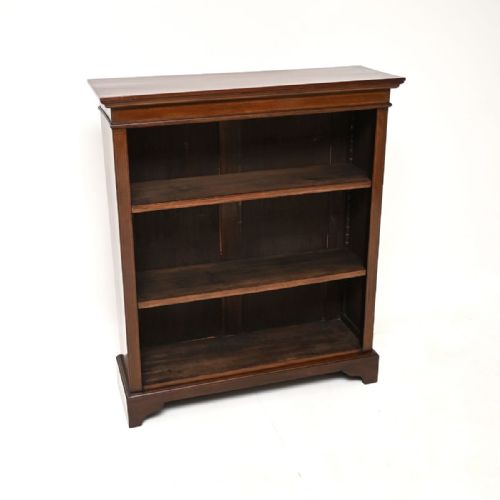
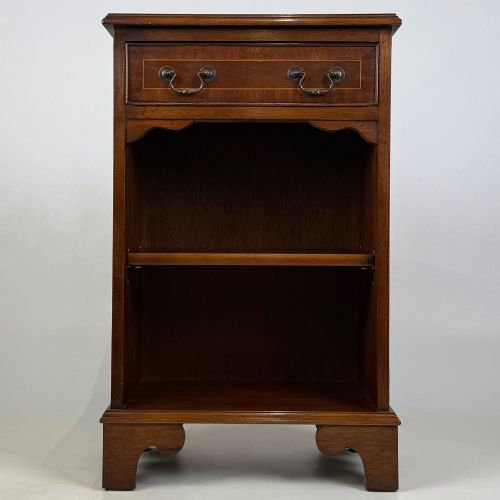
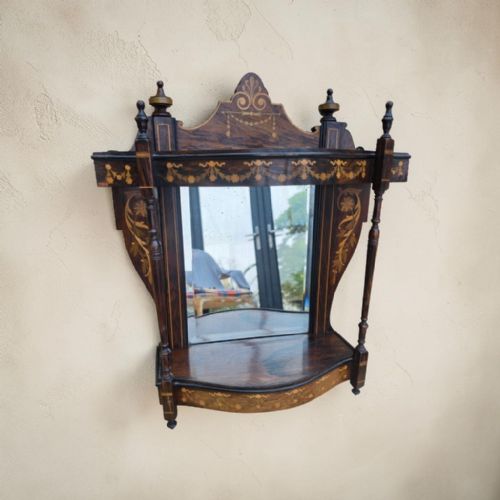
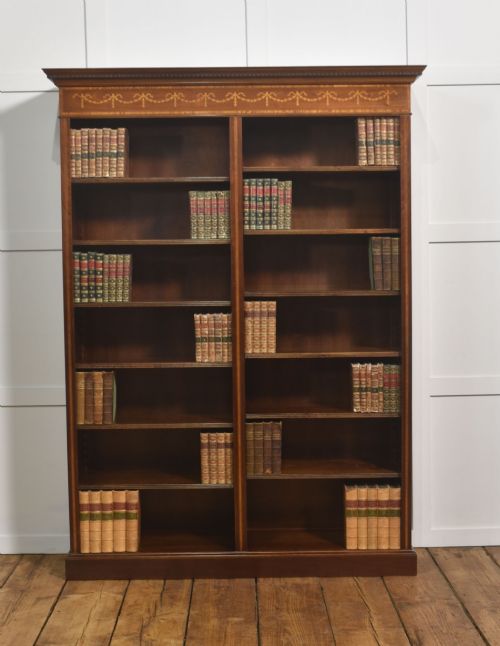
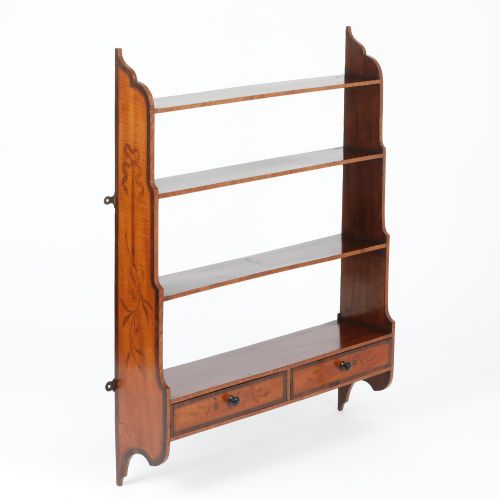
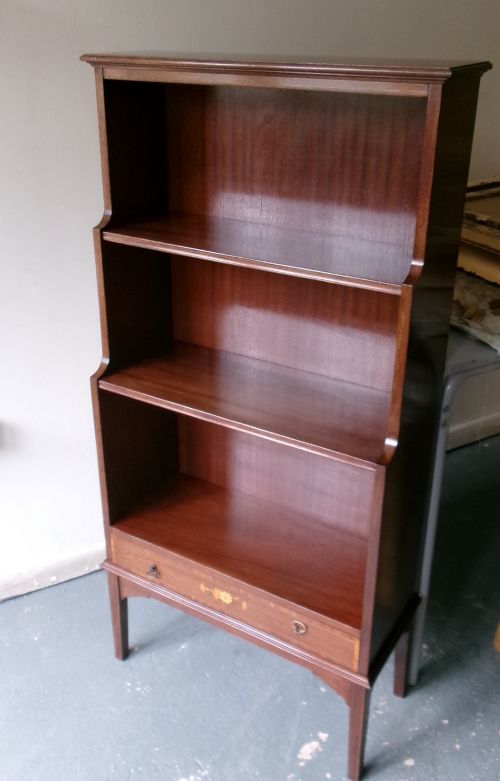
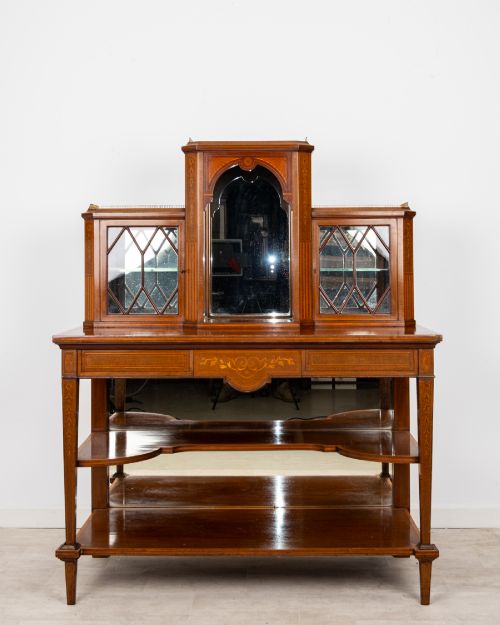
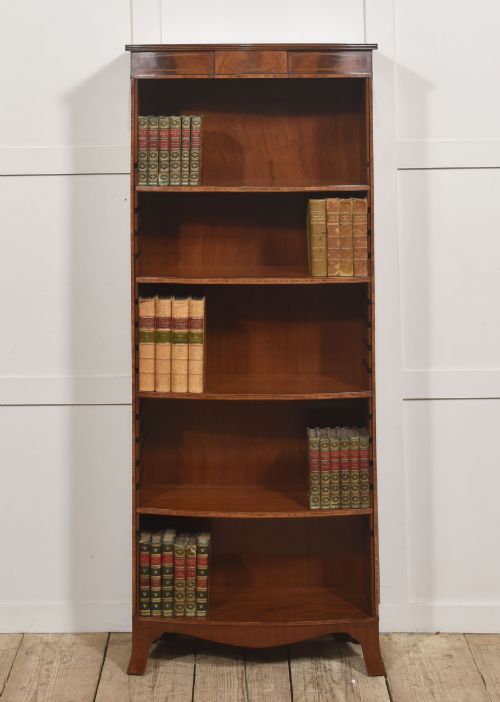
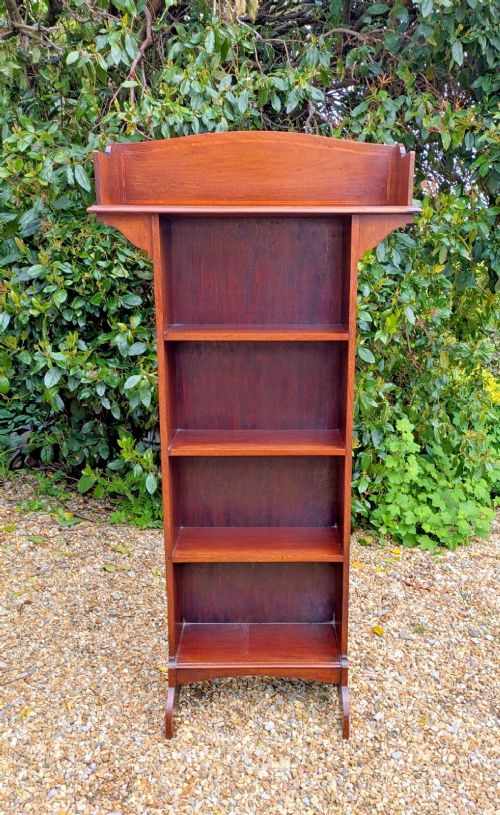
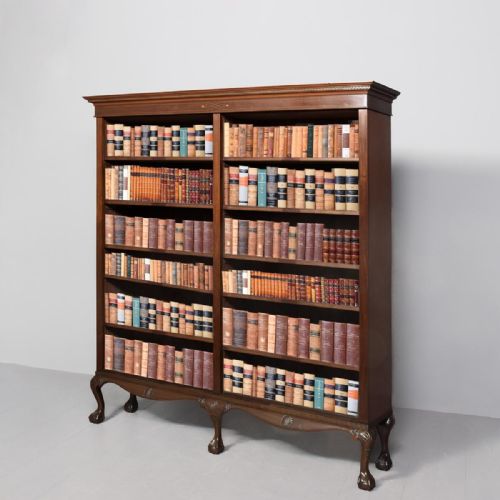
Inlaid mahogany shelving encompasses open bookcases, wall hanging shelves, waterfall bookcases, and display cabinets designed for domestic storage and display. These pieces frequently emerge from the Edwardian period, late Victorian era, and the 19th century, drawing heavily on Sheraton Revival and Georgian design influences.
The utility of these items extends from traditional libraries and studies to bedrooms and hallways, functioning as both storage units and decorative focal points. Their forms range from simple hanging shelves to complex cabinet hybrids featuring drawers, cupboards, and glass doors.
Materials and Construction
Makers built these pieces primarily using solid mahogany and mahogany veneers, selected for deep grain patterns and structural stability. Secondary decorative elements frequently incorporate satinwood and boxwood inlay to create crisp geometric borders and contrasting panels.
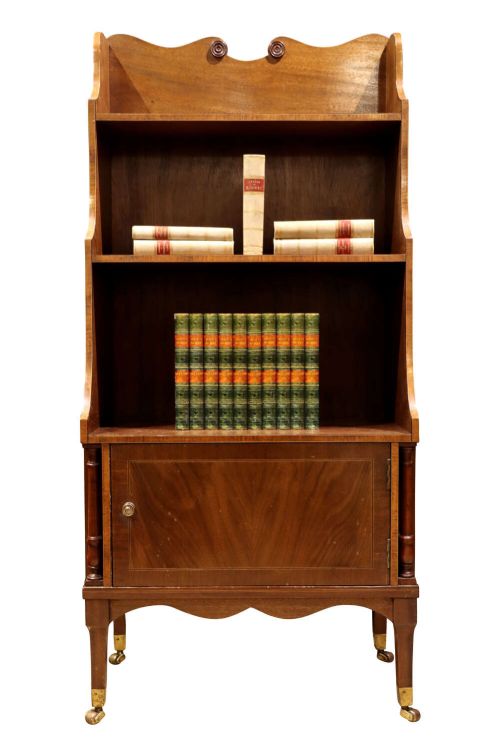
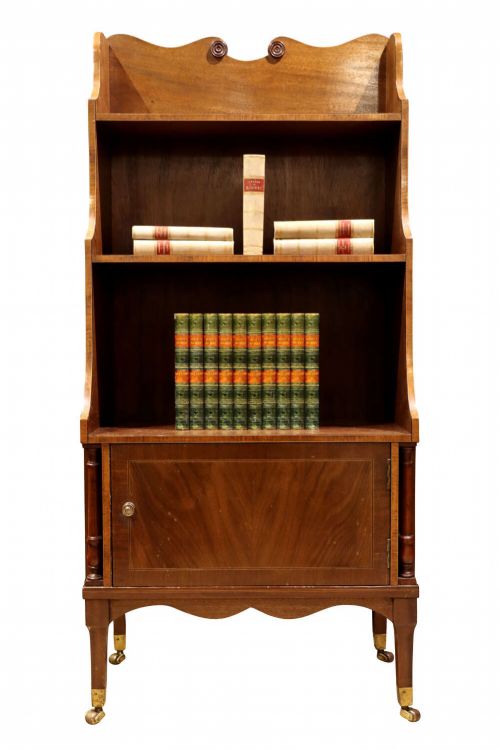
Hardware details such as brass castors appear on larger floor-standing waterfall bookcases and cabinets to aid mobility. Joinery techniques combined traditional cabinet-making methods with precise wood inlay work, integrating contrasting timber slivers directly into the primary mahogany surfaces.
Some larger waterfall bookcases arrive equipped with rolling brass castors, built precisely so owners could wheel their entire library across the floor.
Evaluating Quality and Detail
Quality in these pieces rests upon the crispness of the wood inlay and the selection of the mahogany timber. Sharply defined contrast between the dark mahogany body and lighter satinwood or boxwood inlay indicates careful hand-craftsmanship.
Structural integrity and proportion distinguish superior examples from standard utility items. Fine pieces demonstrate balanced proportions across open shelves, well-fitted drawers, and intact original brass castors or hanging brackets without excessive restoration.
The Inlaid Mahogany Shelving Glossary
- Inlay
- A technique where pieces of contrasting timber, such as boxwood or satinwood, are inserted into recessed portions of a primary wood base to form decorative patterns.
- Waterfall bookcase
- A tiered shelving unit where each successive shelf is set slightly deeper than the one above it, creating a cascading silhouette.
- Sheraton Revival
- A late 19th and early 20th century design style inspired by the neoclassical furniture of George Sheraton, characterised by light proportions, straight lines, and refined inlay.
- Whatnot
- A piece of furniture consisting of a series of open shelves supported by pillars or columns, used for displaying ornaments and books.
- Bonheur du jour
- A small light writing desk featuring a raised back with small drawers, pigeonholes, or shelves above the main writing surface.
Inlaid Mahogany Shelving: Frequently Asked Questions
What periods do these shelves come from?
The pieces span multiple eras, with a strong concentration originating from the Edwardian period and the late 19th century. Additional examples draw stylistic inspiration from earlier Georgian and Sheraton traditions.
Craftsmanship from these periods typically employs solid mahogany foundations complemented by detailed boxwood or satinwood inlay.
How do I hang a wall shelf?
Wall-hanging shelves require secure mounting to wall studs or the use of appropriate cavity fixings capable of supporting the combined weight of the mahogany frame and books. Ensuring proper alignment prevents warping of the backboards over time.
Consulting a professional installer is recommended for heavier cabinets to protect both the antique timber and the wall structure.
Where should I place a corner cabinet?
Corner cabinets utilise under-occupied room angles, turning dead space into functional storage for books or decorative objects. They integrate effectively into dining rooms, hallways, and studies.
Positioning them away from direct heat sources and strong sunlight preserves the polished mahogany finish and prevents the inlay from drying out.
How do I care for mahogany and inlay?
Maintenance involves dusting with a soft, dry cloth and occasionally applying a suitable furniture wax to nourish the mahogany timber. Avoid using silicone sprays or harsh chemical cleaners that can degrade the polish.
Keeping the piece away from radiators and damp environments protects the delicate boxwood and satinwood inlay from lifting or cracking.