
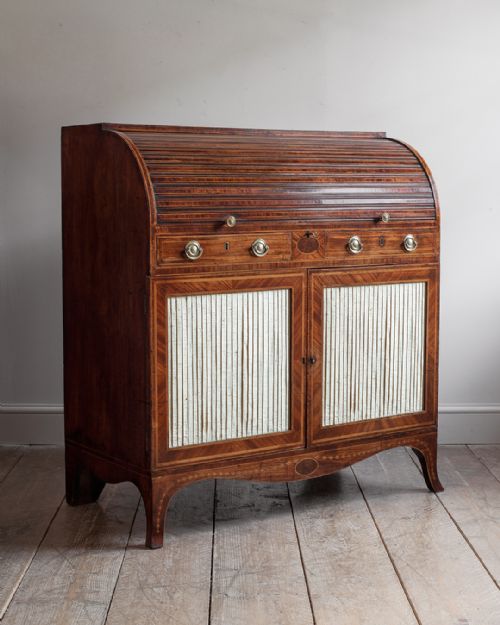
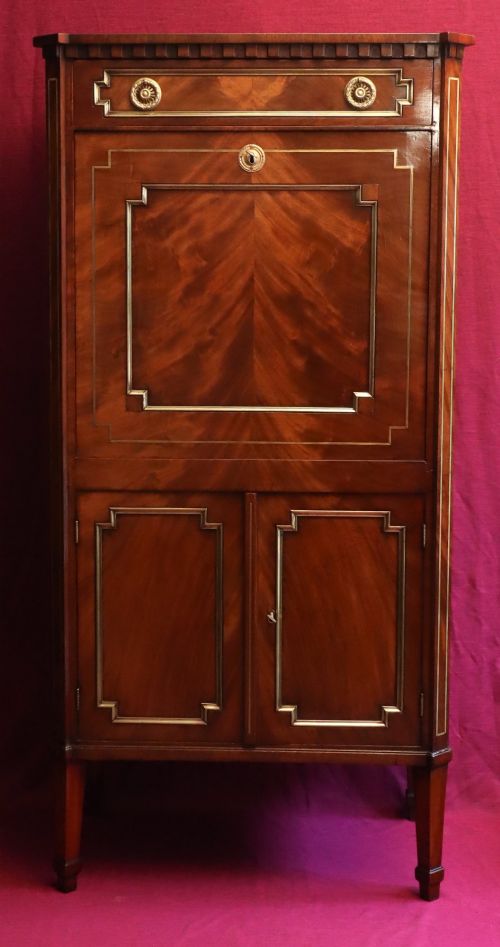
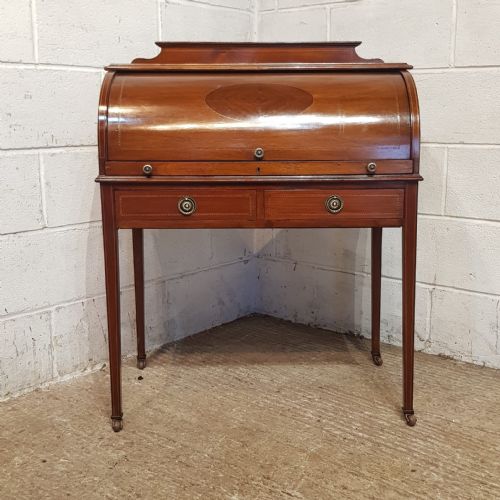
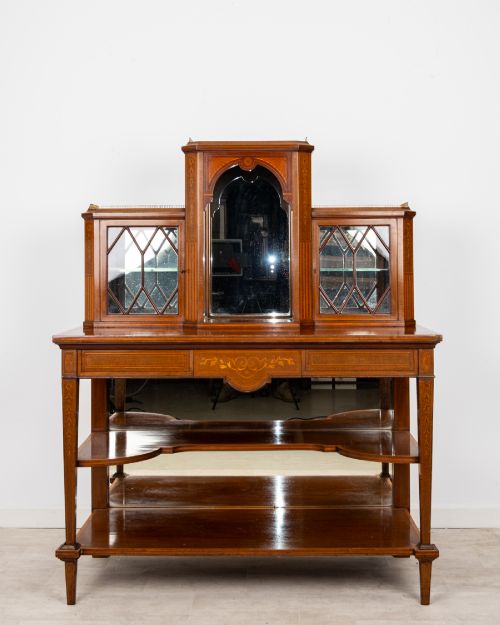


Inlaid Mahogany Secretary Bureau
An inlaid mahogany secretary bureau brings together fine cabinetmaking and practical writing space in pieces ranging from Georgian elegance to Edwardian refinement.

Inlaid Mahogany Secretary Bureau
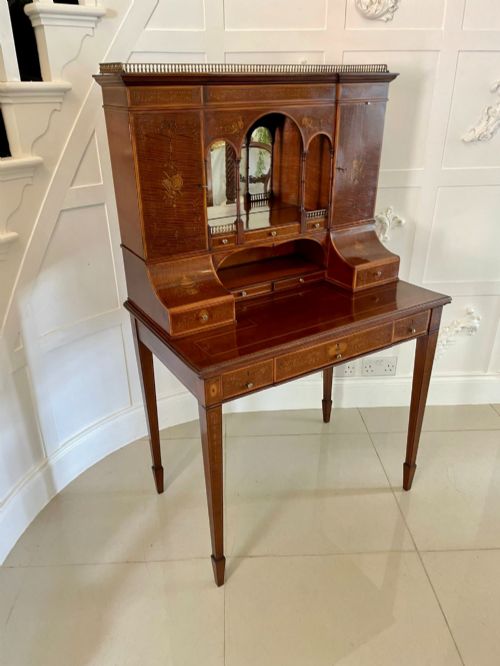
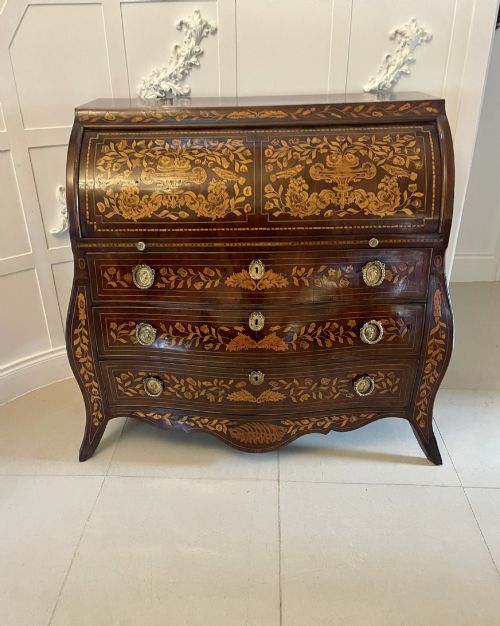
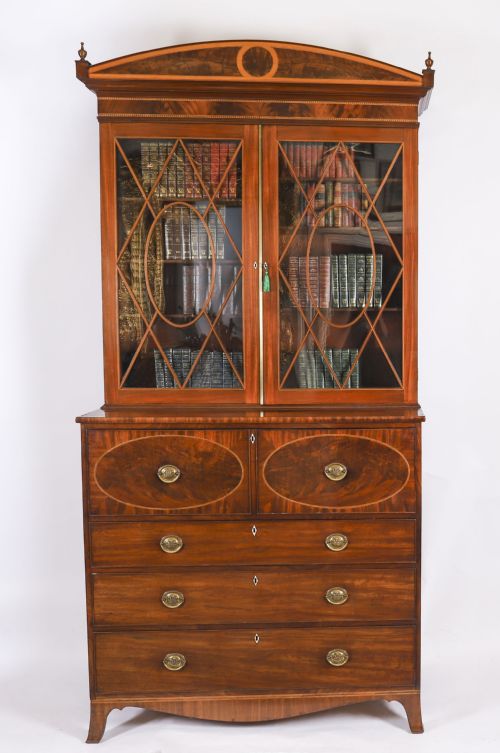
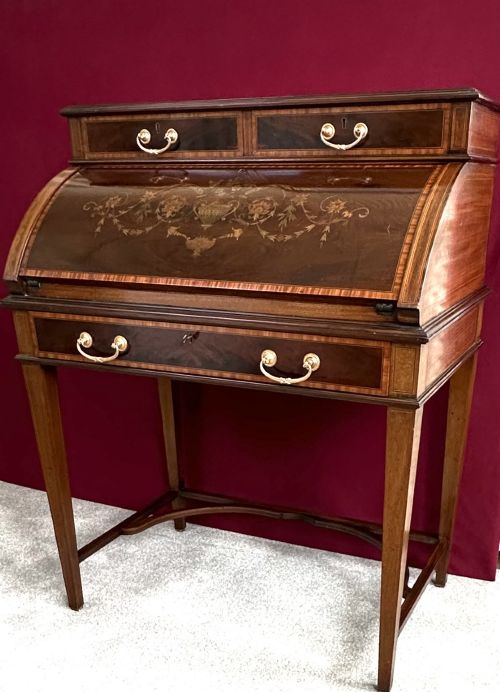
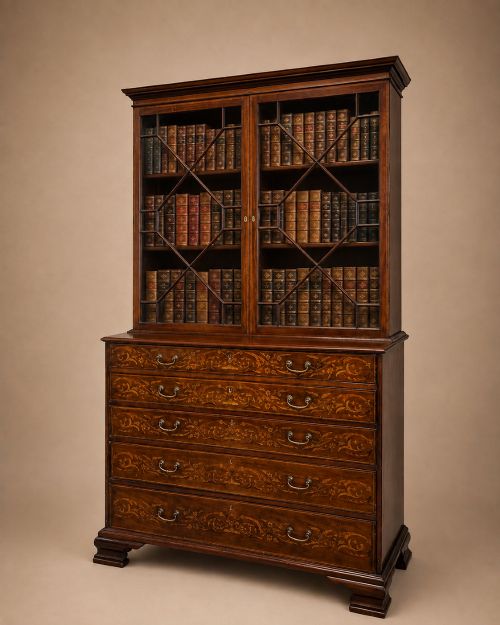
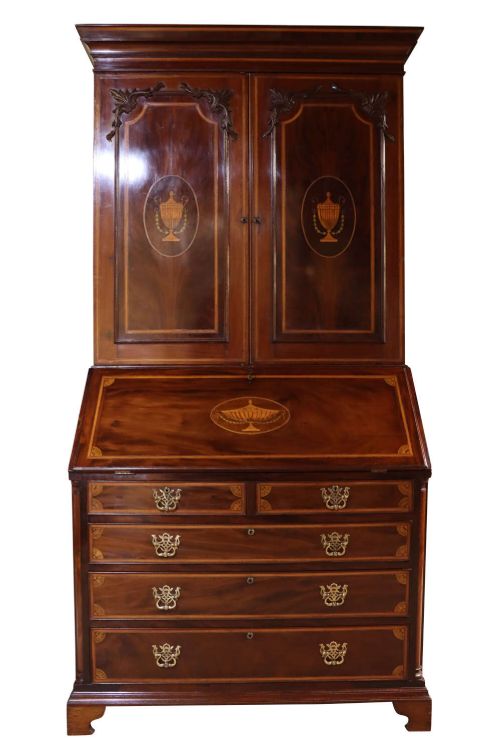
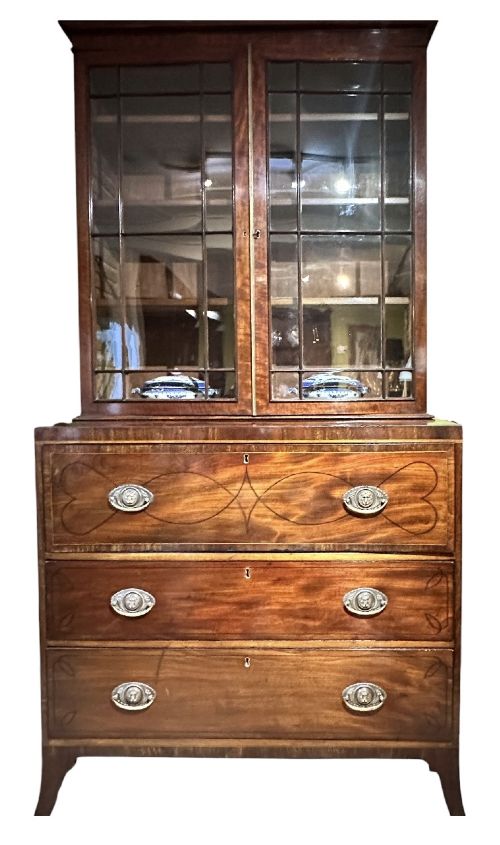
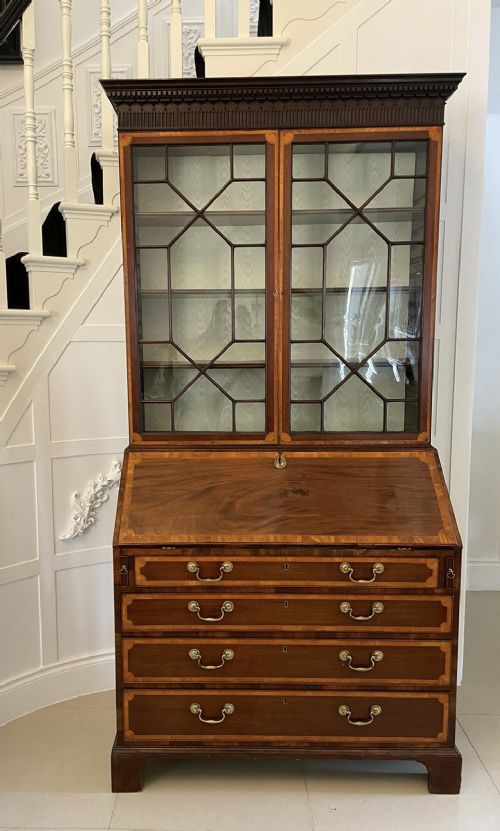
An inlaid mahogany secretary bureau combines a writing surface with storage, often pairing a fall-front desk or cylinder front with drawers or a bookcase top. When you search for this phrase, you encounter forms that span centuries, including bureau bookcases, secretaire bookcases, and smaller writing desks like the bonheur du jour.
The pieces on this page originate from periods such as the Georgian, Regency, William IV, Victorian, and Edwardian eras. Bureau bookcases and fall-front desks dominate the selection, showing how makers adapted the form for domestic study and correspondence over generations.
Makers utilised various timber configurations, combining rich mahogany with satinwood, fruitwood, and flame mahogany veneers. Alongside traditional British designs, you find continental influences such as Dutch Baroque bombe shapes and French secretaire a abattant forms.
How They Were Made
Structural elements include brass fittings, glass panel doors for bookcase tops, and leather inserts for writing surfaces. Drawers frequently feature oak linings, while specialised mechanisms support tambour shutters, barrel fronts, and dropping writing flaps.
Listings span the eighteenth, nineteenth, and early twentieth centuries, featuring cabinetwork from the Georgian, Regency, William IV, Victorian, and Edwardian periods.
What Varies in Quality
The distinction between standard examples and the finest pieces lies in the crispness of the cabinetwork and the precision of the inlay. Superior pieces display carefully matched flame mahogany veneers and intricate satinwood marquetry that remain intact and well-aligned across drawers and fall fronts.
Internal arrangement and secondary woods also dictate the standing of a bureau. Better examples provide fitted pigeonholes, hidden compartments, and robust oak-lined drawers that operate smoothly within heavy carcases.
Edwards & Roberts
The Inlaid Mahogany Secretary Bureau Glossary
- Secretaire
- A desk or chest of drawers containing a fitted writing drawer with a drop-down front. This mechanical feature conceals small pigeonholes and letter drawers.
- Bonheur du jour
- A light lady's writing desk originating in the eighteenth century, typically featuring a small cabinet or set of drawers upon the upper surface.
- Marquetry
- The art of forming decorative patterns using pieces of veneer applied to a wood structure. Makers used contrasting timbers like satinwood and fruitwood to build floral motifs.
- Tambour
- A sliding shutter formed of narrow strips of wood glued to a canvas backing. This mechanism allows a curved desktop to roll open smoothly.
- Flame mahogany
- A timber cut from the fork of the mahogany branch where the grain forms a distinctive flame-like pattern. It was prized for principal display surfaces.
Inlaid Mahogany Secretary Bureau: Frequently Asked Questions
How do I tell a Georgian bureau from an Edwardian one?
Georgian pieces generally display heavier proportions, solid construction in native mahogany, and understated bracket feet or ogee feet. Their inlay tends to be restrained stringing or simple crossbanding.
Edwardian interpretations often reflect the Sheraton Revival style, featuring lighter frames, more extensive marquetry, and delicate proportions designed for smaller domestic spaces.
How were these desks used historically?
These desks provided a secure, private space for writing letters, managing household accounts, and storing important documents. The enclosed writing flap kept correspondence hidden when not in use.
Bureau bookcases added a functional library element above the desk, allowing owners to store and display leather-bound volumes behind glass doors.
How do I care for a mahogany bureau?
Keep the wood away from direct sunlight and extreme temperature fluctuations to prevent the mahogany veneers and delicate satinwood inlay from lifting or splitting. Maintain a stable indoor environment and dust gently with a dry cloth.
Condition the timber periodically with appropriate wax to preserve the polish and protect the antique finish without sealing the wood.