


Edwardian Mahogany Bureau Bookcase
An Edwardian mahogany bureau bookcase combines a practical writing desk with glazed upper shelving, bringing refined storage into any room.

Edwardian Mahogany Bureau Bookcase
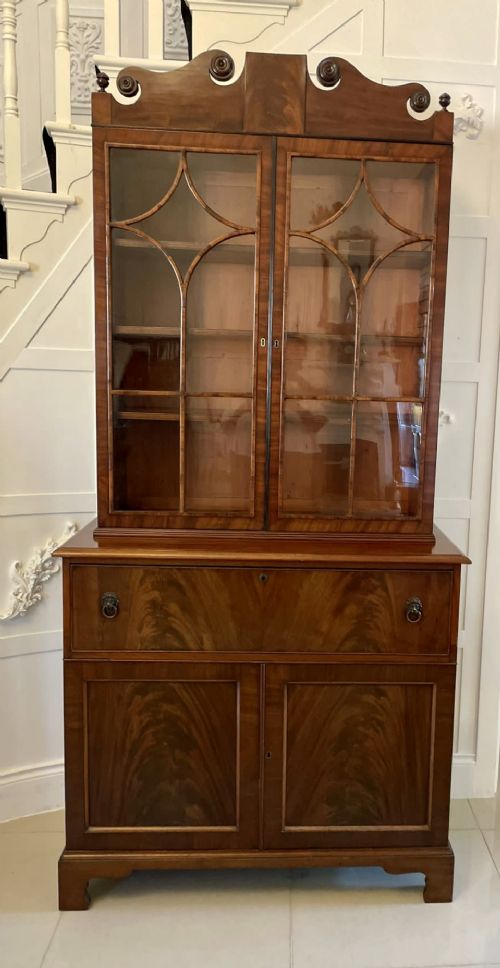
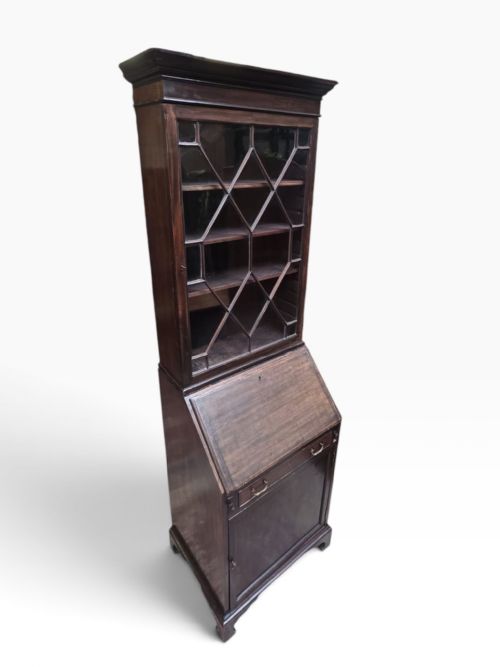
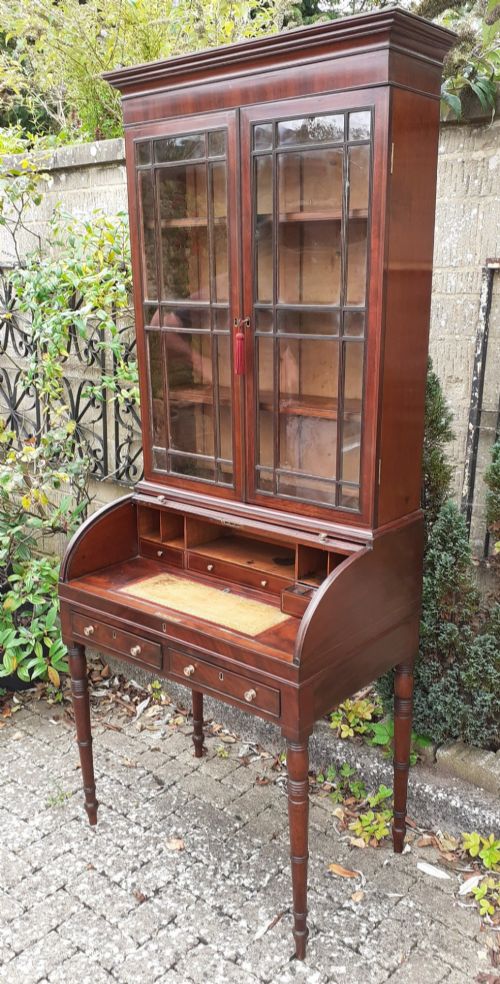
An edwardian mahogany bureau bookcase is a towering hybrid piece housing an upper glazed cabinet and a lower fall-front writing desk. These combination items reflect a domestic demand for multi-functional furniture during the early twentieth century.
Most examples encountered on this page date from around nineteen hundred, executed in the Edwardian Sheraton Revival manner. They frequently feature satinwood inlay and fitted interior compartments alongside adjustable wooden shelves.
Makers of the period adapted earlier Georgian proportions into slightly lighter frameworks while retaining solid timber construction. The lower section typically incorporates storage drawers beneath a sloping writing flap.
Materials and construction methods
Cabinetmakers constructed these pieces primarily from solid and veneered mahogany, often embellishing the exterior surfaces with contrasting satinwood inlay. Glass panes are held within timber framing to form the upper bookcase doors.
Internal components of the writing bureau utilise smaller secondary timbers for pigeonholes and small drawer dividers, sometimes lined with leather on the writing surface. Brass hardware secures the cabinet doors and drop-front mechanisms.
Behind the tidy pigeonholes of one secretaire drawer lies an ink stain that has quietly recorded two world wars.
Distinguishing quality factors
The standard of timber selection and depth of figuring in the mahogany veneer dictates the visual impact of the cabinet. Finer pieces demonstrate precise matching of wood grain across drawer fronts and fall flaps.
Execution of the satinwood inlay reveals the artisan's skill through crisp, tight geometric or floral marquetry rather than coarse painted substitutes. Additionally, the thickness of the glass and the delicacy of the astragal bars mark the tier of manufacture.
Tudor and Burrey·Maple and Co·Gillows·Edwards and Roberts·Turner, Woodward and Co
The Edwardian Mahogany Bureau Bookcase Glossary
- Astragal
- The thin wooden glazing bars that divide the glass panes within the upper bookcase doors. These mouldings dictate the geometric pattern of the window framing.
- Fall-front
- The hinged sloping panel that drops forward to create a writing surface. It conceals the internal pigeonholes and small drawers.
- Satinwood inlay
- Contrasting blonde wood marquetry embedded into the darker mahogany surface. It forms decorative borders and decorative motifs.
- Secretaire
- A specialised desk drawer featuring a drop-front panel that conceals a writing interior. It offers a writing surface without altering the external chest appearance.
- Sheraton Revival
- A decorative style popular around nineteen hundred drawing on eighteenth-century neoclassical design. It prioritises lighter proportions and classical ornamental motifs.
Edwardian Mahogany Bureau Bookcase: Frequently Asked Questions
What is inside the bureau section?
The interior of the drop-front section contains an arrangement of small pigeonholes for stationery storage, accompanied by miniature drawers.
Many examples also incorporate a central lidded compartment and a pull-out support lath to bear the weight of the writing surface.
How do I clean mahogany?
Maintenance requires gentle dusting with a dry, soft cloth to prevent particulate accumulation on the polished timber surfaces.
Moisture and modern chemical sprays should be avoided, relying instead on traditional beeswax applied sparingly to nourish the grain.
Are the shelves adjustable?
The internal wooden shelves within the glazed upper cabinet often rest upon fixed wooden supports or traditional brass rack strips.
This mechanism allows the owner to alter shelf heights to accommodate books of varying vertical dimensions.
How do I tell Edwardian from Georgian?
Edwardian interpretations generally display lighter proportions, machine-sawn internal timbers, and brighter satinwood inlay work typical of the nineteen-hundred revival.
Georgian predecessors rely on heavier structural mass, hand-cut dovetails, and deeper, darker patination accumulated over an extra century of age.