



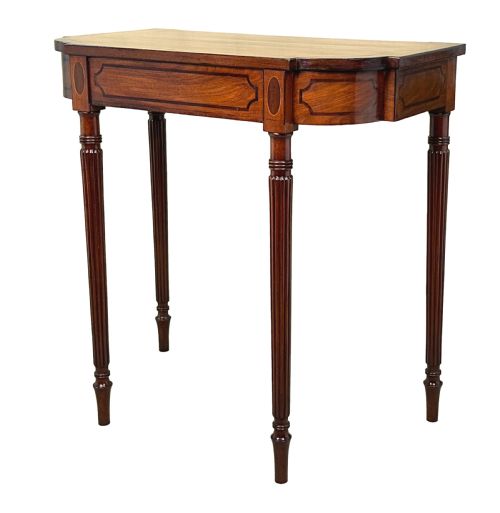


Inlaid Mahogany Pier Table
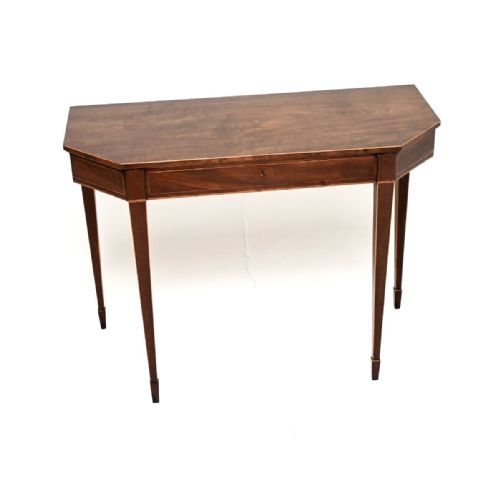
An inlaid mahogany pier table brings architectural elegance to a hallway or drawing room, combining rich timber with delicate contrasting stringing.
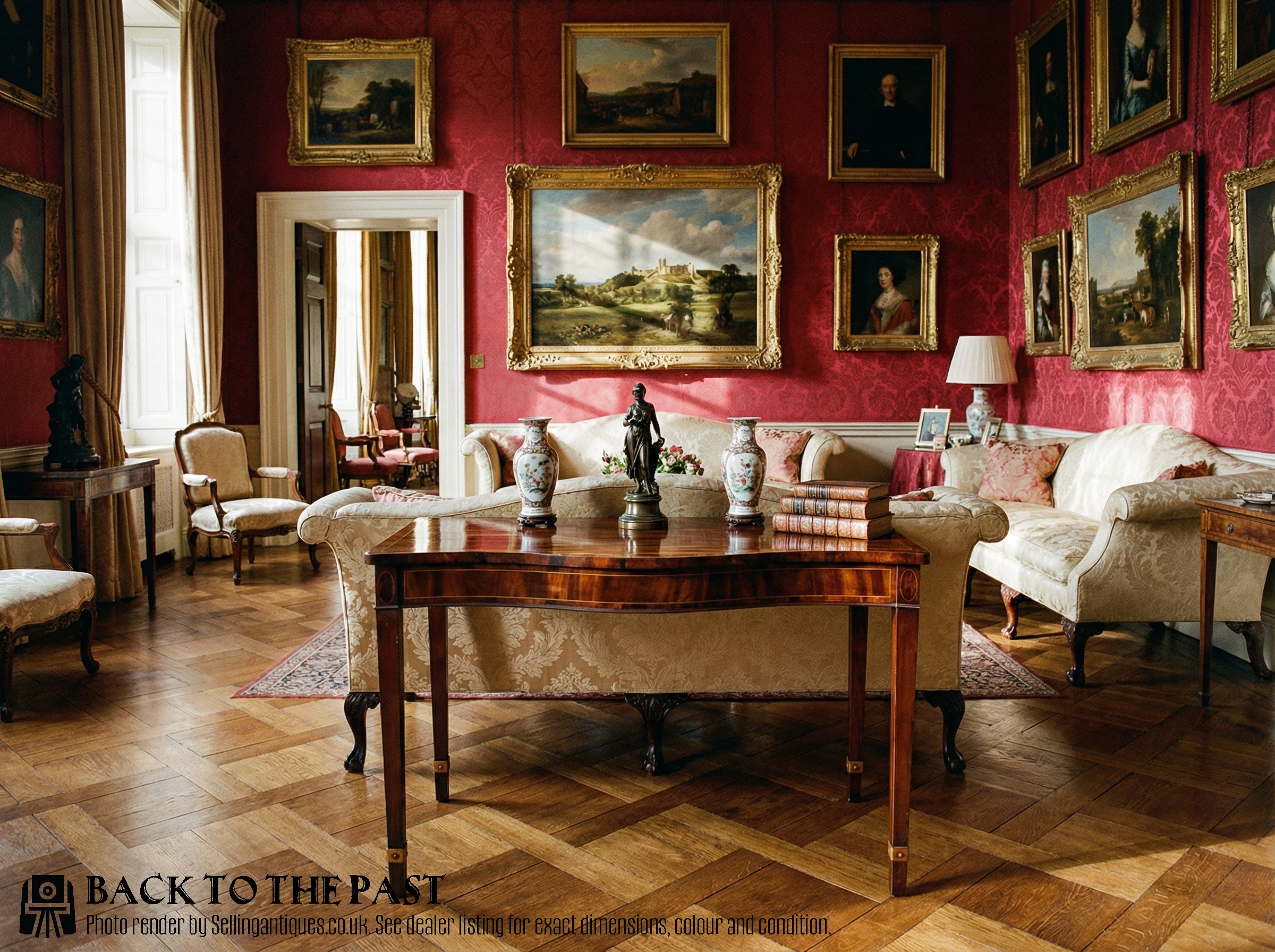
Inlaid Mahogany Pier Table
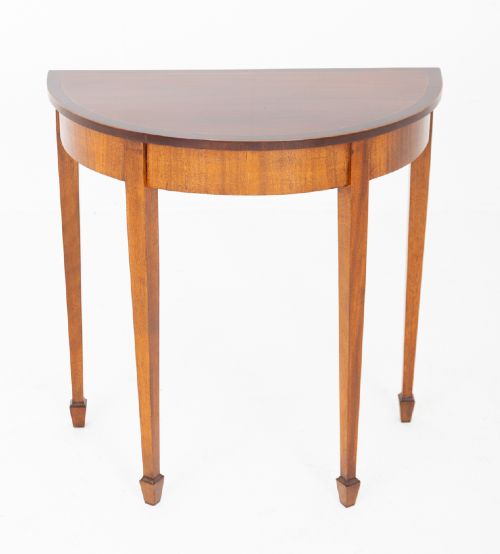
An inlaid mahogany pier table is typically found in forms such as demi-lune console tables, side tables, and occasional card or tea tables designed to stand against a wall. The pieces listed on this page span the Georgian, Regency, and Victorian eras, alongside later revivals from around nineteen hundred and nineteen twenty.
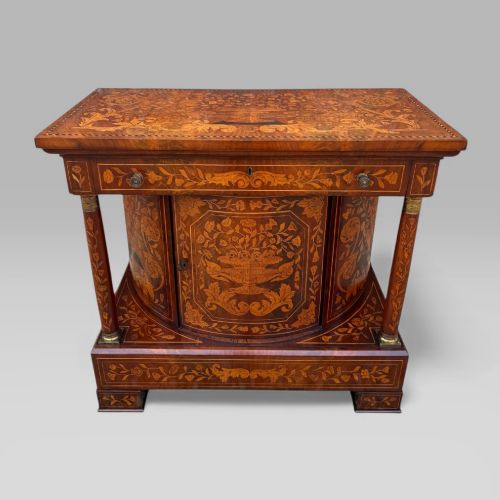
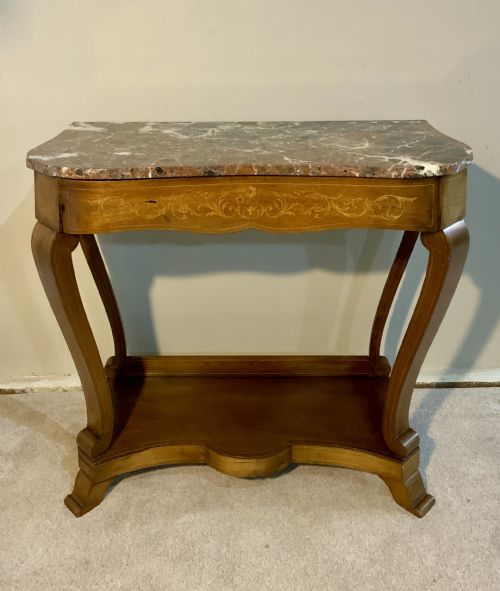
Most examples favour the semi-circular or bowfront shape, frequently incorporating satinwood, boxwood, or fruitwood marquetry detailing. Origins stretch from English workshops to Dutch and French makers, showing styles from George III Hepplewhite to French Empire and Dutch Baroque.
How they were made
Cabinet makers utilised solid mahogany and selected veneers, applying contrasting boxwood and satinwood inlay to define borders and panels. Fruitwood marquetry added pictorial or floral detail, while some versions incorporated marble tops.
Construction techniques involved traditional joinery suited to curved furniture, such as demi-lune rails and folding top mechanisms for card and tea tables.
One versatile survivor doubles as a crystal cabinet, proving that antique furniture makers loved a multi-tasking piece just as much as we do.
What varies in quality
The standard of an inlaid mahogany pier table depends on the crispness of the boxwood inlay and the figuration of the mahogany grain. Finer examples display meticulous attention to proportion in the demi-lune or serpentine shaping and integration of marquetry.
Later revival pieces from the early twentieth century differ in structural depth and timber selection from eighteenth-century originals, though craftsmanship varies across both periods.
The Inlaid Mahogany Pier Table Glossary
- Demi-lune
- A half-moon shape popular for console and pier tables designed to sit flush against a wall. This form allowed smaller tables to occupy narrow spaces like hallways.
- Marquetry
- The art of applying pieces of veneer to a structure to form decorative patterns or pictures. Makers used fruitwood and satinwood to create contrast against the mahogany ground.
- Serpentine
- A gently undulating curved outline seen on the front edges of certain side and console tables. This shaping requires skilled woodworking to maintain structural integrity.
- Stringing
- Thin lines of contrasting wood inlay used to outline panels, drawer fronts, and table edges. Boxwood was frequently utilised for this linear decoration.
Inlaid Mahogany Pier Table: Frequently Asked Questions
Where should I place a pier table?
An inlaid mahogany pier table sits well in a hallway, landing, or against a blank drawing room wall where floor space is limited.
Because many examples feature semi-lune or flat backs, they anchor easily beneath a mirror or painting.
How do I use a foldover table?
Foldover tables function primarily as console or side tables when closed against a wall.
The hinged top opens to reveal a baize-lined surface originally intended for cards or tea, supported by a swinging rear leg.
Are these tables solid mahogany?
Most pieces combine solid mahogany framing with mahogany veneers applied to secondary woods to achieve stable curved surfaces.
Inlay work like boxwood and satinwood is set directly into these veneered or solid surfaces.
How do I distinguish Georgian from revival pieces?
Georgian pieces exhibit eighteenth-century construction methods, timber patination, and hand-cut joinery specific to the period.
Revival examples from nineteen hundred onwards often display different interior timber choices and standardised machine-assisted construction.