
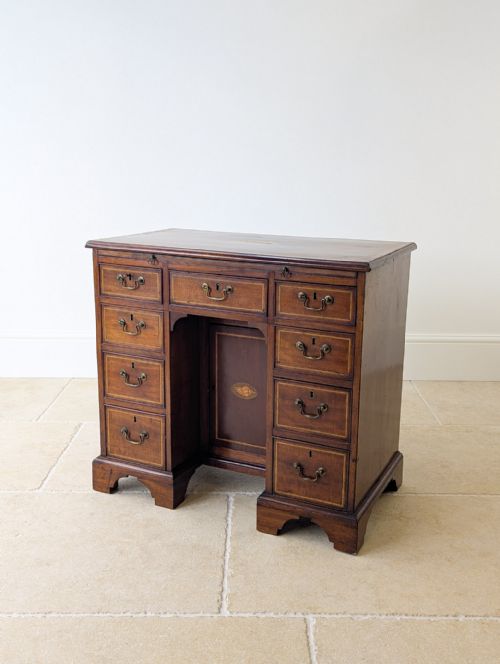


Inlaid Mahogany Office Desk
An inlaid mahogany office desk brings together deep timber and precise contrast work to anchor a study with period elegance.
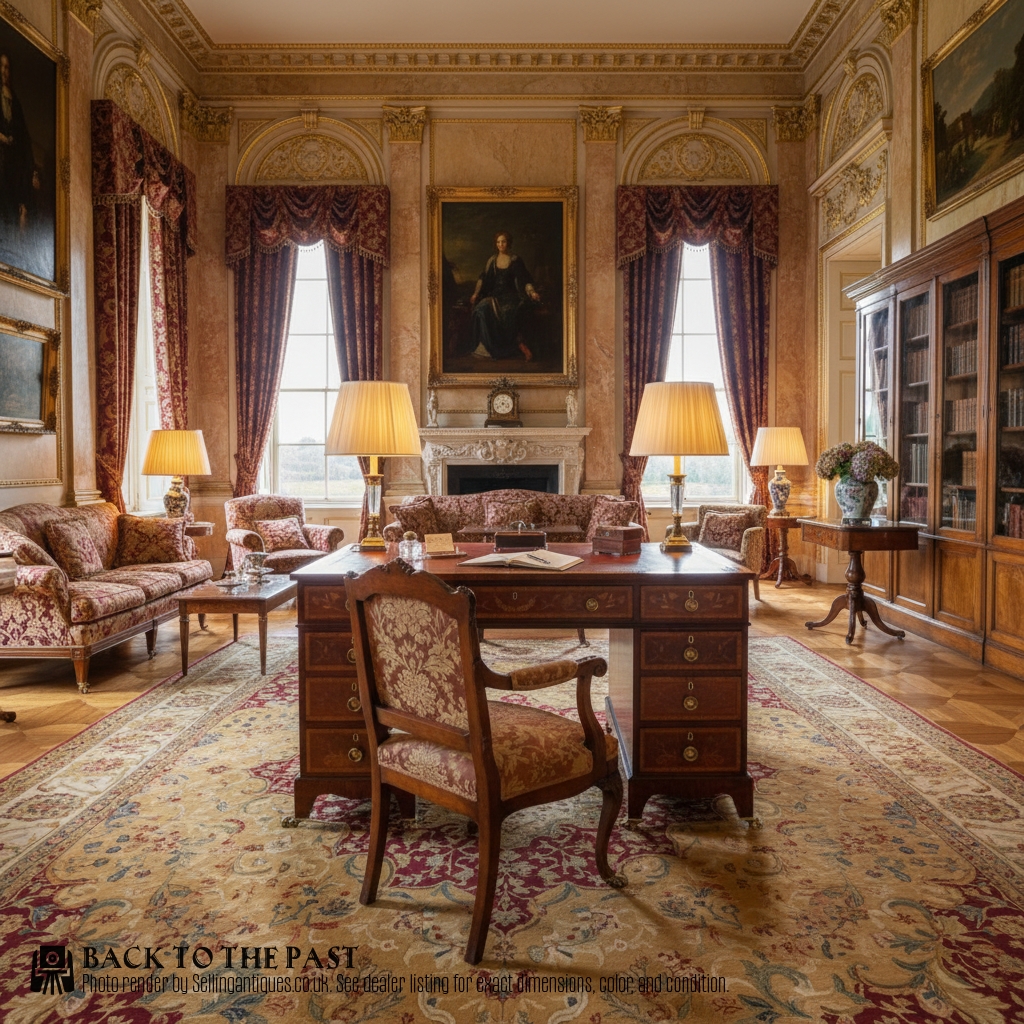
Inlaid Mahogany Office Desk
An inlaid mahogany office desk is typically encountered in Edwardian and Victorian forms, alongside Georgian and Regency examples.
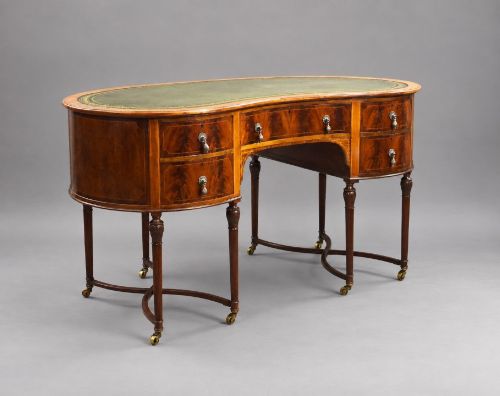
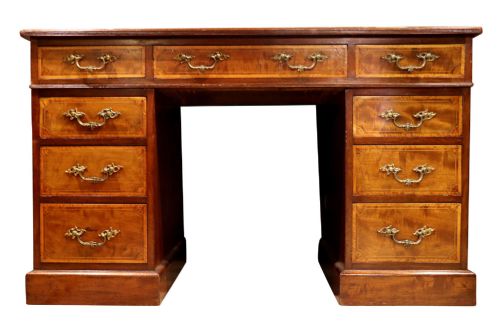
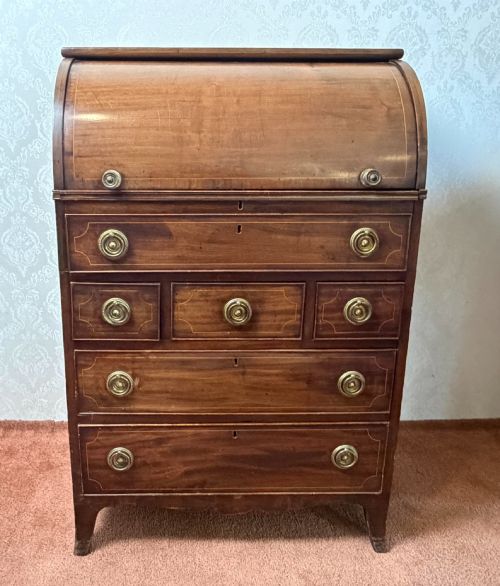
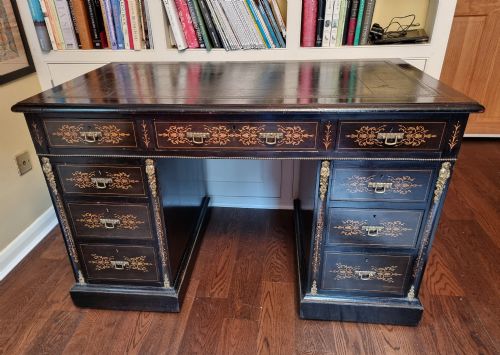
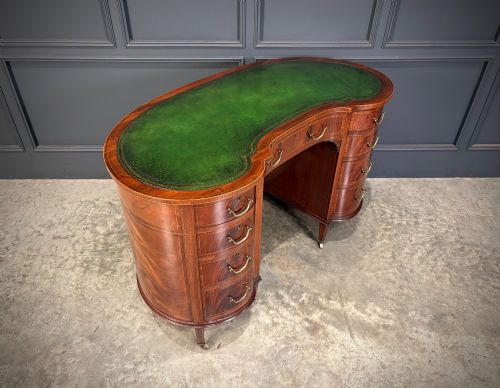
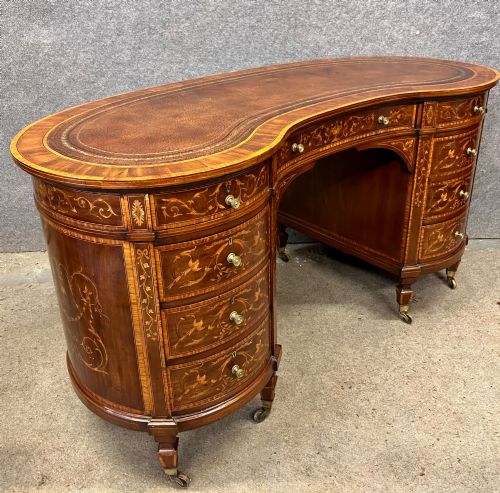
The selection ranges from twin pedestal desks and kneehole formats to kidney-shaped writing tables and cylinder desks.
Makers and workshops of the nineteenth and early twentieth centuries produced these pieces for professional and domestic studies.
Materials and technique
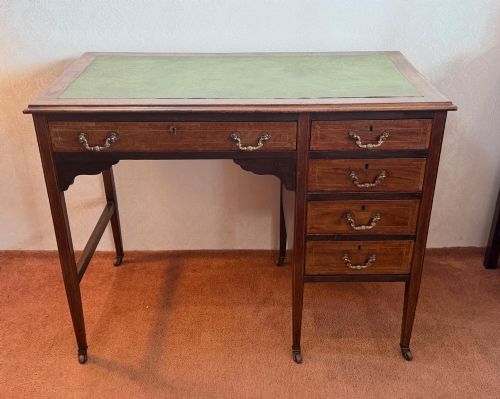
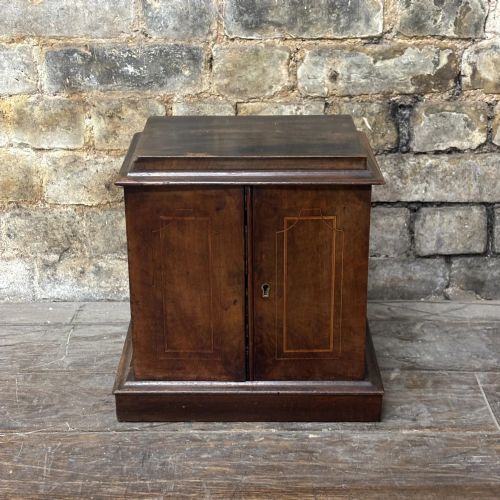
Cabinet makers utilised solid mahogany and flame mahogany veneers, enhanced with satinwood, boxwood, and marquetry inlay.
Working surfaces frequently incorporate fitted leather writing panels, while hardware relies on brass ring handles and banding.
Structural elements span pedestal drawer configurations, tambour shutters, and crossbanded perimeters.
Desks share the catalogue with matching elbow chairs intended for long hours at the paperwork.
Distinctions in craftsmanship
The standard of a piece depends on the crispness of the inlay work and the depth of the mahogany grain.
Subtleties in brass fittings, original handles, and secondary timbers separate workshop pieces from standard commercial production.
Edwards & Roberts·Wolfe & Hollander·James Shoolbred·Maple & Co
The Inlaid Mahogany Office Desk Glossary
- Mahogany
- A durable tropical hardwood known for its reddish-brown tone and suitability for fine furniture construction. It accepts polish and veneer exceptionally well.
- Inlay
- The technique of embedding contrasting woods or materials into a recessed surface to form decorative patterns. Satinwood and boxwood are common choices for this detail.
- Pedestal desk
- A freestanding writing table supported by two banks of drawers beneath the main surface. This form provides substantial storage capacity.
- Marquetry
- Elaborate pictorial or geometric veneer work assembled from various wood slices. It decorates the top surfaces and drawer fronts of finer desks.
- Tambour
- A flexible sliding shutter formed from narrow vertical strips of wood glued to a fabric backing. It conceals pigeonholes and writing compartments on cylinder desks.
Inlaid Mahogany Office Desk: Frequently Asked Questions
How do I identify an Edwardian desk?
Edwardian desks often feature lighter proportions, satinwood inlay, and Sheraton Revival influences dating around nineteen hundred.
They frequently employ kidney shapes or slender tapered legs rather than the heavier mass associated with earlier Victorian pieces.
What is a kneehole desk?
A kneehole desk provides a central recessed space for the user to sit comfortably, flanked by pedestals of drawers.
This configuration appeared frequently during the Georgian and Victorian periods for domestic study use.
How do cylinder desks work?
Cylinder desks enclose the writing surface behind a curved wooden roll-top that slides backward into the body of the piece.
Opening the cylinder often extends the writing slide simultaneously for immediate use.
Where were pedestal desks placed?
Pedestal desks were designed as freestanding library or office furniture intended to sit centrally within a room.
Finished backs allowed them to occupy spaces away from walls while maintaining a polished appearance from all angles.