
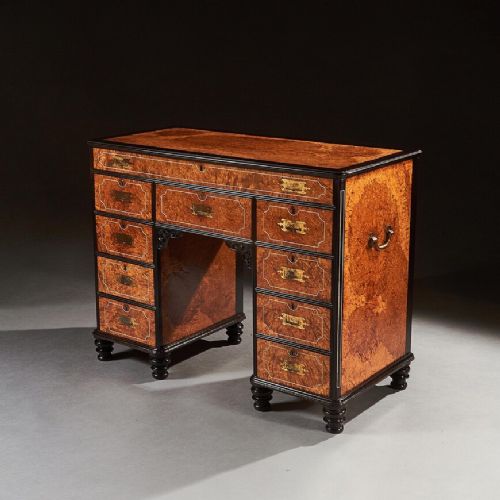


Inlaid Wood Pedestal Desk
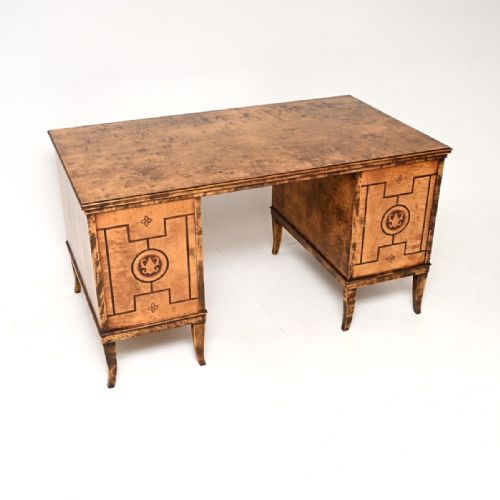
An inlaid wood pedestal desk organises a study with generous proportions and contrasting timber details.
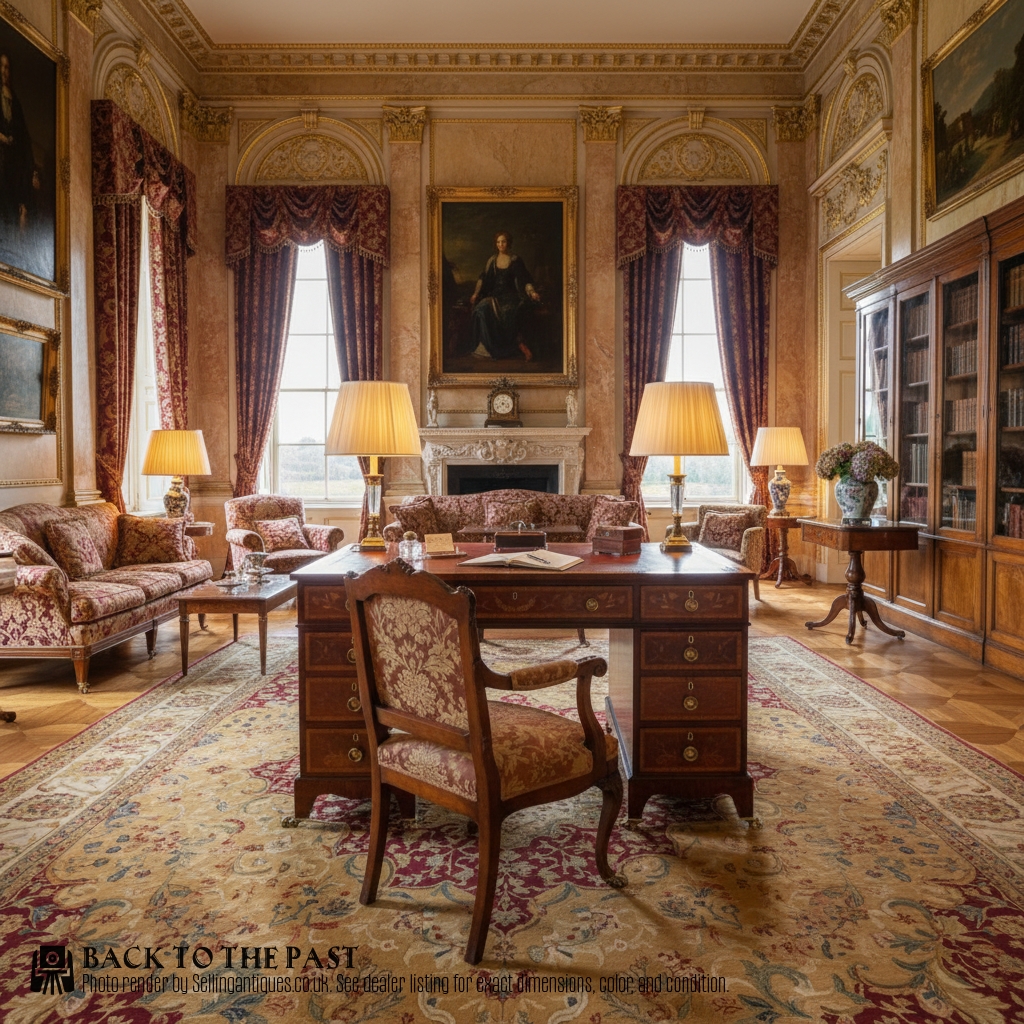
Inlaid Wood Pedestal Desk
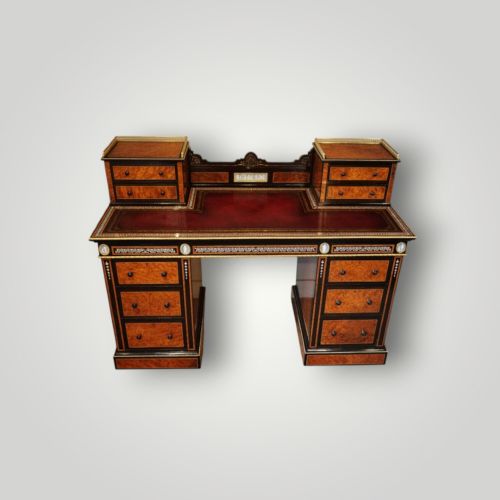
An inlaid wood pedestal desk comprises a double set of drawers supporting a central writing surface, frequently surfaced in leather. The form appears across the Victorian and Edwardian periods, alongside earlier Regency examples.
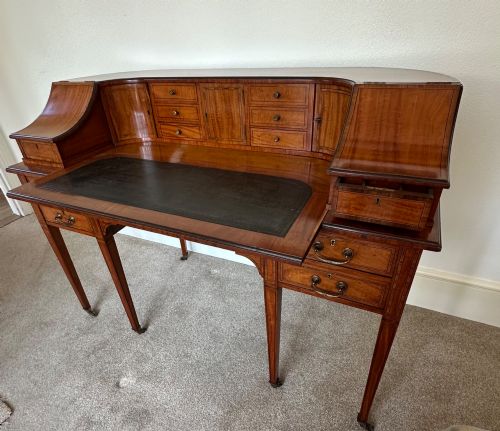
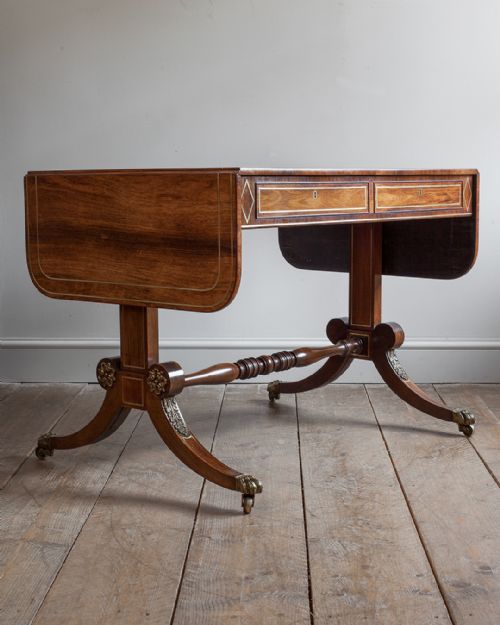
Makers constructed these desks in mahogany, satinwood, rosewood and walnut, embellished with satinwood, boxwood, ivory or brass inlay. Alongside traditional pedestal forms, variations include kneehole desks and Davenport desks.
The evidence shows examples ranging from compact writing tables to large breakfront library pieces, often incorporating marquetry or parquetry details within the timber top.
How they were made
Cabinet makers utilised dense primary hardwoods like mahogany, rosewood and walnut for the structural carcass, applying fine veneers of satinwood and amboyna to the exterior surfaces. Contrasting lines of boxwood and satinwood inlay define the drawer fronts and borders.
Workshops integrated brass mounts, cut brass stringing and ormolu decoration alongside hand-tooled leather writing inserts. Marquetry panels and Wedgwood plaques further embellish the formal facades of late Victorian and Edwardian pieces.
Listings feature pedestal desks spanning the Georgian, Regency, Victorian and Edwardian eras, constructed in mahogany, rosewood, satinwood and walnut.
What varies in quality
The distinction between standard commercial output and exhibition pieces rests in the complexity of the timber selection and the precision of the marquetry. Finer examples employ burr woods and rich amboyna, paired with meticulous hand-cut stringing rather than stamped metal substitutes.
Signature details such as original ormolu mounts, well-figured flame mahogany and stamped maker drawers elevate an ordinary desk to a notable workshop production.
Jackson and Graham·Gill and Reigate·Edwards and Roberts·James Shoolbred·Maples and Co
The Inlaid Wood Pedestal Desk Glossary
- Pedestal desk
- A writing table supported by two banks of drawers flanking a central kneehole space. This configuration provides substantial storage capacity beneath the writing surface.
- Marquetry
- Decorative veneer work arranged in pictorial or geometric patterns using various coloured woods. Craftsmen cut these segments to fit precisely within the solid ground timber.
- Satinwood
- A lustrous yellow timber imported from the tropics, utilised extensively for contrasting stringing and decorative veneers. It forms a bright surface against darker mahogany or rosewood.
- Ormolu
- Gilded bronze used for decorative mounts and furniture trimmings during the nineteenth century. The technique adds metallic lustre to key areas of the desk carcass.
- Kneehole desk
- A compact writing bureau featuring a central recess for the user's legs, flanked by vertical cupboards or stacks of drawers. This form suits smaller study spaces.
Inlaid Wood Pedestal Desk: Frequently Asked Questions
How do I care for the leather top?
Clean the leather surface using a damp cloth and treat periodically with a neutral leather balm to prevent cracking.
Avoid placing hot cups or direct moisture on the writing surface to preserve the tooling and gold leaf.
Where should I place the desk?
Position the desk away from direct sunlight and heat sources to prevent the rosewood, mahogany or satinwood veneers from drying and splitting.
Freestanding pieces benefit from placement in the centre of a room where the panelled rear can be fully appreciated.
How do I distinguish Victorian from Edwardian?
Victorian desks generally display heavier timbers like rosewood and walnut, often accompanied by dense marquetry and brass or ivory inlay.
Edwardian pieces favour lighter satinwood and mahogany constructions, reflecting a preference for refined proportions and Sheraton Revival styling.
Can these desks be dismantled for transport?
Most pedestal desks separate into three distinct components comprising two drawer pedestals and a top writing section.
Lifting the top requires removing internal wooden battens or securing screws located inside the upper drawers.