
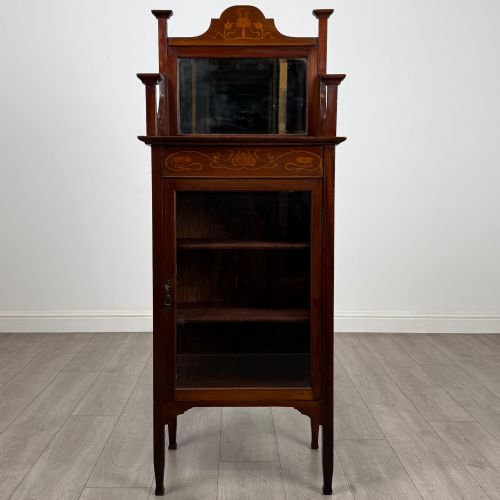
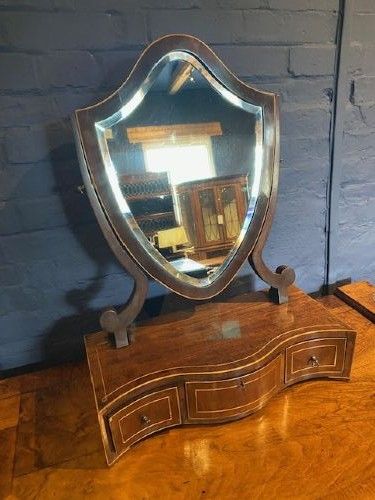
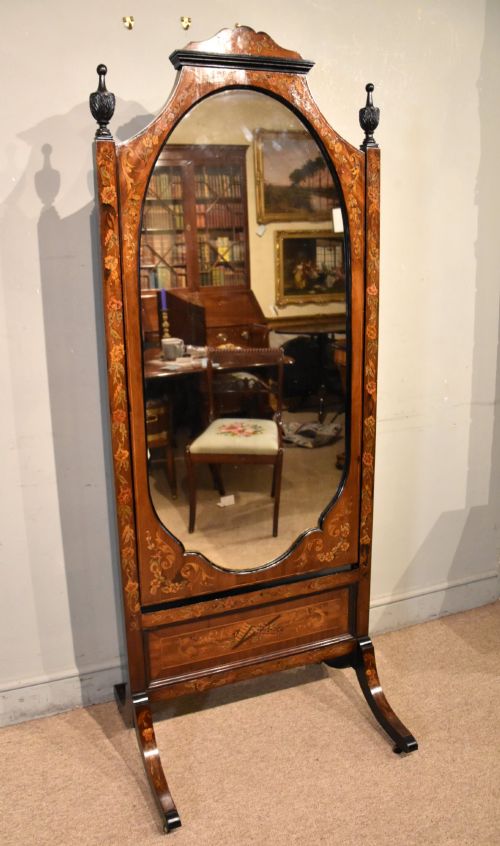


Inlaid Mahogany Mirror Stand
These inlaid mahogany mirror stand pieces combine useful glass with rich cabinet work, offering both a practical dressing glass and a decorative focal point for the room.
Inlaid Mahogany Mirror Stand
When you search for an inlaid mahogany mirror stand, you are looking at items designed for personal grooming and domestic display across several historic periods. The selection spans floor-standing cheval mirrors, tabletop dressing glasses, and multi-functional hall or shaving stands that incorporate mirrors into their wooden framework.
The pieces on this page lean heavily towards the Edwardian era and the nineteenth century, alongside earlier Regency examples. You will frequently encounter swing mirrors mounted on upright supports and large cheval mirrors designed for full-length reflection in bedrooms and dressing rooms.
Beyond simple dressing mirrors, the category stretches to encompass washstands with hidden mirrors, gentleman's vanity tables, and hall stands fitted with coat hooks and umbrella wells. These variations show how cabinet makers integrated mirror glass into diverse household furniture.
Materials and construction
The primary timber across these pieces is mahogany, often selected for its rich grain and stable qualities, sometimes paired with satinwood or boxwood for contrasting decorative borders. Wood inlay and marquetry techniques introduce floral motifs, geometric lines, or contrasting banding into the polished surfaces.
Glass forms the reflective element, whilst brass hardware such as adjustable swing pivots, candle sconces, or hanging hooks provides functional detailing. Frames are joined using traditional cabinet-making methods to support the weight of the pivoting glass and the extended wooden stands.
Listings feature mahogany, satinwood, and boxwood materials across Edwardian, Victorian, and Regency periods.
What separates the finer examples
The standard of an inlaid mahogany mirror stand rests on the precision of the cabinet work and the crispness of the wood inlay. Finer pieces demonstrate meticulous hand-cut marquetry and tightly fitted joints that remain stable over centuries of use.
Proportion and the quality of the mahogany timber dictate the visual presence of the object. Superior examples feature well-figured wood grain, balanced dimensions between the mirror frame and its supporting standards, and original brass fittings that complement the design.
The Inlaid Mahogany Mirror Stand Glossary
- Cheval mirror
- A large freestanding mirror supported on a frame with four legs that allows the glass to swing freely. This form became popular for full-length dressing during the eighteenth and nineteenth centuries.
- Marquetry
- An elaborate decorative technique of applying thin veneers of various woods to a structural surface to create pictorial or geometric patterns. It differs from simple inlay by covering more of the background.
- Swing mirror
- A dressing glass mounted on vertical pivots between two upright posts, allowing the user to tilt the angle of reflection. These are frequently found sitting atop dressing tables or mounted on dedicated floor stands.
- Satinwood
- A durable, yellowish timber prized for its lustrous sheen, frequently utilised for contrasting inlay work and banding against darker mahogany surfaces.
- Shaving stand
- A specialist piece of furniture incorporating an adjustable mirror, small drawers for grooming implements, and often a basin or shelf. These items date predominantly from the Georgian and Edwardian periods.
Inlaid Mahogany Mirror Stand: Frequently Asked Questions
How do I date a mirror stand?
Dating relies on identifying the stylistic markers of periods such as the Edwardian era, Regency, or Victorian times. Construction methods, wood choices, and the type of mirror glass also offer clues to the decade of manufacture.
Earlier pieces from the Georgian and Regency periods tend to feature heavier brass mounts and distinct timber patination. Edwardian examples often display lighter satinwood banding and varied functional forms like combination hall stands.
Are the mirror plates original?
Many surviving pieces retain their original mirror glass, though some have been replaced over the centuries due to damage or silvering degradation. Original glass often shows subtle imperfections, light foxing, or slight distortion.
Replacements are common in antique mirrors and do not necessarily diminish the decorative utility of the stand. Examining the backing boards and the way the glass is secured helps determine its age relative to the frame.
How do I care for the mahogany finish?
Maintain the mahogany surface by dusting regularly with a soft, dry cloth and avoiding placement in direct sunlight or near heat sources. Excessive temperature fluctuations can cause the wood or the intricate inlay to warp and split.
Apply a microcrystalline wax periodically to nourish the timber and preserve the polished sheen. Avoid modern silicone-based polishes, which can build up and dull the historic finish over time.
Where should I place a cheval mirror?
Cheval mirrors work best in bedrooms, dressing rooms, or large hallways where their height and pivoting glass can be fully utilised. Because they are freestanding, ensure they sit on a level surface so the swinging frame operates smoothly.
Positioning the glass opposite a window helps reflect natural light into darker corners of a room. The substantial wooden bases require adequate floor space to prevent the piece from becoming a hazard in narrow walkways.