


Shaving Mirror Stand
When you handle a shaving mirror stand, you hold a piece of daily personal ritual shaped in mahogany, walnut, or brass.
Shaving Mirror Stand
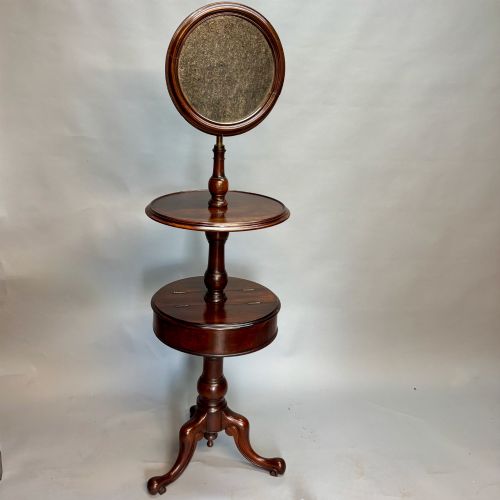
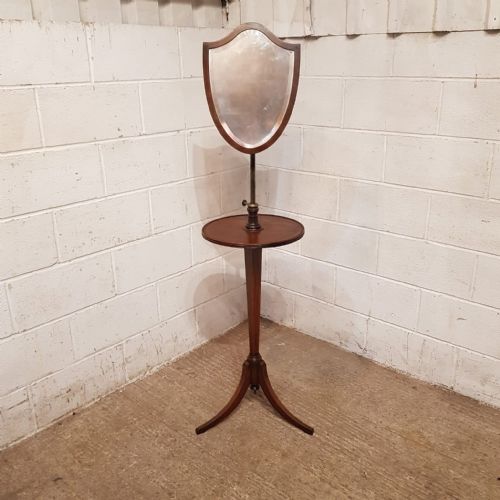
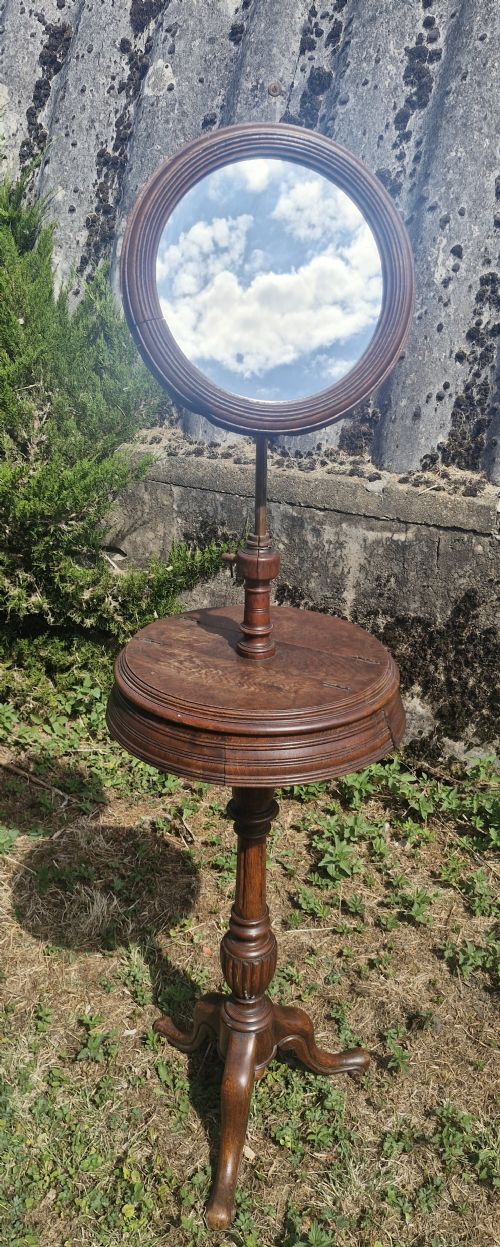
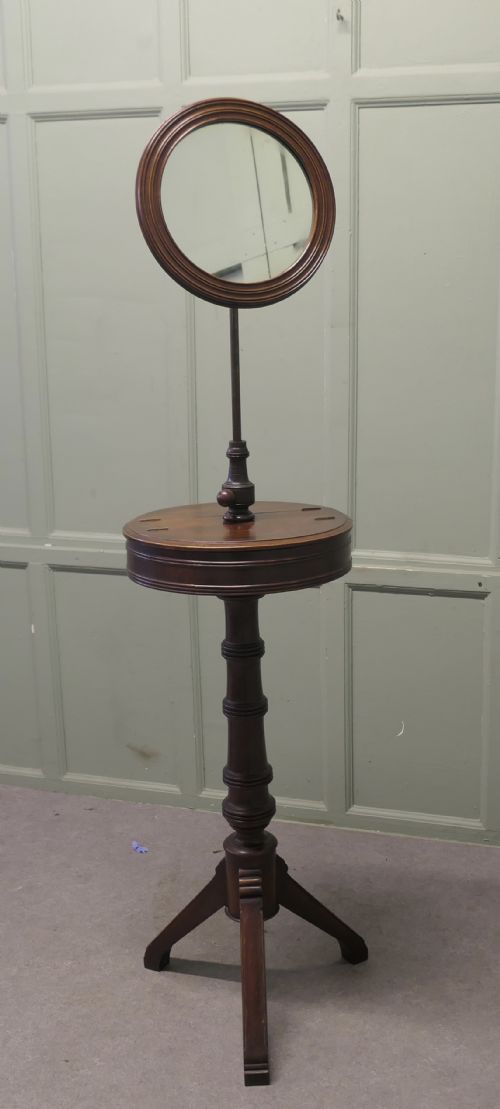
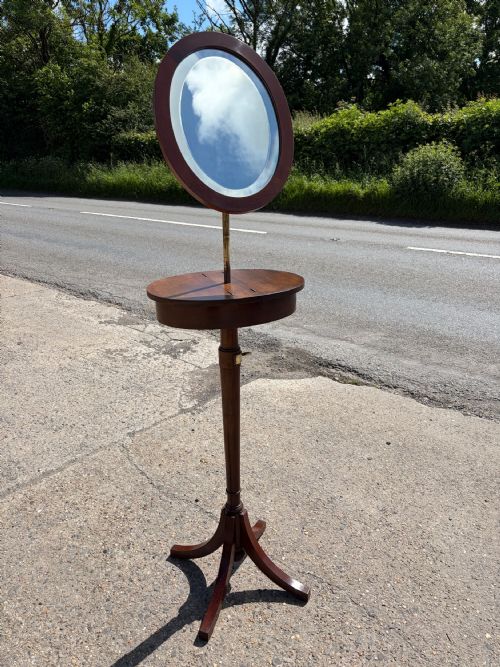
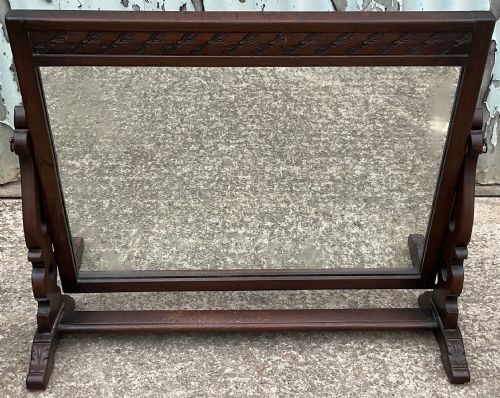
A shaving mirror stand combines a tilting or adjustable glass with a dedicated support, often taking the form of a tripod base, a tabletop frame, or a freestanding cabinet. These pieces served the Victorian and Edwardian gentleman for morning grooming, offering adjustable heights and pivoting frames to catch the light.
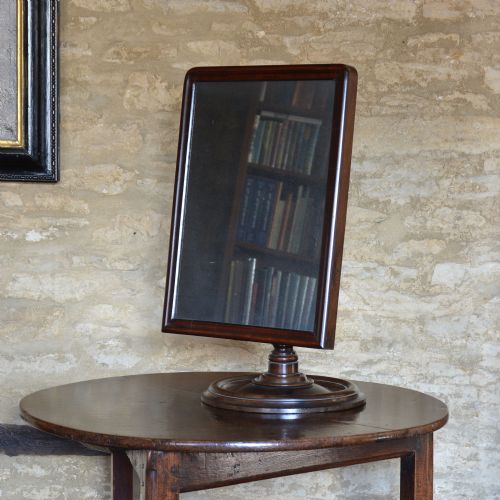
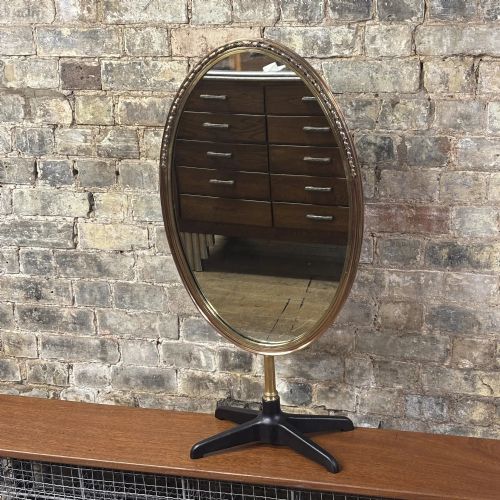
The most common forms on this page include Victorian mahogany tripod stands and Edwardian dressing variations. You also encounter walnut, oak, and brass examples spanning the nineteenth and early twentieth centuries, from simple table mirrors to complex telescopic designs.
How they were made
Cabinet makers utilised dense hardwoods like mahogany, walnut, and oak to build the frames and tripod supports, often incorporating boxwood stringing or intricate inlay. Metal components such as brass brackets, rods, and screws allowed the mirror glass to tilt and hold position securely.
Telescopic mechanisms relied on precision metal stems sliding within wooden or brass columns to adjust the height of the glass. Mirror glass itself was set into pivoted frames, sometimes mounted above small cupboards or drawers designed for shaving paraphernalia.
Listings feature mahogany, walnut, oak, and brass, spanning the Victorian, Edwardian, and Art Deco periods.
What varies in quality
Quality rests in the rigidity of the adjustable mechanism and the selection of timber figure, such as well-matched mahogany grain or subtle walnut veneer. Pieces bearing maker stamps or incorporating clever storage drawers demonstrate higher workshop ambition.
Proportion and stability separate standard examples from finer ones, particularly in tripod bases where slender legs must support a heavy glass frame without wobble. The precision of the brass fittings and the clarity of the original mirror plate further distinguish superior examples.
Thomas Rubergall·James Shoolbred
The Shaving Mirror Stand Glossary
- Telescopic
- An adjustable mechanism allowing the vertical stem to raise or lower the mirror glass. This permits the user to alter the height for sitting or standing use.
- Tripod base
- A support structure featuring three legs radiating from a central pillar. This design provides stability on uneven floorboards.
- Cheval mirror
- A freestanding full-length or large dressing mirror suspended on side pivots within a frame. These items allow the glass to swing freely through a full vertical arc.
- Boxwood stringing
- A narrow line of pale wood inlaid into a darker timber surface for decoration. It frames panels and outlines drawer fronts on cabinet pieces.
- Toilet mirror
- A smaller mirror designed to sit atop a dressing table or chest of drawers. They often feature small box bases containing functional trinket drawers.
Shaving Mirror Stand: Frequently Asked Questions
How do you adjust the height?
Most examples utilise a central brass screw or a telescopic sliding stem secured by a thumbscrew. You loosen the fitting, slide the mirror to the desired level, and tighten it back into place.
Older mechanisms rely on friction within the brass collar, requiring a steady hand to position the glass correctly without slipping.
Were these only for men?
While many carried labels such as gentleman's shaving stands or barbers mirrors, their adjustable frames served general grooming and dressing needs alike. They were standard fixtures in dressing rooms and bedrooms for daily use.
Later Edwardian versions often integrated vanity storage and dual-purpose designs suitable for any household member.
How do I date an example?
Dating relies on timber choice, construction methods, and hardware styles, alongside any maker stamps or patent marks. Victorian pieces frequently employ rich mahogany and heavy tripod bases, while Edwardian versions lean towards inlaid oak or walnut.
Later twentieth-century iterations introduce chrome plating and simplified geometric lines characteristic of Art Deco design.
Can I use them on a modern dressing table?
Tabletop versions sit comfortably on modern surfaces, provided you check the footprint dimensions against your furniture. Freestanding tripod and cabinet models occupy their own floor space and function well beside modern basins or chests.
The adjustable glass makes them practical for contemporary makeup application or shaving routines.