
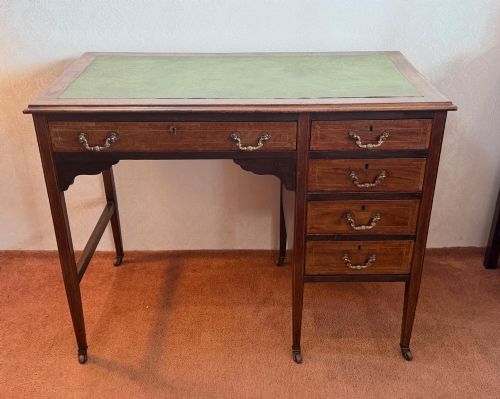
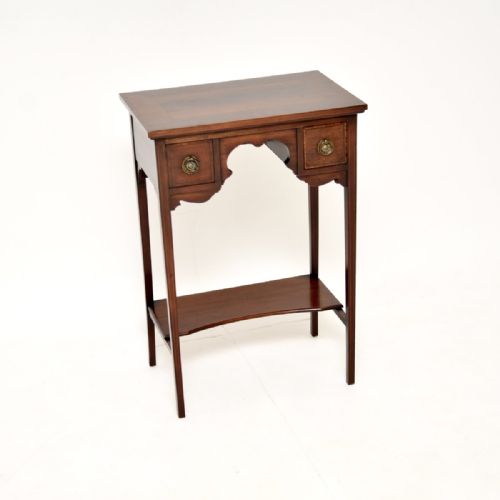
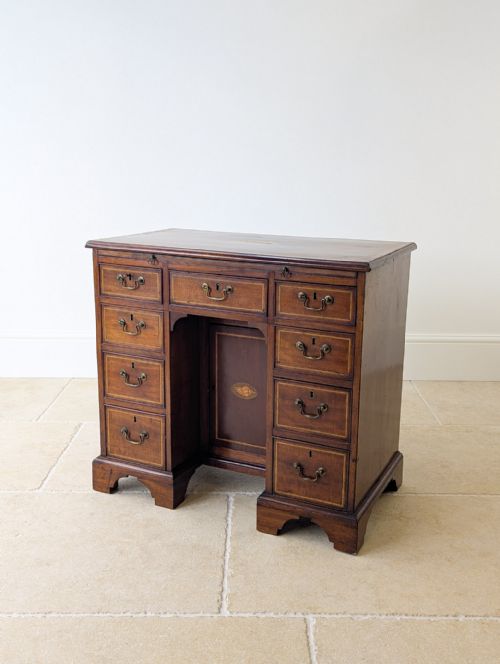
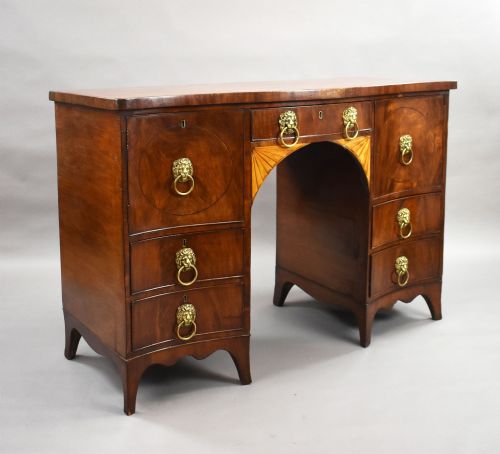


Inlaid Kneehole Desk
An inlaid kneehole desk offers a focused writing space wrapped in classical timber and delicate contrast banding.
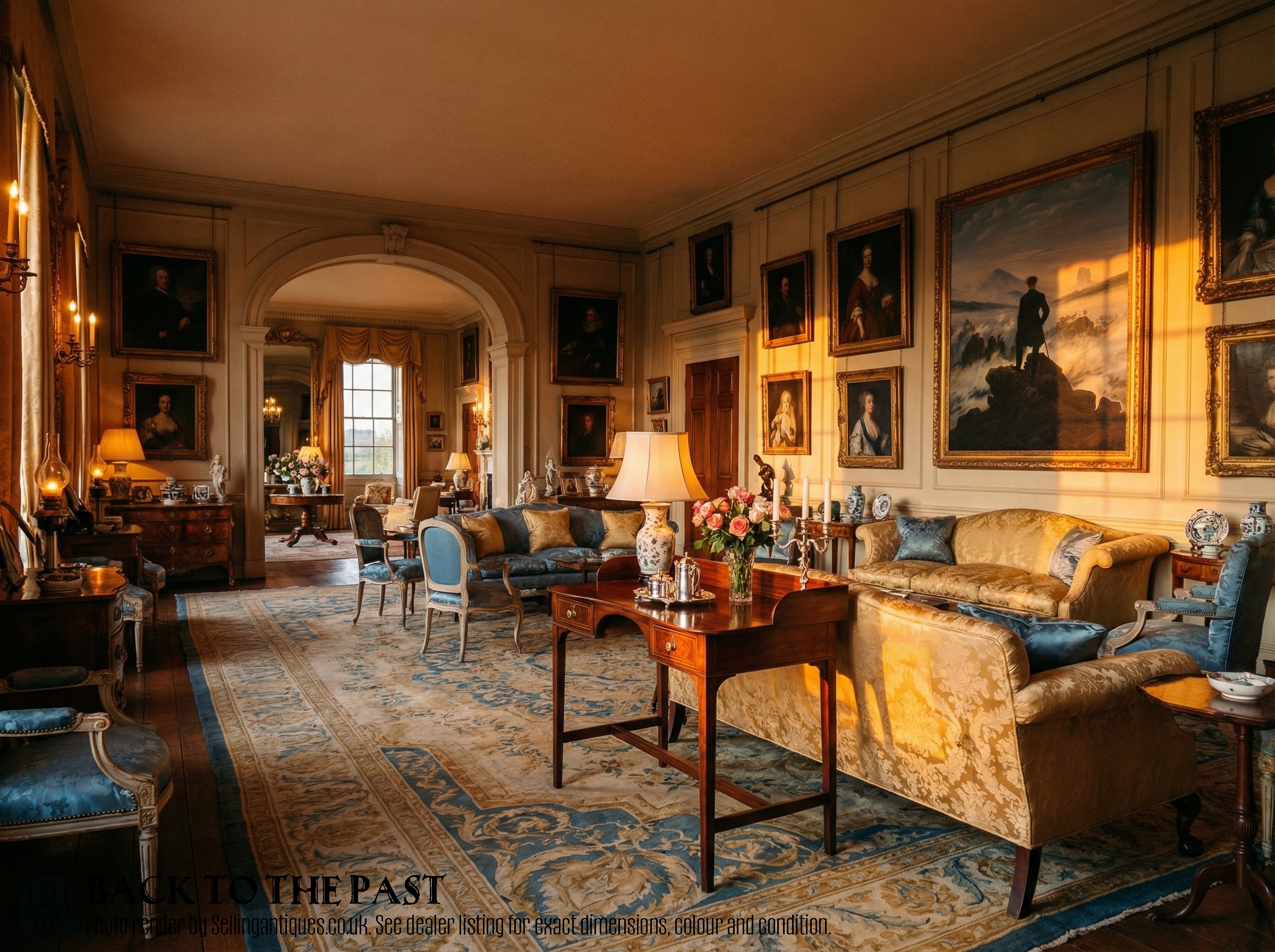
Inlaid Kneehole Desk
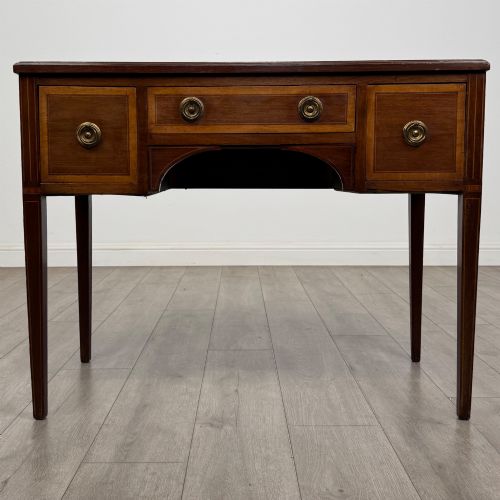
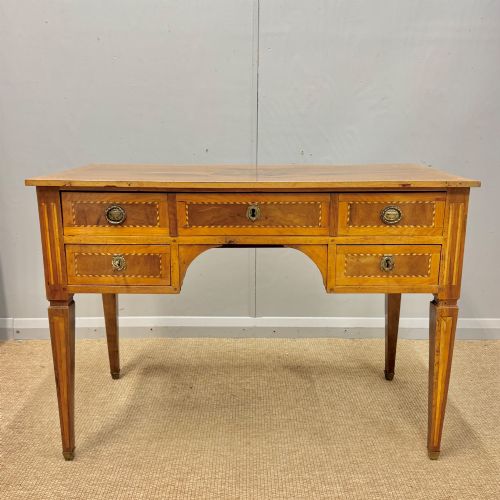
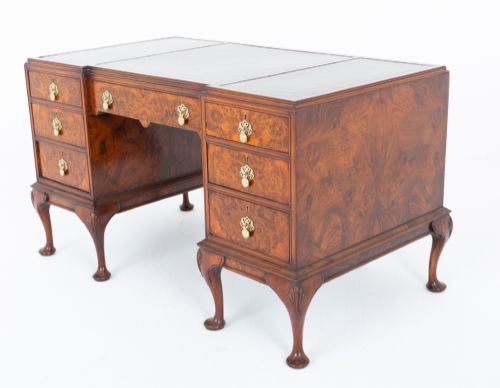
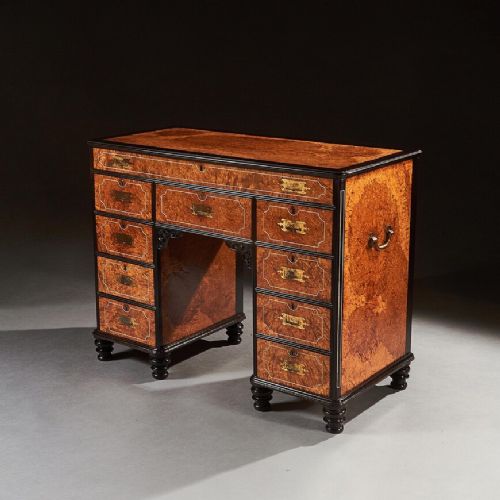
An inlaid kneehole desk is a compact writing table featuring a central recessed space flanked by pedestals of drawers, designed for domestic correspondence and accounts. The form appears frequently from the Georgian period through to the Edwardian era, constructed in timber and finished with contrasting line inlay or marquetry.
The version most commonly encountered on this page is the Edwardian mahogany pedestal desk, often decorated with satinwood inlay and standing on simple bracket feet or castors. These pieces draw heavily on earlier Sheraton Revival and George III aesthetics, combining formal symmetry with practical proportions for the home study or morning room.
Materials and technique
Makers built these pieces primarily using solid mahogany, walnut, or ash for the primary carcase, complemented by secondary timbers for drawer linings. Surfaces frequently receive figured veneers, which display rich grain patterns across the top and drawer fronts.
Decoration relies on precise inlay and marquetry techniques, utilising strips of boxwood, satinwood, and ebony to create geometric stringing or botanical motifs. Brass hardware, including drop handles and keyhole escutcheons, provides functional contrast against the dark timber.
Several desks include hidden kneehole cupboards designed to conceal chamber pots or personal safes from Victorian visitors.
What separates the grades
Quality rests in the crispness of the inlay work and the selection of timber figures on the primary surfaces. Finer examples display tight, unbroken lines of boxwood and ebony that follow contours precisely, whereas simpler pieces rely on painted lines or basic veneers.
Internal construction dictates longevity, visible in the dovetail joints of the drawers and the choice of solid secondary woods rather than cheap substitutes. Desks bearing workshop stamps or signatures from noted cabinetmakers generally reflect superior craftsmanship and more meticulous finishing throughout.
Gill & Reigate·Edwards and Roberts·James Shoolbred of London·Maple & Co.
The Inlaid Kneehole Desk Glossary
- Kneehole desk
- A writing table with a central recessed cupboard or open space beneath the writing surface, flanked by vertical banks of small drawers.
- Marquetry
- A decorative technique arranging pieces of contrasting veneer into pictorial or ornamental patterns on a timber surface.
- Stringing
- Very thin inlay of a contrasting wood, set flush into channels in the primary timber to outline drawers, tops, or legs.
- Pedestal desk
- A heavy writing table supported by two separate stacks of drawers reaching down to the floor, rather than traditional individual legs.
- Sheraton Revival
- A late nineteenth and early twentieth century design style drawing inspiration from the lighter, neoclassical furniture of the late eighteenth century.
Inlaid Kneehole Desk: Frequently Asked Questions
How do I use a kneehole desk today?
These pieces function well as compact writing tables or dressing surfaces in a modern bedroom or study, offering partitioned storage within their pedestals for everyday correspondence and small items.
Their restrained proportions allow them to sit comfortably against a wall or float within a room, depending on whether the back is finished with matching veneers.
How do I distinguish Georgian from Edwardian pieces?
Georgian examples, dating from the eighteenth and early nineteenth centuries, generally exhibit heavier structural timbers, hand-cut dovetails, and deeper patination acquired through decades of use. Edwardian revivals from around nineteen hundred often feature lighter frames, machine-sawn components, and brighter satinwood stringing.
Examining the drawer linings and secondary woods underneath usually reveals the true age of the construction methods used by the cabinetmaker.
Where were kneehole desks originally placed?
Historically, these desks occupied private withdrawing rooms, libraries, or morning rooms where individuals managed personal accounts and correspondence.
Because many feature finished backs, some were designed to stand away from the wall in the centre of a room rather than tucked into a corner.
What maintenance do these timber surfaces need?
Standard care involves keeping the wood away from direct heat sources and sudden humidity shifts to prevent the veneer from lifting or cracking.
Occasional application of traditional beeswax helps nourish the grain and maintains a soft sheen without building up artificial layers of gloss.