
Inlaid Jewellery Box
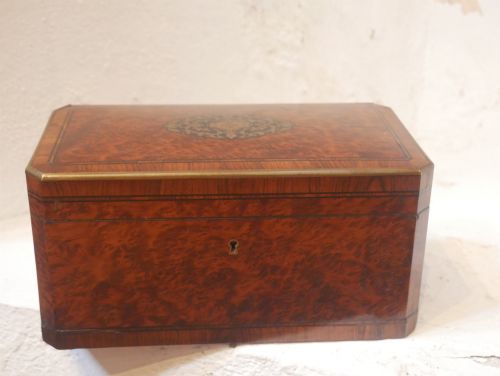
An inlaid jewellery box brings together fine cabinet timbers and meticulous decorative contrasting veneers to safely store small treasures.
Inlaid Jewellery Box
When searching for an inlaid jewellery box, you encounter containers spanning the Georgian, Regency, Victorian, and Edwardian eras, constructed from substantial timbers.
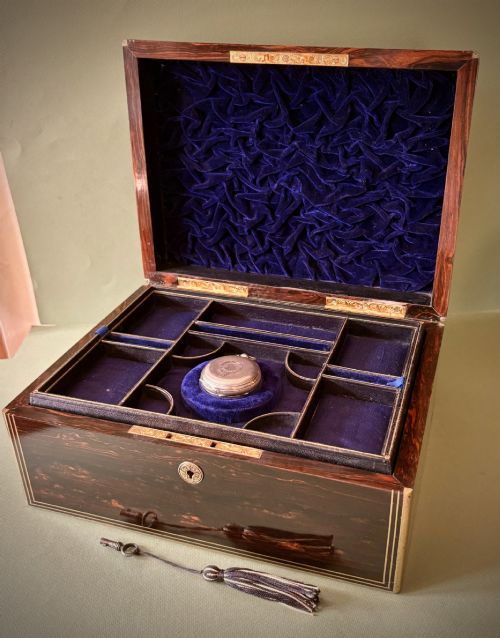
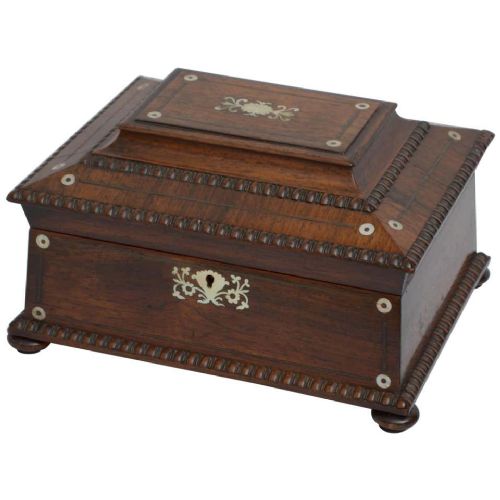
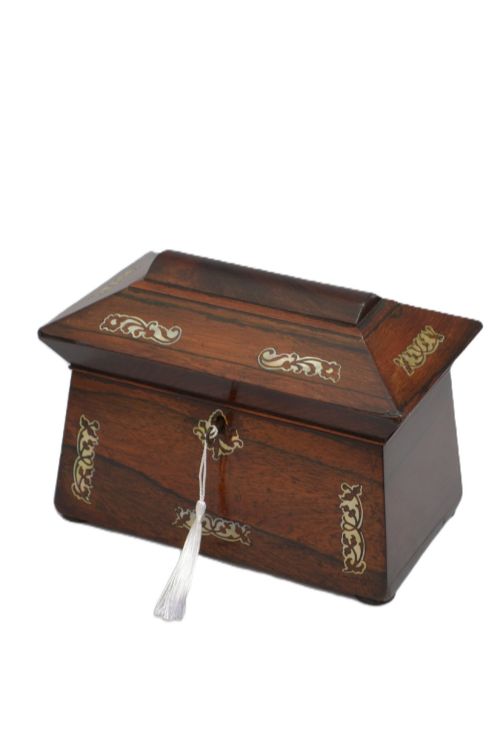
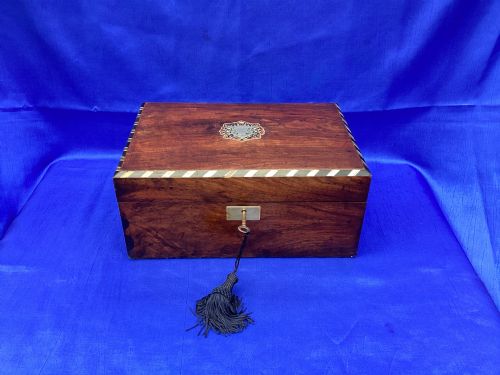
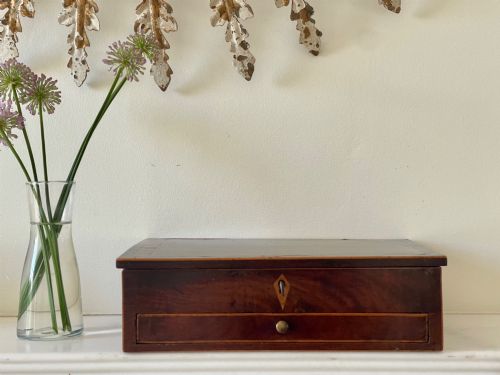
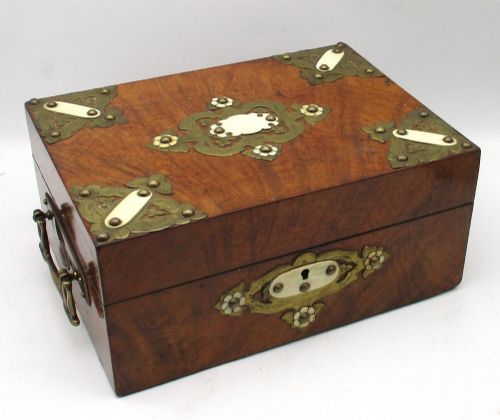
The most common forms on this page include fitted Victorian rosewood and walnut boxes, alongside earlier Regency rosewood examples detailed with brasswork.
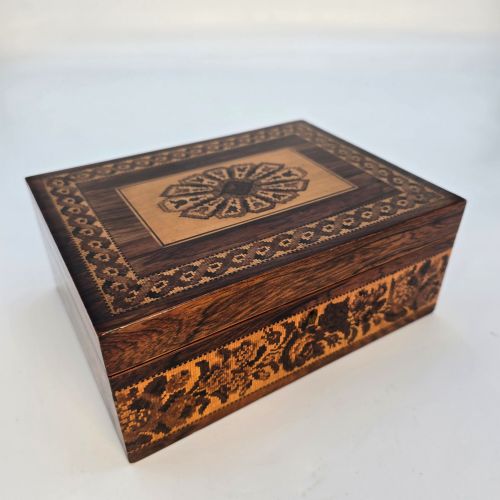
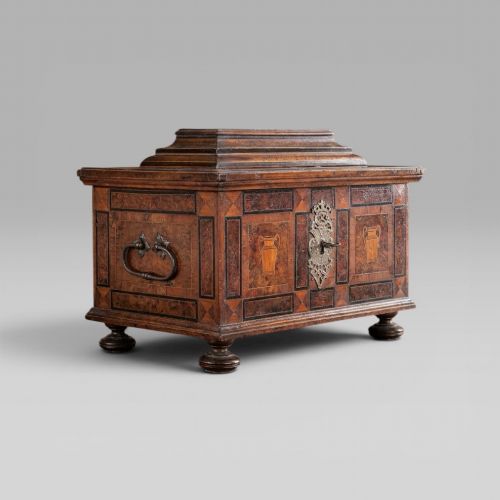
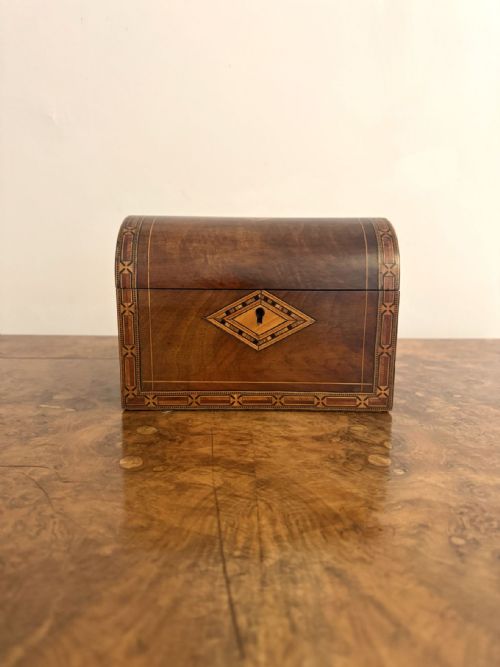
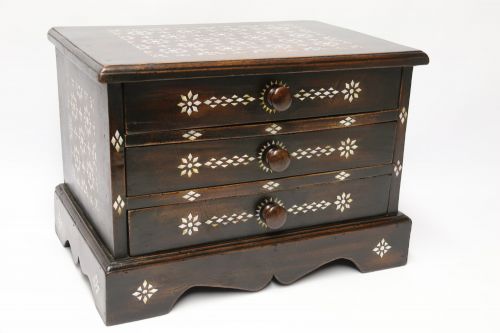
Makers utilised various decorative techniques, ranging from geometric parquetry and Tunbridge ware to mother-of-pearl cartouches and pictorial marquetry.
Materials and Technique
Cabinetmakers selected dense, figured woods such as rosewood, walnut, mahogany, and exotic amboyna to form the primary carcass of the box.
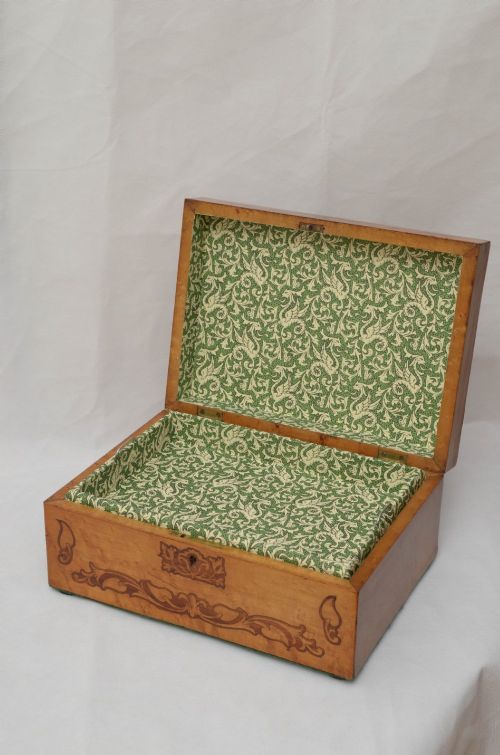
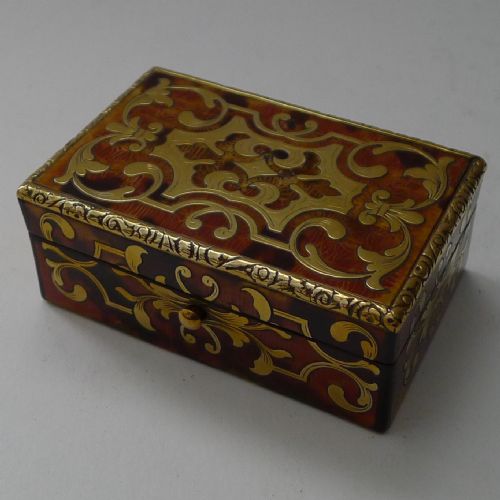
Surfaces received intricate surface ornament through contrasting wood veneers, boxwood stringing, brass inlay, and inlaid panels of mother-of-pearl.
Interiors often incorporated fitted velvet or silk linings, lift-out trays, and compartments designed specifically for rings, watches, and keepsakes.
Several Victorian boxes incorporate secret drawers activated by hidden wooden springs known only to the original owner.
Factors of Quality
The precision of the veneer work and the tightness of the joinery set finer examples apart from simpler production pieces.
Original fitted interiors, working locks with keys, and complete, undamaged inlay elements elevate the desirability of a piece.
The choice of carcass wood, from standard mahogany to figured burr walnut and amboyna, dictates the inherent prestige of the box.
Tahan Paris·Ollivant & Botsford·Edmund Nye·Asprey & Co.·Erhard and Sohne·H Mitchell
The Inlaid Jewellery Box Glossary
- Tunbridge Ware
- Woodworking technique originating from Kent involving tiny mosaic blocks of natural coloured woods to create pictorial scenes. This meticulous craft creates geometric or floral motifs across the lid.
- Parquetry
- Geometric mosaic of wood veneer arranged in repeating patterns. It differs from marquetry by strictly using geometric lines rather than pictorial designs.
- Marquetry
- Form of inlay using various tinted veneers to picture landscapes, flowers, or figures. Craftsmen assemble these thin wood slices carefully into the primary surface.
- Piquê work
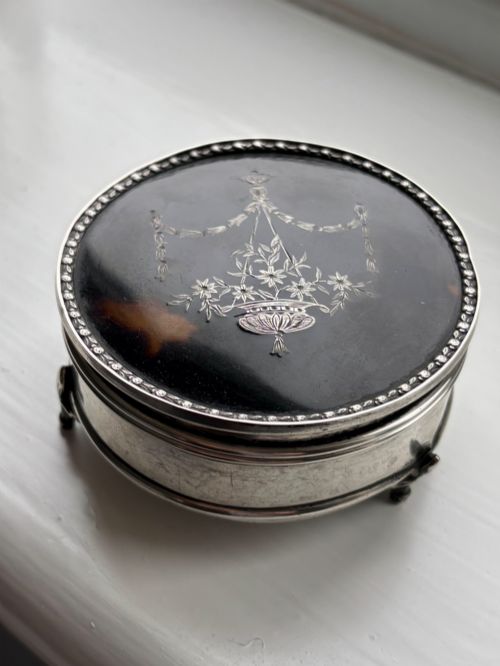
- Decorative technique inlaying tiny points of gold or silver into tortoiseshell or ivory surfaces. This method creates delicate metallic patterns on small trinket boxes.
- Pietra dura
- Inlay method utilising cut and fitted polished coloured stones to form pictorial designs. Artisans insert marbles and semi-precious stones into ebonised wood or metal foundations.
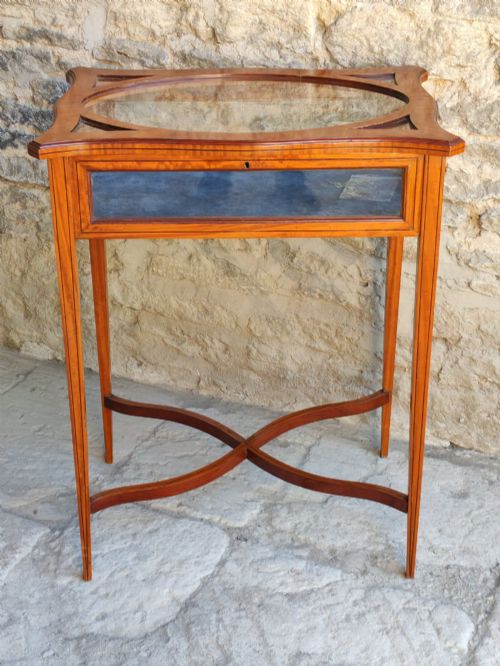
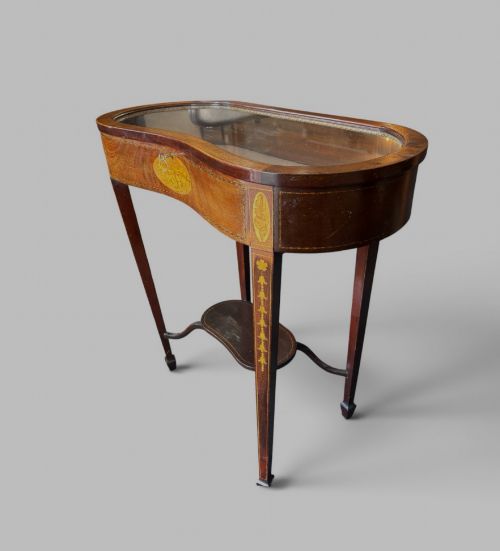
- Bijouterie table
- Glass-topped display table designed to exhibit small collections of jewellery and ornaments. These pieces elevate storage into a visible tabletop showcase.
Inlaid Jewellery Box: Frequently Asked Questions
How do I date an inlaid jewellery box?
Examine the primary timber, construction style, and lining materials to determine the period of origin. Regency boxes frequently feature brass inlay on rosewood, while Victorian examples often utilise burr walnut with fitted lift-out trays.
Hardware such as locks, hinges, and escutcheons also offer clues. Hand-cut screws and specific keyhole designs help narrow down the decade of manufacture.
Were these boxes used only for jewellery?
Many compartments accommodated sewing implements, letters, and calling cards alongside precious gems and rings. Makers often labelled them as work boxes or dressing cases depending on their internal fittings.
Fitted trays typically lift out to reveal deeper storage space below. This versatility made them essential dressing table accessories throughout the nineteenth century.
What is the difference between Tunbridge ware and parquetry?
Tunbridge ware utilises thousands of precisely cut tiny wood blocks to form a specific pictorial mosaic, often depicting butterflies or castles. Parquetry relies on geometric veneer shapes like cubes and chequers.
Both techniques create patterned surfaces, but Tunbridge ware requires an exceptional level of micro-mosaic carpentry. Parquetry focuses on architectural and repeating mathematical arrangements.
How should I care for antique wood and inlay?
Keep wooden boxes away from direct sunlight and extreme temperature fluctuations to prevent the veneer from lifting. Maintaining stable indoor humidity protects both the timber carcass and the delicate inlay.
Apply a microcrystalline wax sparingly to nourish the polished surface without damaging historic finishes. Avoid liquid polishes that can seep under loosened stringing or mother-of-pearl.