
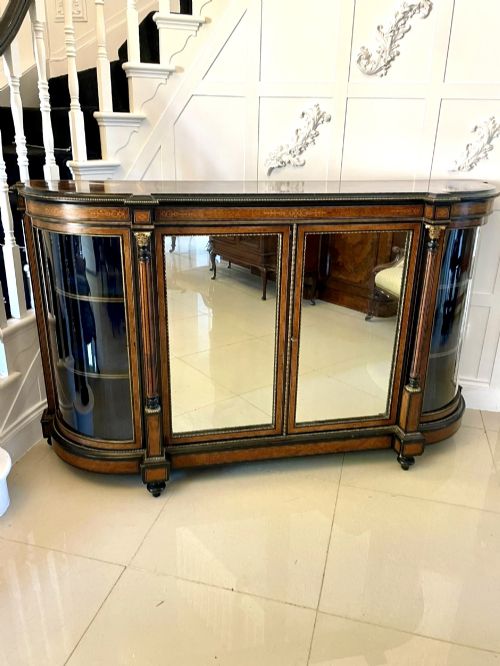
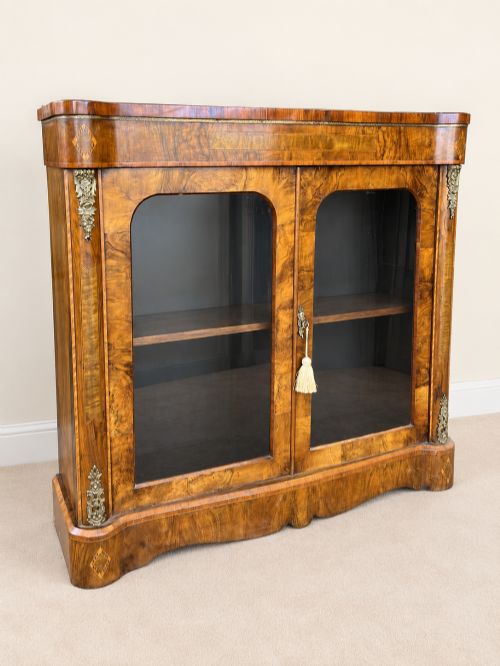
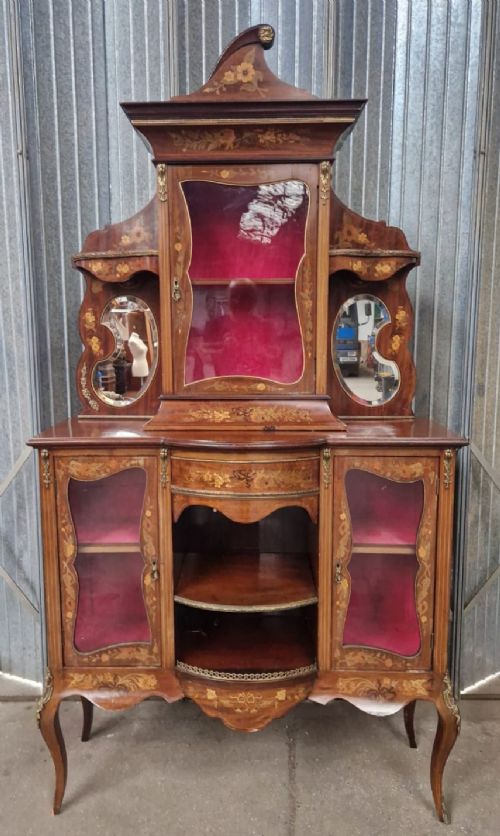
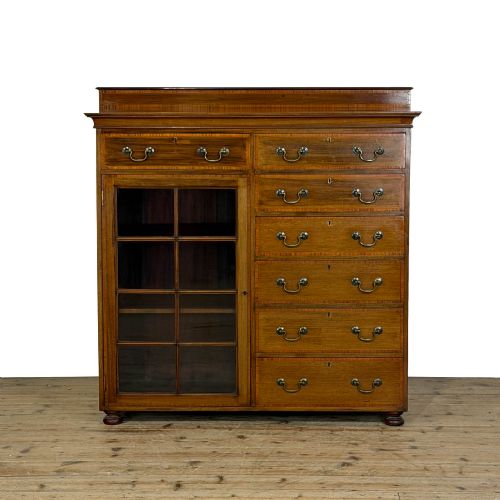
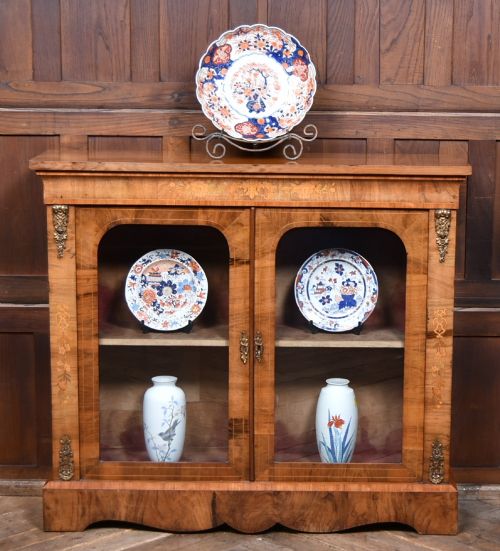
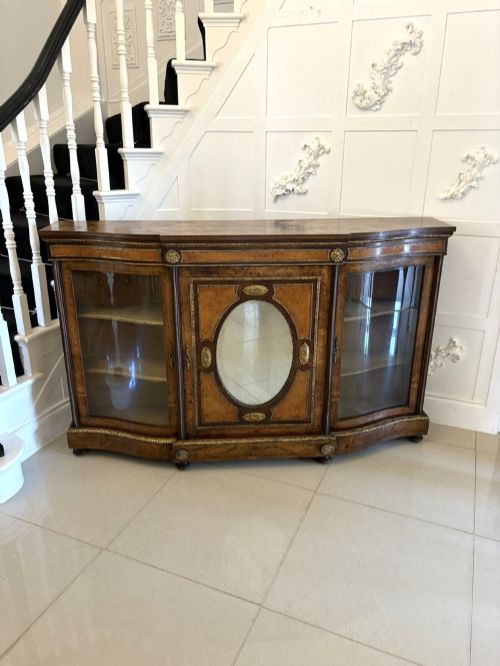
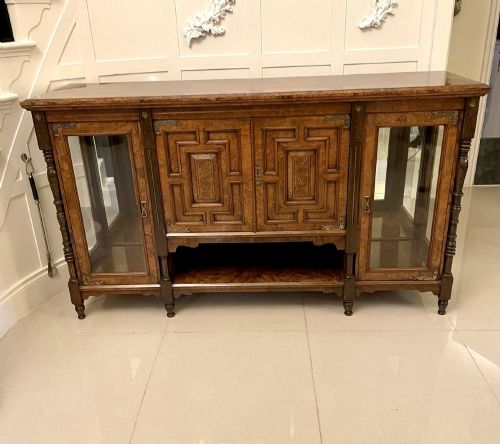
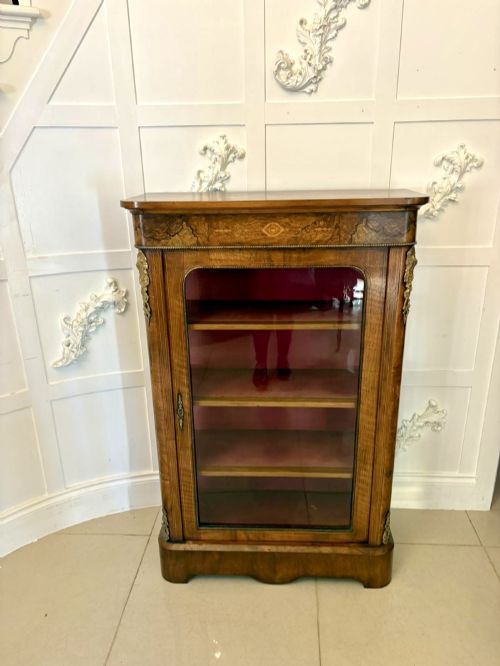
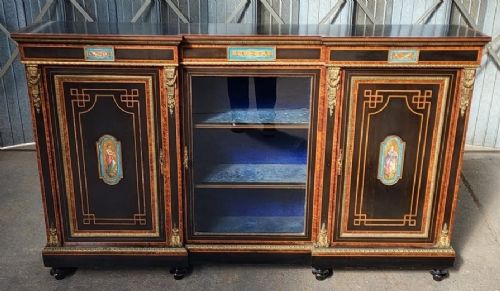

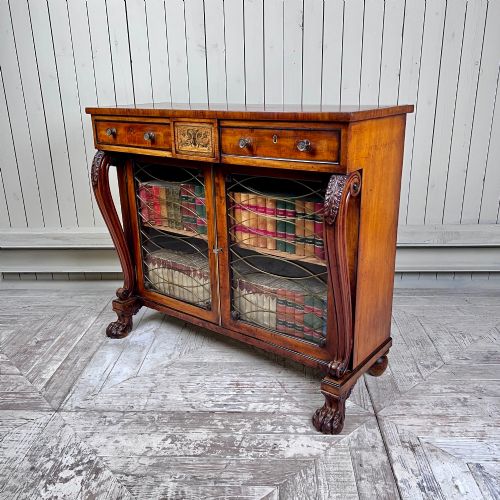
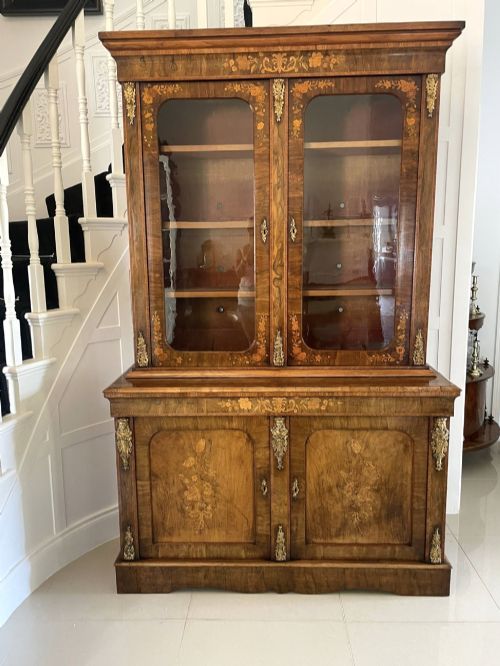
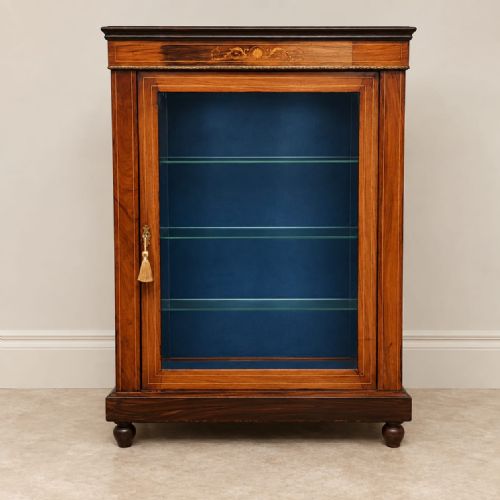
Inlaid Glazed Credenza
An inlaid glazed credenza brings together rich timbers, precise marquetry and glazed display space, answering a demand for sophisticated nineteenth-century interior display pieces.
Inlaid Glazed Credenza
An inlaid glazed credenza sits firmly in the Victorian era, spanning the nineteenth century from the eighteen-fifties through to eighteen-nineties revival periods. These low cabinet forms serve primarily for display and storage in principal reception rooms.
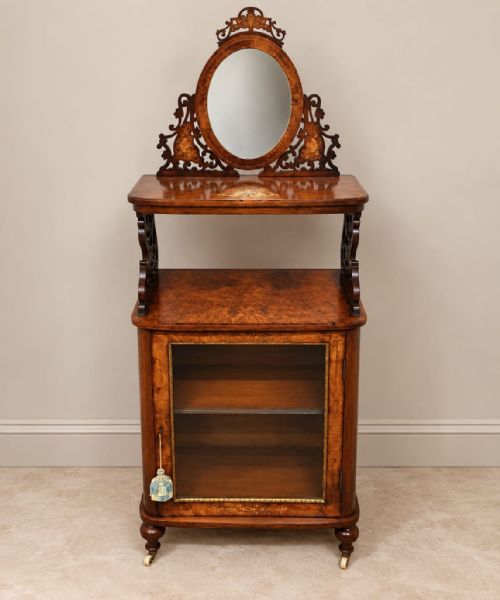
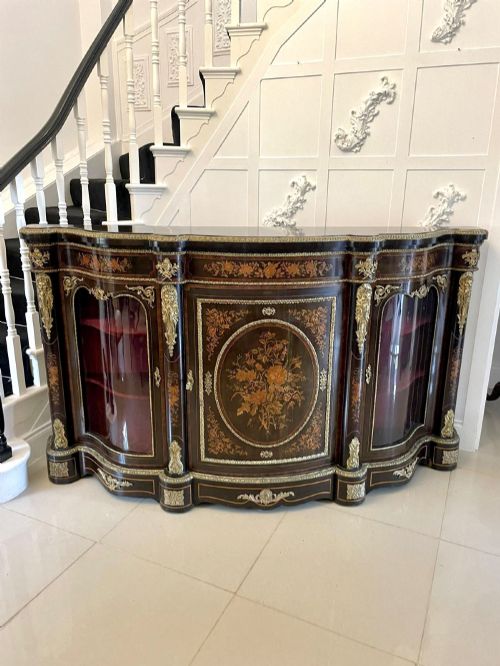
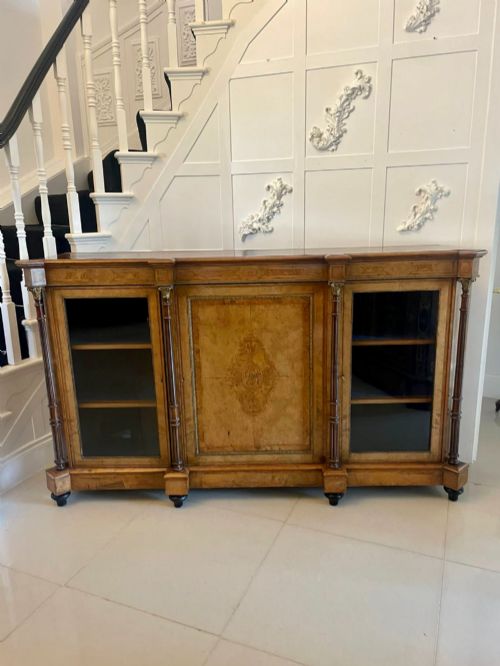
The version most commonly met on this page is constructed from burr walnut with glass panel doors, brass or ormolu mounts, and intricate marquetry inlay. Alongside traditional credenzas, closely related side cabinets, pier cabinets and breakfront bookcases appear frequently under this category.
Materials and Construction
Cabinet makers utilise choice veneers such as burr walnut, rosewood, satinwood and ebonised wood over solid secondary timbers to achieve rich patterned surfaces. Fine contrasting stringing and floral marquetry supply geometric and botanical detail across the doors and friezes.
Gilded bronze ormolu mounts punctuate corners and borders, while glazed central and side doors protect the interior velvet or wood shelving. Brass inlay and stringing also appear, particularly on earlier Regency and transitional pieces.
Listings feature nineteenth-century walnut, rosewood and ebonised woods combined with glass, brass and hand-cut floral marquetry.
Distinctions in Execution
Quality rests on the depth of the timber grain, the precision of the marquetry cutting, and the crispness of the cast ormolu mounts. Finer examples display meticulous symmetry in their floral panels and heavier, more substantial bronze mounts rather than pressed brass.
Structural harmony separates standard production from exhibition pieces, where serpentine shaping, amboyna details and multi-door breakfront configurations demand advanced joinery skill.
Collinson and Lock·Lamb of Manchester·James Hicks
The Inlaid Glazed Credenza Glossary
- Credenza
- A low nineteenth-century cabinet designed for display and storage, typically featuring a glazed central door flanked by curved side compartments.
- Marquetry
- Decorative patterns formed by fitting together thin slices of veneer into wood designs, often floral or geometric.
- Ormolu
- Gilded bronze mounts applied to furniture corners, feet and friezes for decorative accent.
- Pier Cabinet
- A narrow upright display cabinet built to stand against the wall space between windows.
- Burr Walnut
- Timber taken from the warted growths of walnut trees, yielding highly figured and swirling grain patterns.
Inlaid Glazed Credenza: Frequently Asked Questions
What is an inlaid glazed credenza?
An inlaid glazed credenza is a low nineteenth-century cabinet featuring glass doors and decorative wood veneers.
Cabinet makers designed them to display porcelain and silver in grand Victorian reception rooms.
How do I date an inlaid glazed credenza?
Dating relies on timber choices, mount styles and construction methods associated with Victorian and Edwardian periods.
Burr walnut with ormolu mounts points directly to the middle decades of the nineteenth century.
Where were credenzas placed?
These cabinets stood against prominent drawing room walls, often between windows or as the focal point of a formal parlour.
Their low profile ensured unobstructed views of wall art hung above them.
How do I care for walnut veneer?
Walnut veneer requires stable humidity levels and protection from direct sunlight to prevent timber drying and fading.
Polishing with traditional wax preserves the natural lustre of the polished wood surface.