
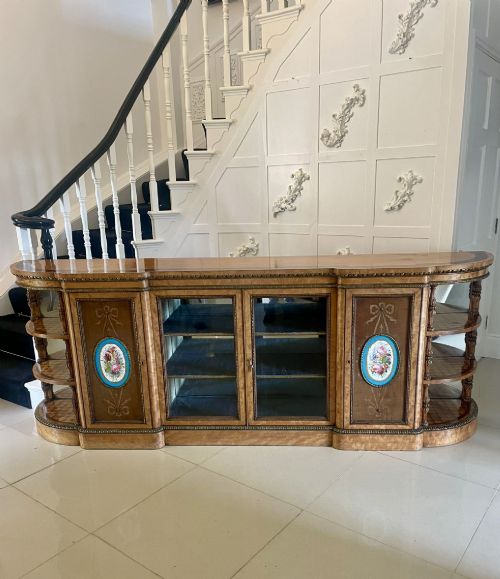
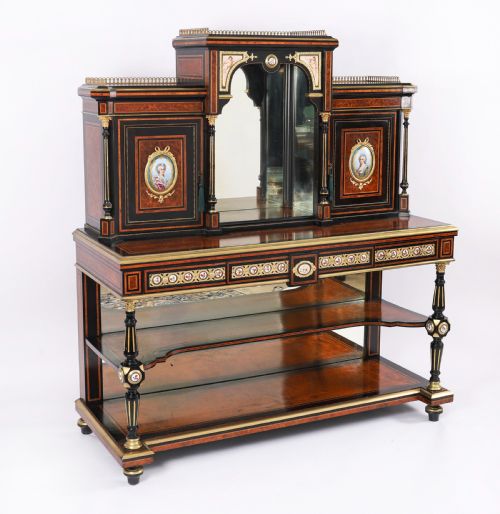


Porcelain Plaque Inlaid Cabinet
A porcelain plaque inlaid cabinet is a refined piece of Victorian furniture combining rich timbers with ceramic inserts, prized for adding sophisticated colour and elegance to a room.
Porcelain Plaque Inlaid Cabinet
A porcelain plaque inlaid cabinet is typically a Victorian creation, spanning the mid-nineteenth century through the 1880s, including periods noted as 1850, 1860, and 1870. The pieces appearing in these listings encompass credenzas, sideboards, pier cabinets, side cabinets, corner cabinets, display cabinets, and desks or writing tables.
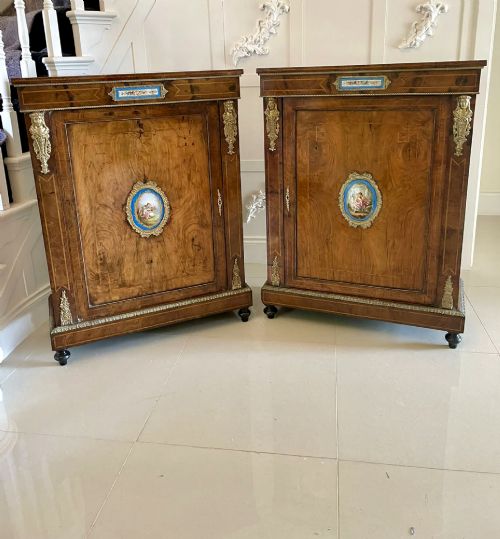
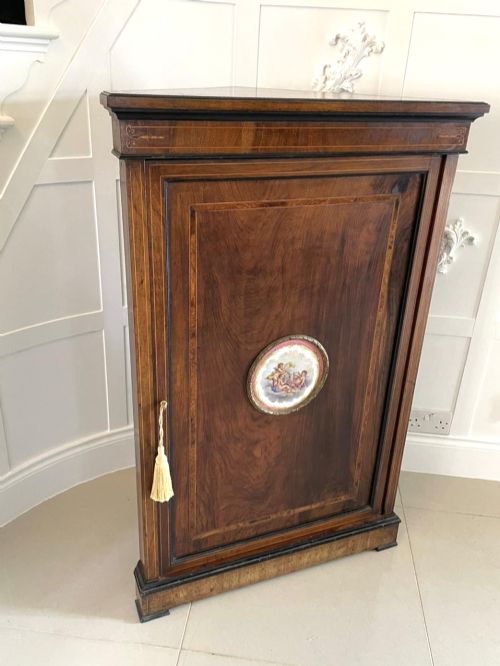
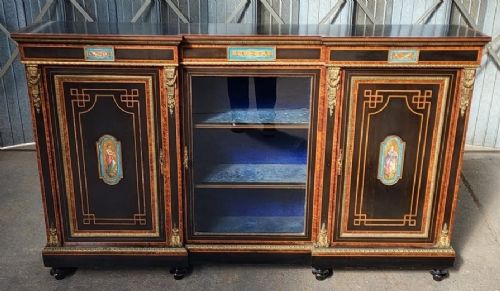
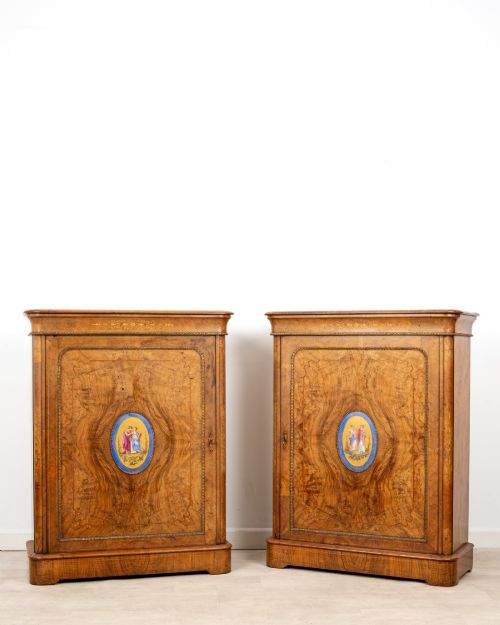
The version most commonly met on this page is the Victorian credenza or side cabinet in burr walnut, ebonised wood, or satinwood, often featuring mounted or Sevres porcelain plaques alongside ormolu details. These works emerge within Victorian French Revival and Louis XVI Revival styles, reflecting the period taste for continental ornamentation.
Buyers encounter single cabinets, pairs of pier cabinets, and larger three-door credenzas designed for formal reception rooms. The integration of ceramic plaques into timber furniture remains the defining characteristic of this search phrase across every recorded object type.
Materials and construction methods
Cabinet makers utilised choice timbers such as burr walnut, ebonised wood, satinwood, amboyna, ebony, and walnut as the foundational carcase materials. These woods were frequently enhanced with marquetry inlay and fine stringing to frame the central ceramic elements.
Glazed doors, glass panels, and cast ormolu mounts were integrated alongside painted porcelain plaques, sometimes attributed as Sevres. The combination of metal mounts, ceramic inserts, and polished timber required precise carpentry to ensure stability across multiple distinct media.
Listings for this phrase feature nineteenth-century furniture predominantly from the 1850 to 1880 period, constructed in walnut, satinwood, and ebonised wood.
Distinctions in quality and execution
The distinction between standard production and the finest quality pieces lies in the choice of timber veneer, such as richly figured burr walnut or select satinwood, paired with the crispness of the ormolu casting. Superior examples exhibit intricate marquetry and well-rendered porcelain plaques that harmonize with the surrounding woodwork rather than appearing as afterthoughts.
Proportion and scale also separate the items, ranging from compact pier cabinets to monumental three-door credenzas. The finesse of the ebonising, the accuracy of the stringing, and the integrity of the glazed display doors indicate the level of craftsmanship invested by the nineteenth-century workshop.
The Porcelain Plaque Inlaid Cabinet Glossary
- Ormolu
- Gilded bronze mounts used extensively in French Revival and Victorian furniture decoration. These decorative elements were cast and chased before being applied to the timber carcase.
- Burr walnut
- A prized timber harvested from the wart-like growths on walnut trees, yielding highly figured, swirling grain patterns. Cabinet makers selected these veneers for prominent door panels and surfaces.
- Credenza
- A sideboard or display cabinet originating in the dining room or parlour, often featuring glazed central and side compartments. Victorian versions frequently incorporated porcelain plaques and ormolu.
- Marquetry
- The art of applying pieces of veneer to a structure to form decorative patterns and pictures. Makers used contrasting timbers to achieve pictorial detail on cabinet doors.
- Pier cabinet
- A narrow display cabinet designed to fit against the wall space between windows. These tall, slender pieces often house ceramic plaques within their upper or lower doors.
Porcelain Plaque Inlaid Cabinet: Frequently Asked Questions
What is a porcelain plaque inlaid cabinet?
It is a piece of nineteenth-century furniture, typically Victorian, featuring painted ceramic plaques set into timber carcases like walnut or ebonised wood.
These cabinets often include glass doors, ormolu mounts, and marquetry inlay, serving as decorative display pieces for refined interiors.
Where were these cabinets placed in a Victorian home?
They were principally positioned in formal reception rooms, drawing rooms, and parlours where guests would admire their artistic ornamentation.
Pier cabinets stood in narrow wall spaces between windows, while larger credenzas occupied main walls to display porcelain and glassware.
How do I date a porcelain plaque inlaid cabinet?
Dating relies on identifying timber choices, revival styles, and construction traits associated with the mid to late nineteenth century. Pieces often date from the 1850s to the 1880s, aligning with Victorian French Revival and Louis XVI Revival aesthetics.
Cabinet construction methods and the style of the ormolu mounts also provide clues to the exact decade of manufacture.
How should I care for a Victorian cabinet?
Maintain stable indoor humidity and temperature to protect the timber veneers, marquetry, and wood joints from warping or cracking. Avoid placing the furniture in direct sunlight to preserve the finish of the wood and the painted porcelain plaques.
Dust gently with a dry cloth and consult a specialist conservator for cleaning the ormolu or ceramic elements.