

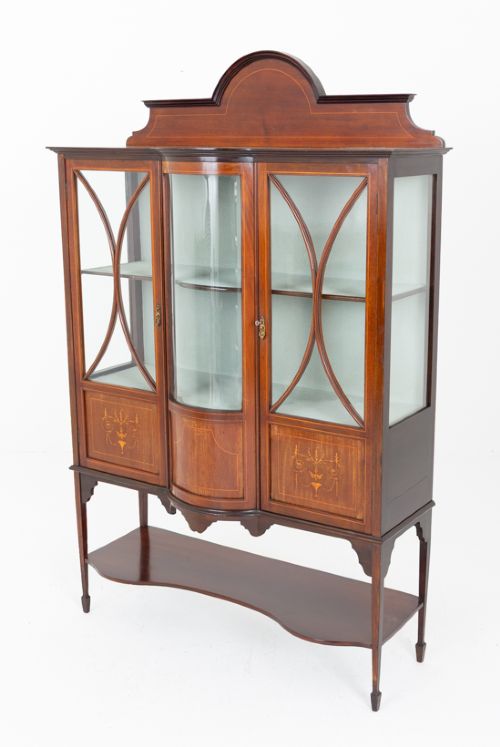
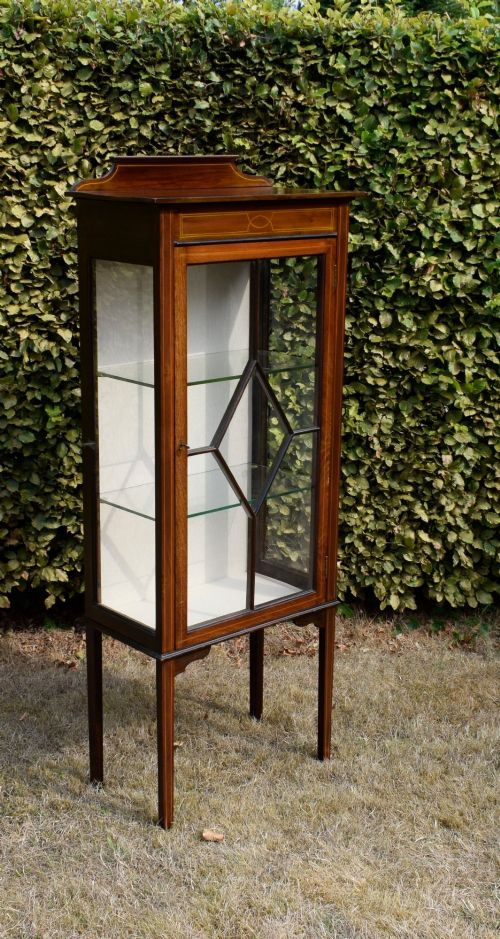
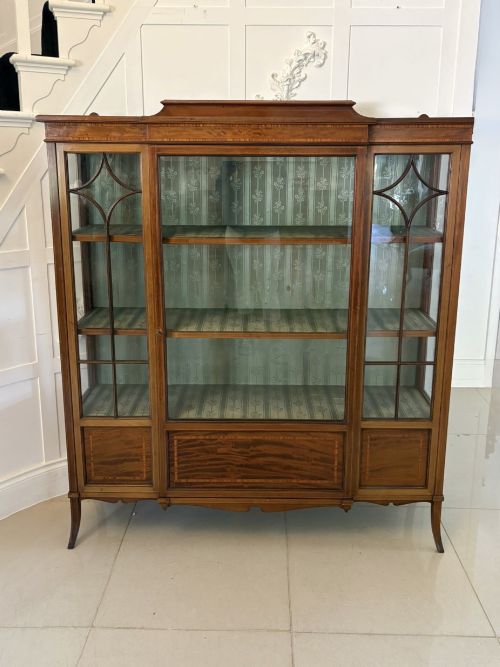
Inlaid Glass Bookcase
An inlaid glass bookcase brings together timber and display space, offering a traditional place to store volumes behind glazed doors.
Inlaid Glass Bookcase
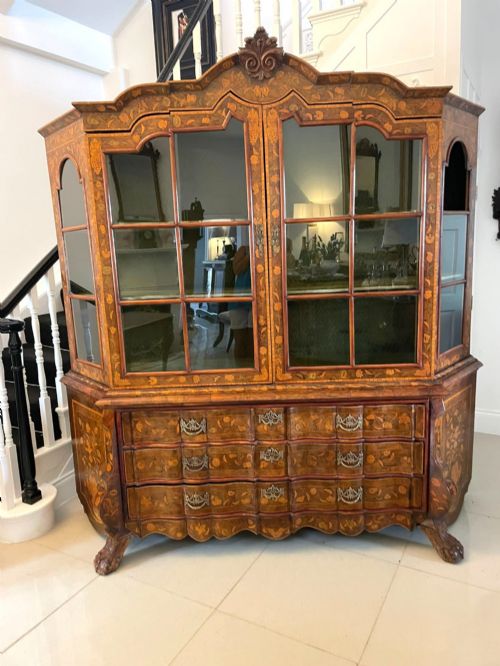
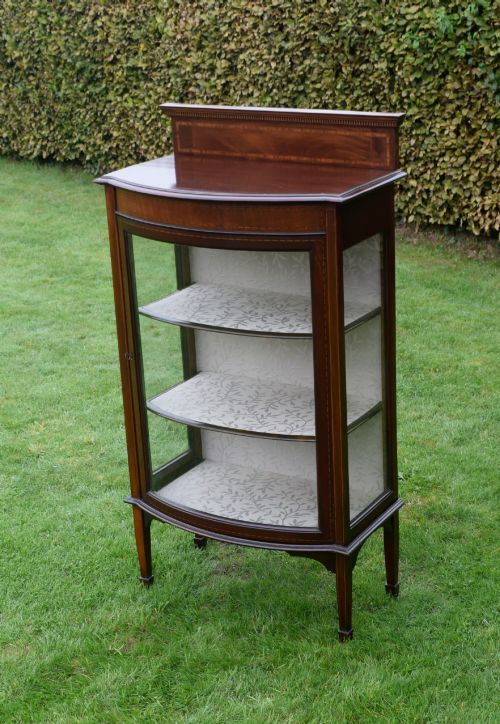
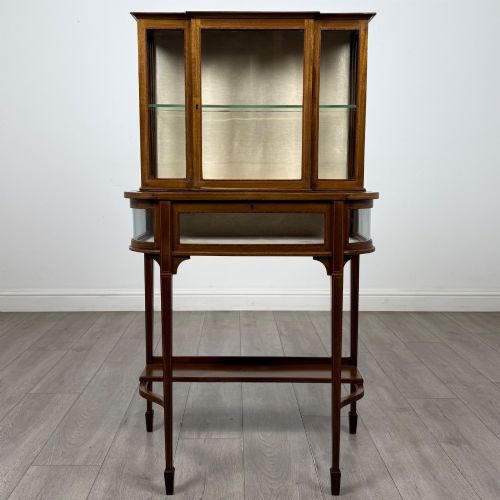
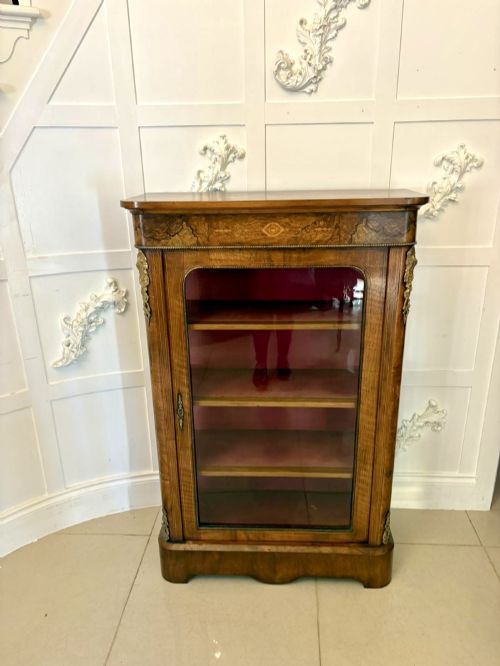
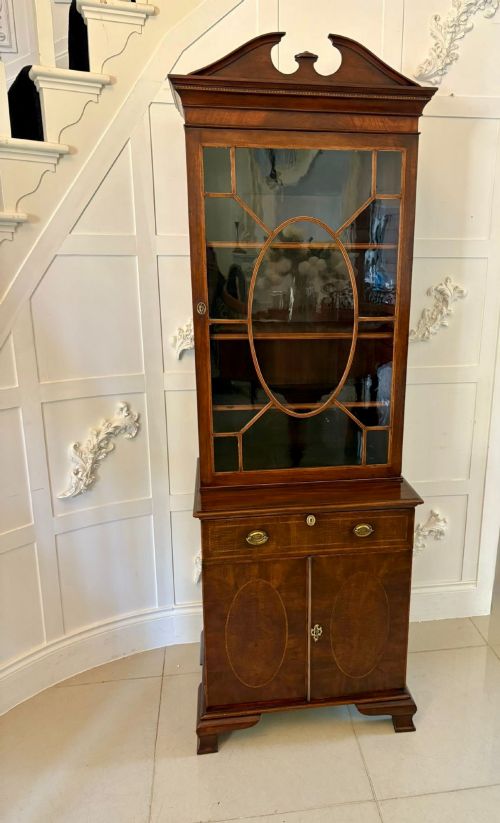
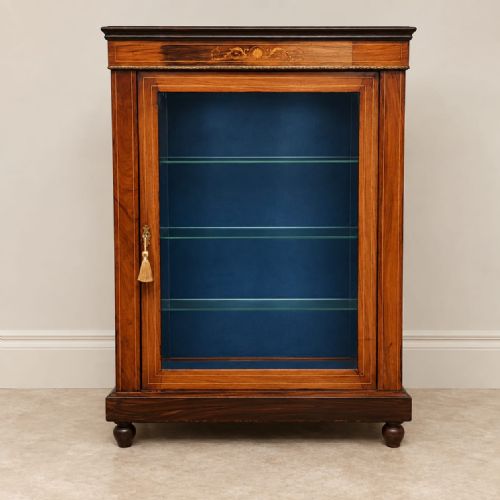
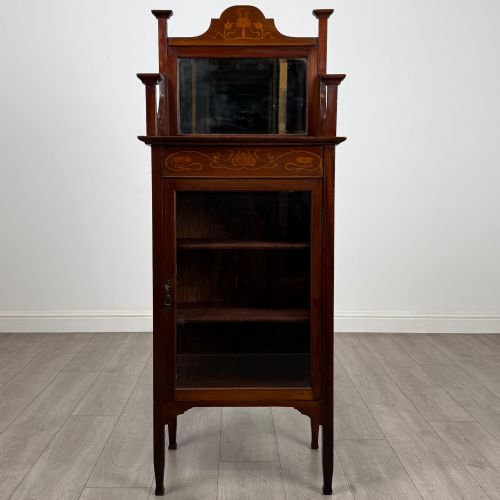
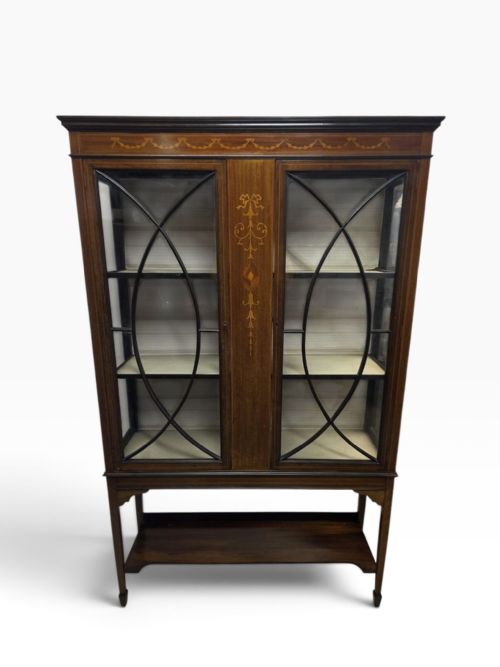
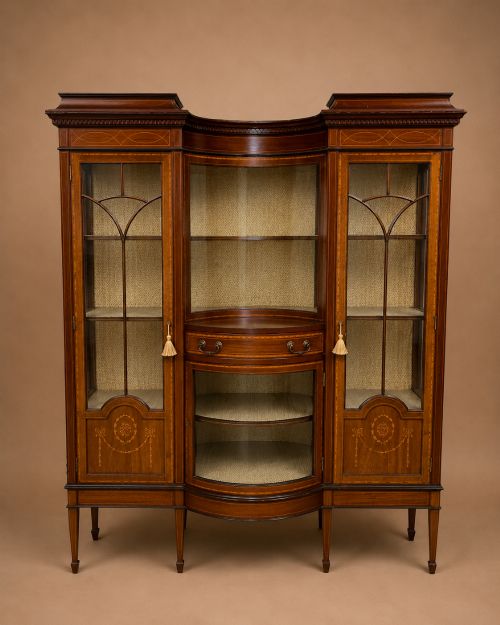
When you search for an inlaid glass bookcase, you encounter pieces spanning the Victorian and Edwardian eras, alongside items from the nineteenth century. These forms appear as display cabinets, pier cabinets, bureau bookcases, and library bookcases designed to house collections.
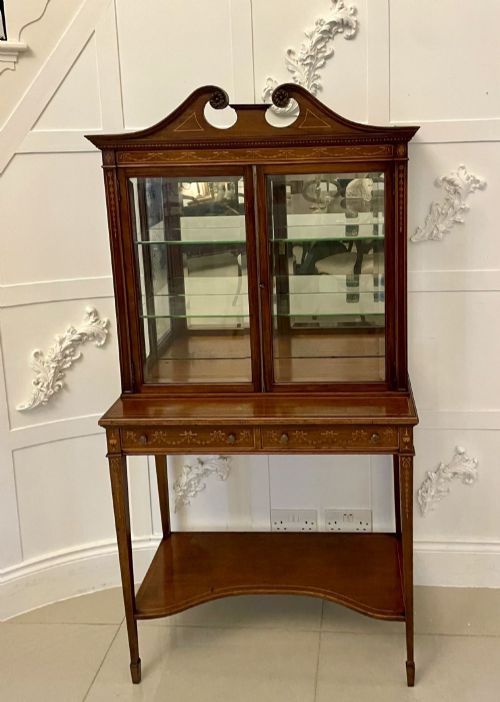
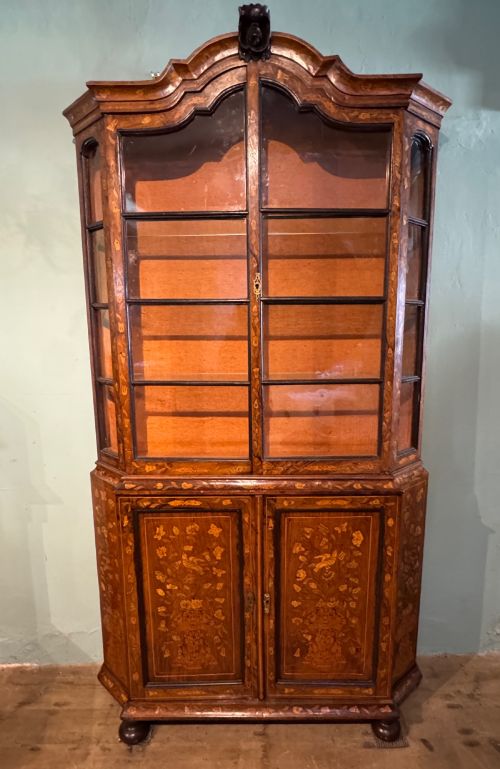
The selection ranges from compact pier cabinets in burr walnut to large mahogany display cabinets and satinwood pieces reflecting Sheraton Revival and Dutch Marquetry styles. Many incorporate glazed doors or mirror backs alongside internal shelving for display purposes.
Earlier examples bridge the Georgian and Victorian periods, while Edwardian pieces frequently utilise lighter timbers and floral marquetry. Each variation serves the core function of storing and displaying books or decorative objects within a timber framework.
Materials and construction methods
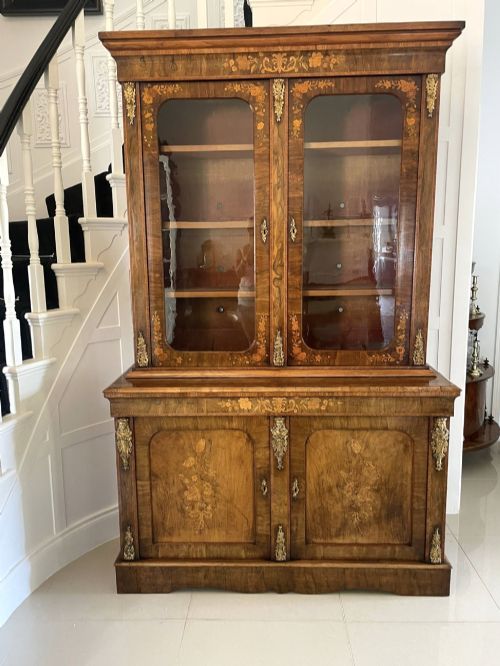
Cabinet makers constructed these pieces primarily from mahogany, walnut, and satinwood, frequently employing burr walnut veneers to achieve figured surfaces on the primary panels. Secondary timbers provide structural support, while glass panels form the doors for viewing contents.
Decoration relies on marquetry inlay using contrasting woods, alongside brass mounts, ormolu details, and occasional ebonised and amboyna elements. Glazing bars divide the glass panes on the bookcase doors, framing the interior shelves.
Workshops utilised traditional joinery techniques to assemble multi-part display cabinets and bureau bookcases, integrating mirror backs and bow-ended doors into the carcase structure.
Some Edwardian display cabinets arrive with mirror backs intended to multiply the sparkle of your tea service by twofold.
Factors determining the calibre of pieces
The finesse of the marquetry inlay and the choice of timber figure set exceptional pieces apart from standard production. Cabinets displaying crisp floral marquetry, well-matched burr walnut, or fine satinwood demonstrate superior cabinet-making standards.
Hardware and secondary mounts contribute significantly to a piece's standing, with cast ormolu mounts and quality brass fittings indicating higher workshop standards. The precision of the glazing bars and the clarity of the glass further distinguish finer examples.
Maker attribution elevates certain pieces, particularly those bearing the stamps or signatures of established firms who maintained rigorous production values during the nineteenth and early twentieth centuries.
Edwards & Roberts·Maple & Co.
The Inlaid Glass Bookcase Glossary
- Marquetry
- Decorative patterns formed by fitting contrasting veneers into a prepared wooden surface. This technique creates floral or geometric designs across cabinet doors and panels.
- Pier cabinet
- A low freestanding cabinet designed to fit against the wall space between windows. These are frequently glazed and feature inlaid wooden surfaces.
- Sheraton Revival
- A late nineteenth and early twentieth-century design movement inspired by late eighteenth-century neoclassical furniture. It often utilises satinwood, delicate inlay, and light proportions.
- Burr walnut
- Timber taken from the abnormal growth of a walnut tree, yielding highly figured grain patterns. Cabinet makers prized this wood for veneering prominent door and drawer fronts.
- Ormolu
- Gilded bronze used for decorative mounts and fittings on nineteenth-century furniture. It adds metallic contrast to wood and glass surfaces.
Inlaid Glass Bookcase: Frequently Asked Questions
What is a pier cabinet?
A pier cabinet is a low cabinet designed to stand against the wall space between two windows. They often feature a single glazed door and inlaid timber decoration.
These pieces served to display ornaments or hold small collections in Victorian reception rooms while utilising narrow architectural spaces.
How do I identify Sheraton Revival pieces?
Sheraton Revival furniture dates primarily from the Edwardian period and late nineteenth century, mimicking eighteenth-century neoclassical designs. They commonly feature satinwood, delicate floral inlay, and lighter structural proportions.
These cabinets often incorporate classical motifs and painted or inlaid swags within the woodwork.
Where were these cabinets used?
These pieces were placed in drawing rooms, libraries, and parlours to store books and display decorative ceramics or glassware. Glazed doors protected volumes from dust while allowing them to be viewed.
Their decorative inlay and polished wood surfaces complemented the formal reception spaces of nineteenth and early twentieth-century homes.
What is the difference between a display cabinet and a bookcase?
Display cabinets generally feature extensive glass panels and mirror backs designed to exhibit porcelain and objects rather than books. Bookcases focus on internal shelving suited for storing bound volumes.
Many surviving pieces combine both functions with glazed upper sections and enclosed lower cupboards.