

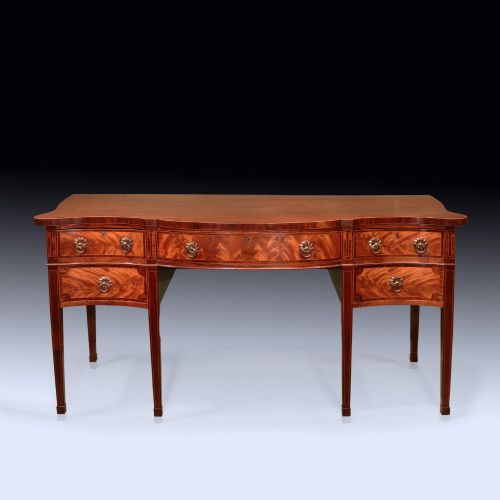
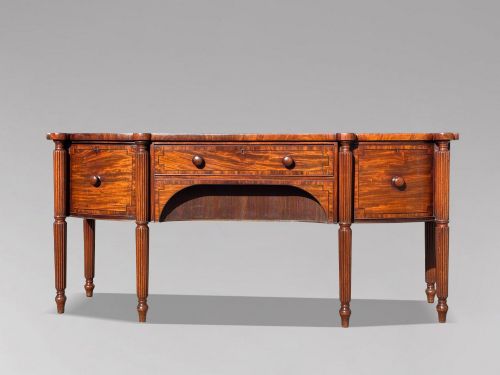
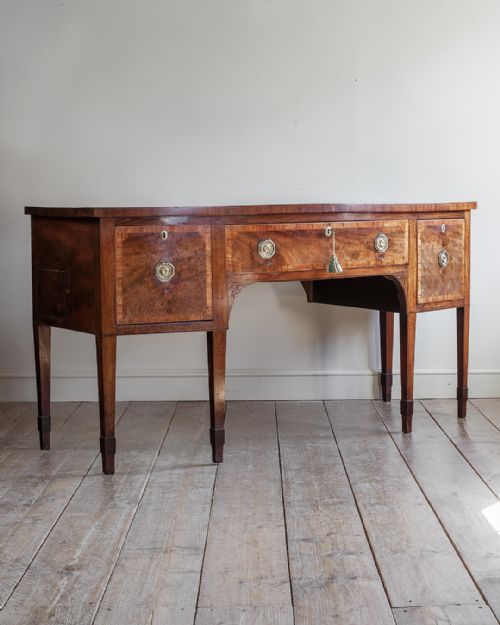
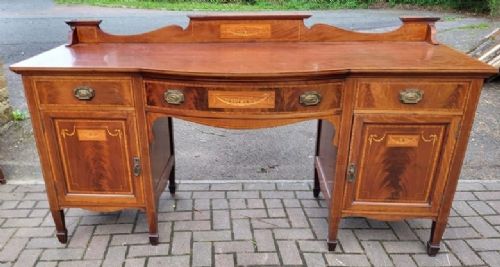




Inlaid Flame Mahogany Tables
When you search for inlaid flame mahogany tables, you enter a world of figured timber and precise cabinet work spanning the Georgian, Regency, and Edwardian eras.
Inlaid Flame Mahogany Tables
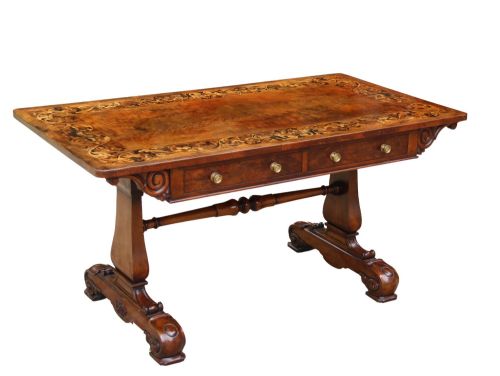
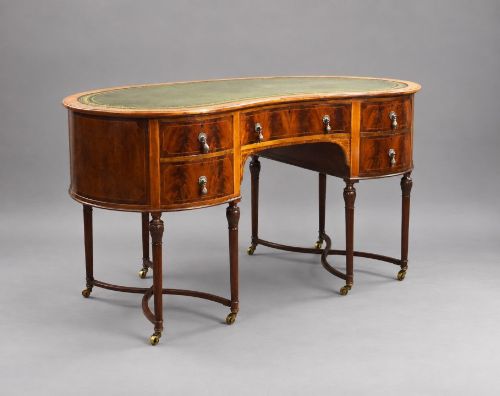
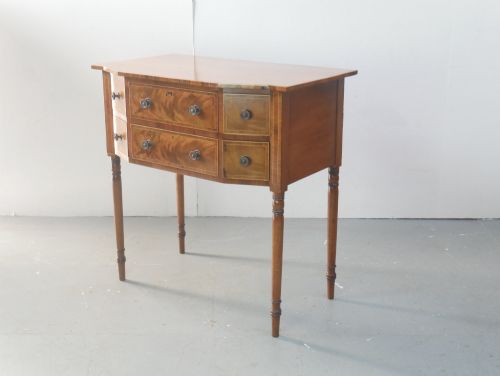
Inlaid flame mahogany tables encompass dining tables, writing desks, card tables, and occasional furniture created across multiple centuries. The selection demonstrates how cabinet makers utilised distinct grain patterns to elevate domestic interiors from the Georgian period through to the Edwardian era.
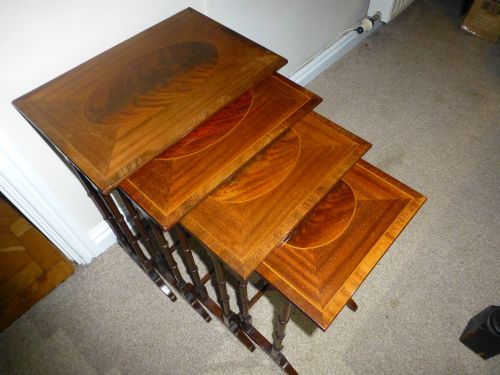
Dining tables and card tables appear alongside smaller occasional forms such as drum tables and nesting tables. Most examples date from the 18th century, the Regency period, and the Edwardian years, showcasing the enduring appeal of figured timber.
The category extends beyond simple dining surfaces to incorporate intricate library tables and writing desks. Each surviving piece reflects the specific social habits and interior requirements of its original period of manufacture.
How they were made
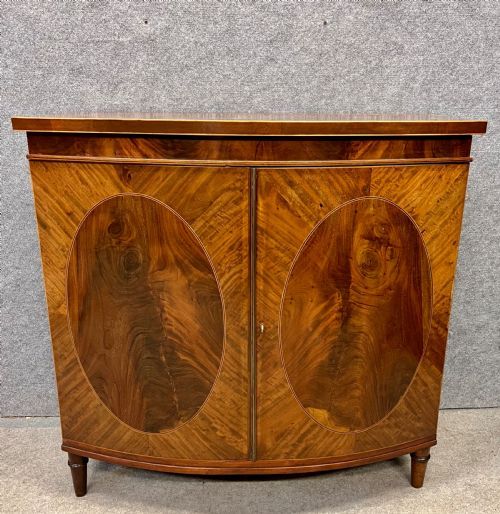
Craftsmen built these tables using solid mahogany and applied veneers of flame mahogany to primary surfaces. This technique displayed the dramatic, swirling grain patterns of the wood to maximum effect across table tops and drawer fronts.
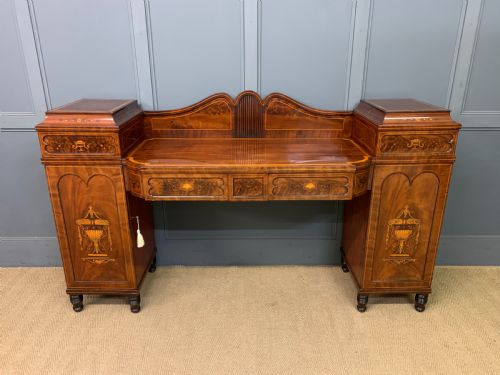
Workshops integrated contrasting timbers such as satinwood and boxwood for decorative inlay and stringing. Brass mounts and brass inlay also appear on select pieces, adding metallic contrast to the deep brown tones of the polished mahogany.
Inlaid Flame Mahogany Tables Retail Price Guide 2026
Typical asking prices for inlaid flame mahogany tables among the pieces listed under this phrase on Sellingantiques today, from the lower quarter to the upper quarter. They describe what is for sale here now, not the wider market.
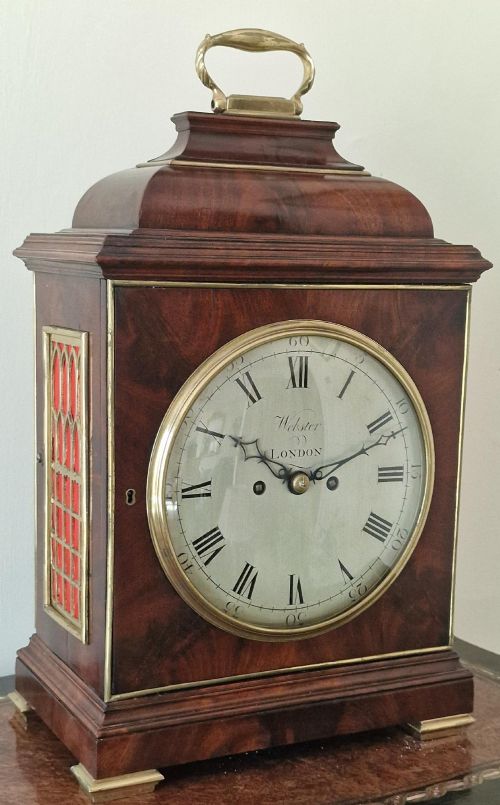
Some bracket clocks included in the selection share workshop origins with the grandest dining tables of the Georgian era.
What varies in quality
The selection of timber grain largely dictates the visual impact of an individual table. Highly figured flame mahogany veneers require careful book-matching by skilled hands to create symmetrical, balanced patterns across large surfaces.
The precision and intricacy of the boxwood or satinwood inlay separates standard production from exceptional craftsmanship. Crisp geometric borders and delicate floral motifs demand exacting standards from the cabinet maker.
Webster London·Hyde of Salisbury·Robson and Sons·Vulliamy
The Inlaid Flame Mahogany Tables Glossary
- Flame mahogany
- A veneer cut from the branch junction of the mahogany tree, producing a distinctive flame-like ripple effect. This figured wood was prized for high-status furniture fronts and table tops.
- Boxwood inlay
- Narrow strips or delicate motifs of pale boxwood inserted into flush channels within the darker mahogany surface. This technique creates sharp visual contrast and defines structural edges.
- Crossbanded
- A border technique where veneer is laid with the grain running perpendicular to the main centre panel. It frames the primary timber and provides a neat architectural boundary.
- Regency
- An English design period spanning the early 19th century, characterised by classical restraint and polished dark timbers. Furniture from this era often incorporates brass inlay and bold architectural lines.
Inlaid Flame Mahogany Tables: Frequently Asked Questions
What periods do these tables represent?
The available selection spans from the late 18th century and George III period through the Regency era and into Edwardian times. Each era brought distinct proportions and decorative vocabulary to the construction of tables and related case pieces.
Cabinet makers of the Georgian period favoured robust architectural forms, while Regency craftsmen introduced lighter proportions and extensive brass detailing. Edwardian pieces often revived earlier Georgian and Regency aesthetics using refined veneering techniques.
How should I care for flame mahogany surfaces?
Polished mahogany requires consistent dusting with a soft, dry cloth to protect the historic polish from abrasive particles. Avoiding direct sunlight and maintaining stable room humidity prevents the timber from drying and the veneer from lifting.
Applying traditional beeswax periodically nourishes the wood and maintains the deep lustre of the original finish. Avoid commercial silicone sprays, which can penetrate old finishes and damage the timber over time.
What distinguishes Regency tables from Edwardian revivals?
Original Regency tables were produced during the early 19th century and exhibit the structural joinery and material ageing appropriate to that era. They often feature genuine brass inlay and heavier construction methods tied to contemporary domestic life.
Edwardian revival pieces date from the early 20th century and replicate these earlier stylistic motifs with machinery-assisted precision. Examining the secondary timbers and internal construction usually reveals the true age of the piece.
Where were these tables used in a home?
Dining tables served the principal entertaining spaces of large townhouses and country estates, while smaller card tables stood in drawing rooms for evening recreation. Writing desks and library tables occupied private studies and reading rooms.
Occasional tables and nesting sets offered versatile surfaces that could be moved around domestic rooms as required. Each form reflects the specific domestic routines of the households that originally commissioned them.