



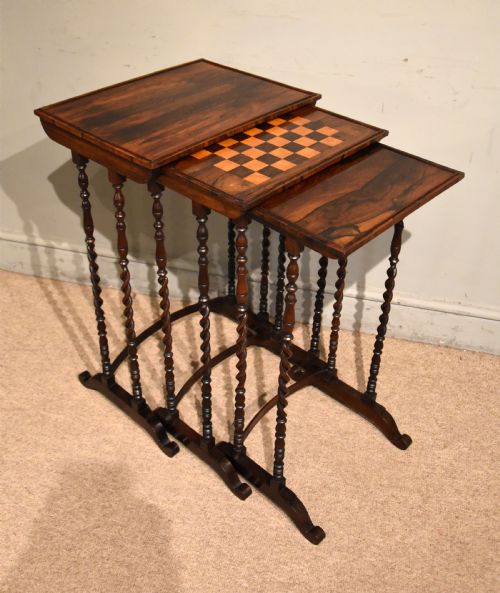


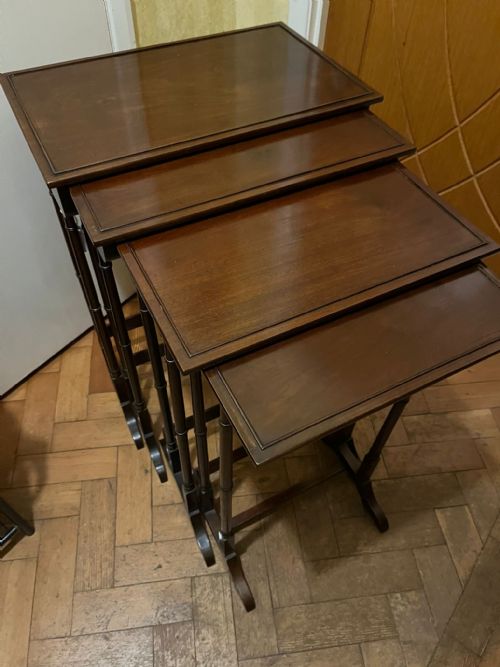


Wood Quartetto Nest Tables
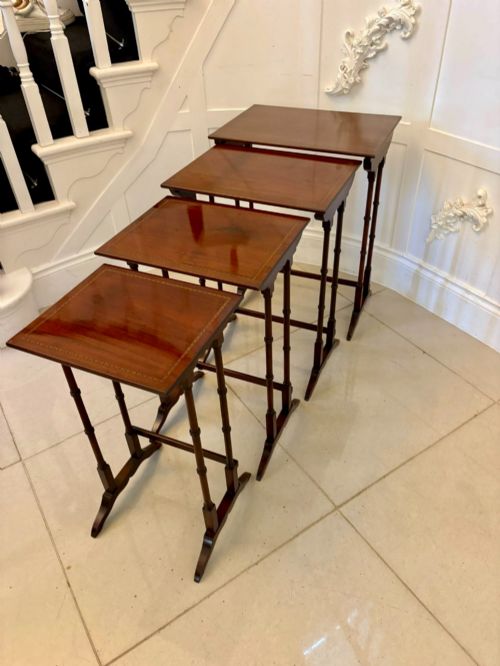
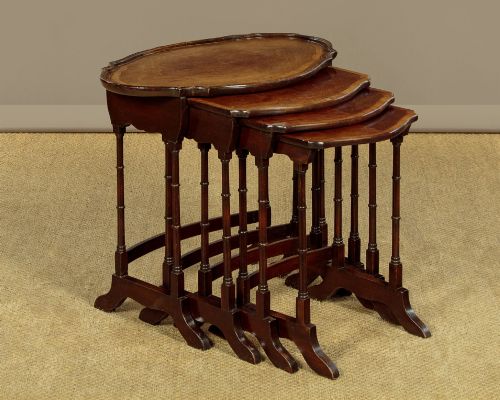
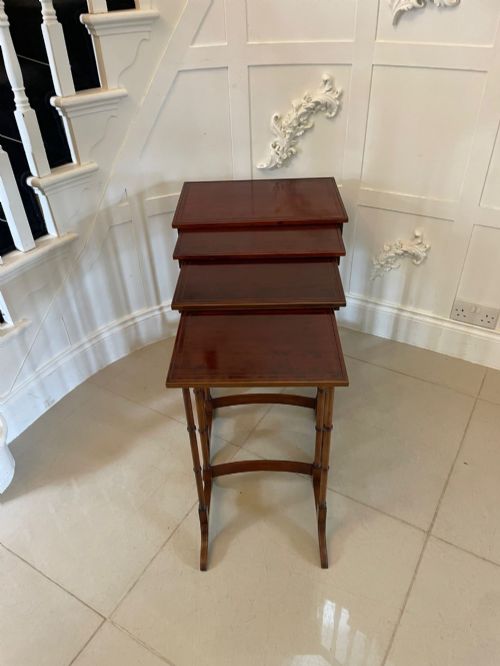
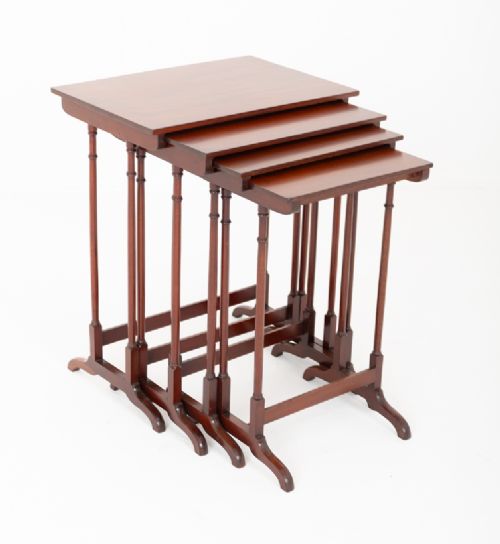
These wood quartetto nest tables slide together neatly as a set of four, offering versatile occasional surfaces for any room.
Wood Quartetto Nest Tables
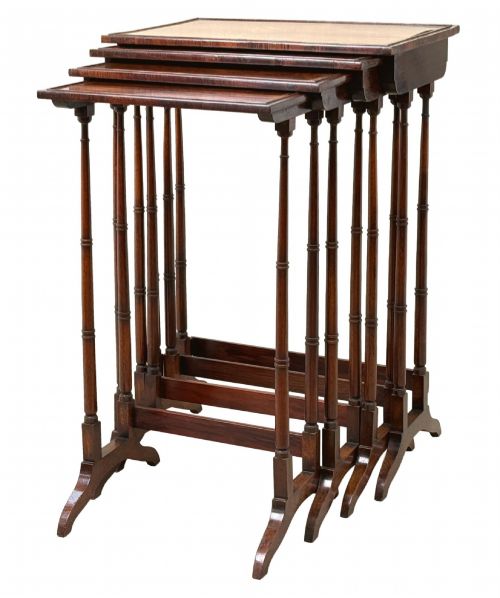
A wood quartetto nest tables set typically comprises four graduated occasional tables designed to slide smoothly one beneath another. This space-saving design became popular across multiple eras, appearing frequently in Edwardian and Regency forms.
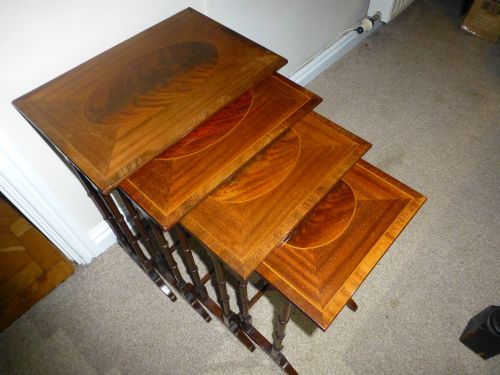
The materials span mahogany, rosewood, oak, and hardwood, often enhanced by satinwood or boxwood inlay. Most examples function as movable side or coffee tables that serve tea, hold lamps, or provide compact display surfaces.
Sets most commonly contain four tables, though variations of three tables also occur within the selection. Origins range from English cabinet makers to Chinese Qing Dynasty carved hardwood pieces.
Materials and Construction
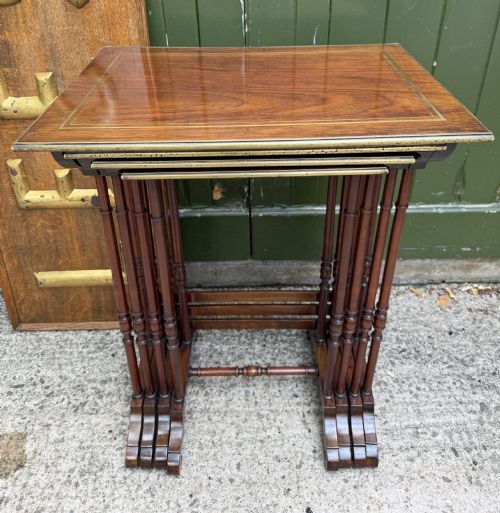
Cabinet makers utilised solid timbers and fine veneers, building frames in mahogany and rosewood. Decorative detailing relied on contrasting boxwood and satinwood inlay, along with brass inlay work on select Regency pieces.
Construction methods focused on creating graduated frames that permit each smaller table to clear the legs and underside of the one above it. Surface finishing included polishing to highlight the natural grain of the hardwood timber.
Wood Quartetto Nest Tables Retail Price Guide 2026
Typical asking prices for wood quartetto nest tables among the pieces listed under this phrase on Sellingantiques today, from the lower quarter to the upper quarter. They describe what is for sale here now, not the wider market.
Listings feature wood quartetto nest tables spanning the nineteenth century, Edwardian era, and 1930s traditional styles in mahogany, rosewood, and oak.
Evaluating Quality
Quality rests upon the crispness of the inlay work, the choice of figured timber veneers, and the structural integrity of the joints. Finer examples display precise serpentine forms and harmonious proportions across all four graduated tiers.
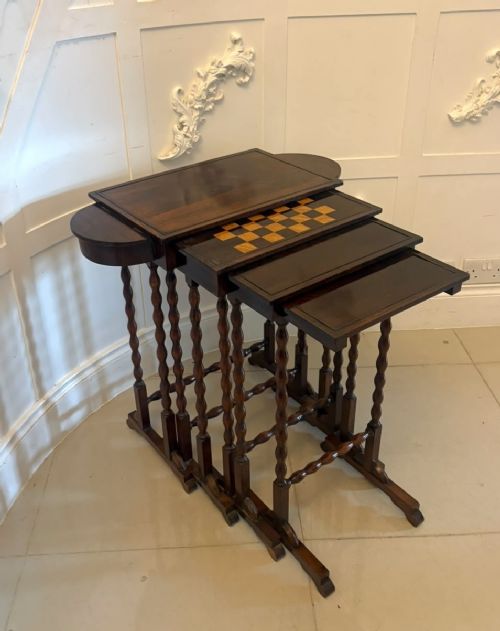
Subtleties in timber selection and the integration of functional elements, such as a chess table top or signed maker details, separate standard production from exceptional craftsmanship.
Gillows·W&C Wilkinson London·E Daligny
The Wood Quartetto Nest Tables Glossary
- Quartetto
- A set of four matching tables designed to nest together. The term derives from musical quartets and describes these interlocking nests.
- Inlay
- A decorative technique where contrasting materials like satinwood, boxwood, or brass are embedded into the wood surface. This creates detailed geometric or floral patterns.
- Veneer
- A thin slice of superior wood applied over a sturdier secondary timber base. It allows makers to display striking grain patterns without using solid costly lumber.
- Graduated
- Describing tables made in decreasing sizes so each smaller unit fits underneath the preceding one. This scaling ensures the entire set occupies the footprint of the largest single table.
- Serpentine
- A gently curved furniture edge featuring a convex centre flanked by concave curves. This shape requires skilled woodworking to maintain alignment within a nesting set.
Wood Quartetto Nest Tables: Frequently Asked Questions
How do you arrange wood quartetto nest tables?
You can slide them apart and place them around a room as individual lamp or side tables when entertaining guests. When not in use, they stack neatly together in a single footprint.
This nesting capability makes them practical for both compact spaces and larger reception rooms where flexible surface space is required.
What is the difference between a nest and quartetto?
While a nest refers generally to any set of tables that slide together, a quartetto specifically designates a set of four graduated pieces. The evidence shows both terms used interchangeably for stacking occasional furniture.
Historical examples predominantly feature four pieces, though sets of three also appear in various nineteenth and twentieth-century styles.
Are these tables sturdy enough for daily use?
Made from hardwoods like mahogany and rosewood, these tables are structurally sound for holding cups, books, and lamps. Their lightweight construction is intended for occasional relocation rather than heavy weight-bearing.
Handling each table by its main frame rather than decorative edges preserves the joints over time.
How do I identify the period of a nest?
Dating relies on stylistic clues such as the Regency brass inlay, Edwardian satinwood banding, or Victorian proportions. Cabinet-making techniques and wood selections also indicate whether a piece originates from the nineteenth century or later revival periods.
Examining the underside and interior joints reveals the construction methods characteristic of specific decades.