





Vintage Quartetto Side Tables
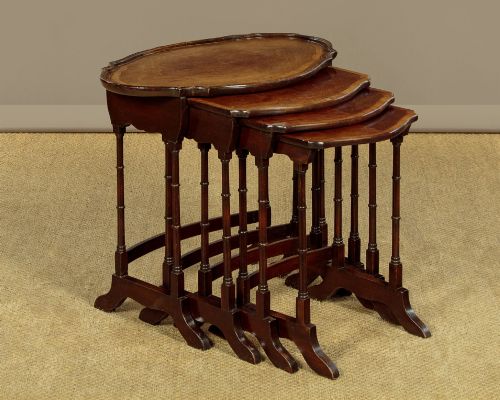
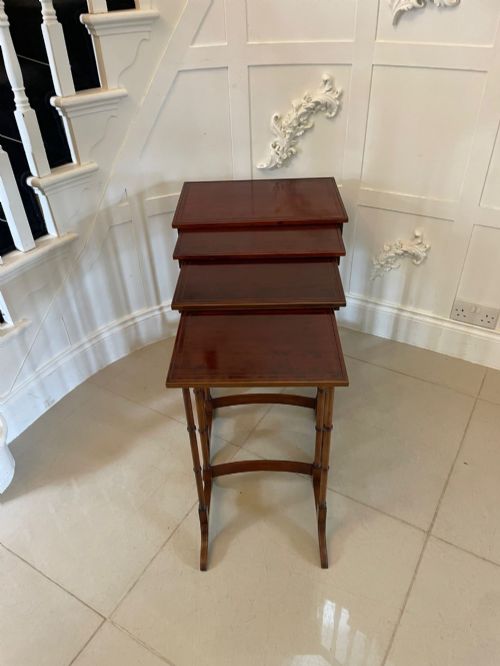
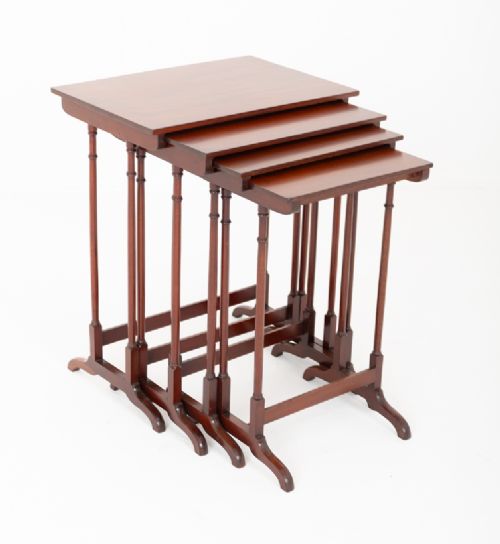
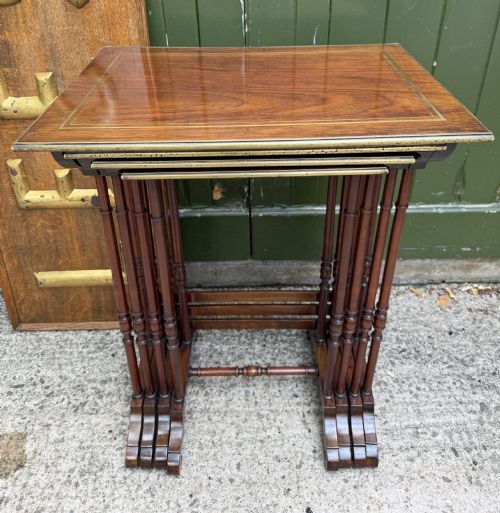
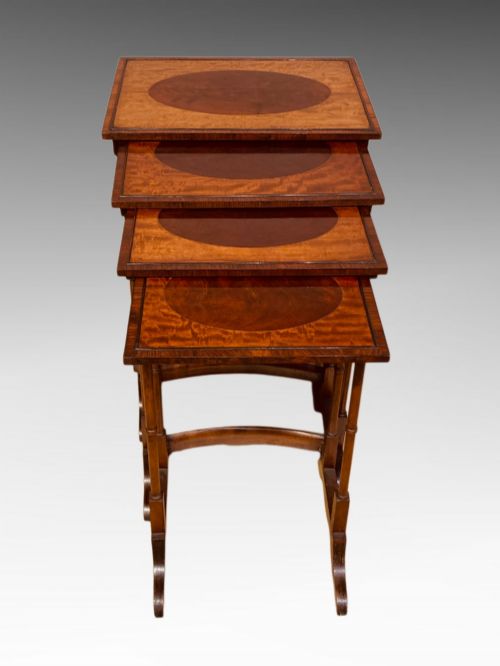
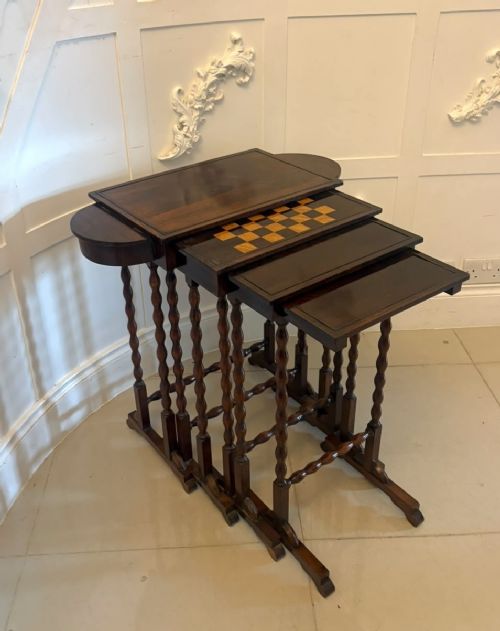
Vintage quartetto side tables are nesting sets of four graduated occasional tables designed to slide neatly beneath one another.
Vintage Quartetto Side Tables
Vintage quartetto side tables are sets of four graduated occasional tables designed to slide neatly beneath the largest piece when not in use. When you search for vintage quartetto side tables, you meet forms originating from the nineteenth and twentieth centuries, including Edwardian, Victorian, and Regency periods.
The primary object types take the form of nests of tables or nesting tables fashioned for practical everyday utility and compact storage. Mahogany remains the dominant timber across the selection, accompanied by rosewood, walnut, oak, and teak.
Most examples you encounter date from the Edwardian era and the early twentieth century, though nineteenth-century and Regency revival pieces also appear. They serve flexibly as coffee tables, tea tables, or side surfaces in drawing rooms and parlours.
How they were made
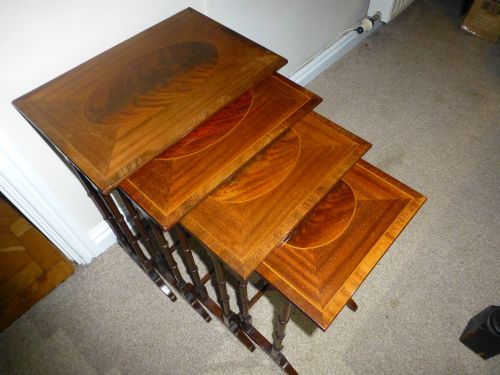
Cabinet makers utilised dense hardwoods such as mahogany, rosewood, and walnut for strength and fine grain patterns. Timber sections were frequently enhanced with decorative veneer and contrasting boxwood inlay.
Detailing often included delicate brass inlay, turned supports, and shaped tops designed to fit sequentially inside one another. Construction required precise carpentry so that each smaller table cleared the frame of the next table above.
Vintage Quartetto Side Tables Retail Price Guide 2026
Typical asking prices for vintage quartetto side tables among the pieces listed under this phrase on Sellingantiques today, from the lower quarter to the upper quarter. They describe what is for sale here now, not the wider market.
Listings feature mahogany, rosewood, burr walnut, and teak, spanning the nineteenth century through to the 1930s.
What varies in quality
The calibre of a set depends upon the selection of timber veneers and the crispness of the boxwood or brass inlay. Superior examples display tighter grain alignment and more substantial framing timbers that withstand frequent sliding.
The Vintage Quartetto Side Tables Glossary
- Quartetto
- A set of four matching tables designed to nest together. The term derives from musical terminology for a group of four.
- Nest of tables
- A group of graduated occasional tables constructed to slide one beneath another to save floor space. They became popular in the nineteenth century for entertaining.
- Boxwood inlay
- Narrow strips of pale boxwood set flush into darker timber surfaces to create contrasting geometric lines. Cabinet makers used this technique extensively during the Sheraton revival and Edwardian periods.
- Veneer
- A thin layer of figured timber applied over a secondary wood base to provide decorative grain patterns. Burr walnut and mahogany veneers appeared frequently on finer table tops.
- Occasional table
- A small, movable table designed for intermittent use around a room rather than a fixed primary purpose. These pieces functioned well for holding books, drinks, or tea.
Vintage Quartetto Side Tables: Frequently Asked Questions
What is a quartetto table?
A quartetto table is specifically one of a set of four nesting tables designed to fit together under the largest top.
Cabinet makers in the nineteenth and twentieth centuries produced these sets to maximise floor space in smaller reception rooms.
How were nesting tables used?
Owners kept the stacked set tucked away in a corner or beside a sofa until guests arrived for tea or card games.
Individual tables were then pulled out and placed around the room to hold cups, books, or writing materials.
What woods were used for these tables?
Mahogany served as the principal timber, often paired with boxwood inlay or delicate stringing lines.
Cabinet makers also utilised rosewood, walnut, oak, and teak, frequently incorporating decorative veneers on the top surfaces.
How do I date a nest of tables?
Dating relies upon timber choices, construction methods, and stylistic revivals present in the legs and inlay.
Edwardian and Victorian pieces display distinct turning styles and veneer thicknesses compared to later 1930s traditional interpretations.