




Sheraton Style Quartetto Tables
Sheraton style quartetto tables are nests of graduated occasional pieces designed to stack neatly when not in use.
Sheraton Style Quartetto Tables
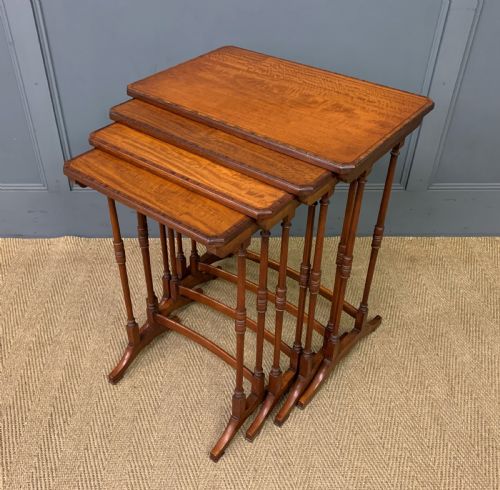
Sheraton style quartetto tables offer a practical surface solution through a graduated set of stacking occasional tables that nest inside one another. When space is tight, the smaller tables slide away beneath the largest top surface, leaving only a single footprint in the room.
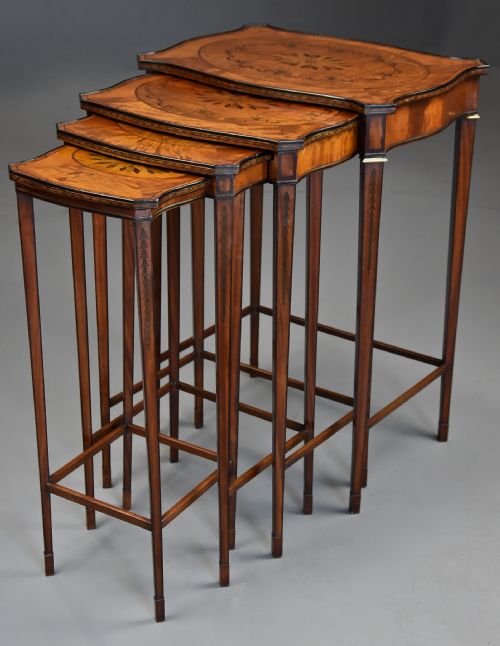
On this page, buyers most frequently encounter Edwardian and nineteenth-century examples taking the form of nests of four tables. These pieces draw on classic late eighteenth-century proportions while serving modern domestic needs for flexible surface space.
Makers often shaped these nested sets with serpentine outlines or rectangular tops supported by slender legs. They function easily as lamp, coffee, or wine tables in reception rooms.
How they were made
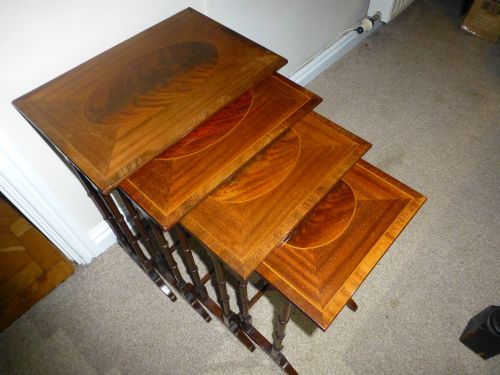
Carpenters constructed these tables using solid timber frames alongside decorative veneers, most commonly relying on mahogany and satinwood. These woods provided a stable yet handsome foundation for the delicate proportions demanded by the style.
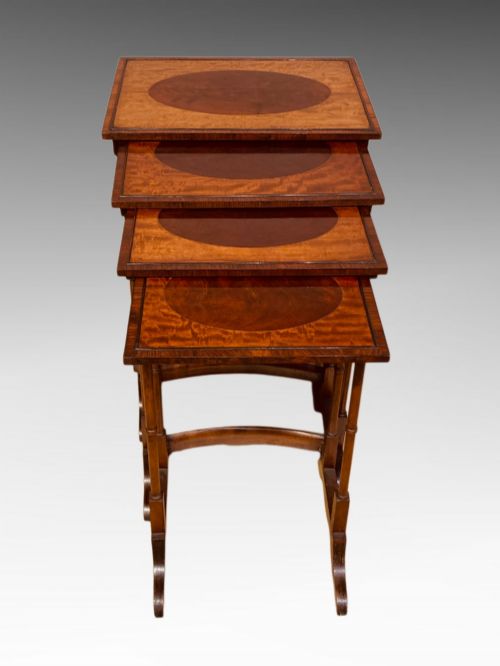
Craftsmen added visual interest through boxwood and rosewood inlay, creating contrasting stringing and geometric details around the edges of the tops. This marquetry work required steady hands to fit delicate strips of pale and dark wood into routed channels.
Sheraton Style Quartetto Tables Retail Price Guide 2026
Typical asking prices for sheraton style quartetto tables among the pieces listed under this phrase on Sellingantiques today, from the lower quarter to the upper quarter. They describe what is for sale here now, not the wider market.
Some sets hide a fourth tiny table so small it feels like furniture made for a doll's house.
What varies in quality
Quality in these nesting sets rests largely on the crispness of the inlay and the selection of timber figure. Finer examples display precise boxwood stringing and rich grain patterns across every surface in the nest, whereas simpler versions rely on plain mahogany boards.
The engineering of the under-framing also dictates the standard of manufacture. Superior tables slide together smoothly without binding, maintaining tight tolerances so the stacked profile remains neat and uniform from every angle.
The Sheraton Style Quartetto Tables Glossary
- Quartetto
- A set of four stacking tables designed to nest within one another. This term originates from nineteenth-century trade terminology for graduating nests.
- Inlay
- A decorative technique where contrasting woods like boxwood or satinwood are embedded into the primary timber surface. This creates crisp geometric borders and decorative motifs.
- Satinwood
- A pale, lustrous hardwood prized for its golden sheen and smooth texture. Cabinet makers used it extensively for table tops and crossbanding during the Edwardian period.
- Serpentine
- A gently undulating curved outline that forms a shallow wave shape along the edge of a table top. This adds visual movement and sophistication to the piece.
- Nest of tables
- A graduated set of small tables designed to fit neatly beneath the largest one. They provide flexible surface space while occupying minimal floor area.
Sheraton Style Quartetto Tables: Frequently Asked Questions
What is a quartetto table?
A quartetto table is one of a set of four occasional tables designed to slide neatly under one another. They offer flexible surface space for drinks or lamps without permanently crowding a room.
Historically, makers constructed these sets in graduating sizes so the smaller pieces disappeared entirely beneath the largest top. This clever nesting design made them popular in formal reception rooms from the Victorian era onward.
How do I date these tables?
Dating relies on examining the timber species, construction joints, and stylistic cues present in the piece. Edwardian and late Victorian examples often feature bright mahogany or satinwood veneers combined with boxwood inlay.
Looking underneath the top table can also reveal clues about workshop practices of the period. Machine-cut screws or specific timber preparations help narrow down whether a set originates from the nineteenth or early twentieth century.
Where should I place them?
These versatile tables suit drawing rooms, studies, or hallways where extra surface space is occasionally useful. You can separate the nested pieces around a seating area when entertaining guests.
When not in use, simply slide them back together into a single compact stack against a wall. This keeps walkways clear while retaining the decorative timber top of the largest table on display.
Are they sturdy enough for daily use?
Despite their slender proportions and delicate appearance, well-built nesting tables handle normal daily use quite easily. The interlocking design of the frame provides surprising stability when the pieces stand independently.
Avoid placing excessively heavy items on the smaller tables, as their lighter frames are intended for lighter objects like cups, books, or small lamps.