



Inlaid Circular Occasional Table
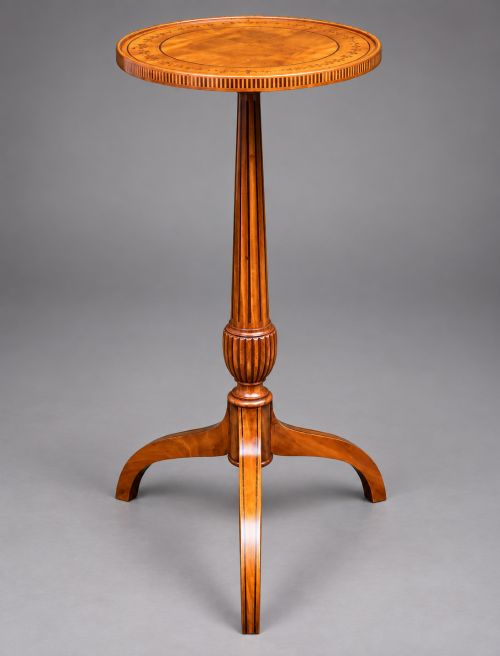
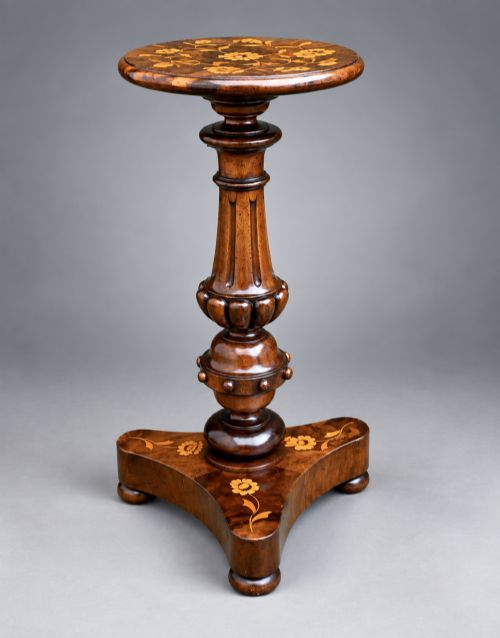
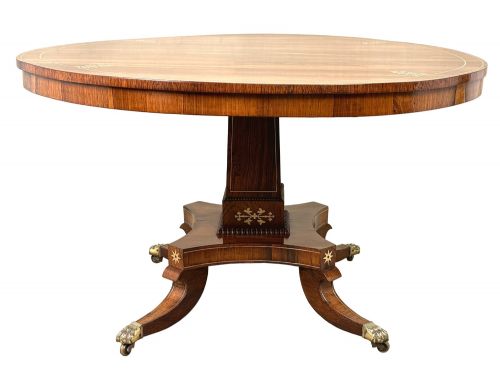
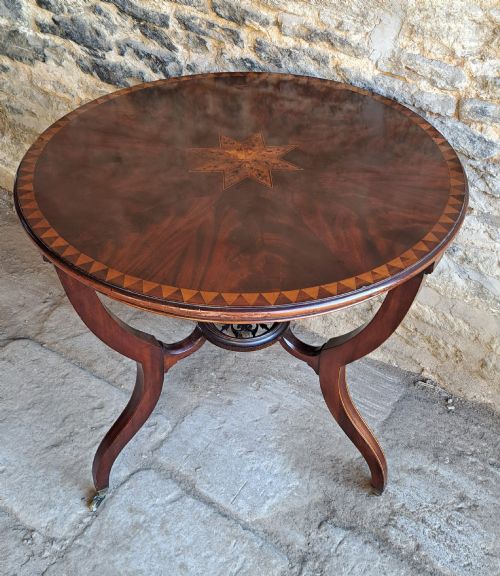
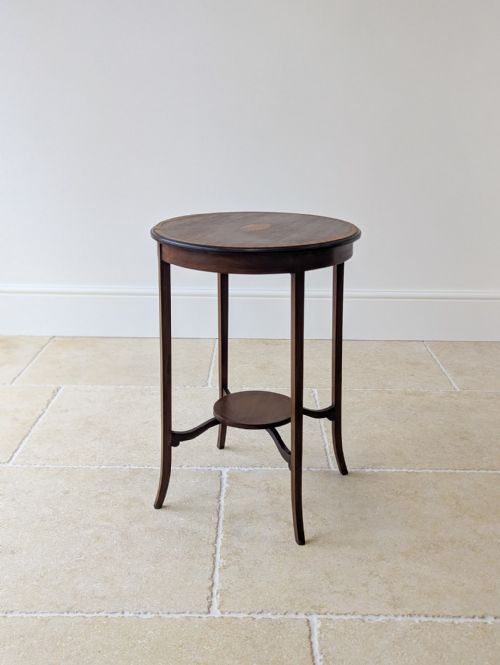
An inlaid circular occasional table provides a compact surface with decorative timber work, serving as a versatile small table for a lamp or corner.
Inlaid Circular Occasional Table
An inlaid circular occasional table is a small round surface designed to move easily around a room for holding lamps, drinks, or decorative objects. You will encounter many Edwardian and Victorian examples on this page, alongside earlier Georgian wine tables and later Art Deco coffee tables.
The form spans several distinct functions, appearing as tripod wine tables, centre tables, and lamp tables. Makers produced these pieces in standard woods like mahogany and walnut, frequently incorporating contrasting lighter timbers or stone tops.
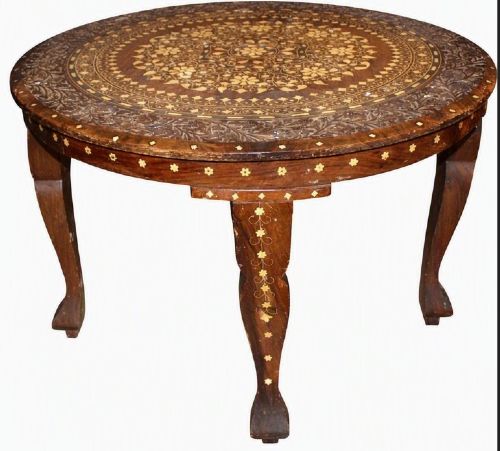
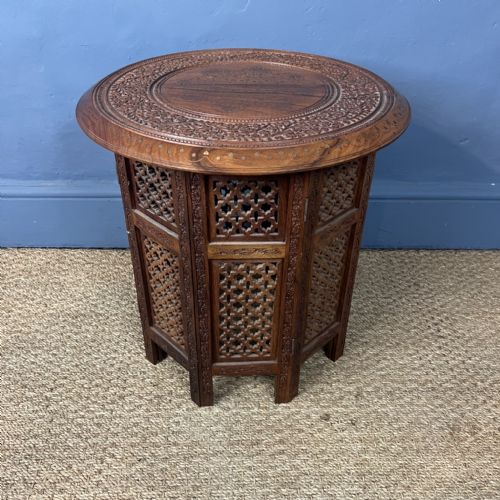
Origins stretch from British workshops to Italian Sorrento ateliers and Anglo-Indian makers in regions such as Hoshiarpur. This geographical spread brings diverse decorative motifs, from classical satinwood swags to intricate bone and hardwood scrolling.
How they were made
Cabinet makers constructed the foundational carcases using solid timbers or veneered bases of mahogany, walnut, rosewood, and satinwood. Tops were turned or sawn into circular shapes, often supported on central pedestals with tripod legs or four-pillar bases.
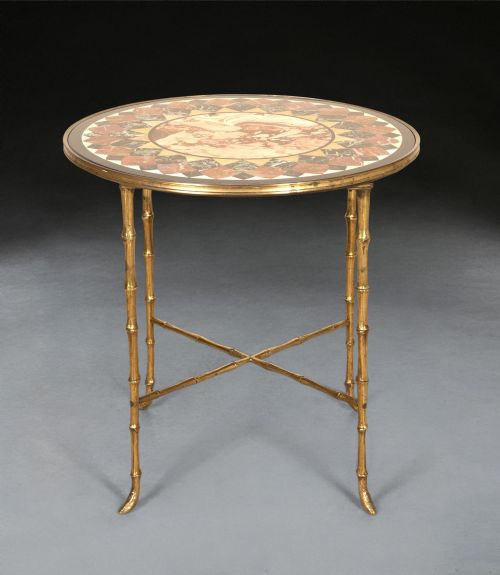
Decoration relied on inlay techniques like marquetry, parquetry, and stringing, inserting thin slices of boxwood, fruitwood, and bone into routed channels. Some workshops utilised imported stone, assembling specimen marble and pietra dura panels directly into the wooden frames.
Listings feature circular tables spanning the Georgian, Victorian, Edwardian, and Art Deco periods, constructed in mahogany, walnut, satinwood, and marble.
What varies in quality
Quality rests in the precision of the timber selection and the execution of the inlay work. Finer examples display tightly grained burr walnut or figured mahogany matched seamlessly across the circular top, whereas simpler pieces use plain timber boards.
The crispness of the inlaid details distinguishes workshop standards. Sharp, flush insertions of contrasting wood or bone separate superior examples from coarser items where gaps appear around the decorative motifs.
Liberty And Co·Maples And Co
The Inlaid Circular Occasional Table Glossary
- Marquetry
- Decorative woodwork where pieces of veneer are fitted together to form pictorial or geometric designs on a surface. This technique allows complex floral and scroll patterns to sit flush with the table top.
- Parquetry
- Geometric mosaic woodwork using small blocks of timber to create repeating patterns such as cubes or chequer-boards. It often appears on the surfaces of Victorian games tables.
- Tripod table
- A small stand supported by three legs radiating from a central pillar. These pieces gained popularity during the Georgian period for stability on uneven floors.
- Gueridon
- A small French round table supported by a single central column or figures. The form originated in the seventeenth century and continued through the nineteenth century.
Inlaid Circular Occasional Table: Frequently Asked Questions
What is an inlaid circular occasional table used for?
These small tables serve as convenient stands for desk lamps, books, or decorative items next to seating. Their compact round footprint allows them to fit easily into corners or tight spaces.
Historically, specific versions functioned as games tables with inlaid chess boards or as wine tables for holding glasses during evening gatherings.
How do I date an inlaid circular table?
Dating relies on identifying the underlying timber, the construction methods of the pedestal, and the style of the inlay. Georgian pieces often feature simple mahogany tripod bases, while Victorian and Edwardian examples frequently use satinwood stringing and walnut veneers.
Cabinet makers also changed their jointing techniques and hardware over time, which helps narrow down the period of manufacture.
Where were these tables made?
Production took place across British workshops, regional cabinet-making centres, and international hubs. Many pieces originated in London firms, while others came from Italian workshops or Anglo-Indian centres like Hoshiarpur.
Each region contributed distinct decorative vocabularies, utilising local woods, carved details, and regional inlay traditions.
What is the difference between marquetry and parquetry?
Marquetry involves cutting diverse wood veneers into pictorial or curved motifs such as flowers, ribbons, and scrolls. It creates flowing, organic designs across the circular top.
Parquetry uses geometric shapes arranged in strict repeating patterns like squares and triangles to form architectural surfaces.