






Georgian Specimen Wood Table
A georgian specimen wood table brings together diverse timbers in geometric patterns to show off exceptional natural tones.
Georgian Specimen Wood Table
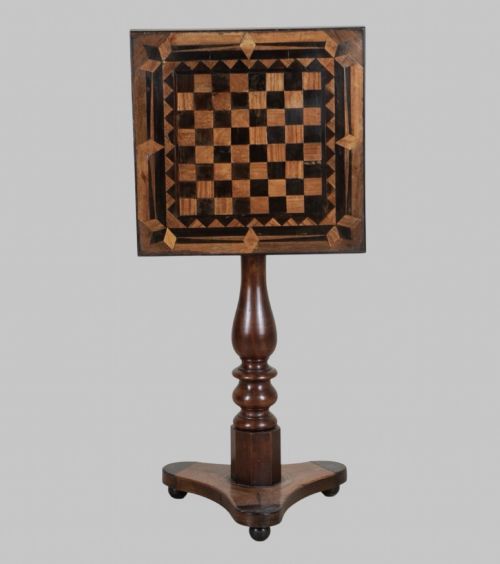
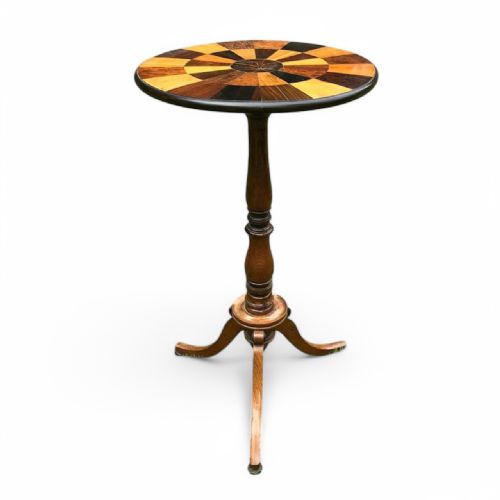
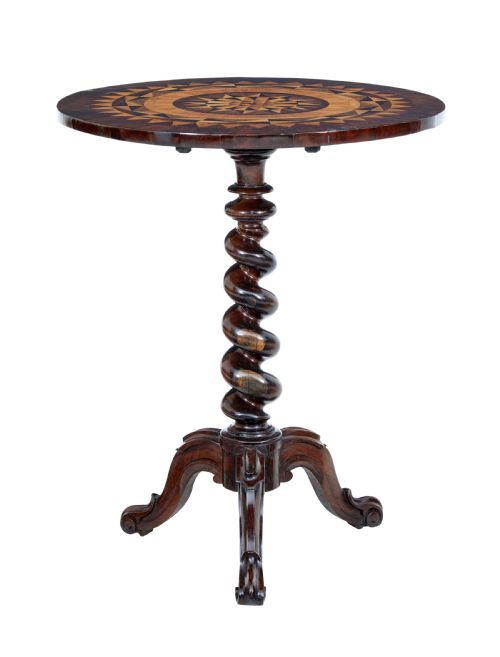
A georgian specimen wood table gathers various decorative timbers into intricate geometric arrangements and sunburst designs on tops of small furniture. These pieces appear in forms such as occasional tables, games tables, centre tables, and side tables across the Georgian, Regency, and William IV periods.
The selections on this page lean heavily towards the early nineteenth century and the Regency era, where makers used contrasting veneers to create striking visual depth. Buyers encounter circular occasional surfaces alongside folding games tables and pedestal centre tables.
Makers also applied these timber techniques to smaller items like miniature chests of drawers and collectors cabinets. Each piece relies on the natural colour variations of different woods rather than painted decoration to catch the eye.
Materials and construction
Craftsmen applied thin specimen wood veneers and parquetry patterns over solid bases of mahogany, walnut, or oak. They integrated boxwood stringing and brass details to frame the complex wood mosaics.
Surfaces often feature tilt mechanisms or circular pedestals supporting the patterned tops. The construction combines structural stability in the main frame with precise cutting of multiple timber species for the decorative top.
Some miniature chests of drawers received the same intricate wood inlay as full-sized tables, built perhaps as apprentice pieces or salesman samples.
Assessing quality and craftsmanship
The standard of a georgian specimen wood table rests on the precision of the veneer work and the variety of timbers utilised in the parquetry. Tighter joints and more complex geometric arrangements indicate greater skill in the workshop.
The choice of secondary woods for the base and the condition of the polished surface also distinguish finer examples. Pieces that maintain crisp inlay lines without lifting or shrinkage show superior original construction.
The Georgian Specimen Wood Table Glossary
- Specimen wood
- Timber selected for its distinct grain, colour, or rarity rather than structural utility. Makers used small pieces of these woods to form decorative mosaics.
- Parquetry
- Geometric mosaic woodwork used for decorative floors and furniture tops. It relies on the precise fitting of angled wood blocks.
- Veneer
- A thin slice of superior wood applied to a base of common timber. This technique allowed makers to display rich grain patterns economically.
- Tilt top
- A tabletop mounted on a hinge mechanism that pivots vertically for storage when not in use. This form is common in occasional tables.
- Stringing
- A narrow line of contrasting wood inlaid into furniture surfaces to create borders. Boxwood is frequently utilised for this purpose.
Georgian Specimen Wood Table: Frequently Asked Questions
How do I date a georgian table?
Dating relies on the overall form, leg style, and secondary timbers used in the construction. Regency and late Georgian pieces often feature pedestal bases or sabre legs.
Changes in hardware, such as brass mounts or hinges, also provide clues to the decade of manufacture. Examining the interior framing helps confirm the period.
Where were these tables placed?
These tables sat in principal rooms where guests could admire the intricate woodwork and natural timber tones. Occasional tables stood beside seating, while centre tables occupied the middle of the room.
Smaller versions functioned as games tables or work tables for ladies. Their decorative tops meant they rarely sat covered with heavy cloths.
Are these tables sturdy enough for daily use?
Most examples are structurally sound but require care due to the delicate nature of the veneered surfaces. Placing them away from direct heat sources prevents the veneer from lifting.
Routine dusting with a dry cloth maintains the polish without damaging the timber inlay. Heavy objects should not rest on the more fragile folding leaves.