


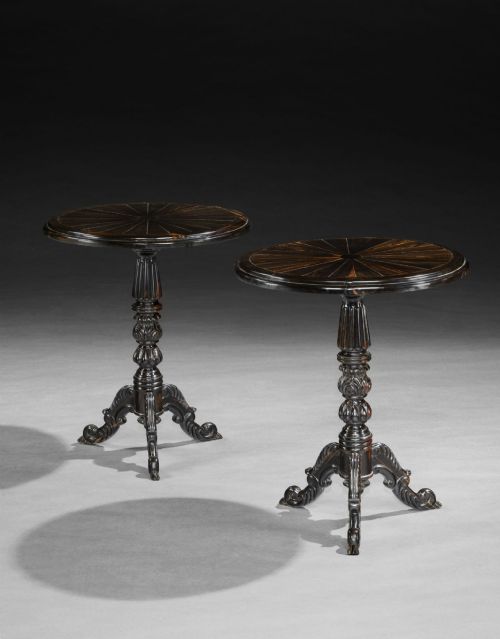
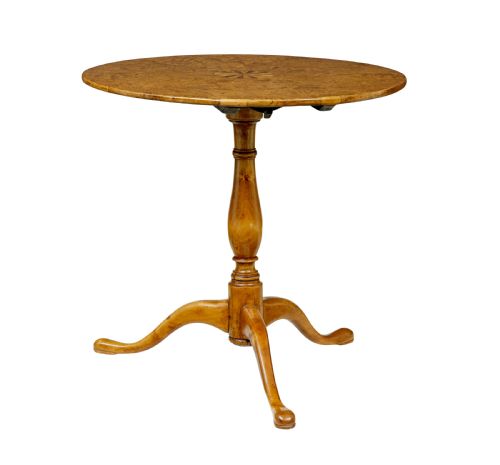
Antique Wood Marquetry Table
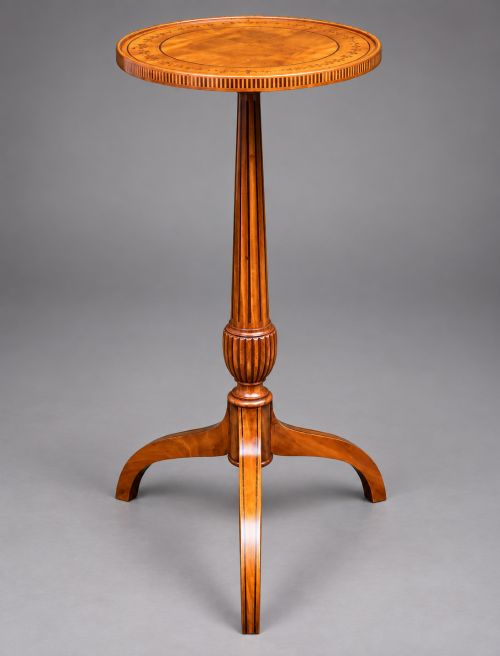
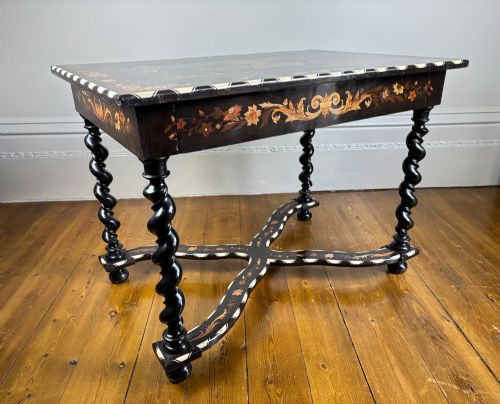
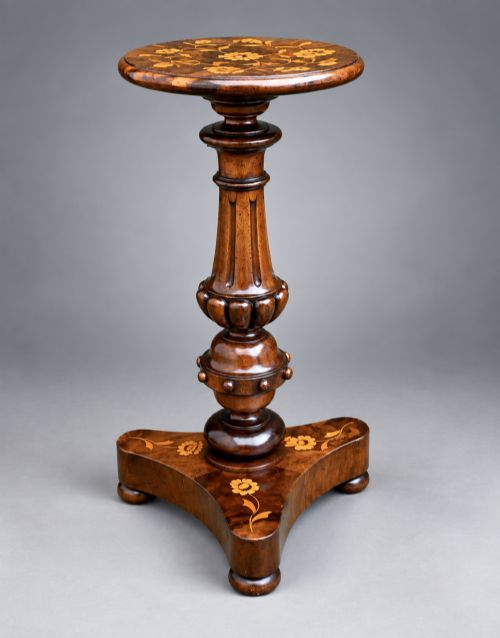
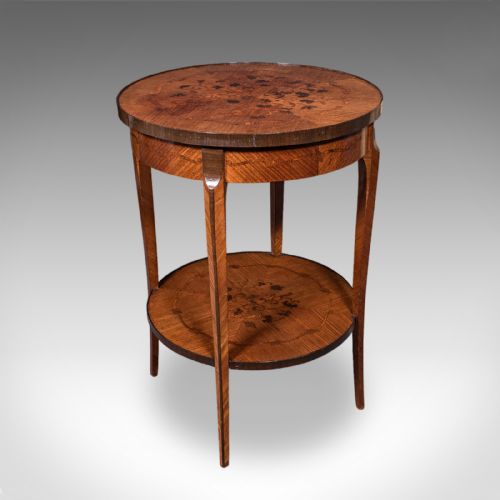
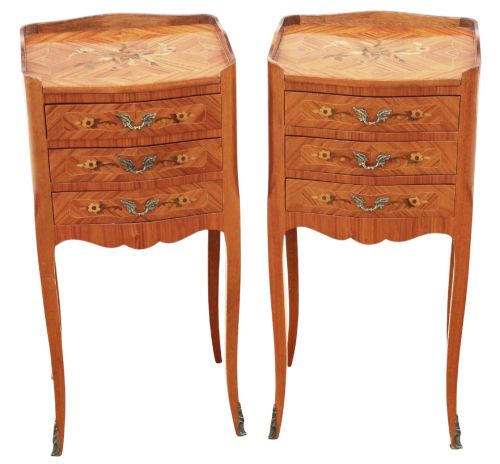
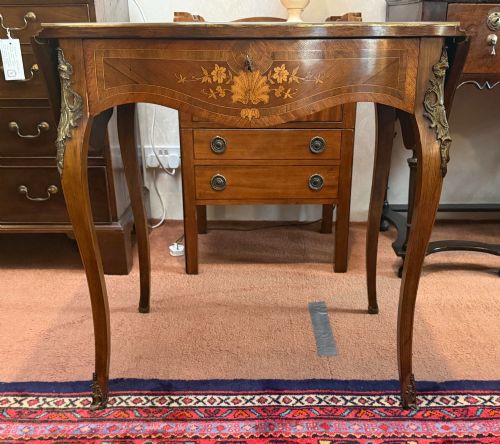
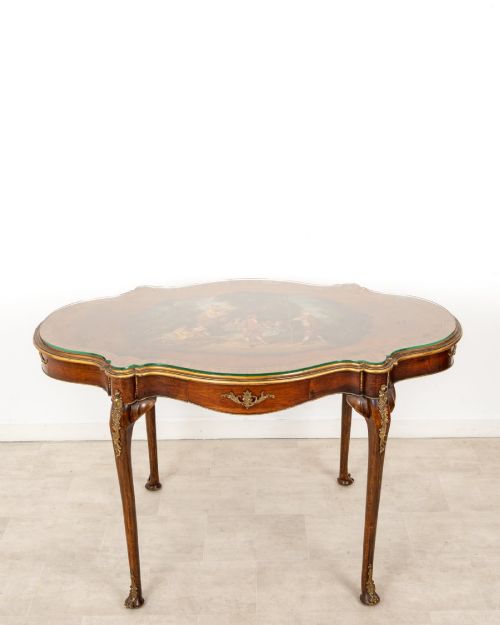
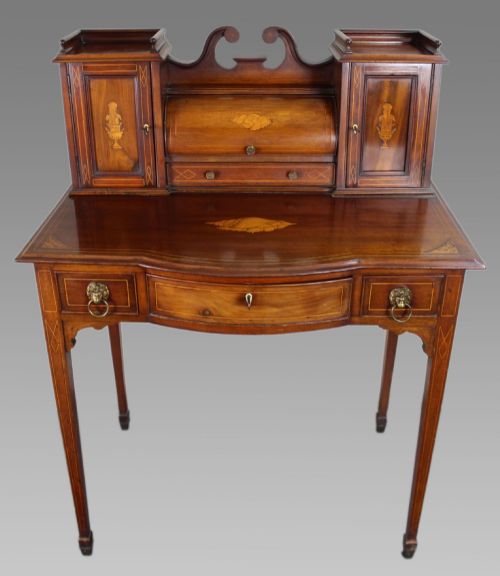
An antique wood marquetry table brings floral and geometric picture veneers into domestic spaces, offering a surface defined by deliberate botanical crafting.
Antique Wood Marquetry Table
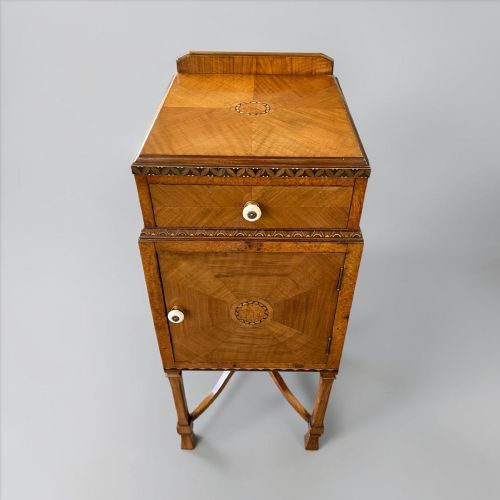
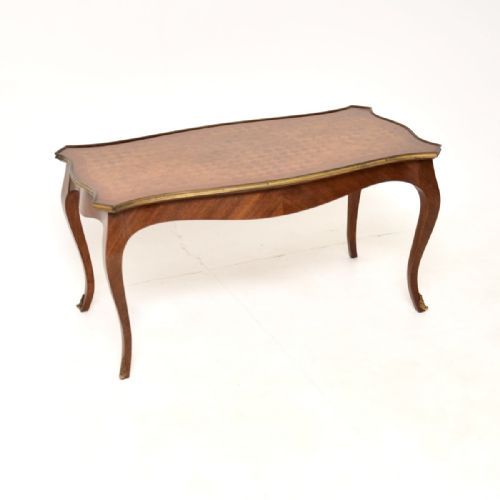
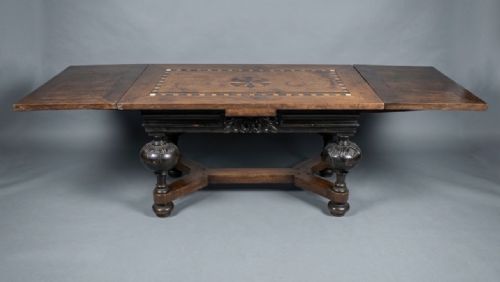
An antique wood marquetry table spans utilitarian surfaces and display pieces, meeting buyers in formats ranging from card and games tables to coffee and occasional tables.
The pieces on this page emerge predominantly from Victorian, Edwardian, and nineteenth-century periods, with continental European workshops providing many of the heavily figured floral designs.
Smaller occasional and centre tables dominate the selection, though writing desks, envelope card tables, and occasional lamp stands appear frequently across the periods.
Materials and Techniques
Craftsmen built these tables using dense structural timbers like mahogany, walnut, and oak, applying fine veneers of kingwood, rosewood, satinwood, and tulipwood over the core.
Marquetry cutters jigsawed thin slices of contrasting woods together by hand, creating pictorial floral motifs, urns, and geometric patterns secured with animal glue.
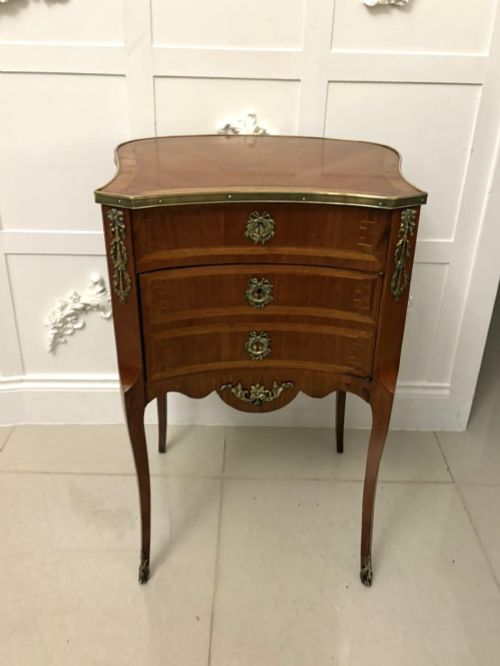
Metal mounts in ormolu and brass alongside boxwood stringing and crossbanding reinforce edges and accentuate the central veneer panels.
Listings feature woods including satinwood, kingwood, rosewood, burr walnut, and ormolu mounts across the nineteenth century.
Markers of Execution
The distinction between ordinary and superior pieces rests on the complexity of the veneer work and the variety of natural timbers utilised within a single design.
Master cabinetmakers achieved sharp, seamless joints between intricate wood grains, whereas lesser examples rely on painted details or repetitive, stamped patterns.
The weight of the underlying timber and the crispness of cast bronze mounts differentiate standard production pieces from exhibition-grade commissions.
George Bullock·François Linke·Gill and Reigate·Waring and Gillow·Edwards and Roberts
The Antique Wood Marquetry Table Glossary
- Marquetry
- The art of applying fitted pieces of wood veneer to a structure to form decorative pictures or patterns. It differs from parquetry through its pictorial and curvilinear designs.
- Kingwood
- A dense, heavily figured timber showing dark violet-brown and golden streaks, utilised extensively in high-status cabinetmaking. Eighteenth and nineteenth-century makers favoured it for contrasting borders.
- Ormolu
- Gilt bronze mounts cast and chased by hand to edge and protect vulnerable table corners. This material adds sculptural weight to French revival designs.
- Crossbanding
- A border technique where veneer strips are laid perpendicular to the grain of the central panel. This frames the primary marquetry scene and controls wood movement.
- Satinwood
- A pale, lustrous timber native to India and Ceylon, chosen for its reflective qualities. It provides a bright ground for floral inlay.
Antique Wood Marquetry Table: Frequently Asked Questions
What is an antique wood marquetry table?
These pieces are domestic furniture surfaces ornamented with fitted wood veneers forming intricate pictorial or geometric designs. Craftsmen cut contrasting timbers like satinwood and rosewood into floral or scroll motifs.
Buyers select them to introduce warmth, texture, and historical craftsmanship into sitting rooms and hallways. They function as practical surfaces for lamps or books while displaying artisanal veneer work.
How do I care for an antique wood marquetry table?
Protect the polished surfaces from direct sunlight and excessive humidity to prevent the thin wood veneers from lifting or splitting. Maintain stable indoor temperatures away from direct heat sources.
Dust gently with a dry, soft cloth and avoid chemical polishes or silicone sprays. Natural beeswax applied sparingly preserves the historical sheen of the timber.
How are parquetry and marquetry different?
Marquetry utilises varied timber veneers to compose pictorial scenes such as flowers, ribbons, and landscapes with curved outlines. It requires precise hand-cutting of diverse coloured woods.
Parquetry constructs geometric and repeating patterns like cubes, chevrons, or squares using uniform blocks of wood. Both techniques decorate tabletops, but they produce distinct visual effects.
How can I tell the period of a table?
Examine the timber species, secondary construction woods like oak or pine, and the style of the leg supports. Nineteenth-century pieces often feature exotic veneers like kingwood and tulipwood mounted with cast ormolu.
Georgian and Edwardian examples display lighter satinwood frames, delicate boxwood stringing, and proportions tied to specific revival movements. Structural joins and drawer linings provide further clues to dating.