

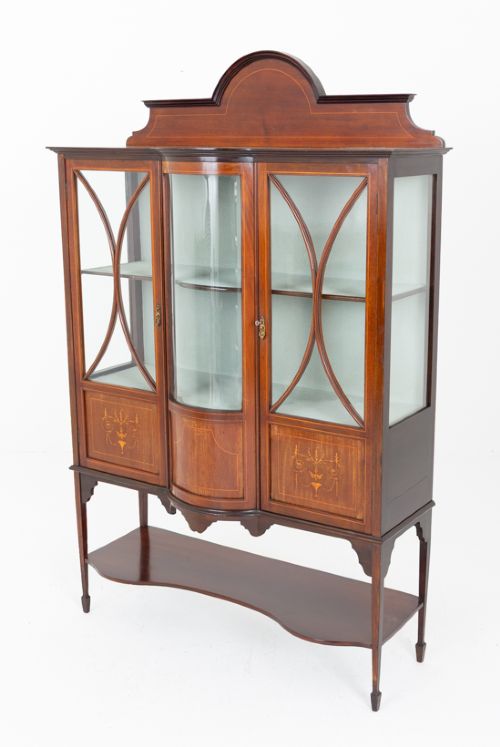
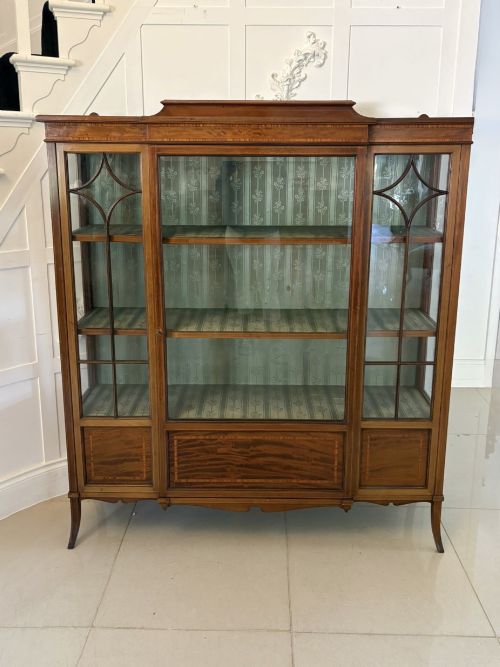
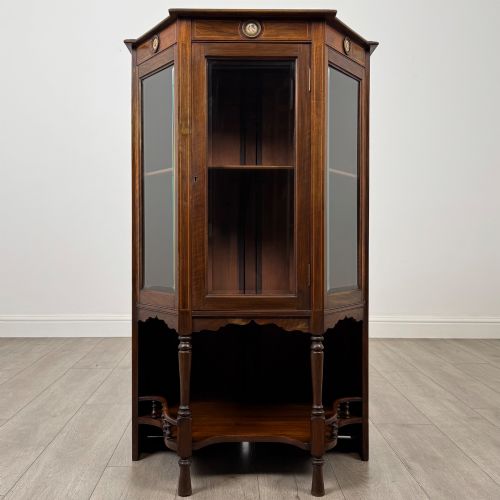
Inlaid China Cupboard
An inlaid china cupboard brings disciplined geometry and softened timbers into a room, offering glazed display space for cherished porcelain.
Inlaid China Cupboard
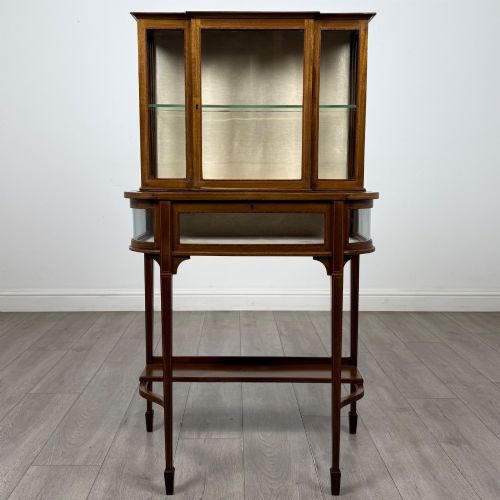
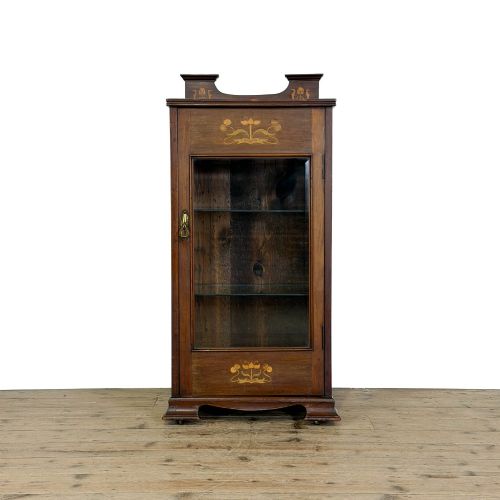
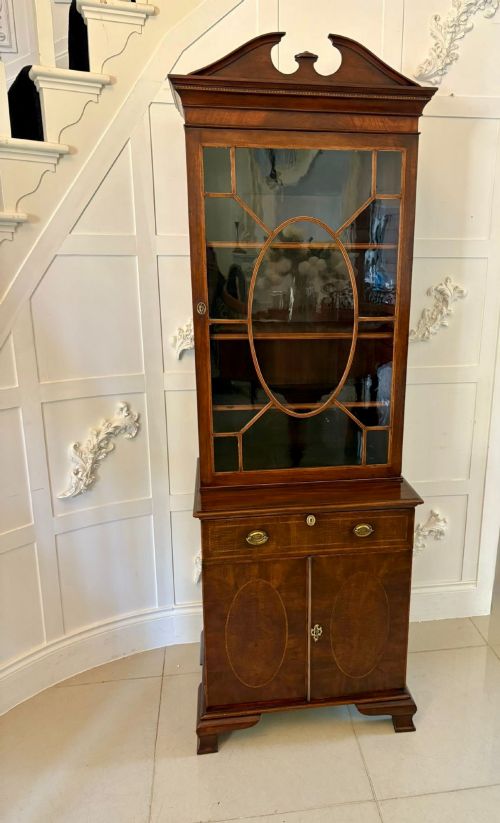
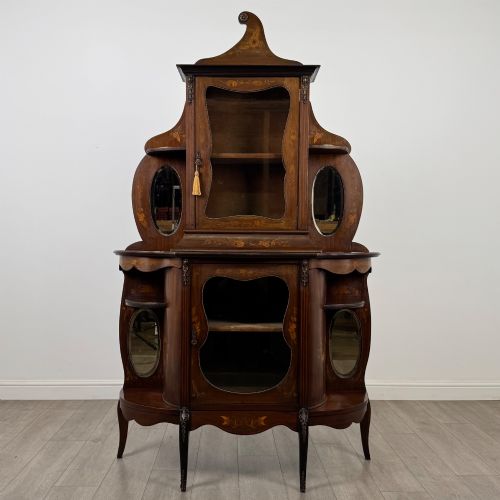
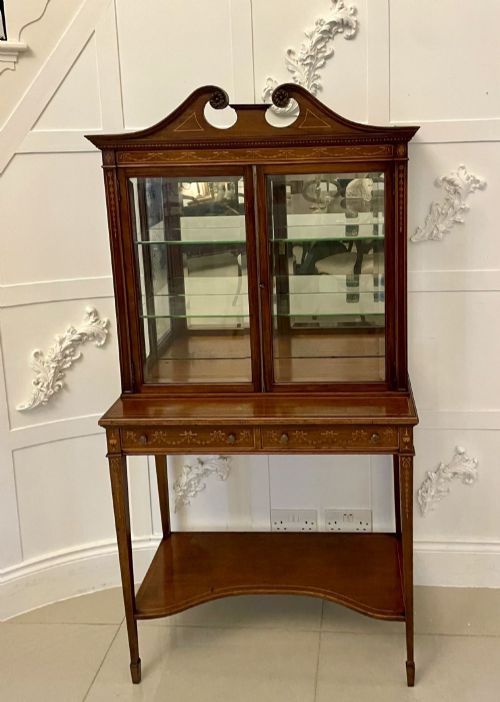
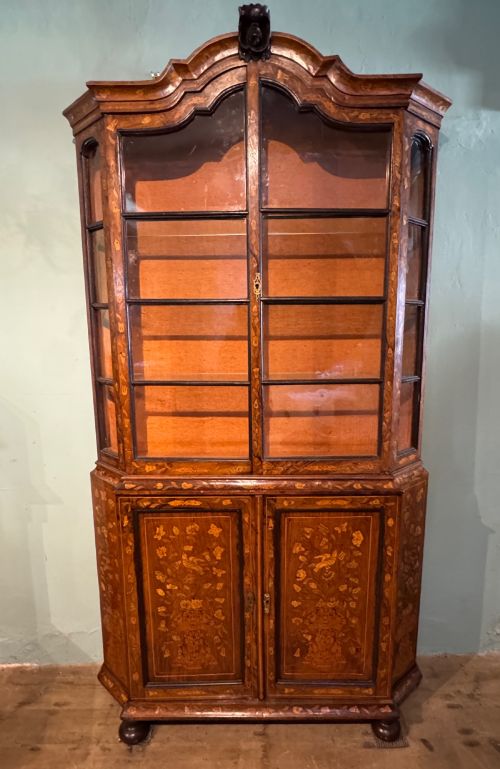
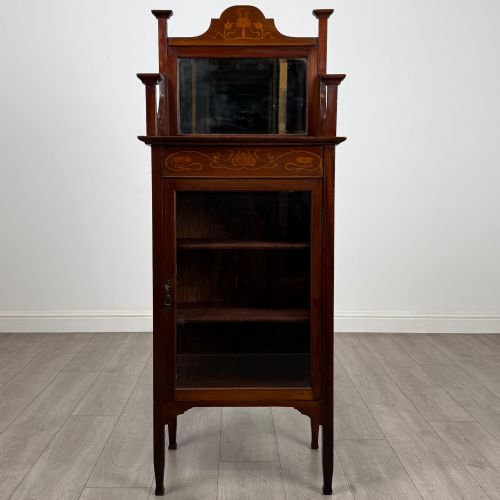
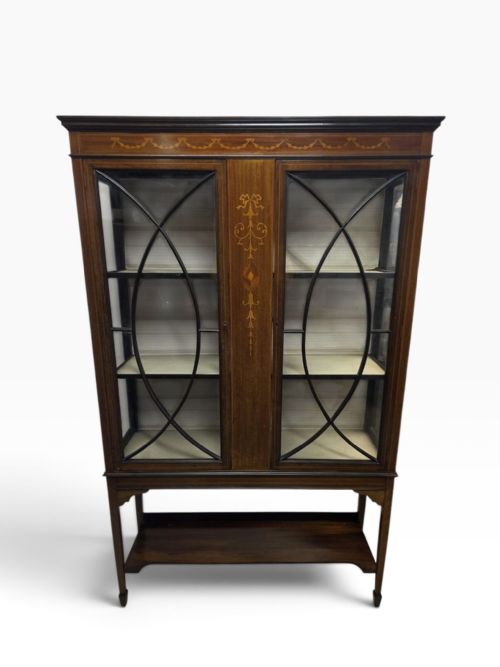
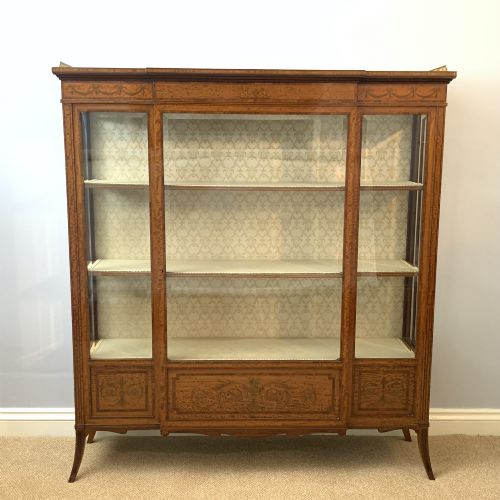
An inlaid china cupboard combines enclosed wooden structure with glass panels designed to showcase ceramic collections safely within domestic spaces. Buyers encountering this selection will most frequently meet Edwardian and Victorian forms, often constructed as upright display cabinets, corner cupboards, or two-part bookcases.
The objects span varied eras, from nineteenth-century mahogany pieces through to lighter satinwood interpretations influenced by Sheraton Revival designs. These items serve practical storage functions while framing precious tableware through glazed doors and mirrored backs.
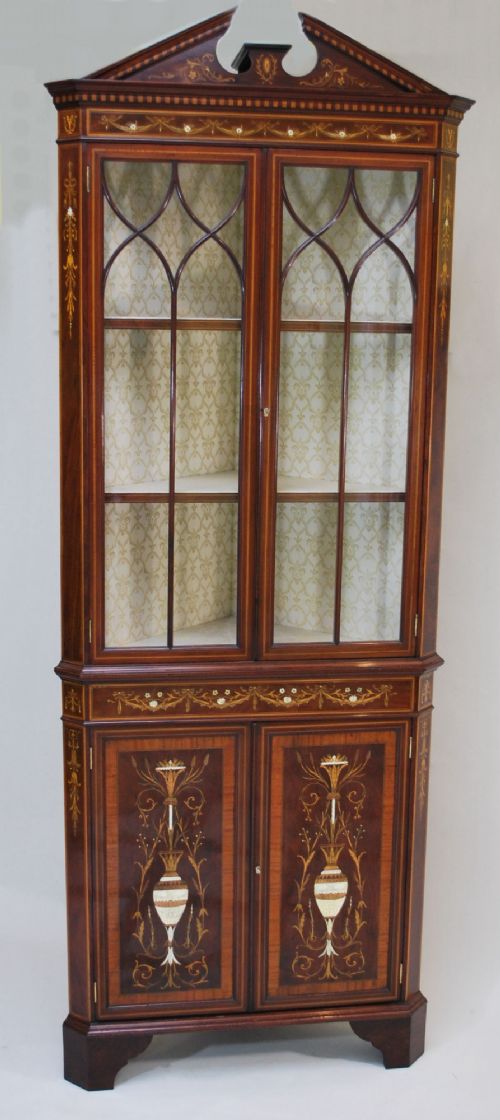
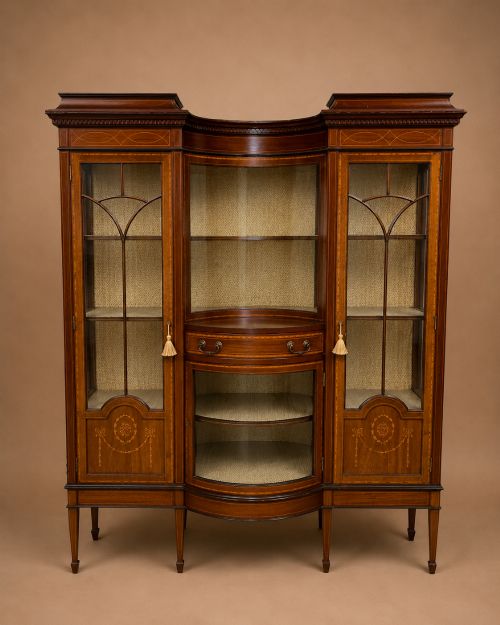
Formats range from floor-standing corner cupboards that utilise awkward junctions in a room to bow-ended cabinets and bijouterie displays. Each variant reflects the domestic requirements of its period, prioritising visibility and dust-free protection for delicate contents.
Materials and Construction
Cabinet makers utilised dense primary timbers such as mahogany and walnut, frequently pairing them with contrasting satinwood inlay and delicate stringing. Surface ornamentation often relied on marquetry techniques, embedding floral motifs or classical swags into the timber grain.
Glazing methods varied from simple rectangular panes to intricate astragal bars that compartmentalised the door fronts. Internal elements frequently incorporated fabric linings and mirror backs to maximise reflected light through the displayed porcelain.
Listings feature mahogany, satinwood, walnut, and oak across Victorian, Edwardian, and Georgian periods.
Judging Quality and Execution
Distinction across the range lies in the crispness of the timber inlay and the fidelity of the proportions. Superior examples demonstrate seamless joins in the marquetry and tightly mitred glazing bars that hold heavy glass without distortion.
Refined pieces exhibit thoughtful secondary timbers within the carcase construction and brass hardware that fits flush to the door frames. The presence of original mirrored panels and balanced grain selection separates standard production from exceptional cabinet work.
Edwards and Roberts·Maple and Co
The Inlaid China Cupboard Glossary
- Marquetry
- Decorative woodwork where pieces of contrasting veneer are assembled to form pictorial or geometric patterns. This technique frequently defines the facades of Edwardian and Victorian cabinets.
- Astragal glazing
- Wood or metal bars holding small panes of glass within a cabinet door. These delicate divisions structure the viewing area of display furniture.
- Satinwood
- A luminous, fine-grained timber imported from tropical regions and utilised extensively for contrasting inlay and banding. Its pale yellow tone brightens darker mahogany surfaces.
- Pier cabinet
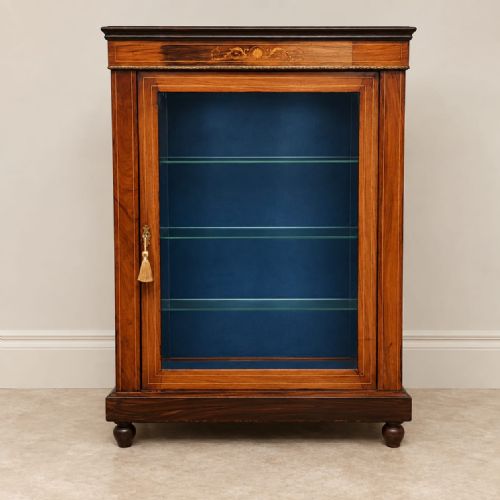
- A low freestanding cabinet designed to fit narrow wall spaces between windows. These pieces often feature glazed doors and elaborate inlay.
- Bijouterie display
- A cabinet with a glazed upper section specifically built to exhibit small trinkets and valuables. The interior is frequently lined with velvet or silk.
Inlaid China Cupboard: Frequently Asked Questions
What periods do these cabinets represent?
The pieces span from the late eighteenth century through the Victorian era and into the Edwardian period. Many examples display nineteenth-century revival styles.
Edwardian and late Victorian variations appear most frequently among current selections, often showcasing Sheraton Revival design influences.
How were corner cupboards used?
Corner cupboards were designed to fit snugly into unused room junctions while utilising vertical wall space. They kept china dust-free and visible.
Floor-standing and wall-hung versions both served dining rooms and parlours for storing everyday or ceremonial tableware.
What is astragal glazing?
Astragal glazing refers to the wooden framework dividing individual panes of glass on a cabinet door. These bars create structured grids.
Finer examples feature slender mouldings that maximise the viewing area for the porcelain displayed inside.
How do I identify satinwood inlay?
Satinwood inlay appears as pale, reflective banding or decorative motifs contrasted against darker primary timbers like mahogany. It creates bright geometric or floral borders.
Cabinet makers used this contrasting wood to draw the eye towards cornices, door panels, and aprons.