

Inlaid Cabriole Leg Desk
When you search for an inlaid cabriole leg desk, you find elegant writing furniture defined by curved supports and decorative wood patterns.
Inlaid Cabriole Leg Desk
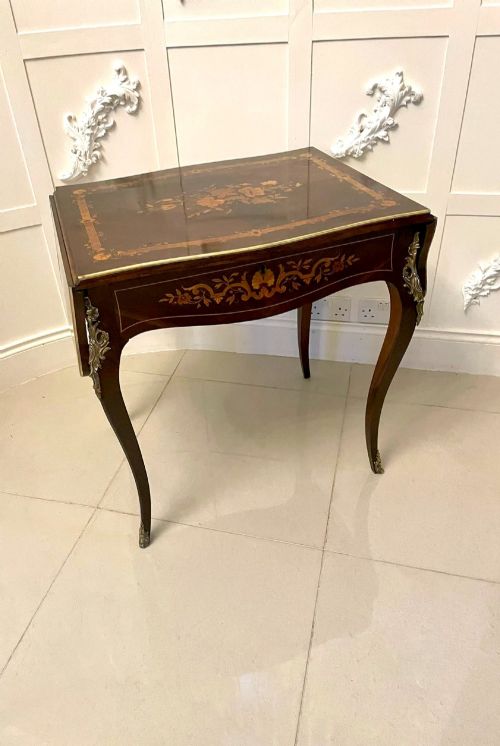
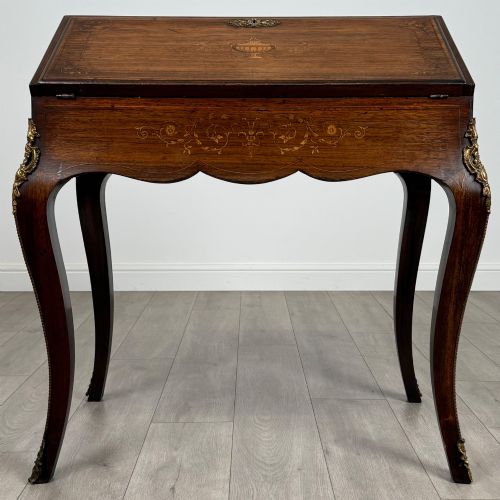
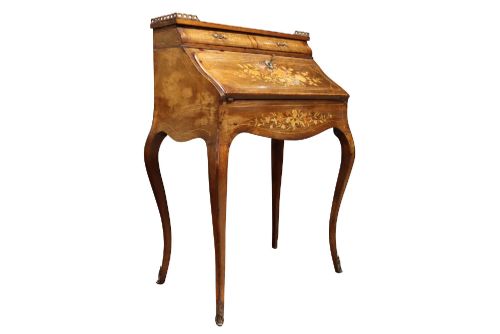
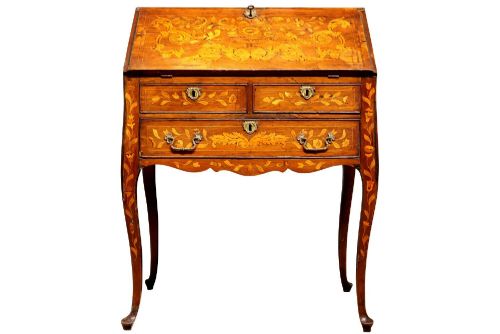
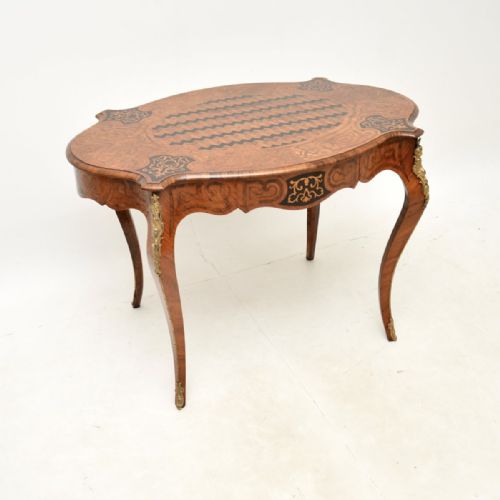
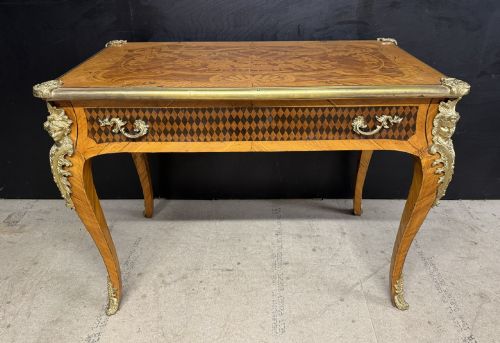
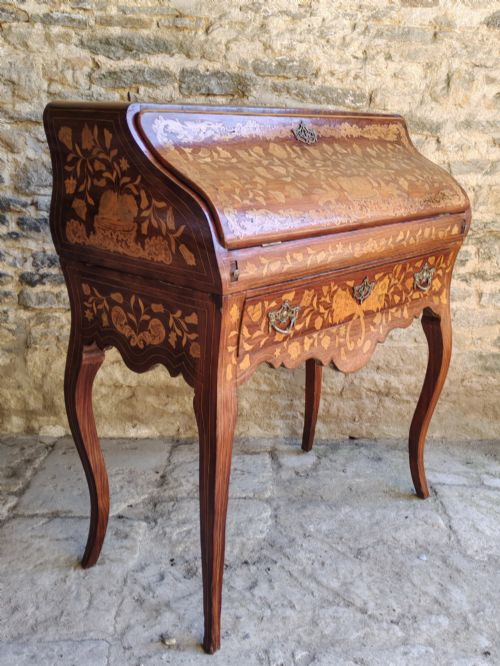
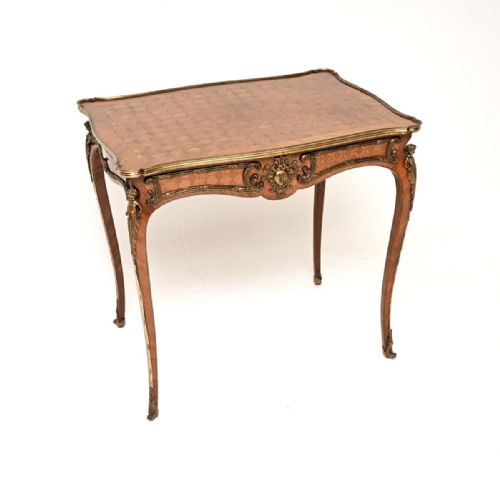
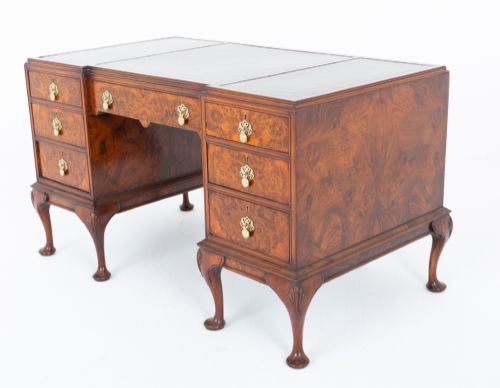
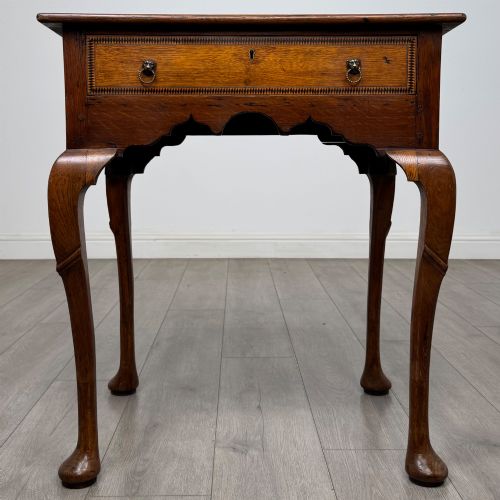
An inlaid cabriole leg desk combines distinctive curved supports with ornate surface decoration, typically appearing in forms such as the bureau plat, bonheur-du-jour, and writing table. Buyers seeking this phrase encounter pieces spanning the eighteenth century through to the early twentieth century, with nineteenth-century French and Dutch revivals forming a significant portion of the selection.
The assortment on this page includes freestanding centre tables, compact writing desks, and elaborately detailed bureaux featuring floral and geometric surface patterns. Walnut, rosewood, kingwood, and satinwood dominate the construction, often paired with contrasting timber veneers and elaborate mounts.
Originating largely from continental workshops and British cabinet makers influenced by continental styles, these desks serve as both functional writing surfaces and decorative focal points. The prevalence of Louis XV revival styles ensures that serpentine fronts and sweeping leg profiles remain central to the pieces available.
Materials and construction
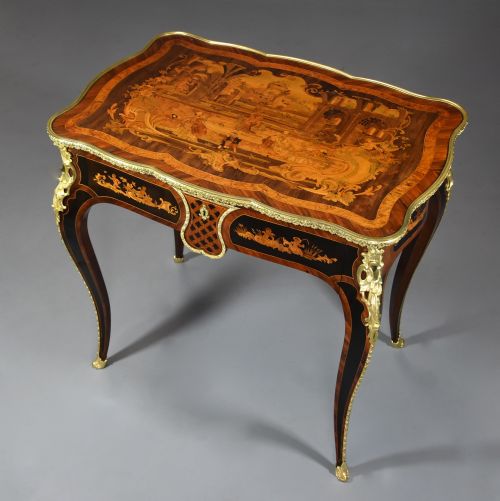
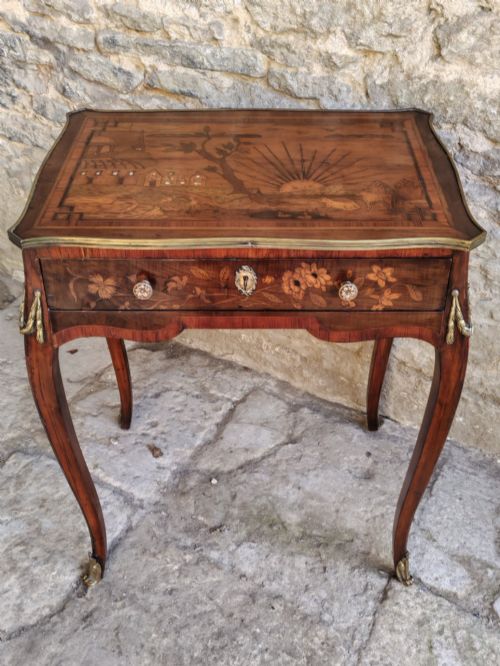
Cabinet makers utilised dense hardwoods such as walnut, mahogany, and rosewood as foundational timber, frequently applying finely sliced veneers of kingwood and satinwood over them. Marquetry and parquetry techniques involved cutting contrasting woods and occasionally brass or mother-of-pearl into intricate floral, bird, or geometric designs set flush into the surface.
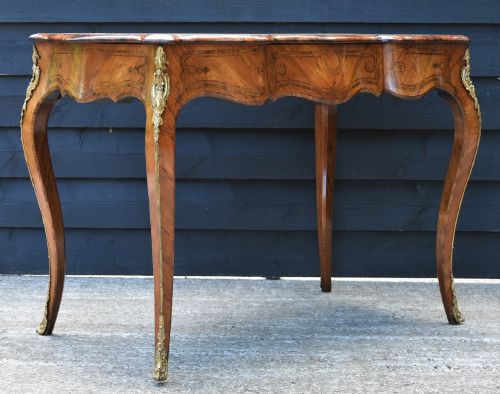
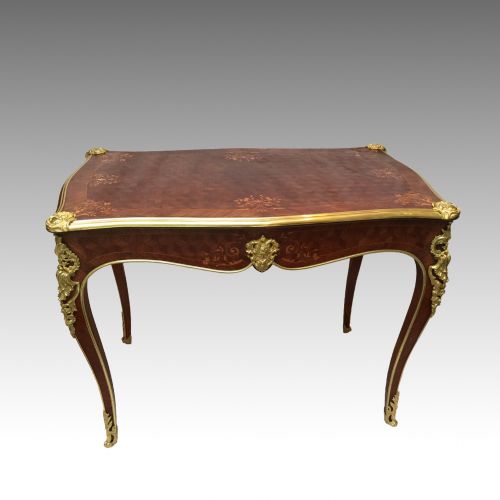
The distinctive double-curved cabriole leg was shaped from solid timber to maintain structural integrity while presenting a flowing line, often terminating in scroll or pad feet. Ormolu mounts cast in bronze and then gilded were pinned to the corners, aprons, and drawer edges to accentuate the contours of the desk.
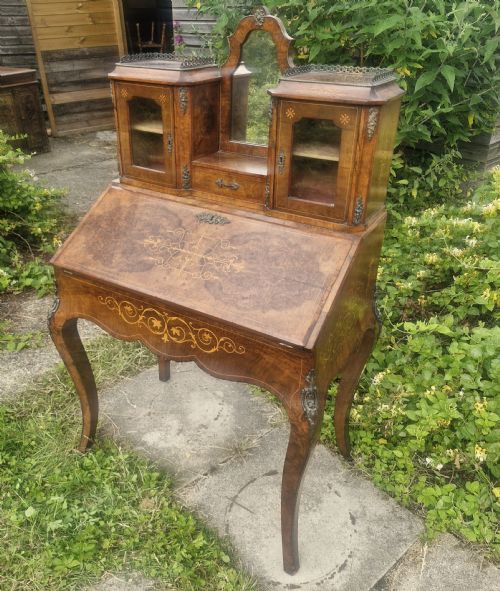
Writing surfaces frequently incorporated inset panels of tooled leather or glass, bordered by crossbanded veneers. Drawers utilised traditional dovetail joinery, and interior compartments within pieces like the bonheur-du-jour housed small pigeonholes and locking cabinet doors.
Pieces span the eighteenth, nineteenth, and early twentieth centuries, with a strong emphasis on Victorian and Louis XV revival styles.
Assessing quality
Quality rests upon the precision of the marquetry cutting and the choice of timber figuring, where dense burr walnut or richly grained kingwood indicates a higher tier of production. The crispness of the cast ormolu mounts and their integration with the wooden frame signal the level of craftsmanship invested in the piece.
Structural harmony dictates the merit of a desk, visible in the balanced sweep of the cabriole legs and the seamless fit of drawers within their housings. Superior examples maintain original finishes and patination on the timber, showing natural wear rather than heavy restoration.
Millet·Gill & Reigate
The Inlaid Cabriole Leg Desk Glossary
- Cabriole leg
- A furniture leg featuring two curves; the upper convex curve arcs outward, while the lower concave curve arcs inward toward the foot. This form derives from animal limbs and became a defining feature of eighteenth-century and revival furniture.
- Marquetry
- The art of applying pieces of veneer to a structure to form decorative patterns and pictures. Craftsmen cut various tinted woods, shells, or metals together to create detailed floral or architectural motifs.
- Bureau plat
- A freestanding double-sided writing desk featuring a rectangular top inset with leather and drawers arranged along the frieze. This form emerged in France during the seventeenth century and remained popular through subsequent revival periods.
- Bonheur-du-jour
- A light-duty ladies' writing desk featuring a small cabinet or set of pigeonholes superstructure upon the main writing surface. These pieces gained popularity during the mid-eighteenth century in France and returned in Victorian iterations.
- Ormolu
- Gilded bronze used for decorative mounts, feet, and handles on fine furniture. The alloy of copper and zinc receives a fine layer of gold applied through mercury amalgamation or electroplating.
Inlaid Cabriole Leg Desk: Frequently Asked Questions
How do I clean the leather top?
Wipe the tooled leather insert gently with a slightly damp, soft cloth to remove dust. Avoid harsh chemical cleaners or excessive moisture that might damage the surrounding wood veneer.
Apply a specialist leather cream sparingly if the surface appears dry, buffing it gently once absorbed to maintain the original sheen.
Are these desks suitable for daily work?
Many of these pieces were built as functional writing furniture and accommodate modern laptops or writing materials comfortably. Consider the kneehole clearance and desk height, as older writing surfaces occasionally sit lower than contemporary desks.
Using a matching antique chair helps ensure correct ergonomic alignment while protecting the proportions of the setup.
How do I tell French revival from 18th century?
Examine the construction methods, timber preparation, and secondary woods used inside the drawer linings. Eighteenth-century pieces typically display hand-cut joinery and specific regional timber choices distinct from later nineteenth-century revival workshops.
Revival pieces often utilise machine-sawn elements alongside hand-finishing, reflecting the industrial techniques available during the Victorian and Edwardian eras.
How do I care for marquetry surfaces?
Keep wooden desks away from direct sunlight and steady heat sources to prevent the veneers from drying out and lifting. Maintain a stable room temperature to protect the intricate wood inlay from splitting.
Apply a traditional beeswax polish occasionally and buff with a soft cloth to nourish the timber and preserve the historic finish.