






Industrial Landscape Painting
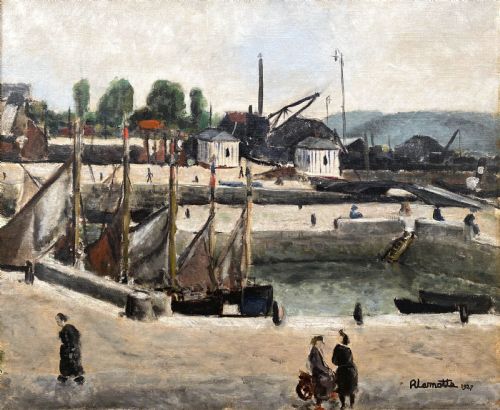
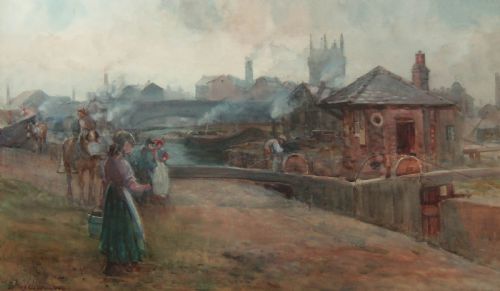
Industrial landscape painting captures the heavy atmosphere of docks, factories, and townscapes through the lens of twentieth-century and nineteenth-century artists.
Industrial Landscape Painting
An industrial landscape painting records the working fabric of towns, ports, rivers, and quarries across Britain and Europe. These works capture the changing face of manufacturing and trade through the nineteenth and twentieth centuries.
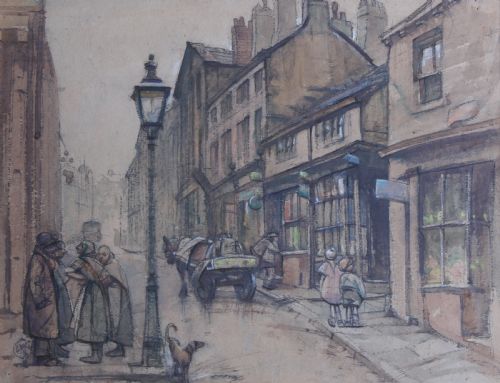
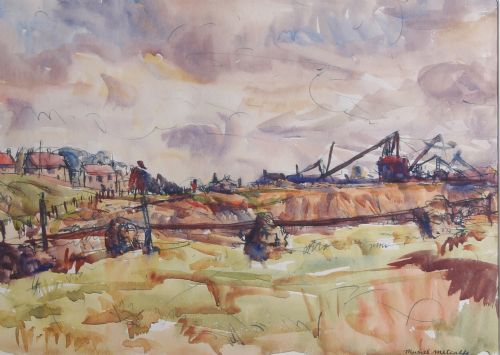
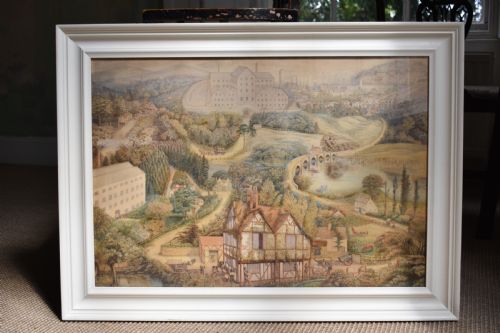
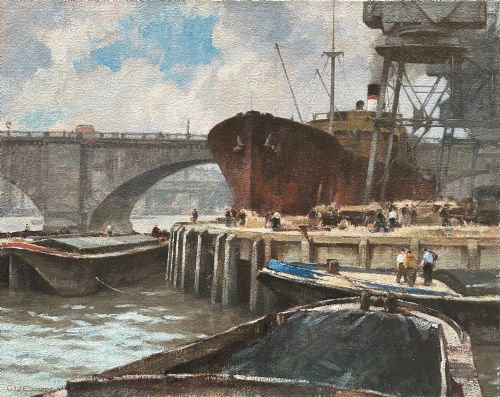
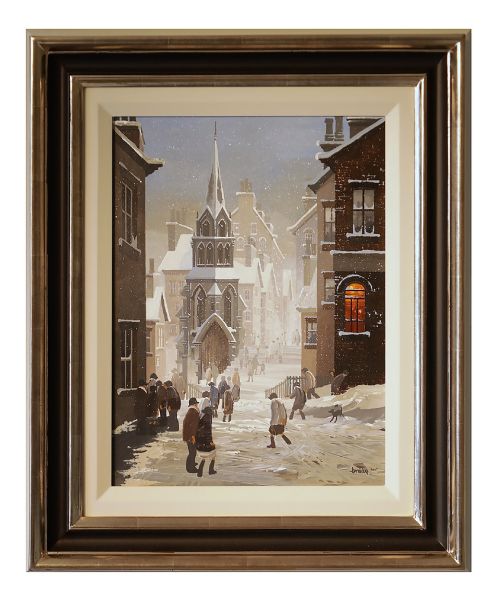
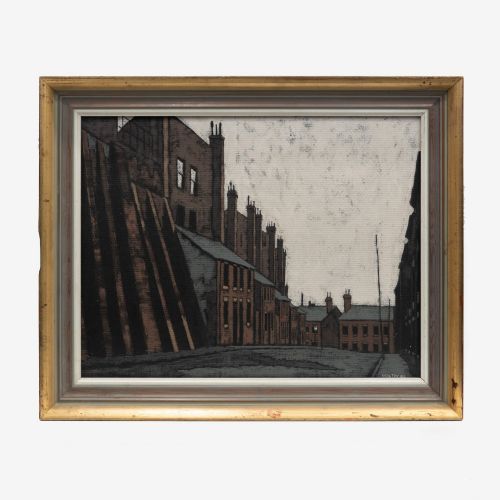
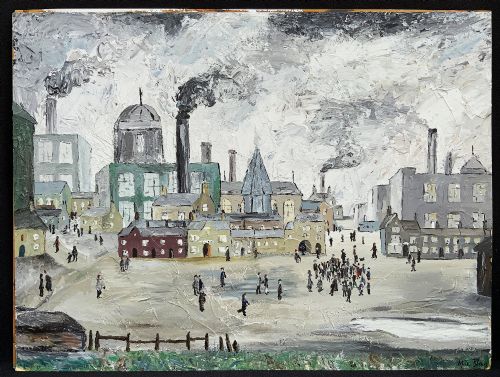
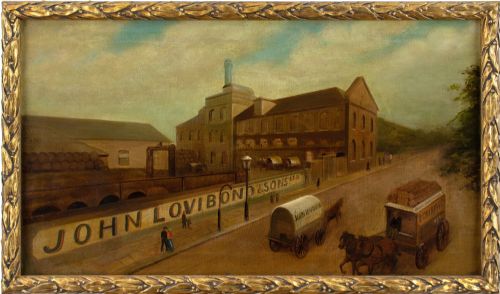
The pieces on this page span the 19th Century through to 1960, taking in Northern School realism, British Impressionism, Modern British work, and Constructivism. You will encounter views ranging from London Bridge and Southampton Docks to Bradford quarries and French canals.
Most examples lean towards oil on canvas or board, alongside watercolours on paper and occasional pastels. Subjects focus on the physical labour of shipping yards, breweries, factories, and urban shipyards.
Materials and Technique
Artists record these heavy scenes using oil on canvas, oil on board, or watercolour pigment on paper. Impasto paint application builds up the thick smoke and textured masonry characteristic of industrial subjects.
Support materials vary from stretched canvas and wooden board to heavy paper sheets. Framing often uses glass for works on paper and traditional wooden mouldings for oil paintings.
Materials in this collection include oil on canvas, watercolour on paper, and pastel on board.
Assessing Quality
Quality rests in the firmness of composition and the artist's handling of light against heavy smoke, brick, and water. Stronger works command attention through confident brushwork and a clear sense of atmosphere.
Pieces tied to identified artists or specific regional schools hold greater interest than anonymous output. The handling of perspective and the integration of figures into industrial settings distinguish accomplished hands from routine topographical recording.
Muriel Metcalfe·Brian Shields Braaq·Stuart Walton·Fred Lawson·Frank Shenton·Arthur Netherwood·Frances E Nesbitt·Herbert John Finn·James W Booth·Walter J Hall
The Industrial Landscape Painting Glossary
- Northern School
- A regional artistic movement depicting the industrial towns, terraced streets, and working life of Northern England. Artists often used muted tones and stark realism.
- Constructivism
- An artistic approach focusing on geometric abstraction and structural forms. In industrial scenes, this translates to an emphasis on the rigid lines of factories, docks, and machinery.
- Impasto
- A technique where paint is laid onto a surface in very thick layers, usually thick enough that the brush or painting-knife strokes are visible. It adds physical texture to smoke, water, and industrial structures.
- Topographical watercolour
- A detailed painting focused on the accurate representation of a specific place. These works often serve as historical records of towns, docks, and rivers.
Industrial Landscape Painting: Frequently Asked Questions
What periods do these industrial paintings cover?
The selection spans from the nineteenth century through the 1960s. Major groupings cluster around the early twentieth century and the mid-century decades.
Styles shift from nineteenth-century British school realism through British Impressionism to mid-century modernism and constructivist factory scenes.
How should I care for an oil painting?
Keep oil paintings out of direct sunlight and away from rapid temperature fluctuations. Display them on interior walls where humidity remains stable.
Dust canvas surfaces gently with a soft, dry brush. Avoid using water or cleaning solutions on the paint layer.
How do I look after watercolour works on paper?
Watercolours require framing behind glass with acid-free mounts to protect the paper and pigment from atmospheric damage. Hang them away from direct sunlight to prevent fading.
Maintain moderate room humidity to keep the paper stable over time.
What subjects feature in these works?
Common subjects include docks, shipyards, breweries, quarries, and urban townscapes. Artists focused on working rivers, canals, and manufacturing hubs.
Scenes range from specific locations in London, Bradford, and Southampton to French harbours and industrial estuaries.