


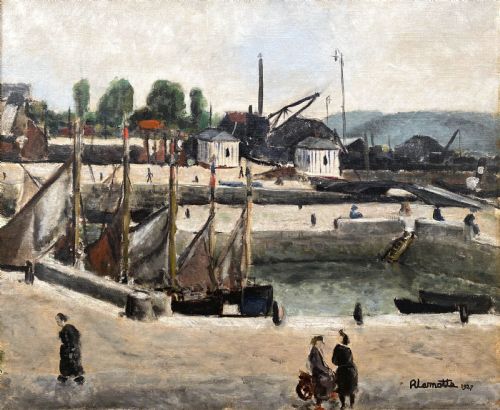


Grey Industrial Oil Painting
A grey industrial oil painting captures the grit and atmosphere of past factories, docks, and shipyards with moody brushwork.
Grey Industrial Oil Painting
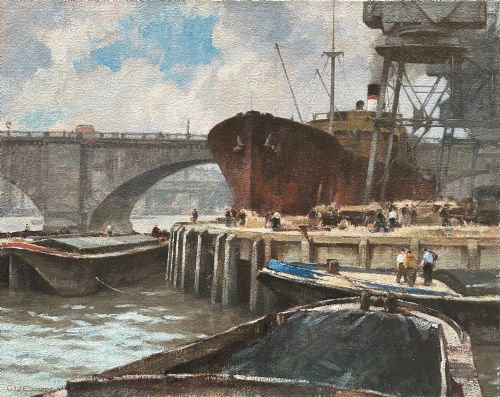
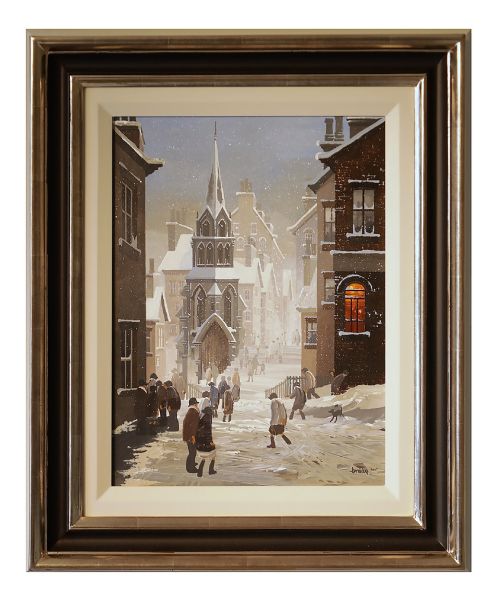
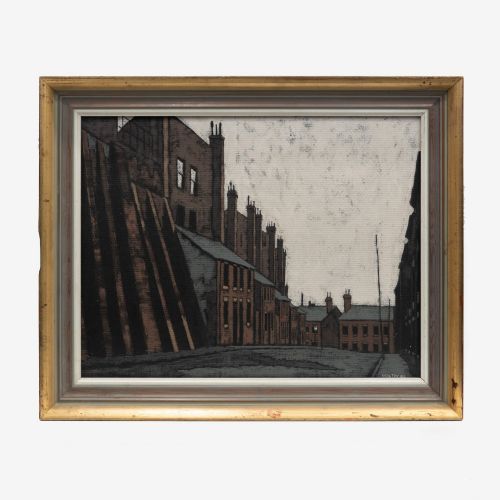
When you search for a grey industrial oil painting, you encounter works that record urban growth, shipping yards, and northern townscapes from the nineteenth century onwards. These canvases capture smoky horizons, dockside cranes, and brick terraces rendered in subdued, heavy palettes.
You are most likely to meet mid-twentieth-century pieces, particularly from the nineteen-fifties and nineteen-sixties, alongside earlier nineteenth-century views. They span British and French schools, often reflecting northern realism or mid-century modern sensibilities.
The subjects range from crowded Southampton docks and Ostend maritime scenes to northern townscapes and industrial estuaries. Each piece offers a specific window into working landscapes through oil on canvas, board, or wood.
How they were made
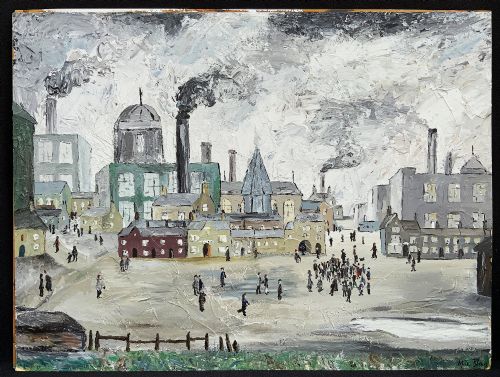
These works rely primarily on oil paint applied to canvas, board, or wood panels, sometimes incorporating thick impasto layers to build up texture. Artists utilised these materials to create heavy, atmospheric surfaces that mirror the soot and grime of industrial subjects.
Many are housed in original wood frames that complement the sombre tones of the composition. The technique often involves visible, expressive brushstrokes rather than smooth academic blending, suiting the rough nature of factories and barges.
One canvas preserves the bustle of French canals circa nineteen-forty, keeping mid-century river life alive in heavy oil.
What varies in quality
The strength of a grey industrial oil painting depends on the confidence of the brushwork and the artist's ability to command a restricted palette without losing depth. Stronger pieces use tone and texture to convey weight and atmosphere rather than relying purely on descriptive detail.
Context and authorship also shape the standing of a work, with named artists from established regional traditions commanding more attention. The handling of light across water or industrial brickwork separates a routine record from a compelling artistic statement.
The Grey Industrial Oil Painting Glossary
- Oil on canvas
- A traditional painting medium where pigment mixed with drying oil is applied to stretched woven fabric. This combination allows for rich blending and varied surface textures.
- Impasto
- Paint laid on an area of the surface in very thick layers, usually thick enough that the brush or painting-knife strokes are visible. It adds physical relief and catches the light.
- Northern School
- A regional grouping of British artists who painted industrial towns, mill workers, and urban landscapes. Their work often employs a dark, atmospheric palette.
- Oil on board
- A technique where rigid wood or composite board serves as the painting support instead of canvas. It provides a firm, unyielding surface for the brush.
- Townscape
- A painting or drawing depicting a built-up urban area, similar to a landscape but focused on streets, buildings, and industrial architecture.
Grey Industrial Oil Painting: Frequently Asked Questions
What periods do these paintings come from?
The works span from the nineteenth century through to the nineteen-sixties and later periods. They document shifting approaches to industrial and maritime subjects over more than a century.
Mid-century modern and nineteen-fifties examples appear frequently alongside earlier nineteenth-century pieces and nineteen-twenties cityscapes.
What surfaces are used for these paintings?
Artists painted on stretched canvas, wooden boards, and various types of panel supports. Oil paint is the primary medium across all these different surfaces.
Some works incorporate thick impasto on canvas or board to build up a textured, tactile finish.
How do I identify a northern school painting?
Northern school and northern realism works typically focus on industrial townscapes, factories, and working-class urban life. They generally employ a muted, atmospheric palette dominated by greys and dark tones.
Artists working in this manner often captured the gritty reality of northern British cities and docks.
Where were these industrial scenes painted?
The subjects range across British and continental locations, including Southampton docks, French canals, Ostend maritime ports, and northern English towns. Each location reflects the specific maritime or industrial activity of the area.
Estuaries, barges, and harbour figures form common motifs within these regional settings.