


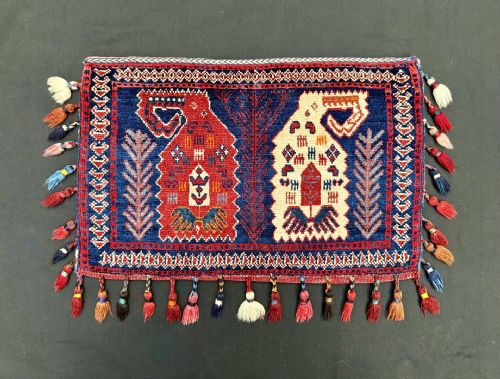


Indigo Wool Tribal Bag
An indigo wool tribal bag brings rugged nomadic artistry into a modern room, offering authentic textile history woven by tribal makers.
Indigo Wool Tribal Bag
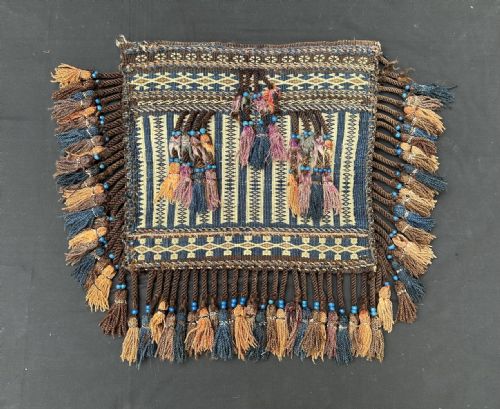
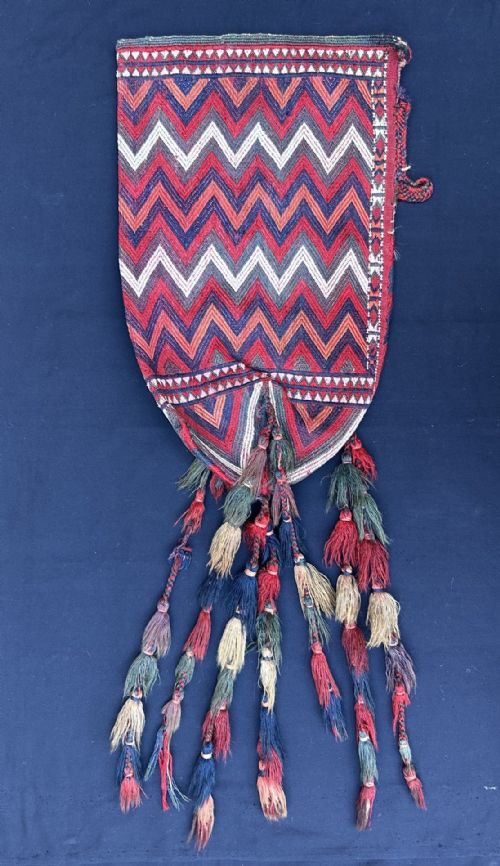
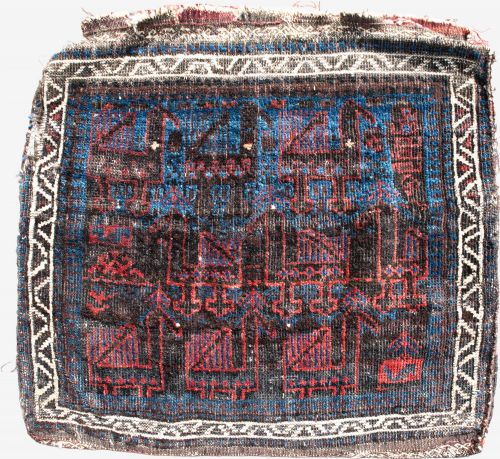
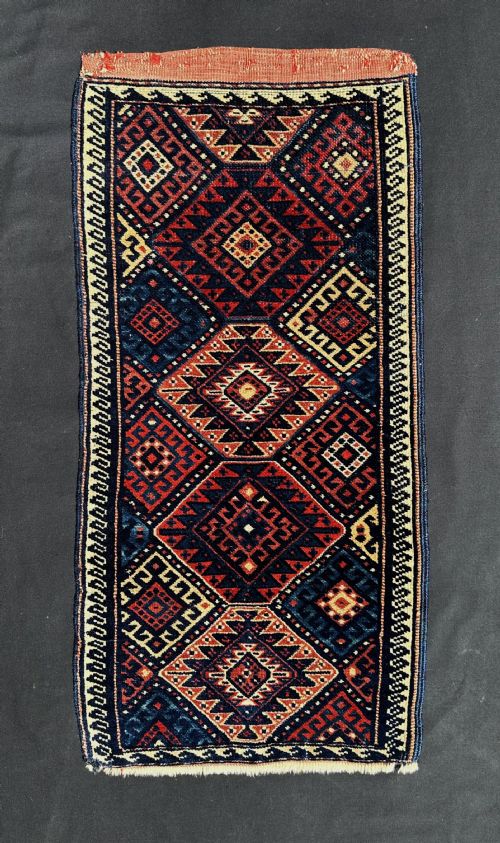
When you search for an indigo wool tribal bag, you encounter woven utilitarian containers created by nomadic and tribal weavers across Persia, Afghanistan, and Central Asia. These items include storage bags, saddlebags, salt bags, vanity bags, and tent-pole bags produced during the nineteenth and early twentieth centuries.
The pieces listed on this page span styles such as Persian Tribal, Turkmen Tribal, and Baluch Tribal. You will frequently find specific regional forms, including Balisht-face pillow bags, Yomut torba faces, and half-saddlebags woven by groups like the Afshar, Baluch, Yomut, and Qashqai.
Each object served a practical purpose in nomadic daily life, functioning as a container for personal possessions, household storage, or transport on animals. Today, collectors value them for their graphic field designs, such as the 'Kepse' gul or Herati motifs, and their robust construction.
Evaluating quality and execution
The distinction between average and exceptional pieces rests on the precision of the weave and the depth of the natural dyes. Superior examples display tightly packed knots or crisp flat-weave structures that maintain their rigidity.
Design clarity also determines distinction, as finer bags feature well-proportioned tribal motifs and balanced borders executed by experienced hands. The condition of the wool pile and the retention of original fringes or backings further separate standard utility pieces from masterworks.
Current listings feature pieces dated between 1860 and 1920, originating from regions including Khorassan, Fars, and Turkmenistan.
The Indigo Wool Tribal Bag Glossary
- Soumak
- A flat-weave technique where coloured weft threads wrap over the warp threads in a continuous direction. This method produces a durable, textured fabric without a pile, often seen on salt bags and trappings.
- Torba
- A wide wall-hanging storage bag traditionally used in Turkmen households for small possessions. These pieces usually feature distinct guls and precise geometric borders.
- Gul
- A repeating medallion or octagonal design motif used extensively in Turkmen and tribal weaving. Each pattern often identifies a specific tribe or clan.
- Balisht-face
- The decorative front panel of a traditional sleeping pillow or bolster bag. These items were woven by nomadic women for daily domestic use.
- Uk Bash
- A cylindrical or tent-shaped bag designed to cover the ends of wooden tent poles in a nomadic encampment. They are often finely decorated with protective amulets or symbols.
Indigo Wool Tribal Bag: Frequently Asked Questions
What is a tribal bag used for?
Nomadic groups utilised these containers for storing household goods, salt, grain, or personal items inside tents and during migrations.
Many functioned as saddlebags or pack trappings draped over animals, combining practical transport with decorative tribal markers.
How do I care for an antique bag?
Protect the wool textile from direct sunlight to prevent natural dyes from fading over time. Gentle vacuuming with a low suction attachment helps remove dust without damaging the fibres.
Avoid using water or chemical cleaners on antique wool, and consult a textile conservator for professional cleaning.
How do I date these textiles?
Dating relies on analysing the wool quality, the chemical composition of natural dyes, and the structural characteristics of the weave. Stylistic conventions and specific tribal attributions also help place pieces within the nineteenth or early twentieth century.
Comparing structural details against documented tribal examples provides a reliable timeframe for manufacture.
Can I hang these bags on the wall?
Mounting these textiles on a wall is a common way to display the graphic patterns and colour palettes safely. A professional framer or textile specialist can attach a fabric sleeve to support the weight evenly.
Ensure the support distributes the tension across the entire upper edge to prevent stretching the antique wool.