
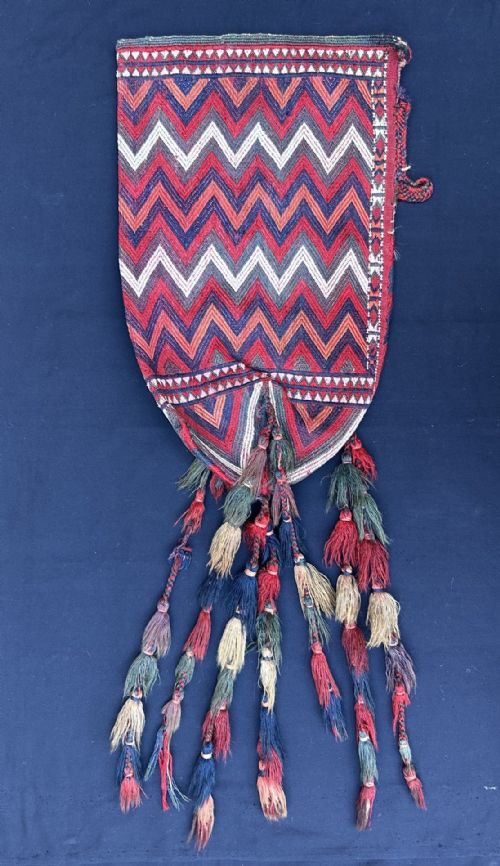
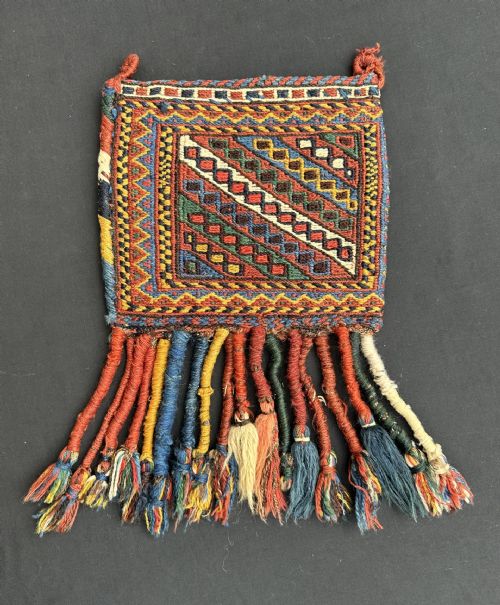


Nomadic Flat Weave Bag
These nomadic flat weave bag examples bring authentic tribal craftsmanship into a room, offering portable storage shaped by generations of tradition.
Nomadic Flat Weave Bag
A nomadic flat weave bag represents the portable textile heritage of pastoral peoples across Central Asia, Persia, and the Caucasus. These utilitarian objects served practical purposes for transport and storage before entering the antique market.
Buyers on this page most frequently encounter pieces originating from tribal groups such as the Shahsevan, Turkmen, and various regional nomads. The selection spans storage pouches, saddlebags, and mafrash panels dating from the mid-nineteenth century onward.
The forms vary from complete pieces retaining original plain weave backs and tassels to individual bag faces and panels. Each textile reflects the specific cultural geometry and weaving traditions of its makers.
Materials and construction
Makers utilised hand-spun wool combined with cotton foundations to create durable structures capable of withstanding nomadic transit. Natural dyes provided the deep reds, blues, and earth tones characteristic of these textiles.
Weaving techniques included sumac wrapping alongside fundamental flat weave methods to produce crisp geometric patterns without pile. Structural details often incorporated supplementary weft wrapping to reinforce edges and openings.
Listings span periods from eighteen-fifty to nineteen-twenty, featuring hand-spun wool, natural dyes, and cotton across Turkmen, Shahsevan, and Caucasian tribal traditions.
Assessing quality in flat weave bags
Quality rests upon the fineness of the weave and the precision of the geometric layout. Tighter structure and careful handling of natural dye palettes distinguish superior examples.
The survival of original backs, tassels, and structural closures elevates the historical integrity of a piece. Finer items demonstrate greater density in the hand-spun wool and more complex structural wrapping.
The Nomadic Flat Weave Bag Glossary
- Flat weave
- A textile constructed without knotting pile, relying on interwoven warp and weft threads to create a smooth surface. This method produces lightweight yet robust containers suitable for nomadic use.
- Sumac
- A supplementary weft-wrapping technique that creates raised pattern details across the surface of the textile. This method adds structural strength and visual texture to storage vessels.
- Mafrash
- A large rectangular storage container or bedding chest used by nomadic groups, often constructed as four side panels and a base. Surviving examples frequently appear as individual panels or complete assembled boxes.
- Khorjin
- A traditional double-sided saddlebag designed for animal transport during seasonal migrations. These pieces feature two pouches joined by a central slit or connecting panel.
- Chuval
- A large tent storage bag traditionally used by Turkmen tribes to store household goods and blankets. They are characterised by distinct tribal gul motifs and horizontal banded designs.
Nomadic Flat Weave Bag: Frequently Asked Questions
How were these bags used?
Nomadic families used these containers to store clothing, bedding, grain, and personal possessions inside tents or during animal transport. Their flexible structure made them practical for packing and loading onto animals.
Double saddlebags hung across horses or camels, while large tent bags stacked inside dwellings to keep living spaces organised.
How do I live with a flat weave bag?
These textiles adapt well to modern interiors as wall hangings, decorative floor placements, or filled cushions. Their flat structure makes them easy to mount or display on furniture.
Keep them out of direct sunlight to protect the natural dyes and vacuum gently with a mesh screen attachment to remove surface dust.
How do I tell different tribal styles apart?
Tribal attribution relies on specific structural patterns, colour palettes, and regional weaving traditions. Turkmen groups frequently employ deep red fields with repeated guls, while Shahsevan weavers use sharp geometric sumac designs.
Geographic origins from Azerbaijan, the Caucasus, or south Persia manifest through distinct colour combinations and border arrangements unique to each culture.