



Vintage Yomut Weaving
Vintage yomut weaving brings tactile warmth and striking geometric patterns to an interior through authentic Turkmen tribal artistry.
Vintage Yomut Weaving
Vintage yomut weaving comprises authentic tribal textiles created by the Yomut tribe across the Trans-Caspian steppes of Central Asia. The pieces appearing here span from the mid-nineteenth century into the early twentieth century, reflecting a nomadic heritage rooted in practical utility and ceremonial tradition.
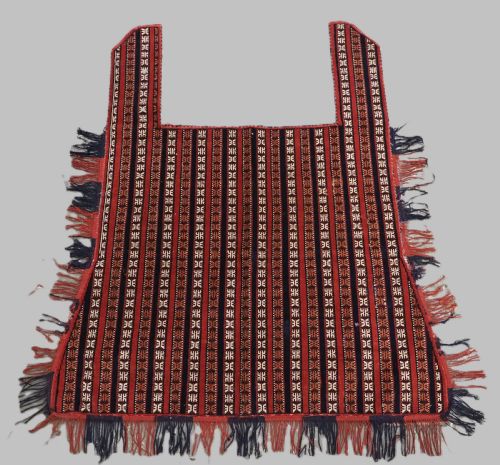
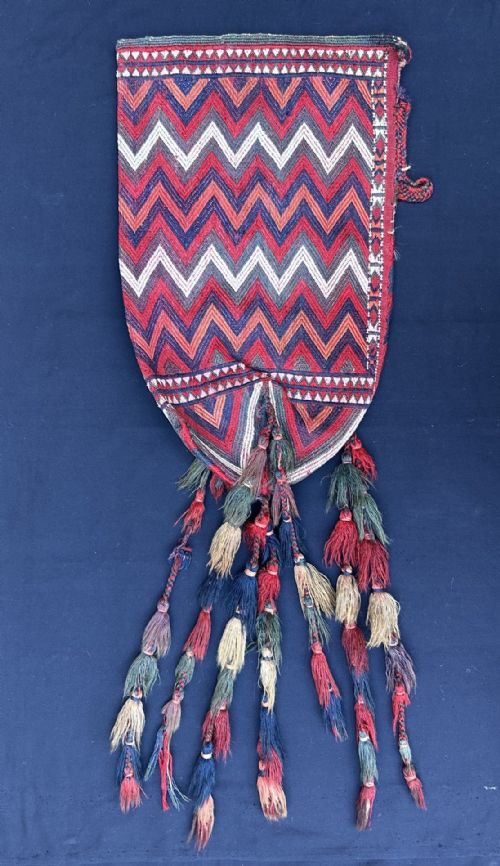
Buyers encounter a diverse range of forms, including horse covers, asmalyks, spindle bags, chuvals, mafrashes, and palas soumak kilims. These functional items translate into versatile wall hangings and decorative carpets suited for contemporary living spaces.
The aesthetic is defined by disciplined geometric layouts, characteristic guls, and banded flatweave designs. Each piece acts as a physical record of Central Asian tribal expression from periods spanning 1860 to 1920.
How they were made
The construction relies fundamentally on wool and hand-spun wool, often combined with cotton foundations to ensure structural integrity. Artisans utilised natural dyes to achieve rich, enduring colour palettes across pile rugs and flatweaves alike.
Techniques range from pile knotting in chuvals and asmalyks to soumak wrapping and banded flatweave construction in palas kilims. Spindle bags and horse covers demonstrate specialised handling suited to their specific utilitarian or ceremonial purposes.
Current listings feature pieces dated between 1860 and 1920, utilising wool, hand-spun wool, natural dyes, and cotton.
What varies in quality
Quality in these textiles depends heavily on the density of the weave and the precision of the geometric execution. Tighter knotting and finer spinning separate standard utility items from exceptionally refined ceremonial pieces.
The vibrancy and depth of the natural dyes play a primary role in visual distinction. Intact kilim ends, well-preserved structural integrity, and clarity within the gul motifs elevate the standing of individual textile examples.
The Vintage Yomut Weaving Glossary
- Asmalyk
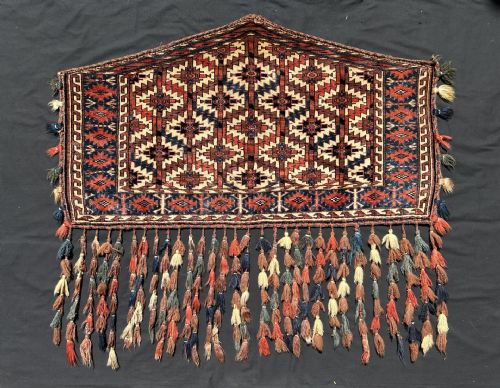
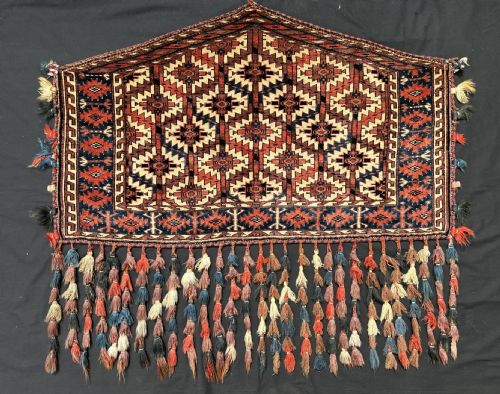
- A ceremonial pentagonal trapping produced by Turkmen tribes, traditionally hung on the flanks of a bride's camel during wedding processions. These decorative pieces display complex geometric field designs.
- Chuval
- A large storage bag made by Central Asian nomads for domestic use inside the yurt. They frequently feature repeating gul motifs across the face.
- Soumak
- A flatweaving technique where decorative coloured weft threads are wrapped over and under the warp threads in various sequences. This method creates a durable surface with a braided appearance on the face.
- Gul
- A repeating medallion or primary motif used in Turkmen rug design. Different tribes utilise distinct gul variations to signify lineage and cultural identity.
- Mafrash
- A rectangular storage sack or box-like container used for bedding and household possessions during nomadic migrations. They are often constructed in banded flatweave designs.
- Palas
- A term describing flatwoven textiles produced without a pile. These pieces rely on warp and weft interlacings to form crisp geometric patterns.
Vintage Yomut Weaving: Frequently Asked Questions
What is a yomut asmalyk?
An asmalyk is a pentagonal trapping made by Yomut weavers for ceremonial wedding processions. They were designed to adorn the flanks of camels.
Today, collectors prize these items as decorative wall hangings that showcase the intricate tribal artistry of Central Asia.
How were these tribal textiles used?
Nomadic families utilised these woven items for practical storage, animal trappings, and household organisation. Bags held wool, bedding, and personal belongings inside the yurt.
Other items served ceremonial functions during weddings or provided warm floor coverings and horse blankets across the steppes.
Are these pieces suitable for walls?
Many examples, particularly smaller chuvals, horse covers, and kilims, lend themselves well to vertical display. Their strong geometric designs translate effectively into textile art for modern interiors.
Mounting them properly protects the wool surface from the wear of foot traffic while highlighting the detail of the hand-spun yarn.
How do I identify a chuval?
A chuval is a large utility bag characterised by its broad proportions and repeating rows of guls across the face. Yomut examples feature specific tribal medallions unique to their weaving tradition.
They often appear today as complete bag faces or flat panel fragments preserved for their visual impact.
What materials make up these vintage pieces?
The primary material is wool, frequently hand-spun to create durable yarn with slight variations in texture. Cotton also appears in the structural foundations of certain items.
Artisans relied exclusively on natural dyes to colour the wool, resulting in rich tones that age gracefully over decades.