


Indigo Wool Oriental Rug
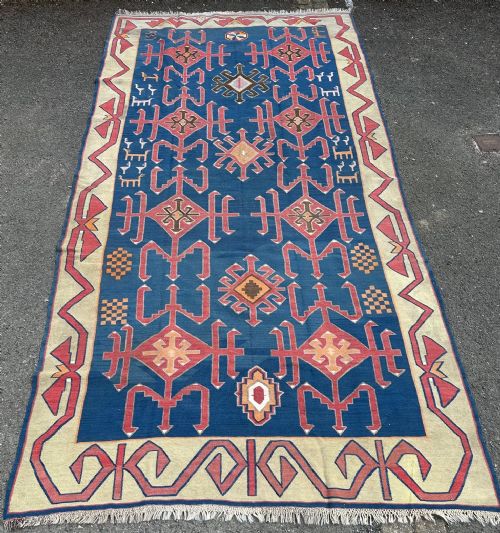
An indigo wool oriental rug brings deep blue dye and tribal weaving traditions directly into a room, offering durability and historical character.
Indigo Wool Oriental Rug
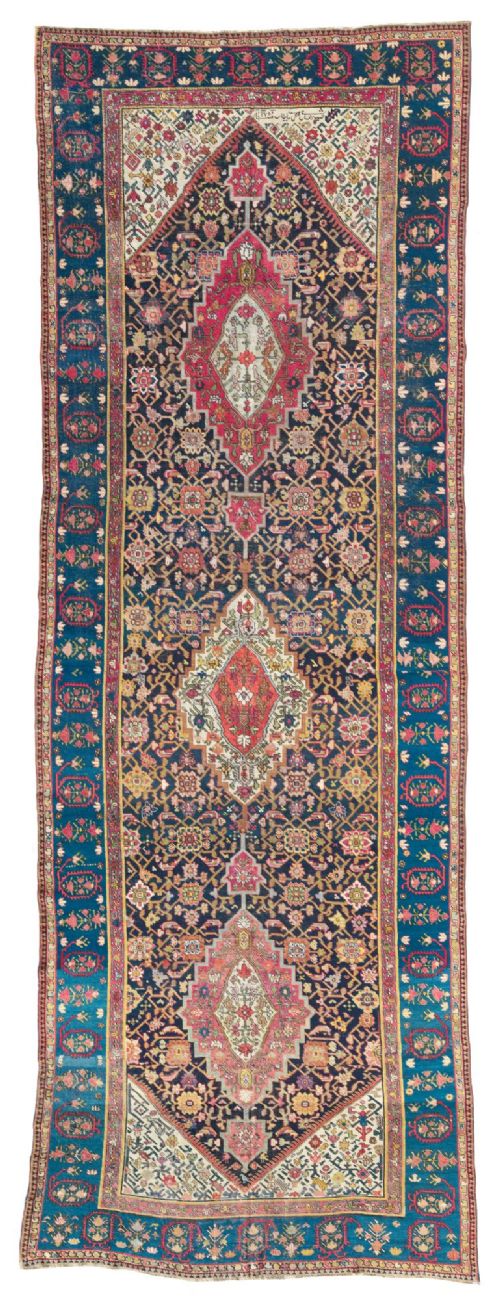
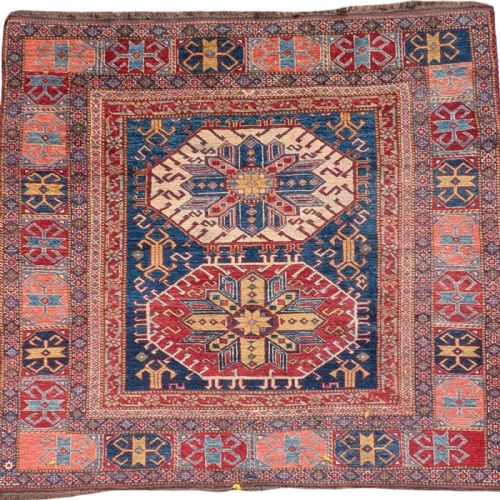
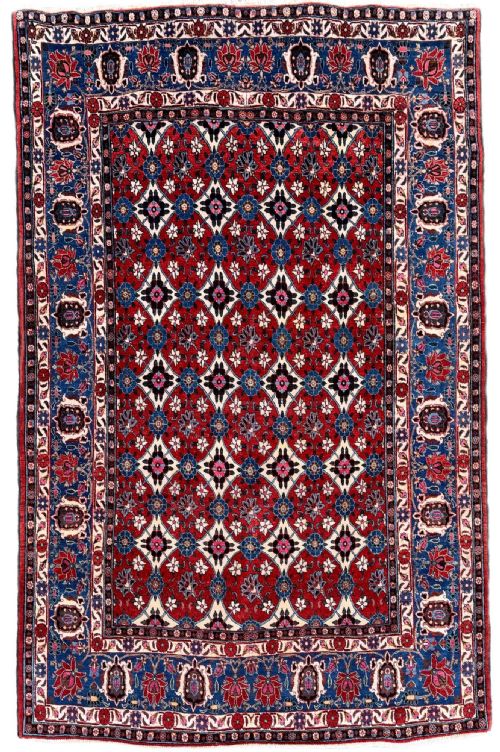
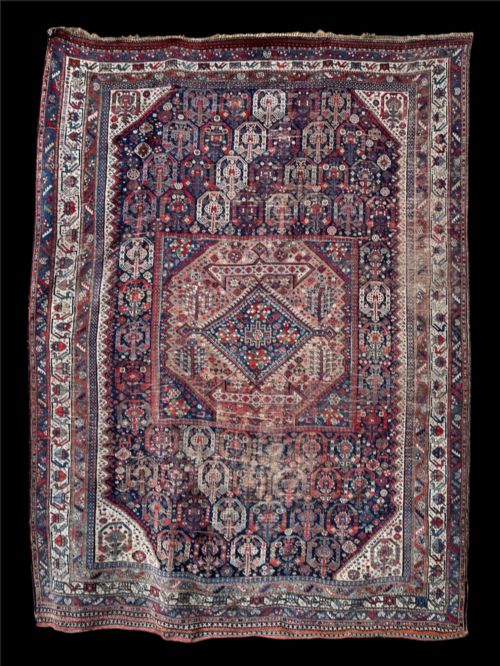
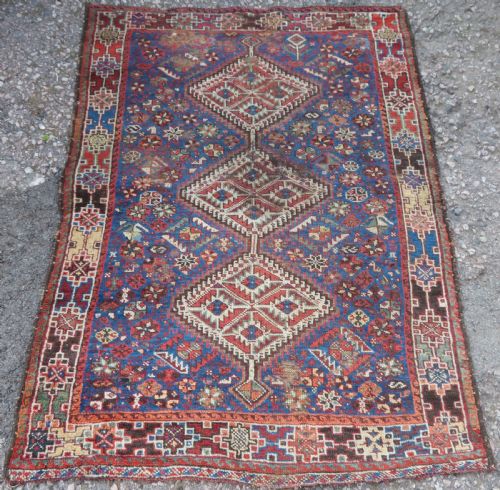
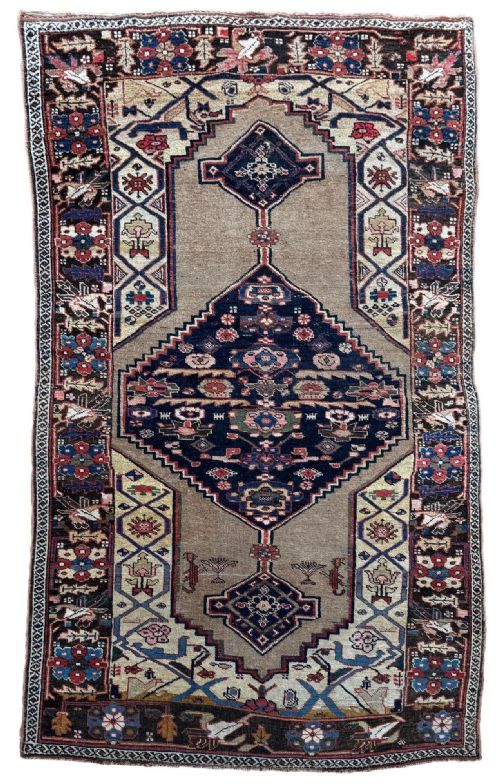
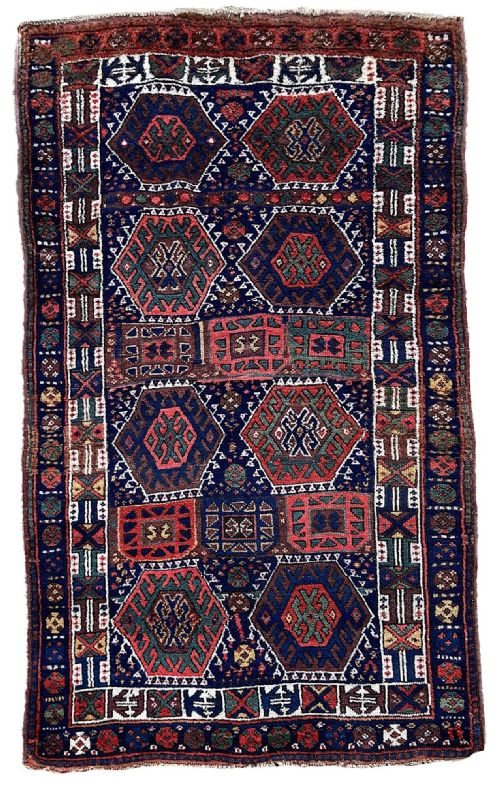
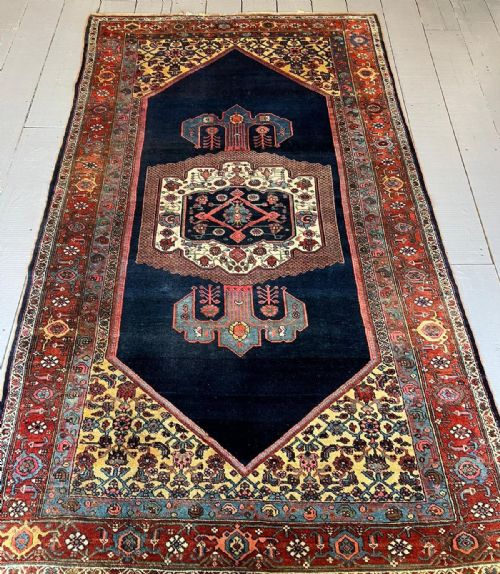
When someone searches for an indigo wool oriental rug, they are looking at hand-knotted and flat-woven floor coverings originating from Caucasus, Persian, and tribal regions. These textiles span periods from the mid-nineteenth century through the early twentieth century, incorporating regional formats such as runners, scatter rugs, and larger carpets.
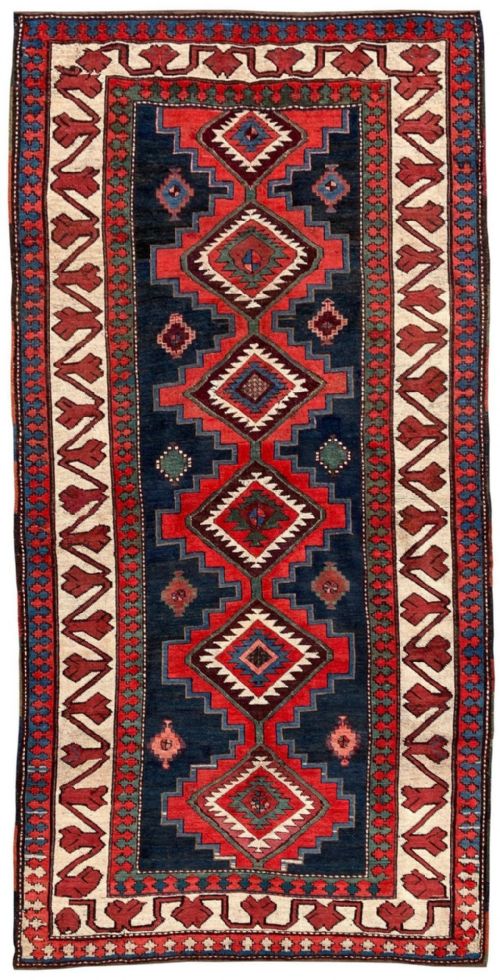
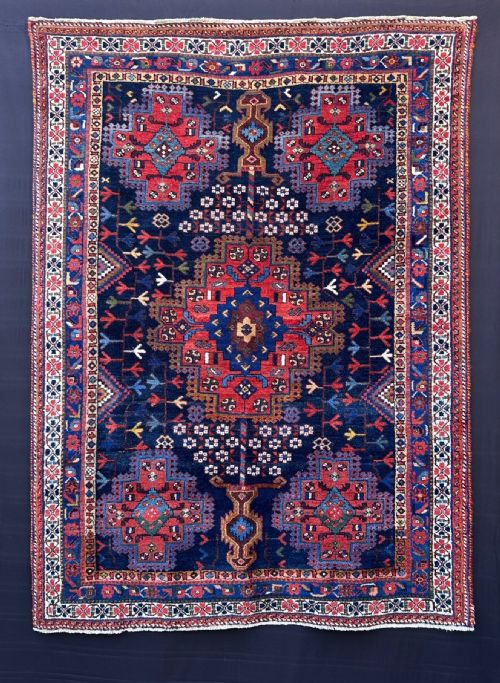
The most common versions met on this page include Caucasian Kazak pieces, Kurdish tribal formats, and Persian village rugs. These items rely on heavy wool foundations and dense piles tailored for domestic utility.
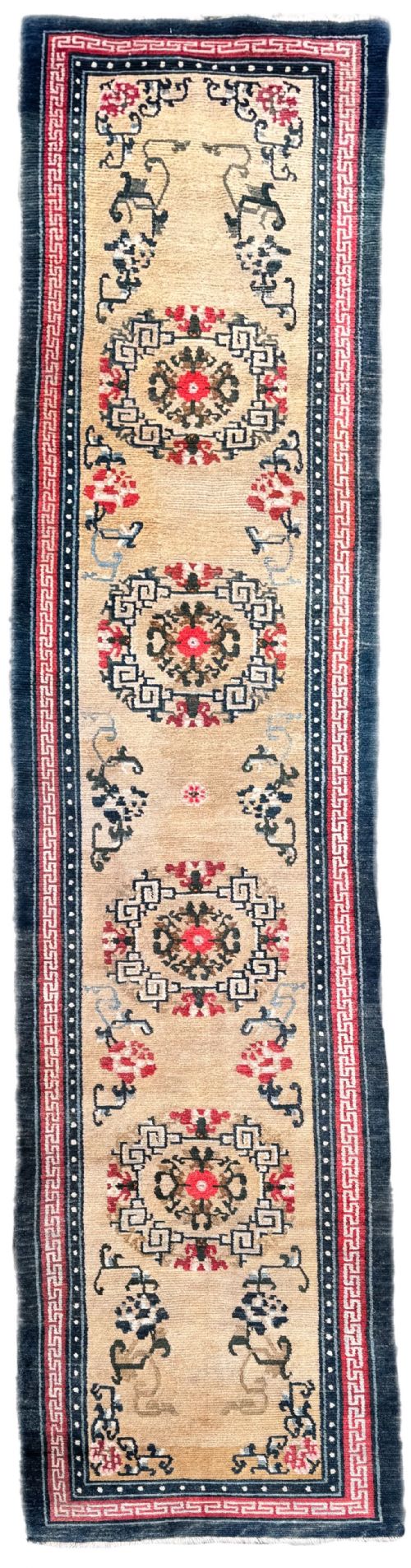
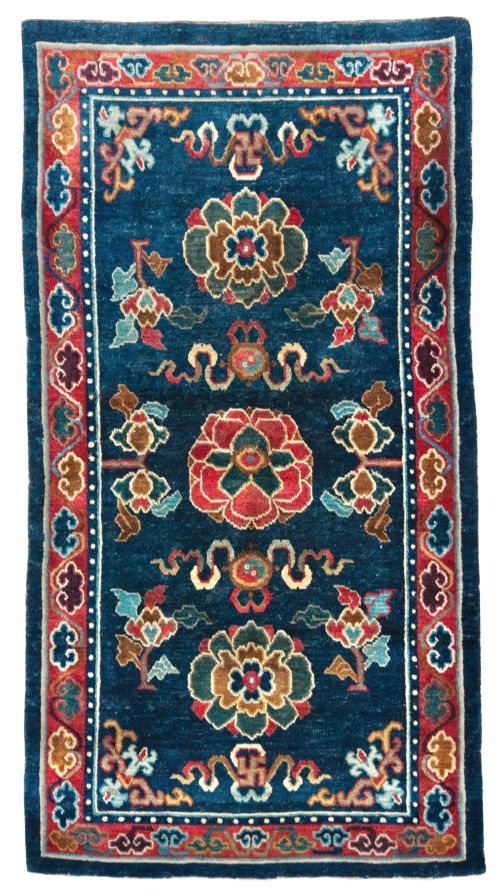
Makers ranged from nomadic tribal weavers to village workshops across Persia, the Caucasus, and Tibet. Each piece reflects the specific geometric or floral iconography of its origin group.
How they were made
The foundation and pile are constructed from hand-spun wool and cotton, providing a sturdy structure designed to withstand heavy foot traffic. Natural dyes supply the distinct palette, yielding deep blues alongside complementary earth tones.
Weavers utilised traditional upright looms, tying symmetrical or asymmetrical knots depending on the regional workshop or tribal tradition. Flat-weave kilims and pile carpets alike were beaten down firmly during construction to create a compact, resilient textile.
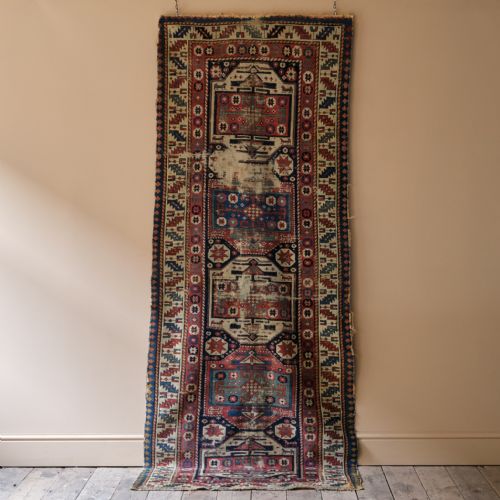
A crooked Kazak runner proves that weavers embraced charming geometry over rigid straight lines.
What varies in quality
Quality rests upon the fineness of the knotting and the stability of the wool foundation. Tightly packed structures hold their geometric lines more precisely over decades of use.
The depth and consistency of natural indigo dyeing set finer examples apart from simpler village productions. Greater variation in hue and careful preparation of the dyebath contribute to visual richness across the surface.
The Indigo Wool Oriental Rug Glossary
- Kazak
- A type of rug originating from the Caucasus known for bold geometric medallions and primary colour palettes. These pieces typically display strong indigo grounds and crisp rectilinear motifs.
- Kelleh
- A long, narrow carpet format traditionally used in Persian domestic interiors. Proportions are broader than a standard runner but narrower than a main carpet.
- Gul
- A repeating medallion or octagonal motif used extensively in Turkmen and tribal weaving traditions. Each design often signifies a specific clan or tribal affiliation.
- Khanden
- A small Tibetan seating or sleeping rug often featuring borderless designs and soft wool piles. They were traditionally utilised in monastic or domestic settings.
- Kilim
- A flat-woven tapestry textile produced without a pile. These pieces rely on tightly interlocked warp and weft threads to form sharp geometric patterns.
Indigo Wool Oriental Rug: Frequently Asked Questions
How do I clean an antique wool rug?
Gentle surface brushing and professional dusting remove embedded grit without harming the natural fibres. Avoid harsh chemical immersion or modern detergents that strip natural indigo dyes.
Allow the textile to dry flat in a shaded area after any spot treatment. Excessive moisture can weaken the cotton foundations and warp threads over time.
Where were these rugs made?
Production centres include village and nomadic regions across the Caucasus, Persia, and Tibet. Local tribes utilised available regional materials for their looms.
Specific valleys and confederacies developed distinct weaving idioms that distinguish a Caucasian Kazak from a Persian Afshar or Kurdish piece.
How can I tell the age of a rug?
Examination of the wool spin, dye sources, and structural wear patterns reveals the approximate period of manufacture. Natural indigo and hand-spun wool point toward nineteenth and early twentieth-century origins.
Structural irregularities in older village weaving often indicate hand-cranked or vertical tribal looms rather than modern mechanical production.
Can I use these rugs on heated floors?
Natural wool and cotton textiles tolerate moderate radiant heat provided an appropriate breathable underlay is utilised. Prevent direct contact with intense heat sources that dry out animal fibres.
Lift the textile periodically to inspect the floorboards and backing for trapped humidity or dust accumulation.