



Indigo Wool Flatweave
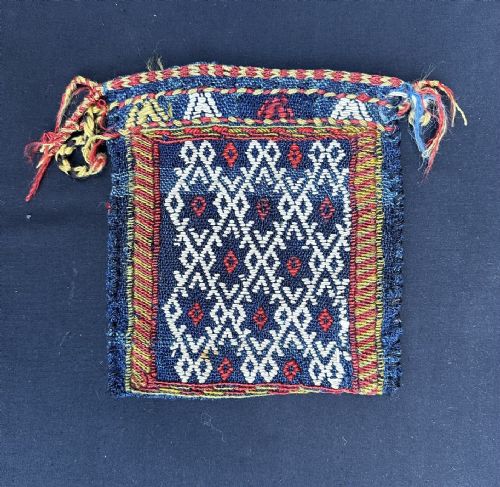
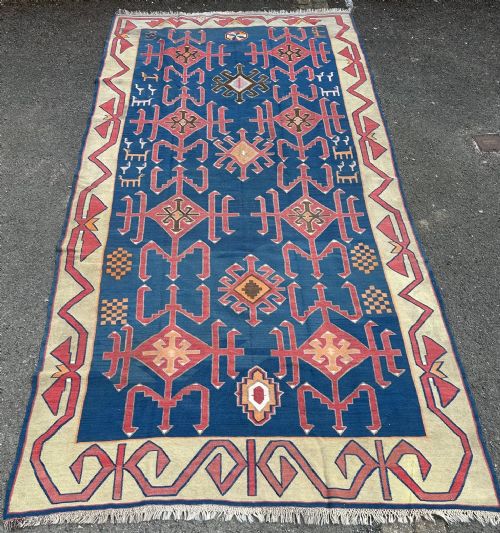
These indigo wool flatweave textiles bring deep colour and tribal geometry into a room through flat-woven kilims, bags and panels.
Indigo Wool Flatweave
An indigo wool flatweave brings together nomadic textiles produced across the Caucasus, Persia, Anatolia and Central Asia. These items include kilim rugs, flat-weave carpets, tribal bags, salt bags, mafrash panels and sofres. The pieces collected under indigo wool flatweave reflect the functional output of tribal weavers who utilised accessible local resources.
The objects stem predominantly from the late nineteenth century up to the middle of the twentieth century, specifically drawing on periods such as eighteen-eighty, nineteen-hundred, nineteen-ten, nineteen-twenty and nineteen-forty. Tribal groups such as the Baluch, Afshar, Shahsavan, Yomut Turkmen, Kungrad Uzbek and the tribes of Avar and Davaghin in Daghestan produced these works. You are most likely to encounter vintage Turkish kilims, Caucasian mafrash panels converted into small kilims, and Afghan Baluch flatweaves on this page.
How they were made
The structural foundation of an indigo wool flatweave relies on wool, natural dyes and cotton. Weavers interlocked warp and weft threads without a knotted pile, producing a thin, durable textile. Certain pieces incorporate soumak work, a wrapping technique that creates raised structural patterns across the surface.
Nomadic workshops and tent households dyed their materials using natural substances to achieve deep shades of indigo alongside secondary tones. Panels were frequently woven in separate strips and joined together, or individual items such as saddle-bags, tent-pole bags and eating cloths were later adapted into flat formats for domestic use.
Indigo Wool Flatweave Retail Price Guide 2026
Typical asking prices for indigo wool flatweave among the pieces listed under this phrase on Sellingantiques today, from the lower quarter to the upper quarter. They describe what is for sale here now, not the wider market.
Nomads wove tent-pole bags so structurally sound that damp tent poles survived long horseback journeys without puncturing the wool.
What varies in quality
The distinction between standard and superior examples of an indigo wool flatweave rests in the handling of the dye and the tightness of the weave. Saturated, evenly struck natural dyes provide depth that inferior chemical or weak baths lack. Structural integrity depends on consistent tension during the flat-weaving process, which prevents warping across large surfaces.
Artistic execution in tribal geometry and the complexity of subsidiary techniques, such as soumak wrapping, elevate certain pieces. Condition matters less than original structural competence, though period adaptations from utilitarian bags to flat panels influence how cleanly the textile lies.
The Indigo Wool Flatweave Glossary
- Flatweave
- A textile produced without a pile by tightly interlacing warp and weft threads. This technique creates a smooth, thin cloth used for rugs, covers and bags.
- Kilim
- A pileless carpet or rug woven flat using slit-weave or related techniques. These pieces originate across Turkey, the Caucasus, Persia and Central Asia.
- Soumak
- A brocading technique where coloured weft threads are wrapped around the warp threads in various sequences. This method creates a textured surface resembling embroidery on the front and loose floats on the back.
- Sofre
- A flat-woven textile used traditionally as a spread for communal meals or dough preparation. Afghan Baluch weavers produced these items in wool using geometric layouts.
- Mafrash
- A large rectangular storage bag woven in panels by nomadic groups such as the Shahsavan and Caucasian tribes. These panels are often separated and made into flat kilims.
Indigo Wool Flatweave: Frequently Asked Questions
What is an indigo wool flatweave?
An indigo wool flatweave is a pileless textile produced by tribal and nomadic weavers across the Caucasus, Persia, Anatolia and Central Asia. These items utilise wool and natural dyes, taking the form of kilims, saddle-bags, tent-pole bags and flat panels.
Such pieces represent the utilitarian output of groups including the Baluch, Afshar, Shahsavan and Yomut Turkmen. They date primarily from the late nineteenth century through to the mid-twentieth century.
How were these flatweaves used originally?
Nomadic and village communities used these textiles for daily practical functions inside tents and permanent dwellings. Items functioned as floor coverings, storage containers for bedding or salt, and eating cloths.
Bags like mafrash sides and tent-pole covers served transport needs during seasonal migrations. Over time, many structural bags were unpicked and laid flat as panels or small rugs.
How do I care for a vintage flatweave?
Protect these textiles by placing a quality underlay beneath them to prevent slipping and reduce friction on hard floors. Regular gentle vacuuming without a rotating brush bar keeps dust from settling into the weave.
Keep them away from prolonged direct sunlight to protect natural indigo and secondary dyes from fading. Professional cleaning tailored to antique flatweaves is recommended when deep washing becomes necessary.
How can I tell different tribal styles apart?
Tribal styles reveal themselves through distinct structural layouts, colour palettes and specific weaving methods. Caucasian pieces often display sharp geometric medallions, while Baluch and Afshar works frequently incorporate dark indigo fields and repeated latch-hook motifs.
Techniques also differentiate origins, such as the specific soumak wrapping found in Shahsavan panels or the structural strips used in Uzbek covers.