

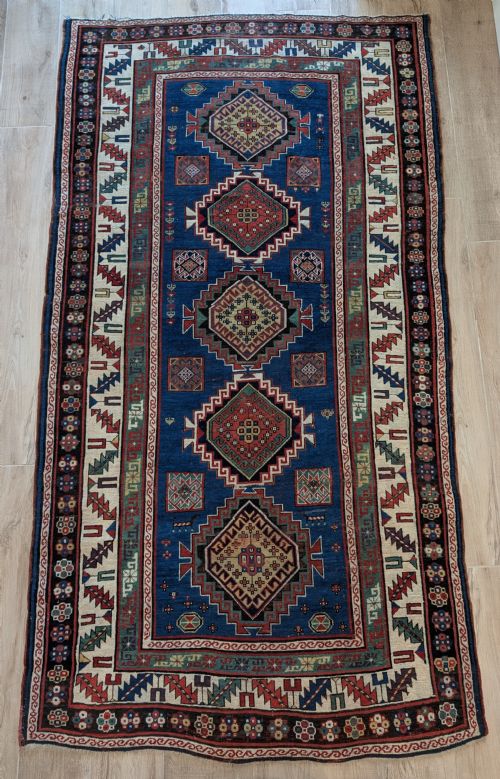
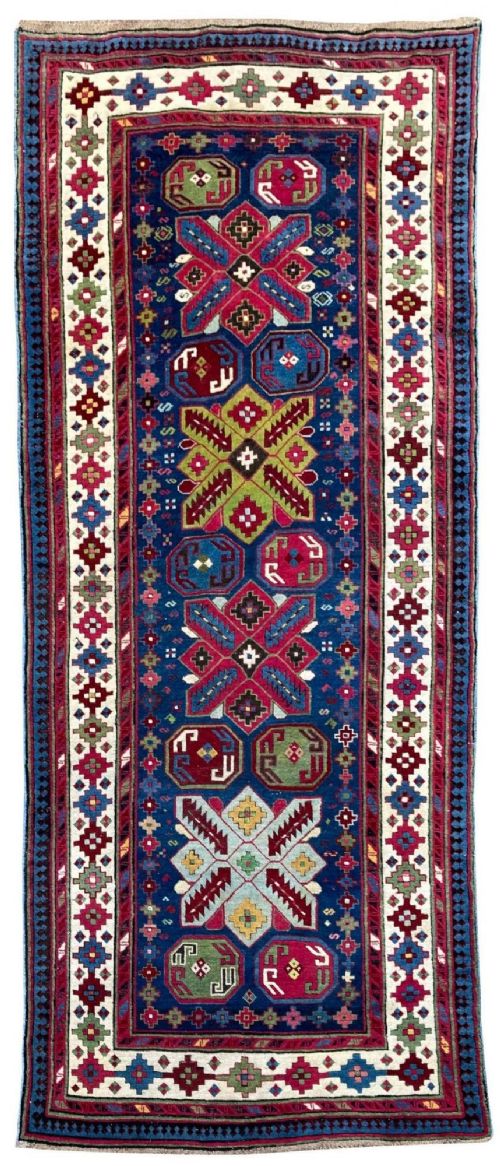
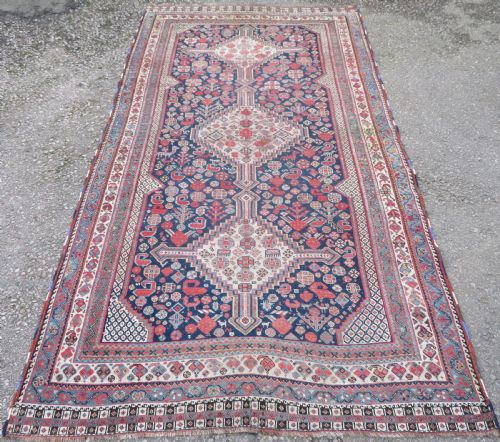
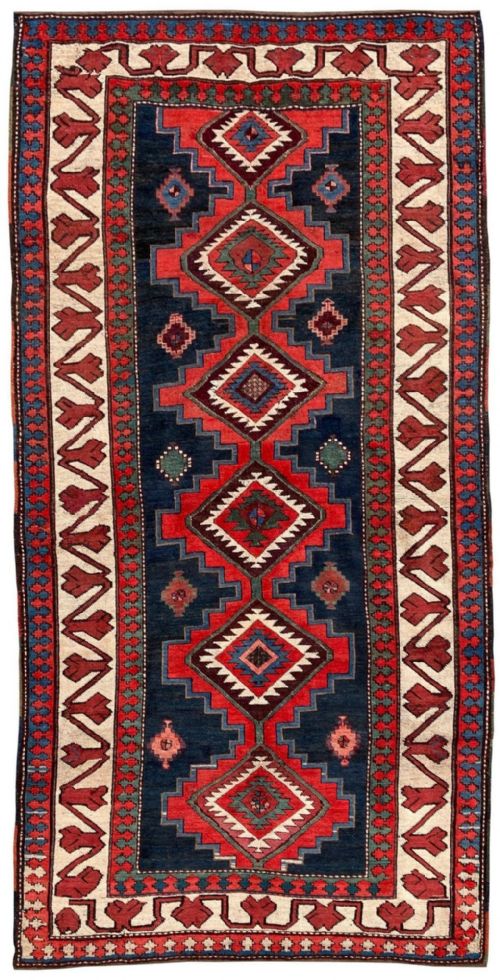



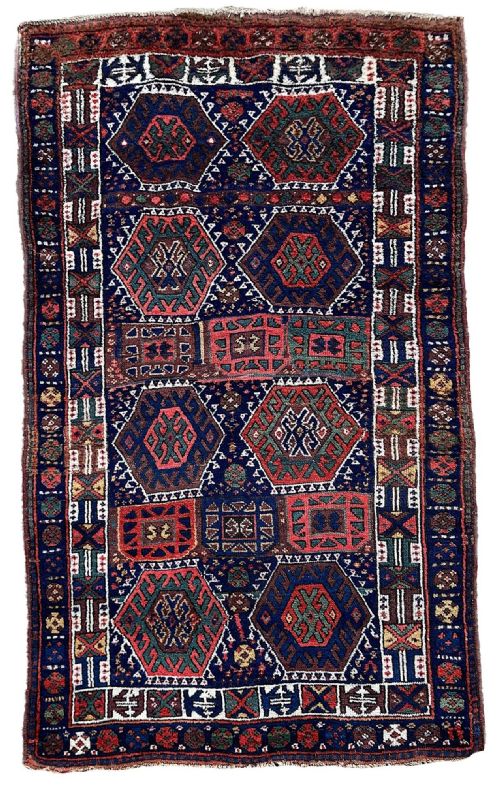


Indigo Blue Runner Rug
An indigo blue runner rug brings saturated botanical dye and narrow tribal geometry directly to narrow corridors and long hallways.
Indigo Blue Runner Rug
An indigo blue runner rug is an elongated textile designed for corridors, hallways, and narrow spaces, combining deep blue ground colours with traditional regional weaving. These floor coverings emerge from tribal and village workshops across the Caucasus, Persia, Turkey, and Central Asia.
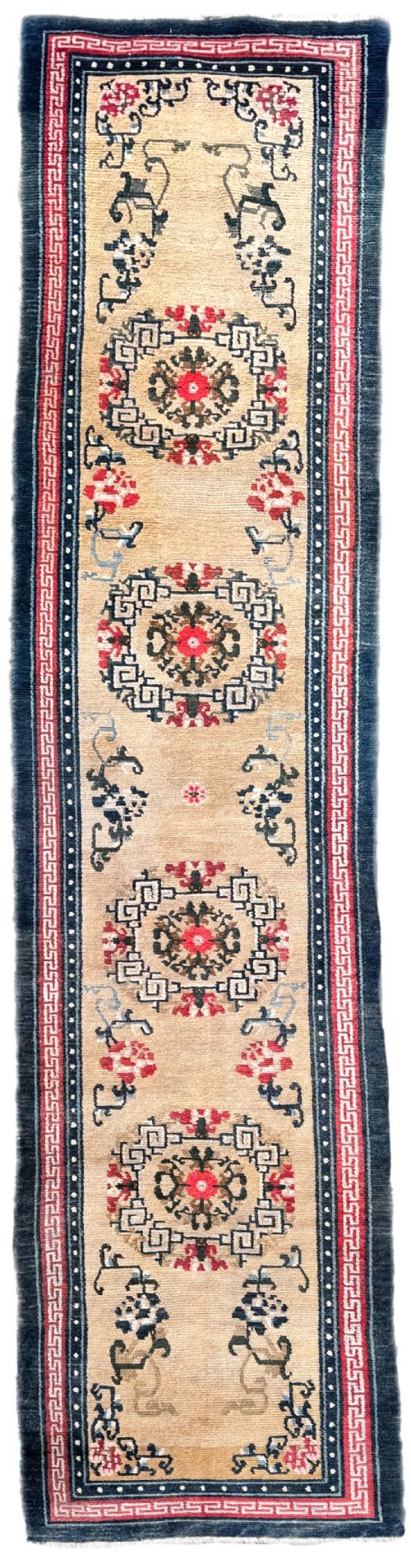
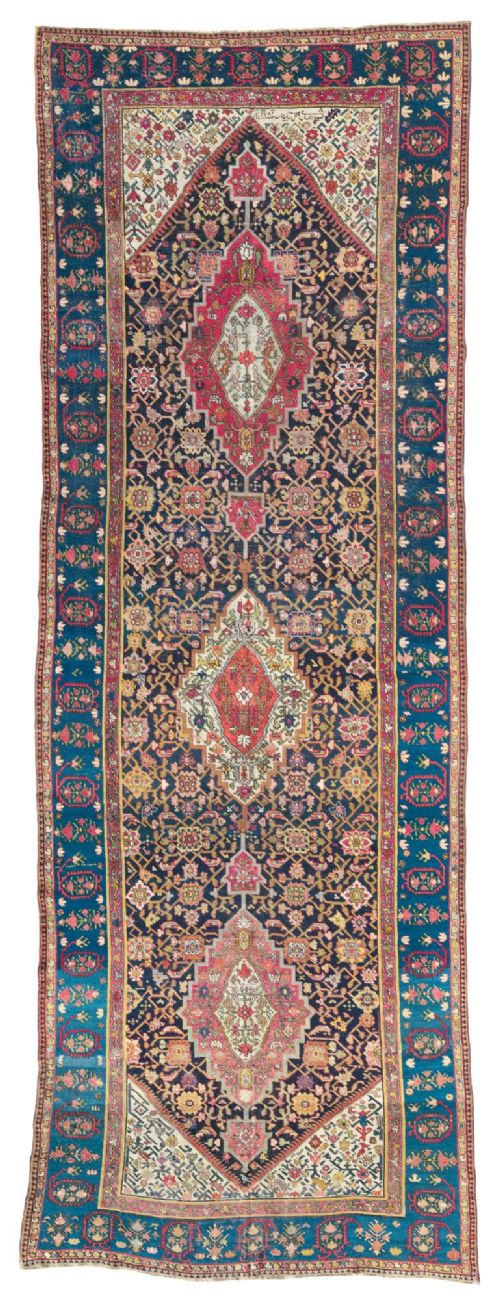
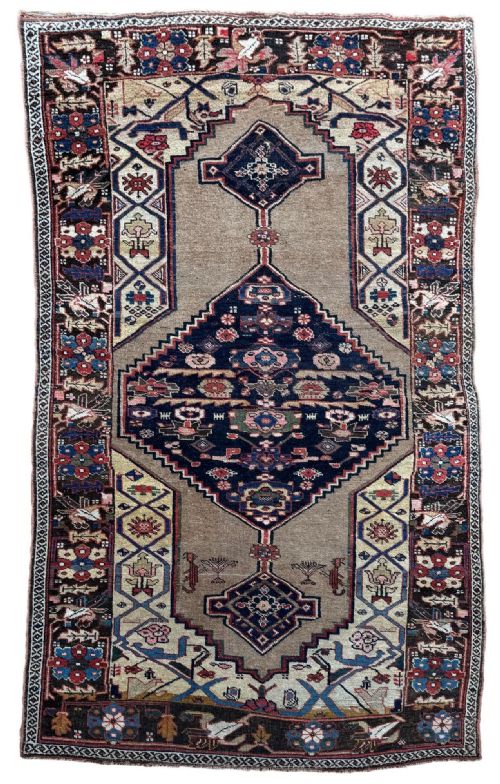
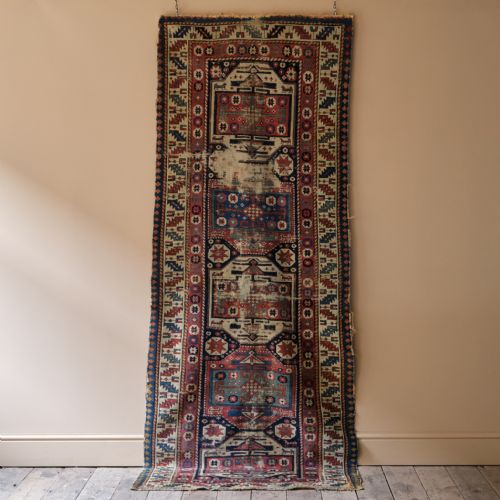
The selections encountered here span from the mid-nineteenth century through the early twentieth century. Examples include Caucasian Talish runners, Kurdish long rugs, and Tibetan runners, each offering narrow proportions tailored for specific architectural spaces.
How they were made
Weavers constructed these textiles primarily using wool, cotton foundations, and occasionally goat hair, utilising hand-spun fibres that absorb natural dyes unevenly to create subtle tonal variations. Natural dyes provide the deep indigo grounds, while flat-weave kilim techniques and pile knots define the structural surface.
Many tribal pieces, such as Uzbek kilim panels or Baluch carpets, employ regional weaving methods passed down through nomadic communities. The integration of wool pile on cotton warps or entirely wool-on-wool construction ensures durability for high-traffic hallways.
Indigo Blue Runner Rug Retail Price Guide 2026
Typical asking prices for indigo blue runner rug among the pieces listed under this phrase on Sellingantiques today, from the lower quarter to the upper quarter. They describe what is for sale here now, not the wider market.
Listings feature natural dyes, wool, and cotton across nineteenth-century and early twentieth-century Caucasian, Persian, and Tibetan formats.
What varies in quality
Quality rests upon the depth and saturation of the natural indigo dye and the crispness of the tribal geometry, such as Lezghi stars or medallion repeats. Tighter knot density and well-balanced proportions separate finer village productions from standard utility weaving.
The integrity of the original selvedges and ends dictates the structural merit of a runner, alongside the clarity of secondary colours contrasting against the blue ground. Well-preserved tribal examples maintain structural balance across their extended lengths.
The Indigo Blue Runner Rug Glossary
- Indigo
- A natural blue dye extracted from plants of the Indigofera genus, prized for its deep, light-fast tone. It forms the primary ground colour for numerous Caucasian and Persian runner rugs.
- Runner
- A long, narrow carpet format specifically proportioned for corridors, hallways, and staircases. These pieces measure significantly longer than they are wide.
- Kilim
- A flat-woven textile produced without a pile, utilising interlocking or slit-weave techniques. These lighter coverings often display geometric motifs native to Anatolian and Caucasian tribes.
- Medallion
- A central ornamental design motif placed within the field of a rug. Regional types often feature single, triple, or box medallions set against the blue ground.
- Selvedge
- The reinforced outer edge of a rug formed by wrapping lateral warp threads. Original selvedges indicate that a textile retains its authentic historical width.
Indigo Blue Runner Rug: Frequently Asked Questions
Where should I place a runner rug?
These elongated textiles fit naturally into hallways, corridors, narrow entryways, and alongside beds where floor space is constrained.
Their narrow proportions draw the eye down a passage while protecting high-traffic wooden flooring.
How do I care for antique wool runners?
Gentle vacuuming without a rotating brush roll prevents fibre damage while removing surface dust from the pile.
Professional specialist cleaning is recommended for antique natural dye textiles to preserve the wool and indigo colours.
What causes the blue colour variation?
Natural indigo dye absorbs into hand-spun wool at varying rates, producing subtle abrash and tonal shifts across the surface.
This organic variation is a hallmark of traditional dyeing methods used before synthetic alternatives became widespread.
Are these pieces woven by nomads?
Many examples originate from tribal confederacies and nomadic groups such as the Qashqai, Baluch, Kurdish, and Shahsavan peoples.
Their weavers adapted traditional tribal symbols and geometric medallion layouts into portable floor coverings.