







Authentic Caucasian Runner
An authentic caucasian runner brings striking tribal geometry and rich regional hues to a hallway.
Authentic Caucasian Runner
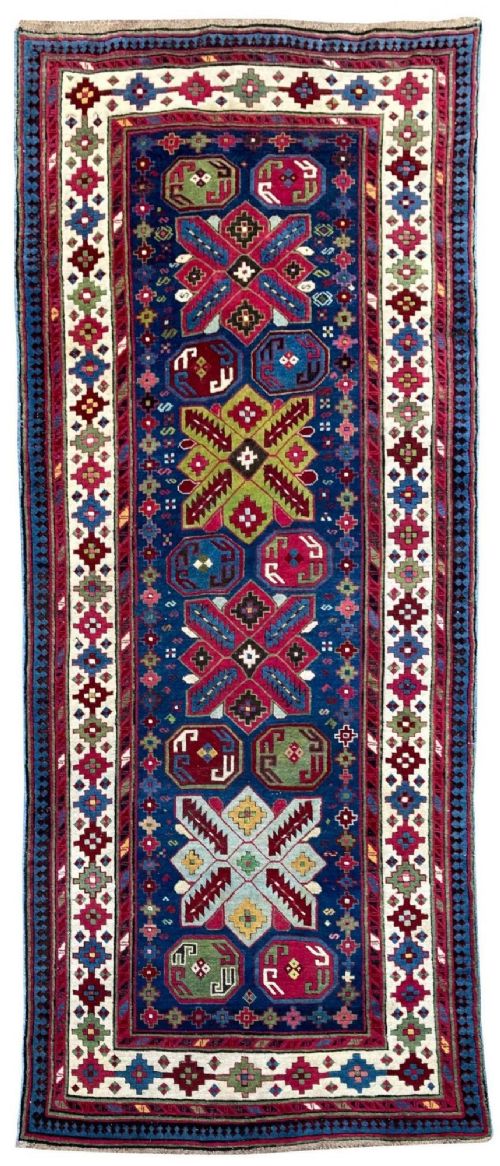
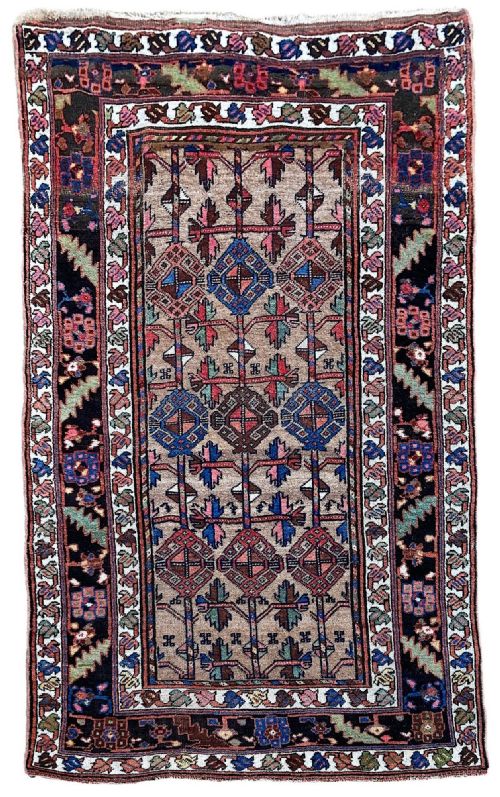
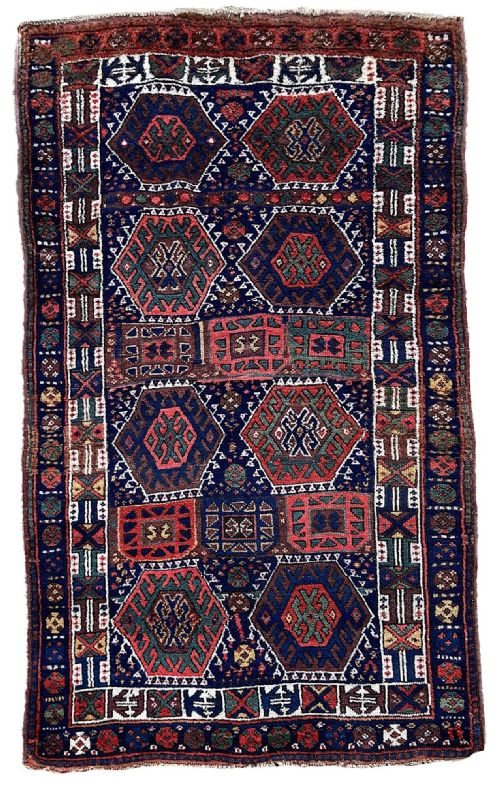
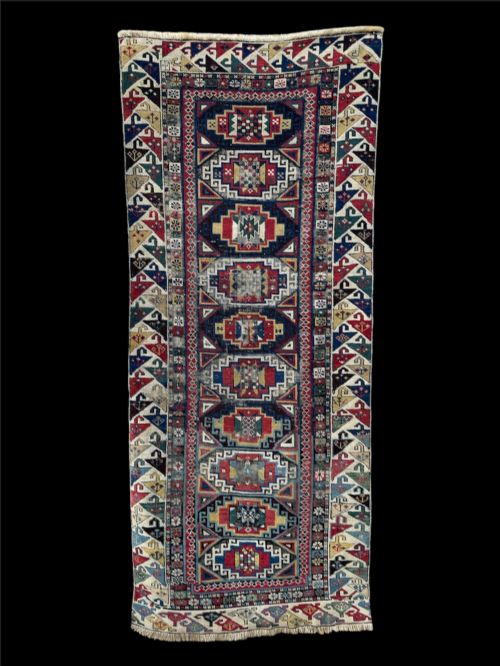
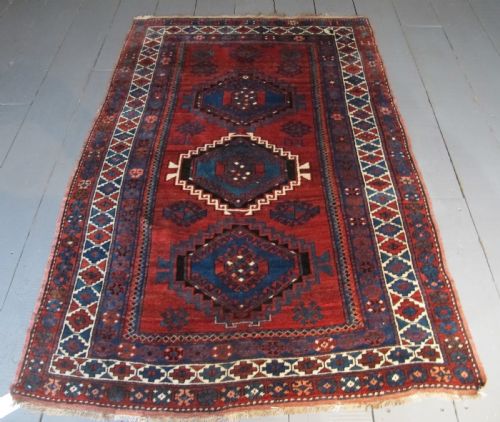
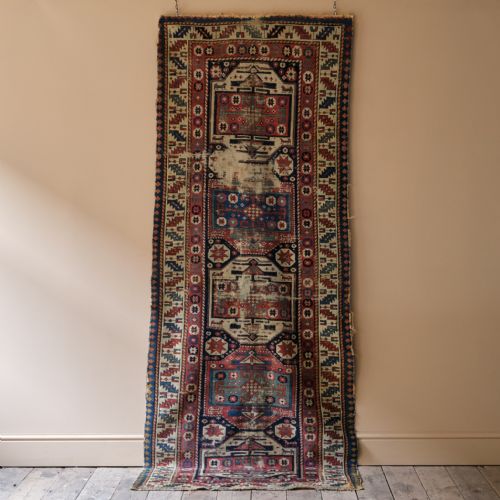
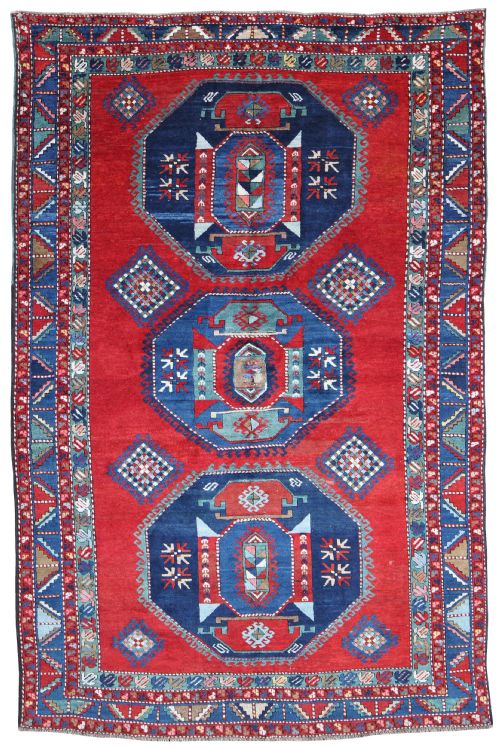
An authentic caucasian runner is a long, narrow floor covering originating from the Caucasus region or neighbouring tribal territories. These textiles typically take the form of runner rugs and long rugs designed for corridors or narrow spaces, measuring over two metres in length. Buyers seeking an authentic caucasian runner will frequently encounter regional types such as Kazak, Shirvan, Talish, and Karabagh woven during the nineteenth and early twentieth centuries.
The style of these pieces draws heavily upon Caucasian tribal and Kurdish tribal traditions, which favour bold geometric medallions, stylised animals, and stark diagonal motifs. Pieces date across a span from the eighteen-seventies up to the nineteen-thirties, reflecting traditional weaving practices maintained across generations. Woven formats range from structured Shirvan and Talish compositions to more spontaneous Kazak and Karabagh designs.
How they were made
These floor coverings are constructed primarily from wool and hand-spun wool pile set onto cotton or wool foundations. The use of hand-spun wool gives the pile an irregular texture that absorbs dye unevenly, creating subtle tonal shifts across the surface. Natural dyes provide the deep reds, indigos, and golds characteristic of these tribal weaves.
Weavers utilised traditional knotting techniques specific to the Caucasus and north-west Persia to build durable, dense piles designed for heavy domestic use. The structure relies on hand-tied knots secured across warp and weft threads, resulting in sturdy runner rugs that withstand centuries of foot traffic.
Authentic Caucasian Runner Retail Price Guide 2026
Typical asking prices for authentic caucasian runner among the pieces listed under this phrase on Sellingantiques today, from the lower quarter to the upper quarter. They describe what is for sale here now, not the wider market.
Some nineteenth-century Kazak runners feature intentional weaver asymmetries, including charmingly crooked medallions that reveal the hand of an unhurried maker.
What varies in quality
Quality in these tribal textiles rests upon the clarity of the wool, the depth and vibrancy of the natural dyes, and the crispness of the geometric drawing. Finer knots and tighter packing of the foundation create a more resilient structure that preserves the sharpness of the design over time.
The artistic merit of the drawing dictates the upper tier of the range, where weaver asymmetry and bold proportional choices transform a utilitarian runner into a dynamic textile work. Poorer examples often display muddied colour combinations, cramped borders, or structural distortion that lacks the purposeful character found in superior specimens.
The Authentic Caucasian Runner Glossary
- Kazak
- A style of rug originating from the southern Caucasus, known for bold geometric medallions and primary colour palettes.
- Shirvan
- A style associated with the eastern Caucasus, typically featuring more delicate, finely drawn geometric motifs and balanced fields.
- Talish
- A long, narrow carpet type named after a region in the Caucasus, often characterised by an open field flanked by multiple narrow borders.
- Karabagh
- A weaving tradition from the southern Caucasus that frequently incorporates large-scale floral elements and distinct animal or medallion forms.
- Warp
- The vertical foundation threads stretched lengthwise on the loom, onto which the pile knots are tied.
Authentic Caucasian Runner: Frequently Asked Questions
Where should I place a runner?
These narrow tribal textiles suit hallways, corridors, and long gallery spaces where their linear format guides the eye along the room. They also function effectively in kitchens or beside beds.
Because of their historical age, placement in high-traffic corridors should be balanced with appropriate underlay to cushion the vintage wool and foundation threads against hard stone or timber floors.
How do I clean an old rug?
Gentle surface vacuuming without a rotating brush helps remove embedded dust from the hand-spun wool pile without damaging the antique structure. Professional specialist cleaning remains the safest method for deep maintenance.
Water and standard domestic detergents should be avoided, as traditional natural dyes can bleed or react poorly to harsh chemical treatments.
How do I date these textiles?
Dating relies upon examining the wool quality, the type of natural dyes used, and the structural characteristics of the foundation. Stylistic traits rooted in nineteenth-century regional traditions also help narrow the period of origin.
In some instances, weavers inscribed dates directly into the pile or field, though most pieces require stylistic comparison to establish an estimated decade of manufacture.
Are tribal rugs durable?
The combination of hand-spun wool and tight knotting makes these runner rugs remarkably resilient for daily domestic use. Their original purpose as utilitarian floor coverings meant they were built to endure heavy foot traffic in nomadic and village households.
Proper care, including periodic rotation and supportive underlay, ensures these historic textiles remain robust enough for modern living spaces.