


Indian Pierced Carved Table
An Indian pierced carved table brings deep colonial craftsmanship and intricate woodwork into a room, offering a functional surface with rich historical character.
Indian Pierced Carved Table
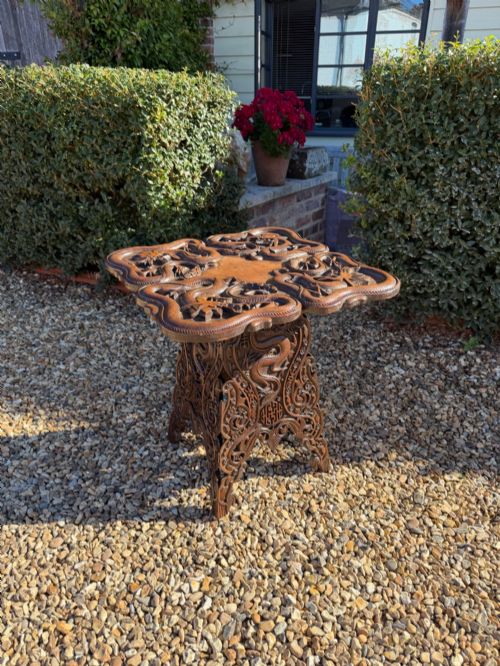
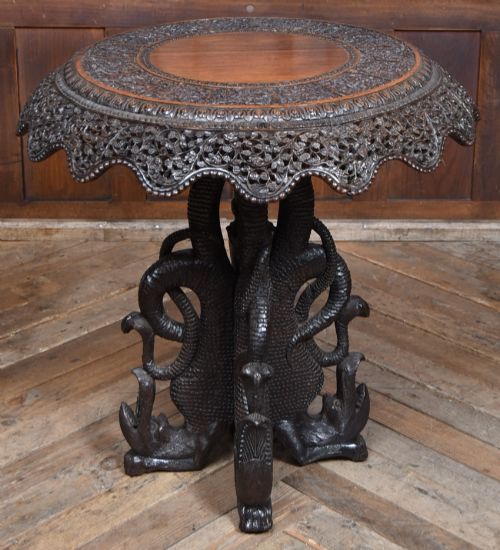
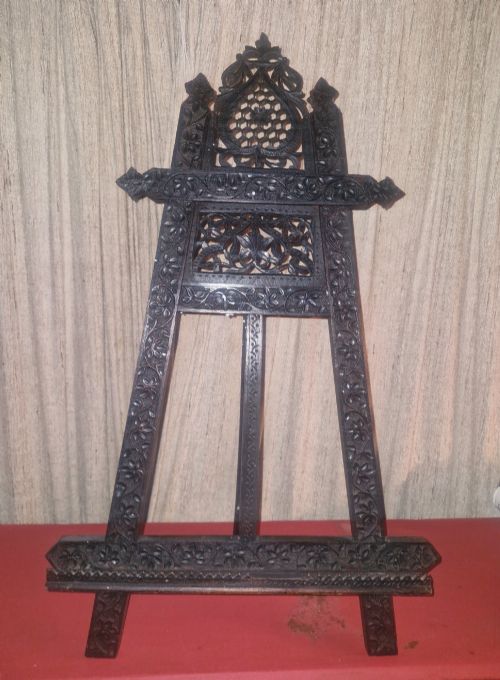
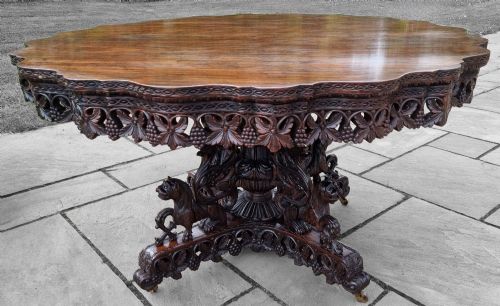
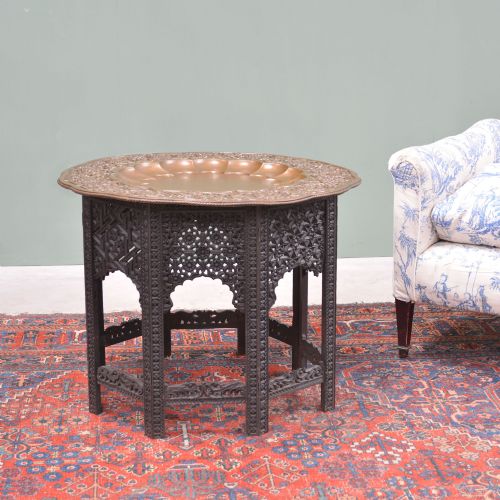
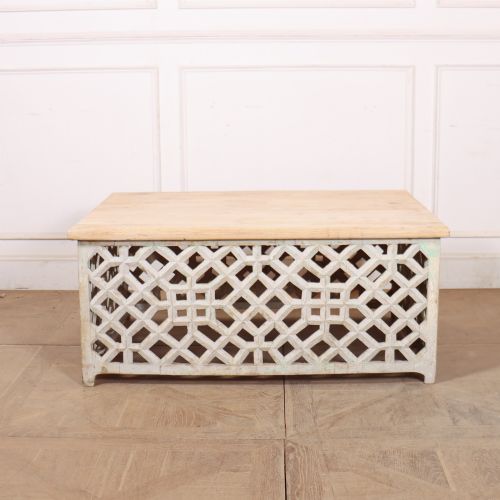
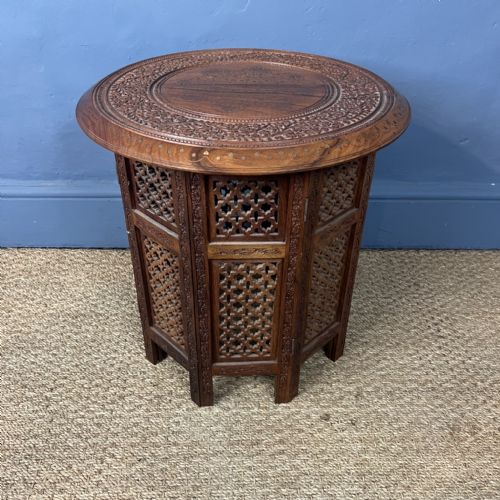
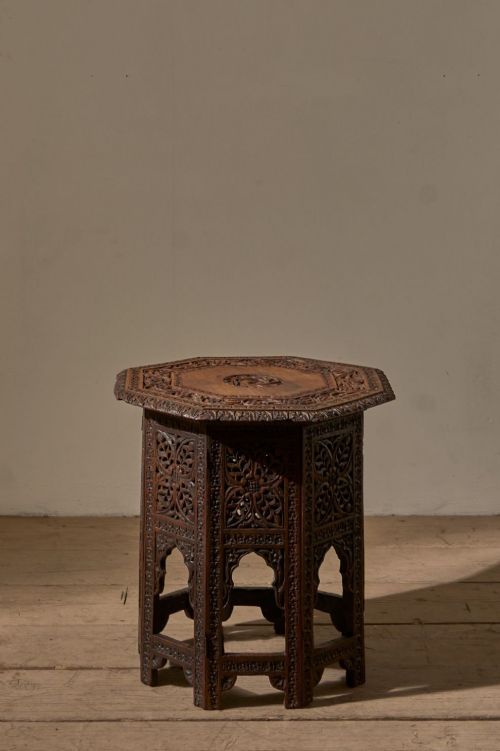
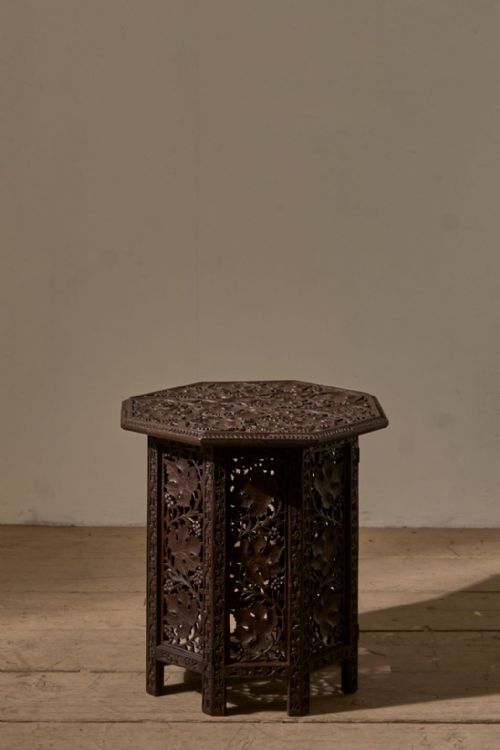
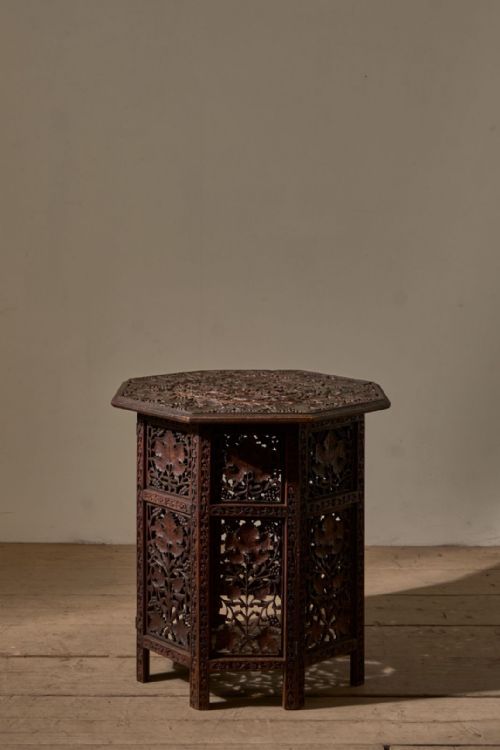
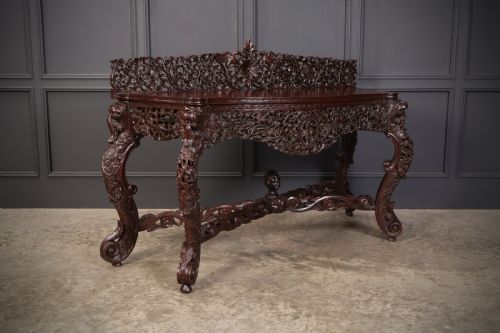
When you search for an Indian pierced carved table, you encounter diverse forms created across the nineteenth and twentieth centuries under Anglo-Indian and Anglo-Burmese influences. Side tables, occasional tables, and folding campaign pieces dominate the selection, often featuring elaborate fretwork and intricate surface carving.
The objects span from compact lamp tables to large centre tables and console tables, reflecting both domestic utility and colonial trade. Many examples incorporate folding bases, demonstrating the practical requirements of travel and British colonial administration.
Makers utilised regional traditions from centres such as Hoshiarpur alongside broader Burmese colonial styles. The surviving pieces reveal a rich dialogue between traditional eastern woodcarving and British nineteenth-century furniture forms.
Factors Distinguishing Quality
The depth and clarity of the piercing separate exceptional work from standard production. Superior examples display crisp undercutting where the negative space creates sharp shadows and true three-dimensional relief.
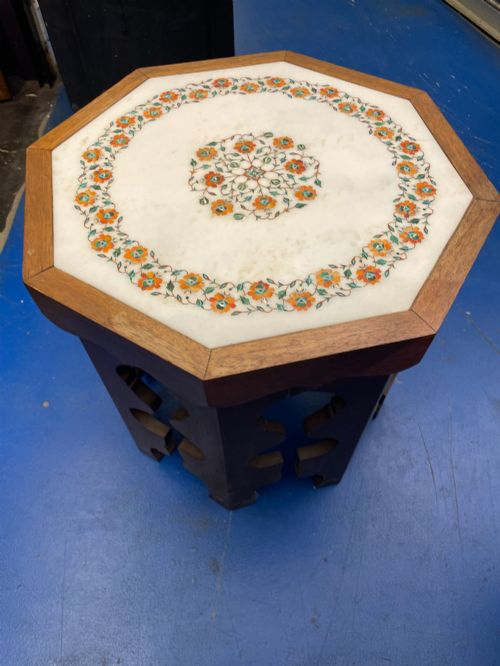
Material selection and the integration of secondary elements dictate the standing of a piece. Tables that combine dense padauk or teak with precise brass or copper wire inlay demonstrate a higher level of workshop skill than plain carved alternatives.
Brass and copper inlay frequently accompanies the deep pierced carving on Hoshiarpur tables.
Hoshiarpur workshop
The Indian Pierced Carved Table Glossary
- Pierced work
- Woodcarving that cuts completely through the timber to create openwork fretwork patterns. It requires immense dexterity to prevent the delicate sections from snapping.
- Hoshiarpur
- A renowned centre in the Punjab famous for intricate woodwork. Tables from this region typically feature dense geometric patterns and extensive inlay.
- Campaign table
- A folding or dismantling piece of furniture designed for portability by travellers and military officers. These examples fold flat for ease of transport.
- Tip top
- A table construction featuring a hinged top that pivots vertically for storage. This mechanism allowed tables to be tucked away against walls when not in use.
- Padauk
- A heavy, durable tropical hardwood with a rich reddish-brown tone. It serves as a primary material for high-status colonial furniture.
Indian Pierced Carved Table: Frequently Asked Questions
What is an Indian pierced carved table?
These pieces are decorative and functional tables featuring intricate openwork carving and traditional eastern motifs created during the nineteenth and early twentieth centuries.
They reflect the colonial interaction between British domestic tastes and skilled regional woodcarving traditions.
How were folding tables used?
Many of these tables served as portable campaign furniture for officers and administrators moving across regions. Their folding bases allowed for quick dismantling and easy transport.
In permanent residences, the folding mechanism offered flexibility, enabling owners to clear floor space easily.
How do I identify Hoshiarpur work?
Hoshiarpur pieces are distinguished by dense geometric interlacing and extensive metal inlay, usually brass or copper. The carving covers every available surface in intricate floral or star patterns.
Unlike simpler regional tables, these incorporate contrasting materials embedded directly into the hardwood frame.
Where should I place one?
These tables function well as occasional surfaces beside seating or as lamp tables in a study. Their detailed carving makes them effective as central display pieces in a room.
Pair them with plain furnishings to allow the intricate woodwork and metal inlay to remain the visual focus.