


Colonial Carved Plant Stand
A colonial carved plant stand brings intricate regional craftsmanship into a room, offering a sturdy yet decorative stage for greenery.
Colonial Carved Plant Stand
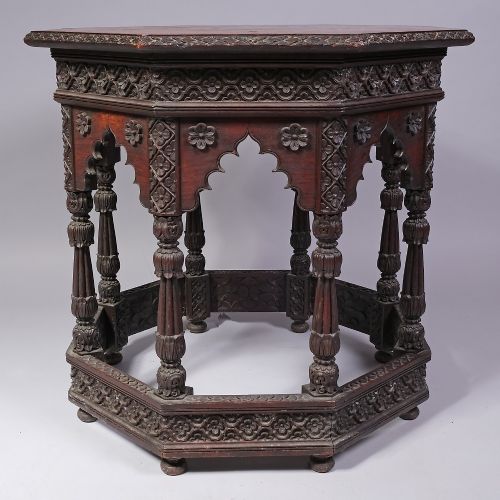
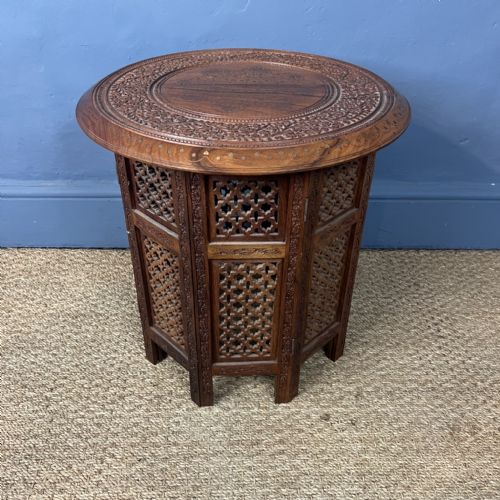
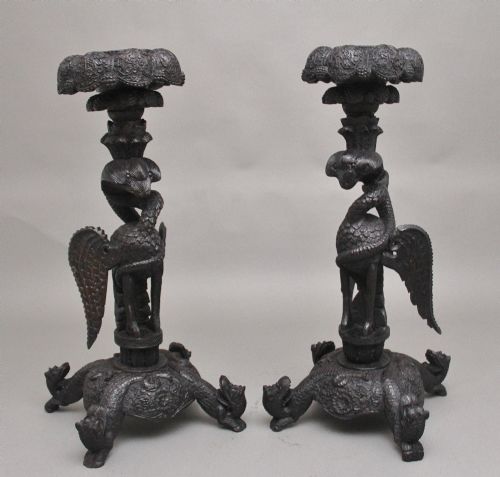
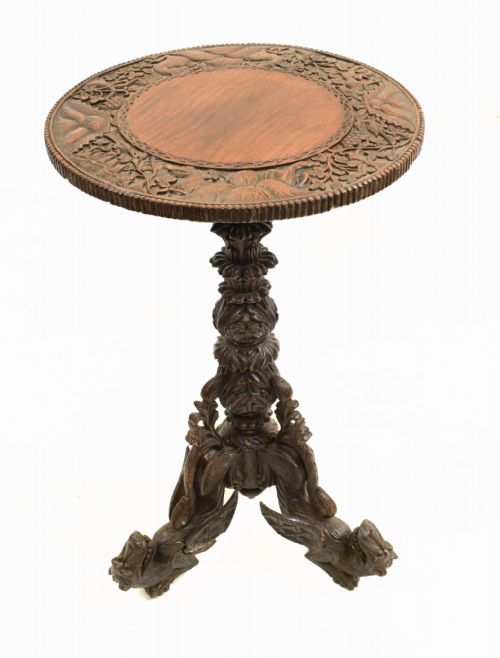
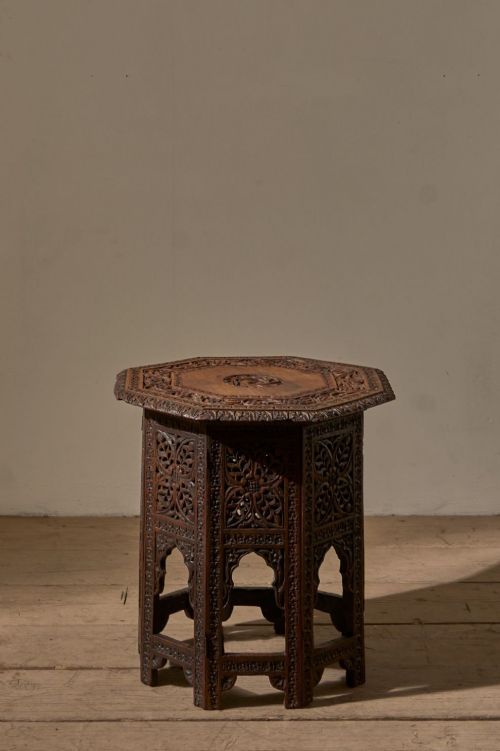
A colonial carved plant stand spans varied forms produced across the nineteenth and early twentieth centuries, encompassing round, octagonal, and hexagonal tables alongside dedicated plant stands and torcheres. Many examples reflect Anglo-Indian, Anglo-Burmese, and colonial styles, incorporating distinct regional motifs such as carved elephants, camels, dragons, and leaf patterns. Buyers encountering these pieces often find side tables and occasional tables functioning interchangeably as display surfaces for plants, lamps, or ornaments.
The material palette of a colonial carved plant stand relies heavily on dense timbers like teak, padauk wood, rosewood, and general hardwoods, frequently enriched with contrasting details. Bone inlay, brass wire, and copper tops appear across Hoshiarpur and Bombay Presidency pieces, adding reflective surfaces and geometric patterns to carved wooden frames. Occasional inclusions of bone tusks or native timbers further distinguish individual tables within the wider grouping.
How they were made
Makers of a colonial carved plant stand utilised dense tropical timbers such as teak, rosewood, padauk wood, and native hardwoods, selecting woods capable of supporting deep, intricate chiselling. Skilled artisans carved dense foliage, animals, and geometric motifs directly into the solid timber framework of tables, stands, and torcheres.
Surface ornamentation combined carving with metalwork and inlay techniques, utilising brass wire, bone pieces, and copper tops set flush into the wooden substrate. Folding mechanisms also appeared in specific designs, allowing heavy timber occasional tables to collapse flat while maintaining structural stability through interlocking joints.
Listings feature items from the 1870s to the 1930s, using teak, rosewood, padauk wood, and bone inlay.
What varies in quality
The quality of a colonial carved plant stand rests primarily on the depth and crispness of the carving, distinguishing sharply executed foliage and animal figures from softer, shallower handiwork. Superior examples maintain precise symmetry in octagonal and hexagonal tops, ensuring that intricate panels align neatly with the supporting legs or tripod bases.
Materials and inlay work further separate tiers of production, with dense solid rosewood or heavy teak outlasting lighter secondary timbers. The integration of metal or bone inlay reveals artisan skill when pieces fit flush without gaps, whereas inferior items display uneven surfaces and misplaced geometric brass or bone elements.
Anton Seuffer
The Colonial Carved Plant Stand Glossary
- Anglo-Indian
- A style describing furniture produced in the Indian subcontinent during the British colonial period, combining traditional local carving techniques with European furniture forms. These pieces frequently feature dense floral and animal motifs.
- Hoshiarpur
- A North Indian centre known for intricate woodwork involving delicate brass and bone inlay set into seasoned teak or shisham wood. Tables from this region often display dense geometric patterns alongside naturalistic motifs.
- Torchere
- A tall, slender stand designed specifically to support a lamp or candle, functioning as a vertical display piece. In colonial contexts, these items share the heavy carving seen on side tables and pedestals.
- Padauk
- A dense, heavy tropical hardwood prized for its reddish hue and durability under intricate hand carving. This timber appears frequently in nineteenth-century side tables originating from the Indian subcontinent.
- Jardiniere
- An ornamental stand or container intended to hold a plant or flower pot indoors. Victorian and colonial variants often utilise tripod bases and carved wooden bodies to elevate greenery.
Colonial Carved Plant Stand: Frequently Asked Questions
What is an elephant table?
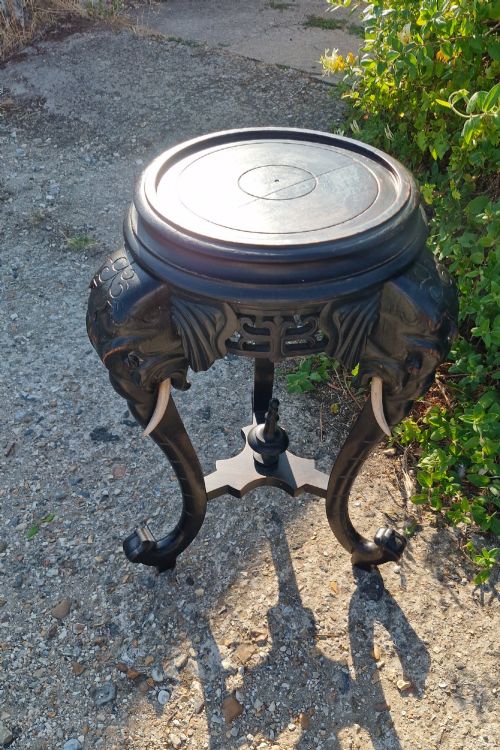
An elephant table is a specific form of colonial occasional furniture featuring carved wooden elephant figures supporting the main tabletop. These figures often incorporate painted or actual bone tusks into the design.
Such tables originated predominantly within the Bombay Presidency and Anglo-Indian workshops during the nineteenth and early twentieth centuries, serving as both functional side surfaces and decorative conversation pieces.
How do I distinguish Burmese from Indian tables?
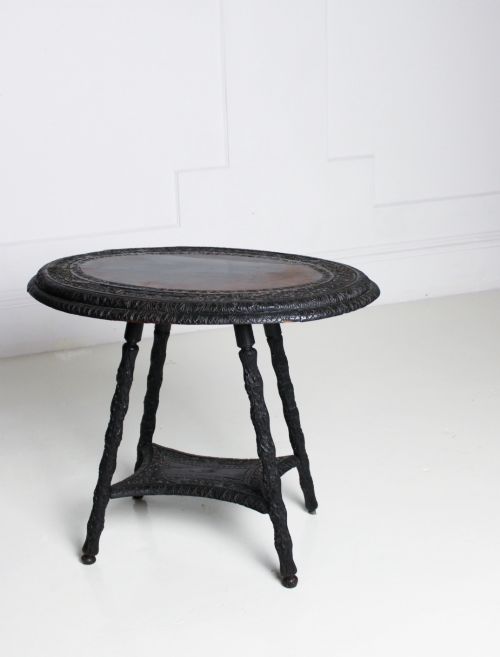
Burmese tables generally showcase deep, sculptural carving focusing on figures, dragons, and dense foliate scrolls executed in teak or local hardwoods. Indian regional pieces frequently incorporate brass or bone inlay work alongside carved animal motifs.
Examining the secondary materials and inlay style helps clarify the likely geographic origin within the broader colonial category.
Are these tables sturdy enough for plants?
Most colonial carved plant stands and occasional tables utilise dense hardwoods like teak, rosewood, and padauk wood, providing a solid foundation for heavy ceramic pots. Their original construction supported lamps, heavy bowls, and jardinières.
Care should be taken with folding variations or tripod bases to ensure weight is centred evenly across the supporting legs.
What periods do these pieces come from?
The pieces listed span the nineteenth century through the early twentieth century, encompassing Victorian eras up to the 1930s. Styles evolved slightly over these decades while maintaining traditional hand-carved techniques.
Victorian and late nineteenth-century examples often display darker rosewood and heavy elephant motifs, while later 1920s and 1930s items frequently feature simplified teak or brass inlay work.