

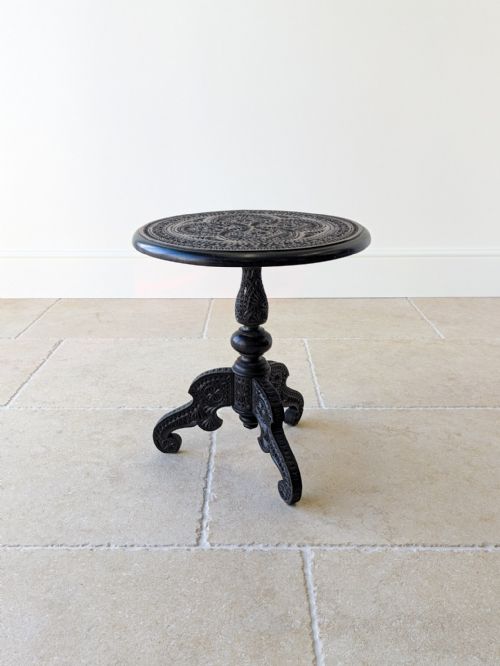
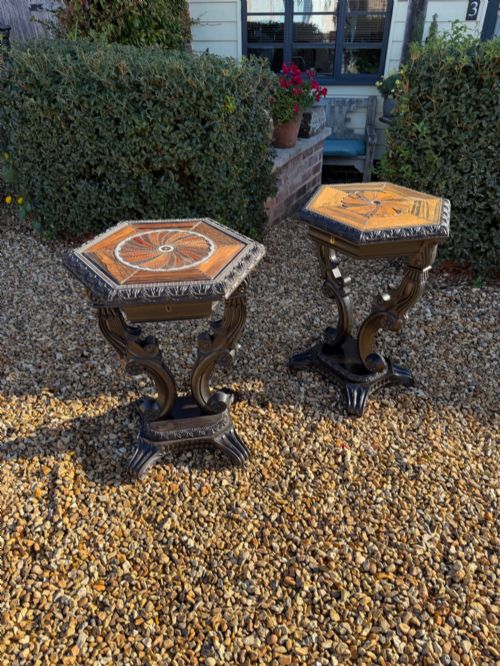
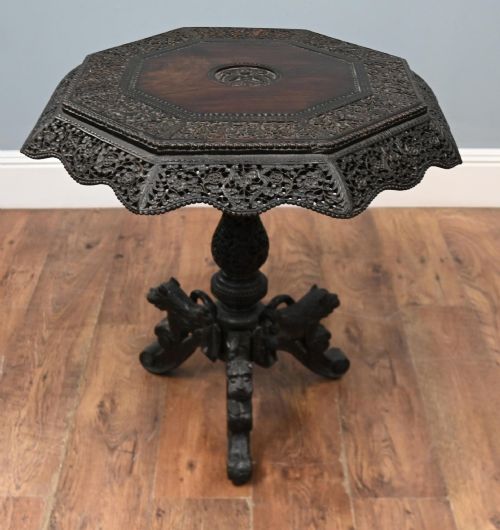
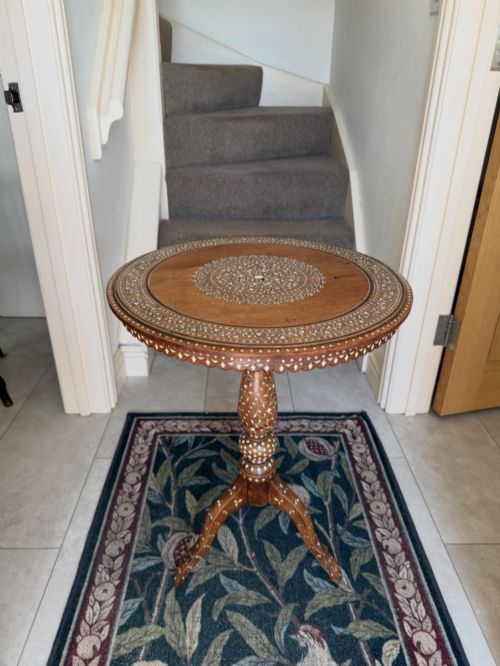

Indian Carved Wine Table
These indian carved wine table examples bring intricate colonial craftsmanship into modern rooms.
Indian Carved Wine Table
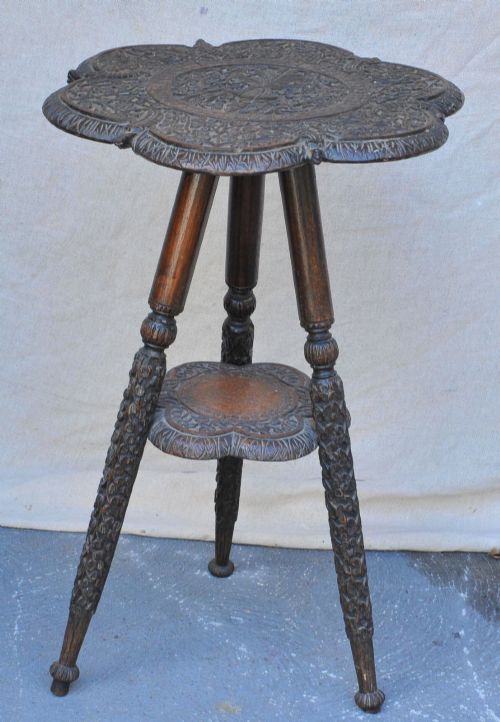
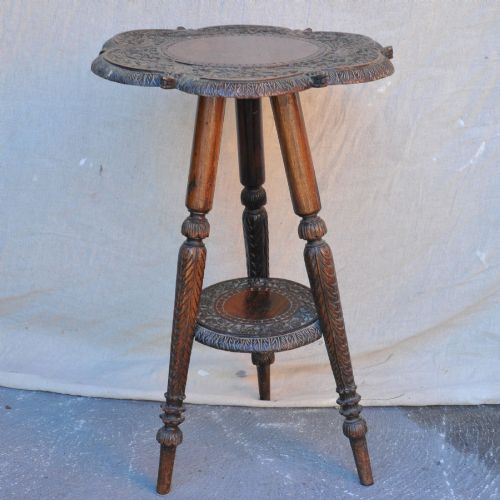
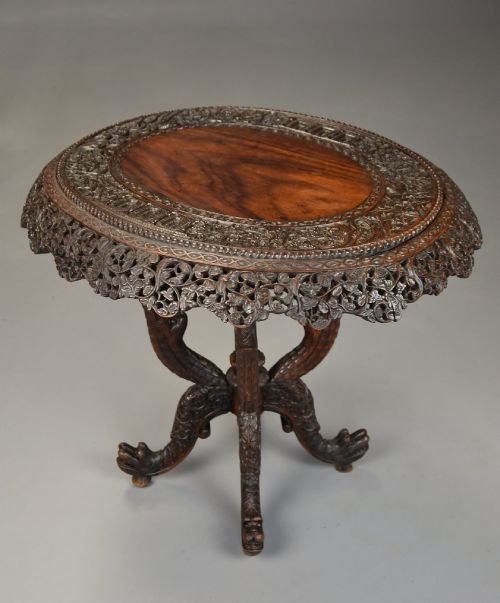
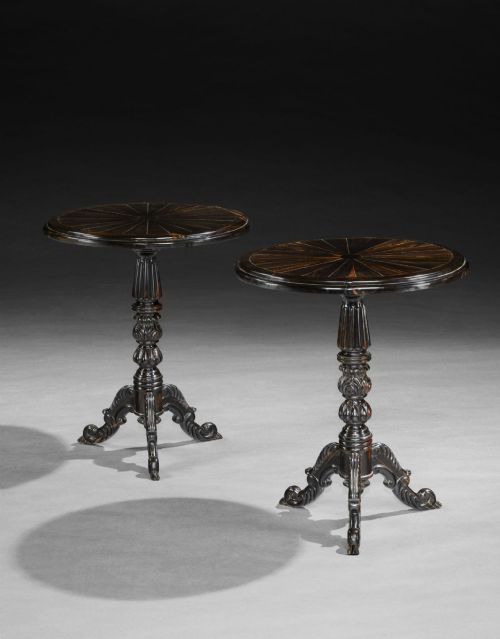
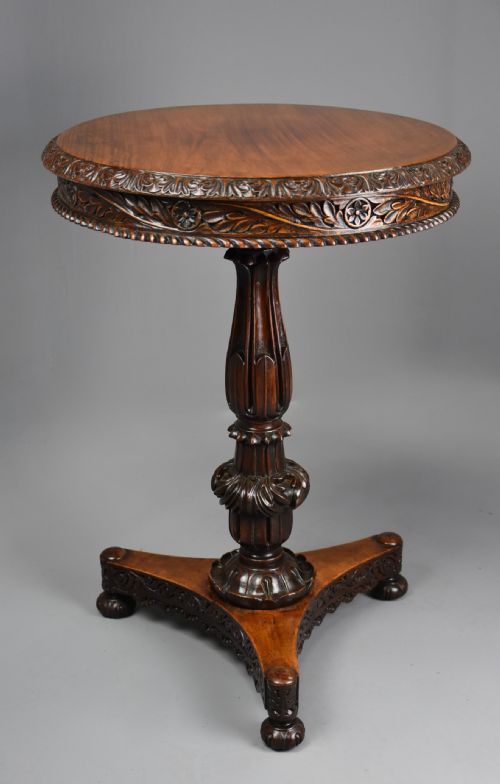
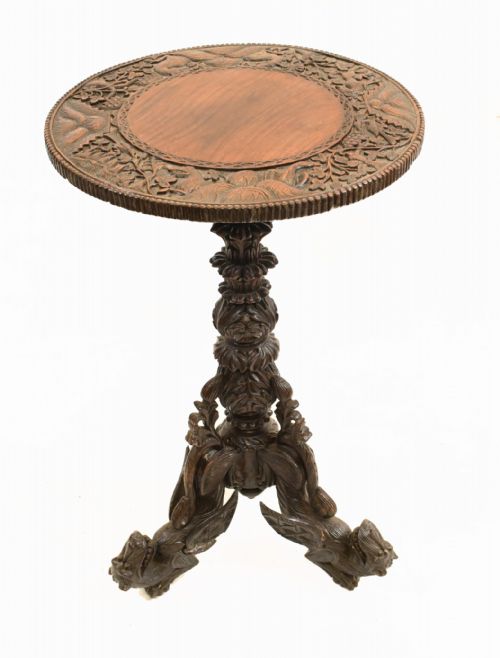
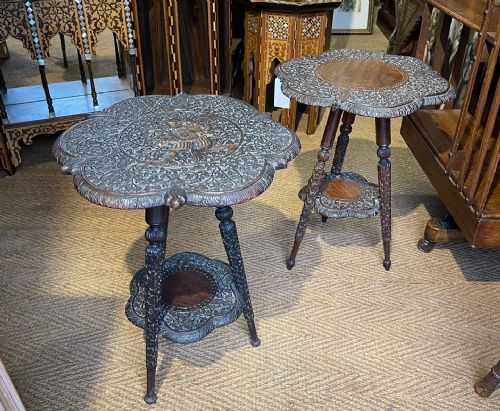
When you search for an indian carved wine table, you encounter small occasional surfaces shaped by colonial trade and local craftsmanship during the nineteenth and early twentieth centuries. These pieces appear as tripod stands, pedestal tables, and folding camp variations designed for flexibility in domestic spaces.
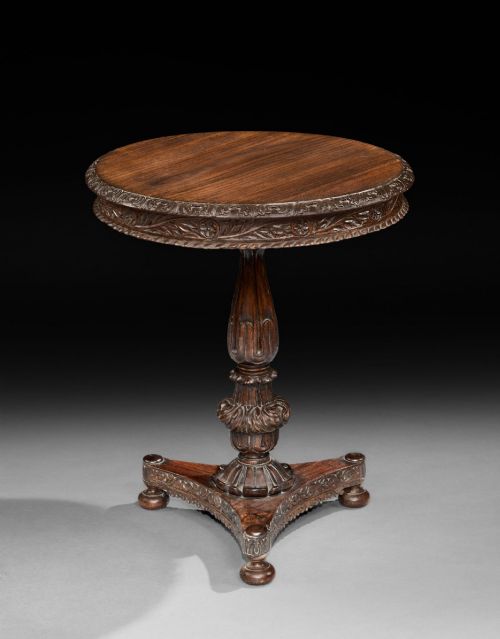
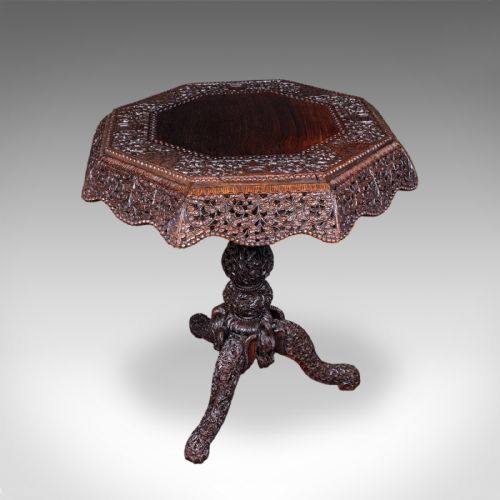
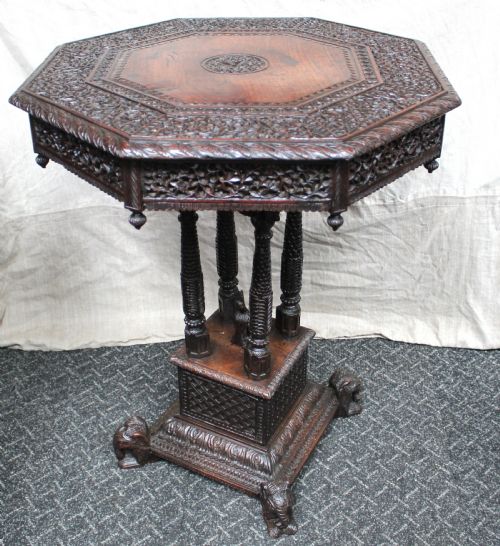
The most common formats on this page include round, oval, octagonal, and shield-shaped table tops supported by heavily carved pillars or folding bases. Their origins span regional workshops across the Indian subcontinent and Burma, often categorised under Anglo-Indian, Anglo-Burmese, or Ceylonese colonial styles.
Makers utilised dense timbers and intricate relief carving to create portable furniture that served as tea tables, lamp stands, and wine tables for British households abroad and at home. The resulting forms combine functional European furniture types with traditional eastern ornamentation.
Materials and construction methods
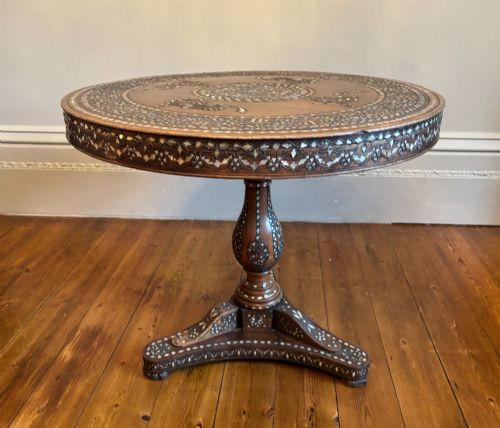
Craftsmen built these tables using dense tropical hardwoods such as teak, padauk wood, rosewood, and ebony, which provided stable surfaces for deep chisel work. Some items incorporate exotic specimen woods and intricate bone inlay to create contrasting geometric or floral patterns across the surface.
Joinery methods range from fixed tripod pedestal bases to folding campaign frames designed for easy transport. Woodworkers employed relief carving, piercing, and turning techniques to cover every visible surface with dense foliage, animal motifs, and architectural details.
Indian Carved Wine Table Retail Price Guide 2026
Typical asking prices for indian carved wine table among the pieces listed under this phrase on Sellingantiques today, from the lower quarter to the upper quarter. They describe what is for sale here now, not the wider market.
Listings feature teak, ebony, padauk wood, and bone inlay across pieces spanning the nineteenth and early twentieth centuries.
Factors of quality and execution
The distinction between standard production and superior examples lies in the crispness and depth of the carving. Master carvers achieved three-dimensional relief with undercut foliage and sharply defined motifs, whereas lesser pieces feature shallow, mechanical stamp-like incisions.
Material selection also dictates standing, with rich ebonised finishes, solid ebony, or finely figured padauk wood commanding attention over plain secondary timbers. Furthermore, the structural stability of the central pedestal and the tight fit of folding joints separate enduring furniture from wobbly imports.
The Indian Carved Wine Table Glossary
- Anglo-Indian
- Descriptive term for furniture produced in India during the British colonial period, combining local styles with European forms. These pieces often feature dense botanical carving and exotic timber construction.
- Padauk
- A heavy, durable tropical hardwood with a reddish-brown hue favoured by colonial cabinet makers. It polishes to a fine lustre and withstands intricate relief carving.
- Tripod base
- A furniture support comprising three legs radiating from a central pillar. This configuration provides stability on uneven floorboards and appears frequently on small occasional tables.
- Bone inlay
- The technique of embedding small pieces of carved bone into wooden surfaces to form geometric or floral designs. It creates striking white contrast against dark hardwoods like ebony and teak.
- Tilt-top
- A hinged table top that pivots vertically for compact storage when not in use. This mechanism was popular in nineteenth-century occasional and tea tables.
Indian Carved Wine Table: Frequently Asked Questions
What is an indian carved wine table used for?
These pieces served as portable furniture for holding drinks, books, lamps, or tea service in colonial homes. Their compact footprints made them easy to move between rooms or pack for travel.
Today, they function well as bedside stands, plant supports, or small accent tables beside armchairs in modern interiors.
How do I identify a Burmese carved table?
Burmese pieces typically feature dense teak construction with deep, multi-layered relief carvings depicting figures, foliage, and traditional iconography. They often take round or octagonal forms supported by carved pillar bases.
Makers in Burma produced these items heavily throughout the nineteenth century for both local use and export to Britain.
What is Hoshiarpur furniture?
Hoshiarpur work originates from the Punjab region and is instantly recognised by its intricate bone inlay and micro-mosaic woodwork. These tables feature dense geometric patterns across teak frames.
They represent some of the most decorative examples found within Anglo-Indian colonial furniture production.
Are these tables sturdy enough for daily use?
Solid hardwood construction makes most examples robust, though their stability depends on the central pedestal and leg joints. Tripod bases distribute weight effectively but require careful placement on thick carpets.
Treating them with care preserves the delicate relief work on the edges and tops.