



Colonial Wood Tripod Stand
These colonial wood tripod stand pieces bring intricate regional craftsmanship and rich timber tones straight into a modern interior.
Colonial Wood Tripod Stand
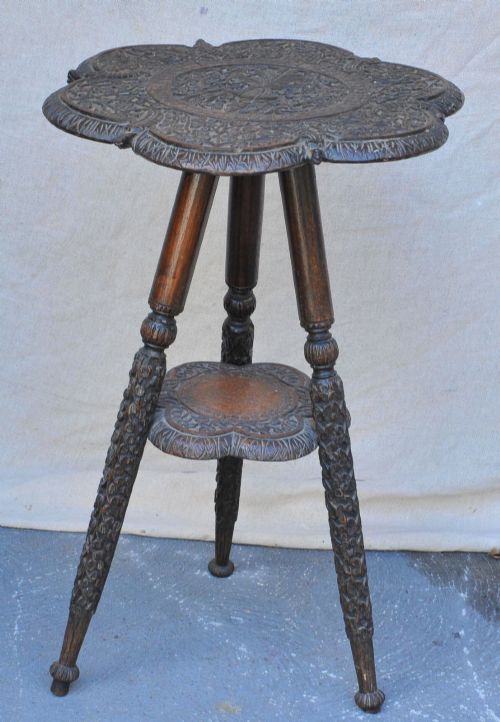
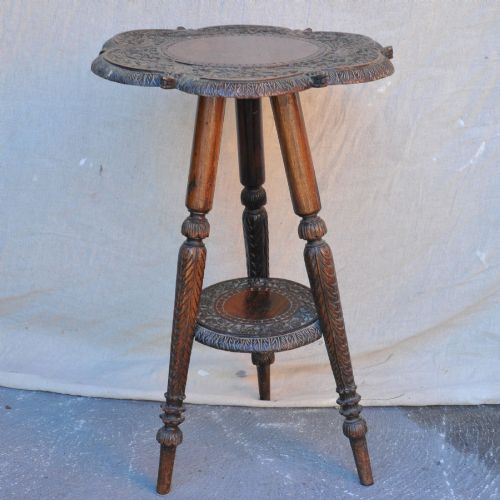
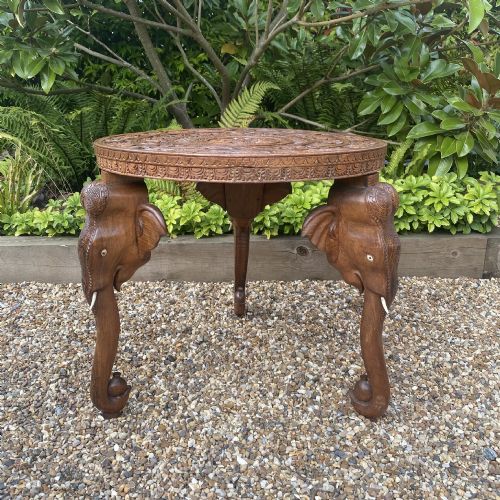
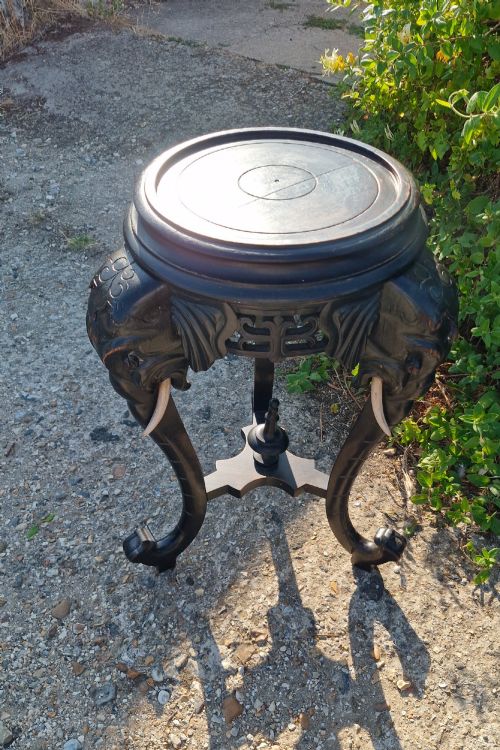
A colonial wood tripod stand represents a distinctive cross-cultural furniture tradition, spanning regions such as India, Burma, Ceylon, and Myanmar during the nineteenth and early twentieth centuries. These occasional pieces, side tables, and plant stands often incorporate traditional motifs like carved elephants or intricate foliage combined with European furniture forms.
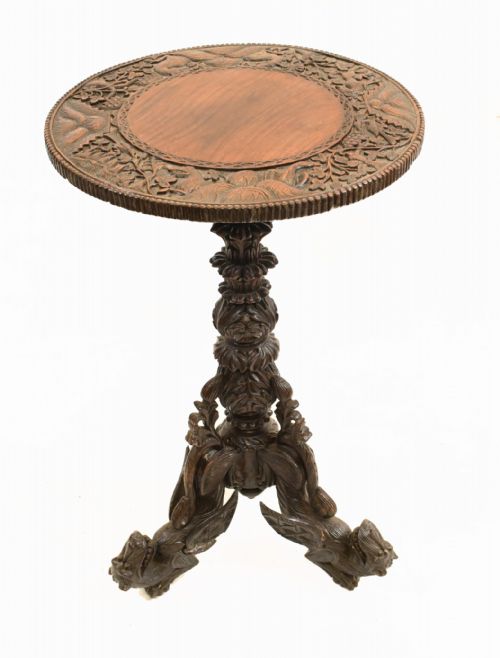
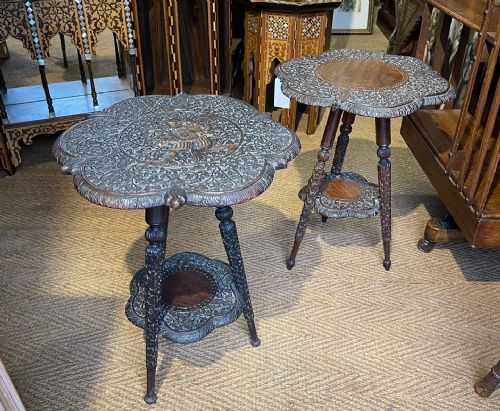
Buyers browsing this selection will frequently encounter round occasional tables supported by three carved legs, sometimes shaped as animal limbs or tusks. Styles range from Anglo-Indian and Anglo-Burmese to Ceylonese Colonial, reflecting the rich exchange of design ideas during the period.
The assortment includes items from the Victorian era alongside early twentieth-century examples, giving collectors access to both mid-Victorian craftsmanship and later vintage interpretations. These small tables function effectively as display surfaces or bedside pieces while offering strong decorative presence.
Materials and construction methods
Carpenters utilised dense tropical timbers such as teak, rosewood, ebony, padauk, and general hardwoods to construct these tripod tables. These heavy woods provided stable foundations and allowed artisans to carve deep, intricate relief patterns across the tops and legs.
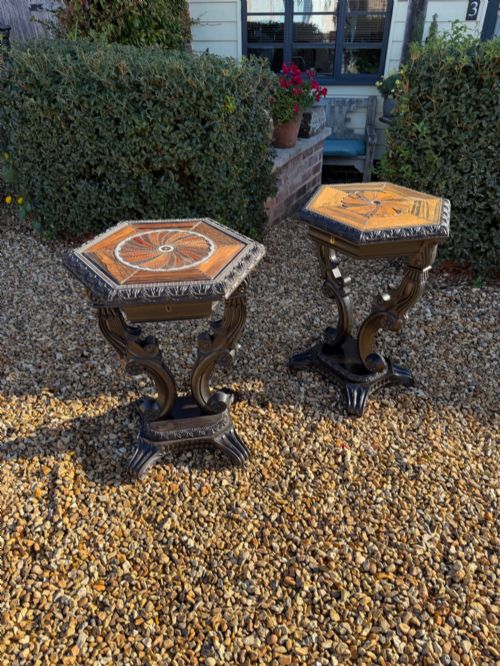
Many examples feature contrasting embellishments, incorporating bone and bone inlay to highlight geometric or floral motifs. Selected pieces from regions like Hoshiarpur also display detailed inlay work alongside traditional hand-carved surfaces.
Colonial Wood Tripod Stand Retail Price Guide 2026
Typical asking prices for colonial wood tripod stand among the pieces listed under this phrase on Sellingantiques today, from the lower quarter to the upper quarter. They describe what is for sale here now, not the wider market.
Several tables feature painted wooden tusks on their carved elephants, proving that nineteenth-century artisans appreciated a touch of playful realism.
Quality and craftsmanship distinctions
The depth and crispness of the hand-carving largely separate standard production from superior pieces. Finely articulated animal figures, such as elephants with detailed tusks and caparisons, demonstrate a higher degree of artisan skill than simpler geometric reliefs.
The choice of primary timber and the precision of any bone inlay further define the standard of a table. Solid rosewood, ebony, and heavy teak structures with intact, flush inlay command greater appreciation among collectors than softer or more plainly finished woods.
The Colonial Wood Tripod Stand Glossary
- Tripod table
- A small table supported by three legs, which provides natural stability on uneven floors and remains a hallmark of this furniture group.
- Anglo-Indian
- A style describing items made in India during the British colonial period, blending local craftsmanship with European forms.
- Padauk
- A heavy, durable tropical hardwood with distinctive reddish-brown colouring utilised by regional makers.
- Bone inlay
- A decorative technique where small pieces of bone are set flush into the wooden surface to create geometric or floral patterns.
- Occasional table
- A small, light table designed for flexible placement around a room rather than a single fixed purpose.
Colonial Wood Tripod Stand: Frequently Asked Questions
What is a colonial tripod table?
A colonial tripod table is a small occasional piece supported by three legs, produced in regions like India, Burma, and Ceylon during the nineteenth and early twentieth centuries.
These tables combine British furniture shapes with local carving traditions and dense tropical timbers.
How do I date these tables?
Dating relies on stylistic markers, timber choice, and recorded periods ranging from the mid-nineteenth century through the Edwardian era and 1920s.
Victorian examples often feature heavier carving and solid rosewood or ebony, while later pieces may incorporate specific regional inlays.
How should I care for a wood tripod stand?
Keep the timber away from direct heat sources and sudden humidity changes to prevent the wood from splitting and to protect any bone inlay.
Dust gently with a soft cloth and occasionally apply appropriate natural wax to maintain the finish of the hardwood.