
Colonial Carved Occasional Table
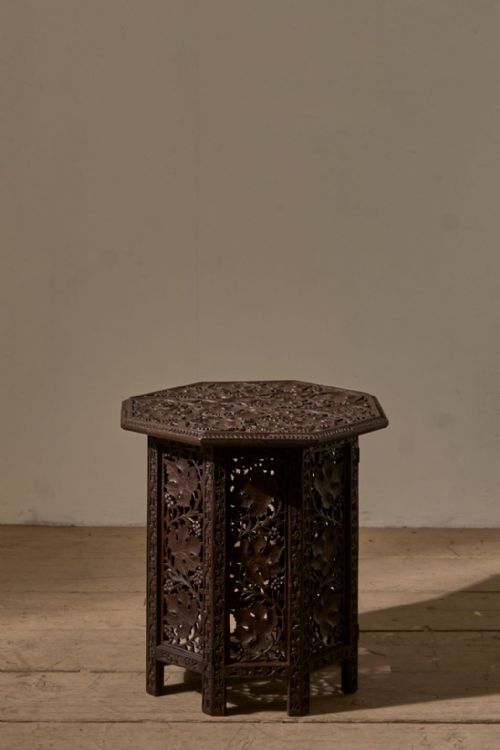
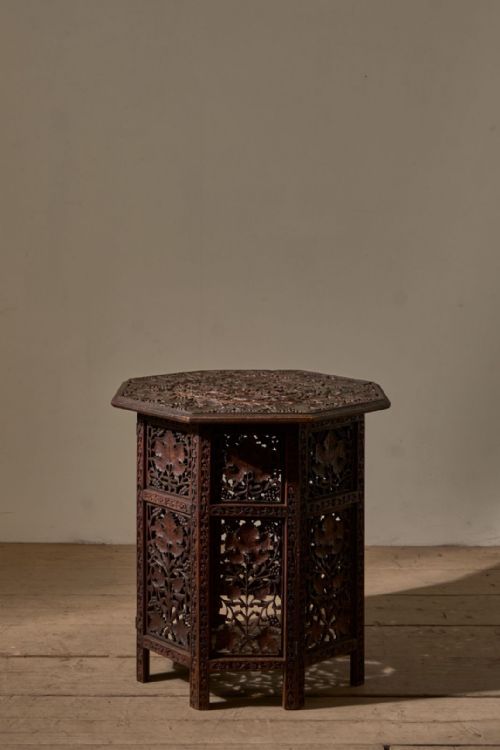
A colonial carved occasional table brings dense foliage, pierced woodwork and regional trade into a sitting room.
Colonial Carved Occasional Table
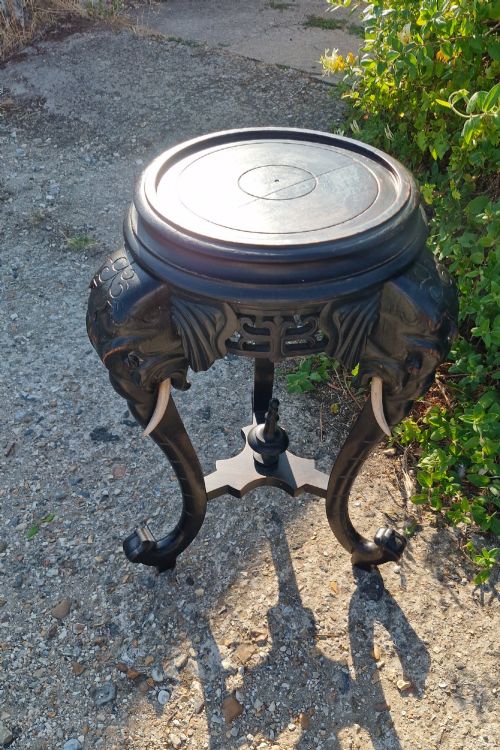
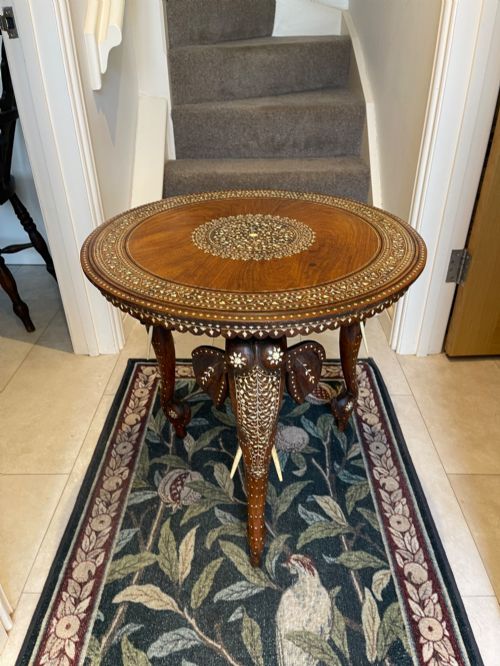
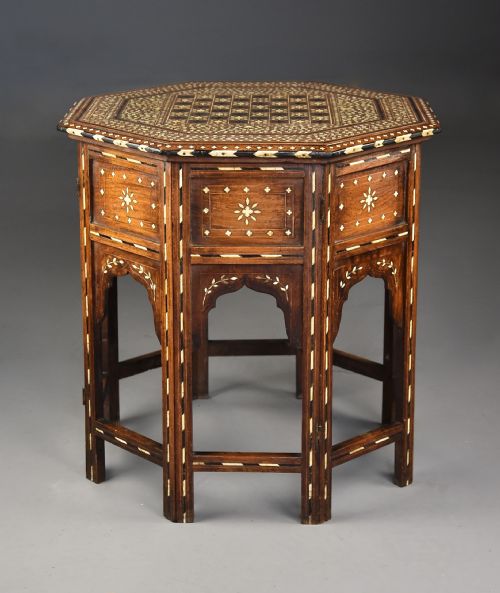
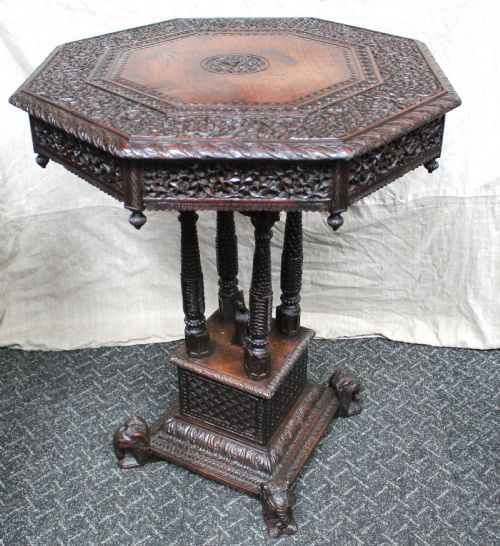
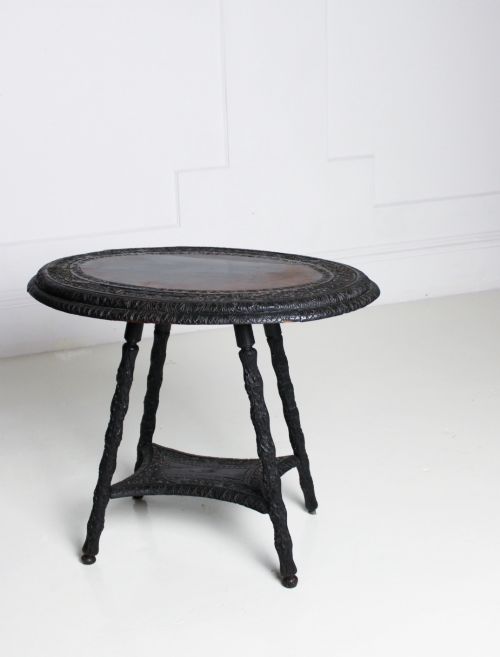
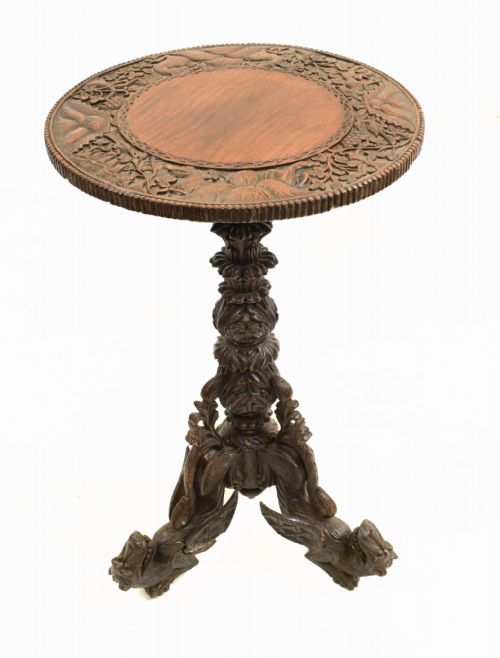
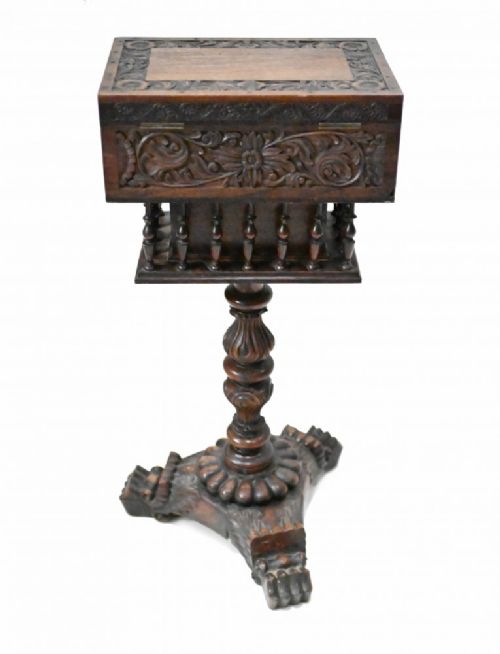
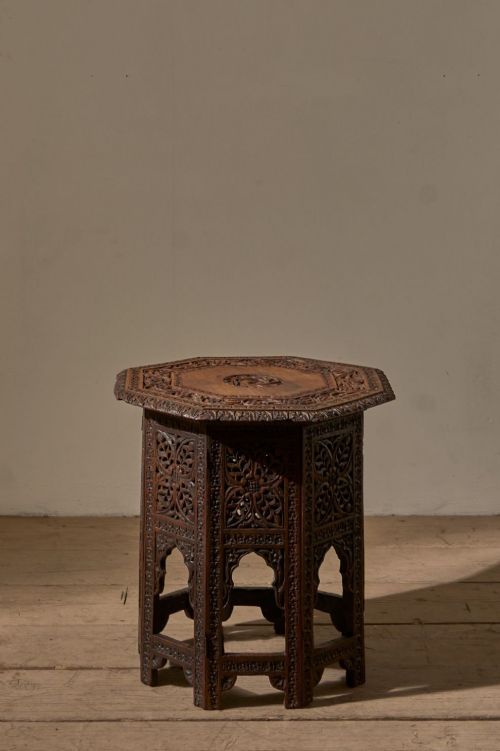
A colonial carved occasional table is a small stand produced during the nineteenth and early twentieth centuries across regions influenced by European trade, notably British India, Burma and Ceylon. These pieces range from octagonal Hoshiarpur designs and tripod stands to elephant tables supported by carved wooden tusks and animal heads.
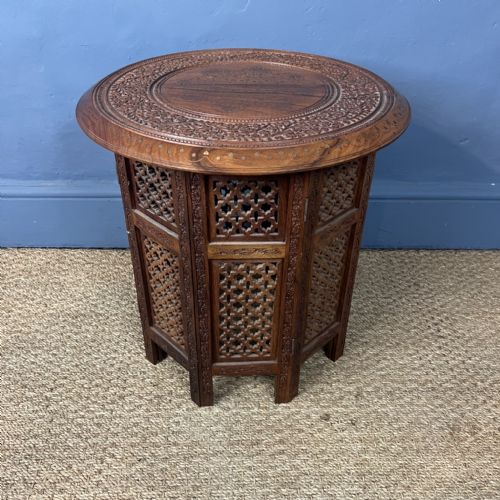
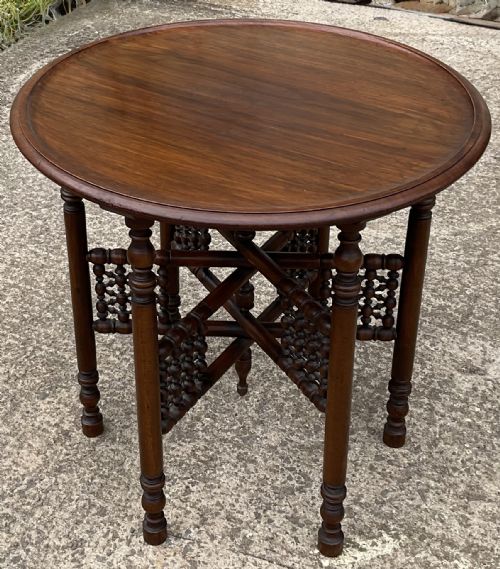
The version most commonly met on this page is the Anglo-Indian side table or pedestal form, frequently shaped with folding bases or tilt tops. Makers fashioned these works for export and colonial residences, blending indigenous woodworking traditions with European furniture types such as chess tables, tea tables and coffee tables.
How they were made
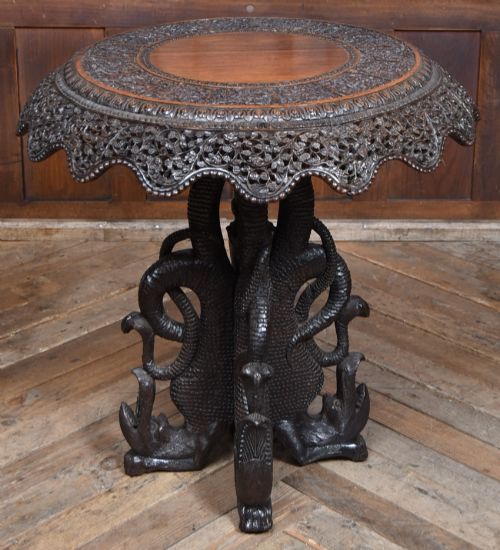
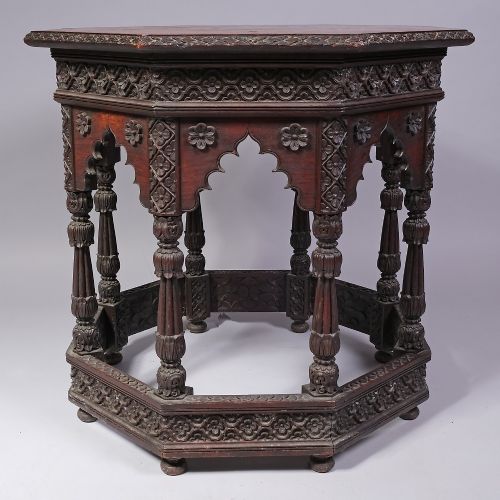
Artisans constructed a colonial carved occasional table using dense tropical hardwoods, selecting padauk, teak, ebony and rosewood for their weight and stability. These timbers allowed deep relief carving without splitting, particularly in panels depicting foliage, dragons, leaves and regional fauna.
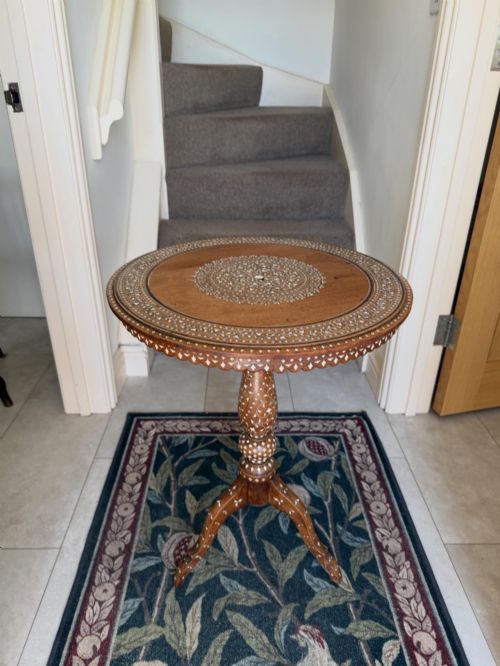
Surface ornamentation involved intricate inlay alongside carving, incorporating brass, copper, mother-of-pearl and bone inlay. Workshops in specific centres such as Hoshiarpur and the Bombay Presidency specialised in geometric wire-inlay and micro-mosaic panels set directly into the dark timber.
Several tables feature carved wooden tusks, transforming standard occasional furniture into diminutive pachyderm menageries.
What varies in quality
The distinction between ordinary and exceptional examples rests upon the depth and crispness of the carving. Superior items display undercut relief with distinct details in animal heads, feathers and leaf veins, whereas lesser pieces feature shallow, mechanical stamp-work.
Material selection and inlay integration further separate the tiers. Top-grade tables combine solid exotic hardwoods with precise, complete metal or bone inlay that sits flush with the polished surface, avoiding missing segments or clumsy repairs.
The Colonial Carved Occasional Table Glossary
- Hoshiarpur
- A style of woodwork originating from the Punjab region, characterised by dense geometric inlay in brass, bone or shisham wood. These pieces often feature folding octagonal tops and intricate latticework panels.
- Padauk
- A heavy, durable reddish-brown tropical timber favoured by nineteenth-century colonial cabinetmakers. It darkens with age to a deep, rich brown while retaining a fine natural grain.
- Teapoy
- A small table traditionally used for holding tea equipment or serving beverages. In colonial contexts, the term often applies to small occasional stands with carved or inlaid tops.
- Tilt top
- A tabletop mounted on a mechanism allowing the surface to swivel vertically for storage against a wall. This format appears frequently on nineteenth-century tripod and pedestal tables.
- Tripod table
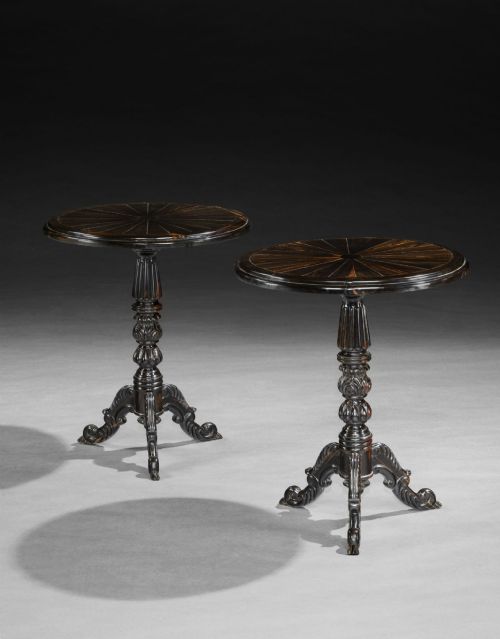
- A small freestanding table supported by three legs radiating from a central pillar. They provide stable placement on uneven floors and feature prominently in nineteenth-century drawing rooms.
Colonial Carved Occasional Table: Frequently Asked Questions
What is an elephant table?
An elephant table is a regional form supported by carved animal figures, often incorporating wooden tusks and detailed trunks into the base architecture.
These pieces typically date from the late nineteenth century and were produced in centres such as the Bombay Presidency for the export market.
How do I care for inlaid wood?
Inlaid wooden tables require stable indoor humidity to prevent the timber from shrinking and releasing metal or bone elements.
Apply a microcrystalline wax sparingly to maintain the finish without obscuring the intricate carving or loosening the inlaid wires.
Where were these tables made?
Production centred in distinct workshops across British India, Burma and Ceylon during the Victorian and Edwardian eras. Specific cities such as Hoshiarpur developed recognisable schools of carving and inlay.
Cabinetmakers adapted traditional regional motifs to suit European furniture forms requested by colonial residents and traders.
Are these tables sturdy enough for daily use?
Most occasional tables serve well for holding lamps, books or cups, provided the joints and pedestals remain secure. Folding bases and tripod legs require careful placement to avoid tipping under uneven loads.
Heavier hardwood examples offer good stability, though delicate pierced screens benefit from gentle handling during repositioning.