


Indian Carved Hardwood Tables
These indian carved hardwood tables bring intricate regional carving, dense hardwoods, and folding campaigns into British rooms from the nineteenth and early twentieth centuries.
Indian Carved Hardwood Tables
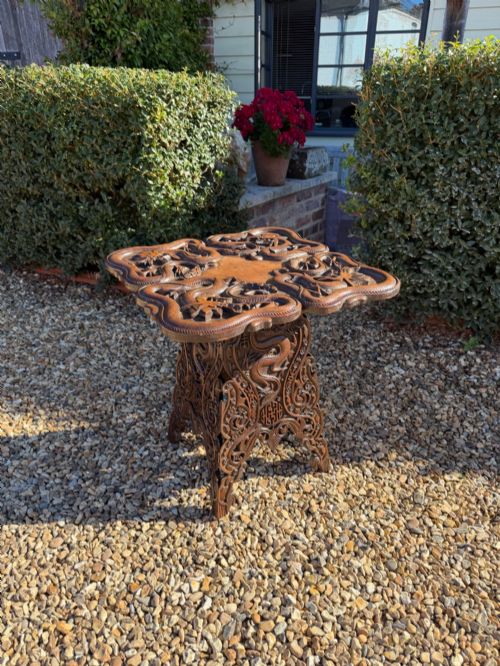
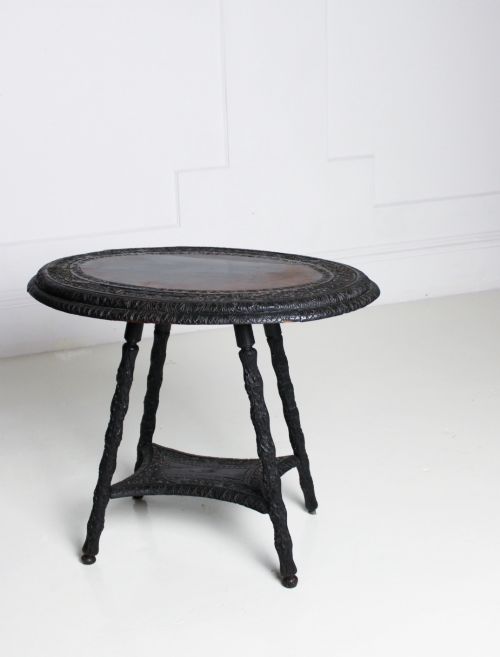
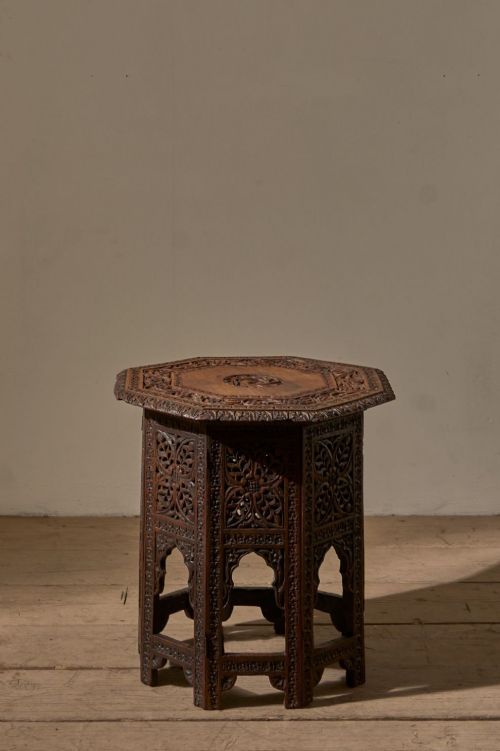
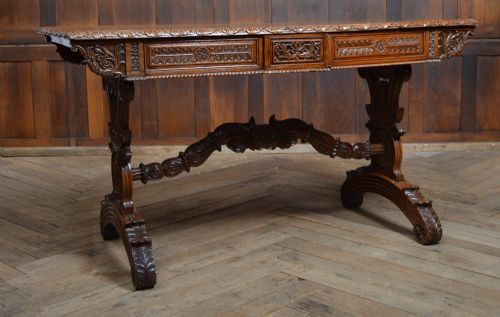
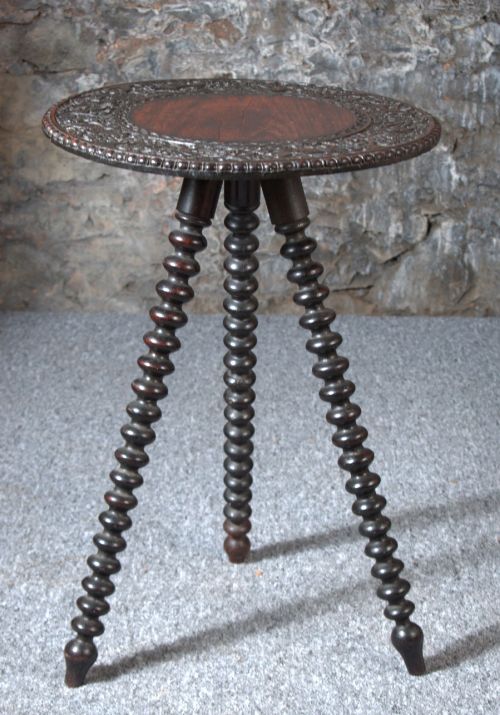
Indian carved hardwood tables comprise forms such as occasional tables, side tables, console tables, coffee tables, and low tables produced across the nineteenth and early twentieth centuries. These pieces reflect stylistic influences spanning Anglo-Indian, Anglo-Burmese, Moorish Revival, and Colonial Indian traditions.
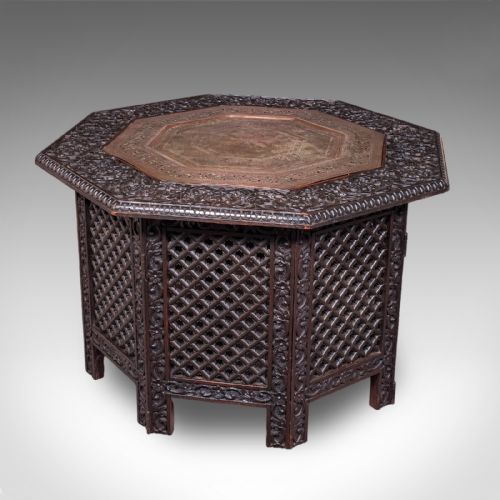
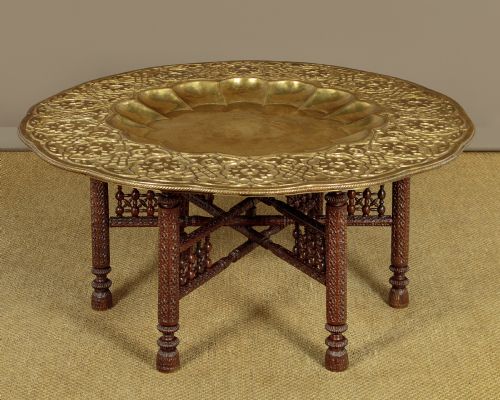
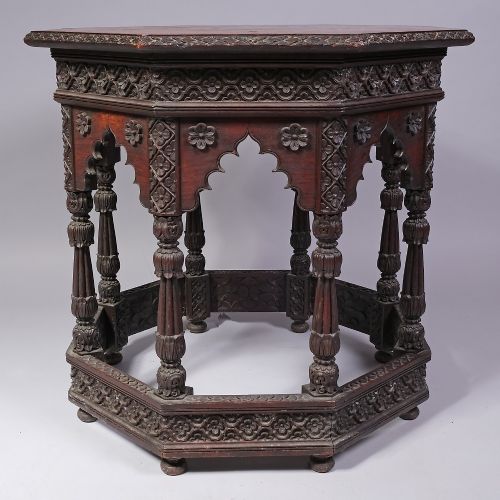
The version most commonly met on this page is the circular or octagonal occasional table, often supported by figural bases featuring elephants or camels. Many examples demonstrate regional origins including the Bombay presidency and North India, while others incorporate folding actions suitable for campaign use.
How they were made
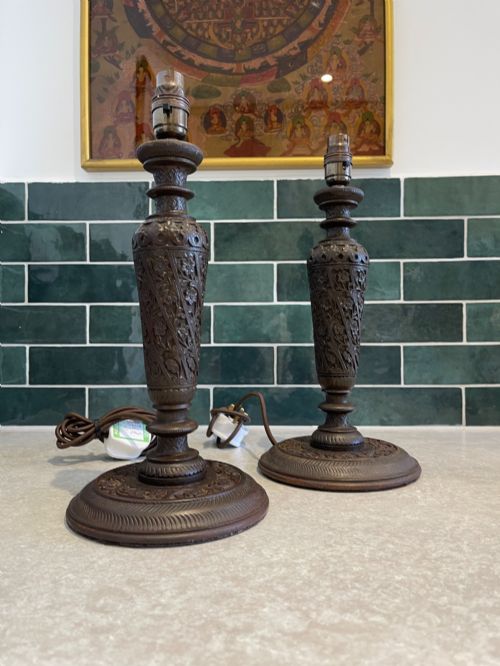
Craftsmen utilised dense timbers such as teak, padauk, and rosewood, which provided stable surfaces for deep relief carving depicting leaf motifs, dragons, and figurative elements. These woods were sourced locally and selected for their weight and grain.
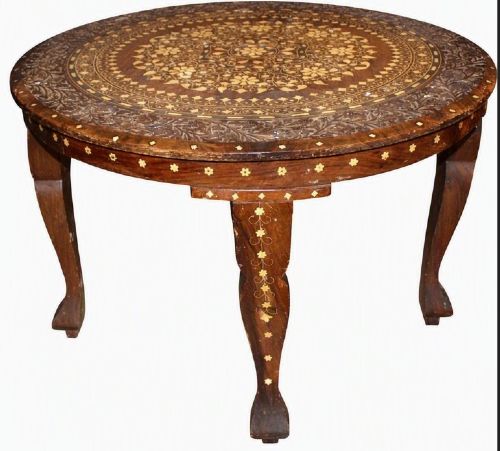
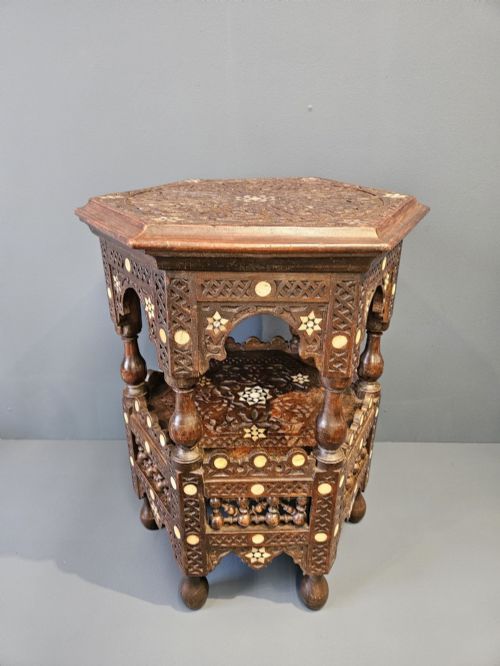
Makers integrated contrasting materials directly into the timber frames, inserting bone, brass, and copper inlay to articulate geometric patterns and borders. Folding mechanisms and tilt-top joints required precise joinery to ensure stability without permanent fixings.
Listings span the nineteenth and early twentieth centuries, featuring hardwoods like padauk, teak, and rosewood alongside brass, bone, and copper inlay.
What varies in quality
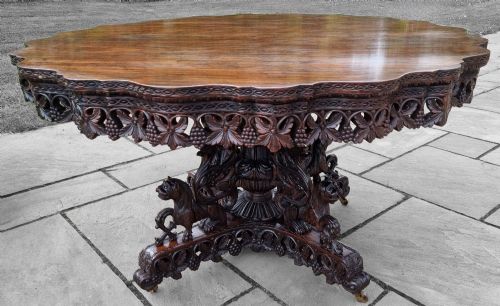
The crispness of the chisel work dictates visual depth, separating tables with sharp, undercut foliage and well-defined animal figures from those with softer, shallower incisions. Wood selection also plays a part, with heavy padauk and figured rosewood holding fine detail better than plain utility timber.
Complexity of construction distinguishes standard occasional tables from sophisticated examples featuring bone inlay, intricate brass wirework, or functional folding and tilt-top mechanisms. Maker attribution, such as stamps by Liberty & Co, adds another layer of distinction.
Liberty & Co
The Indian Carved Hardwood Tables Glossary
- Anglo-Indian
- A style describing furniture made in India during the British colonial period for export or domestic European use. It merges traditional Indian carving techniques with Western furniture forms.
- Padauk
- A heavy, durable tropical hardwood with a reddish-brown colour that darkens with age. It is frequently encountered in nineteenth-century tables.
- Tilt-top
- A tabletop hinged to its pedestal so it can be folded vertically when not in use. This mechanism allowed for easier storage in colonial interiors.
- Campaign furniture
- Portable pieces designed to be easily disassembled or folded for travel. These tables often incorporate folding bases or removable trays.
- Inlay
- A technique where contrasting materials such as bone, brass, or copper are set flush into recesses within the wooden surface. This creates geometric or floral patterns across the top.
Indian Carved Hardwood Tables: Frequently Asked Questions
How do I identify an elephant table?
Elephant tables feature carved wooden elephant heads and trunks forming the structural legs or central support of the piece. These are typically executed in dense hardwoods with detailed facial and tusk carving.
Such tables frequently originate from the nineteenth century and often connect stylistically to the Bombay presidency workshop traditions.
What is an Anglo-Indian table?
An Anglo-Indian table is a piece made in the Indian subcontinent during the British colonial era, combining local artisan carving with European furniture shapes. They utilise regional timbers like teak and padauk.
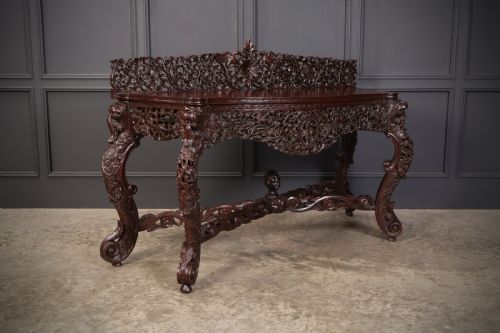
These tables range from small occasional stands to large centre and console tables decorated with dense floral or animal motifs.
How were folding campaign tables used?
Folding campaign tables were designed for colonial officers and travellers who required furniture that could be packed down for transit. Their bases collapse or fold flat while remaining rigid when assembled.
They often combine teak or padauk with brass hinges, reinforcing plates, and occasional metal top surfaces suited to tropical climates.
What woods were used for these tables?
Makers relied on durable tropical hardwoods including teak, padauk, rosewood, and general hardwood. These materials provided the structural strength required for deep carving.
Selected timbers often exhibit rich dark tones and heavy grain patterns that complement inlaid bone or brass wire decoration.
Are these tables solid hardwood?
These tables are constructed from solid tropical hardwoods such as padauk, teak, and rosewood rather than veneered deal. This solid construction was necessary to support the heavy relief carving characteristic of the style.
Solid timber also allowed artisans to carve directly into the frame for figural table bases and folding mechanisms.