


Carved Anglo Indian Pedestal
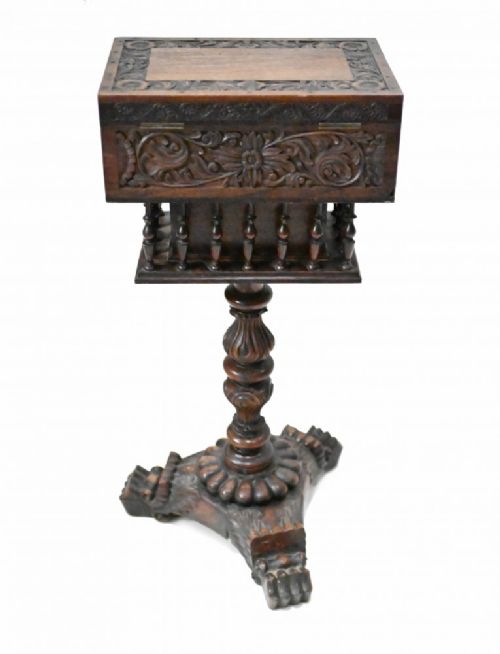
A carved anglo indian pedestal brings heavy colonial timber and deep surface work into a room.
Carved Anglo Indian Pedestal
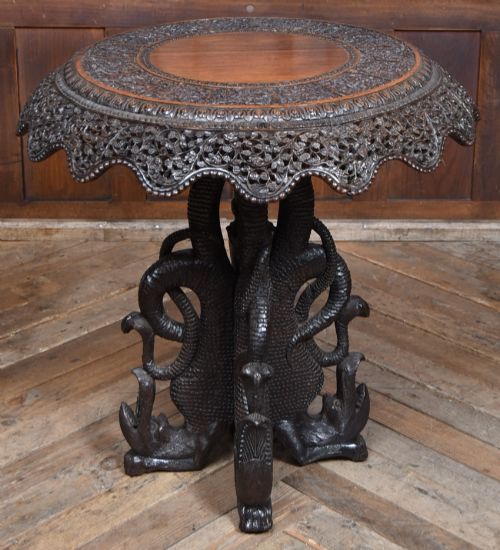
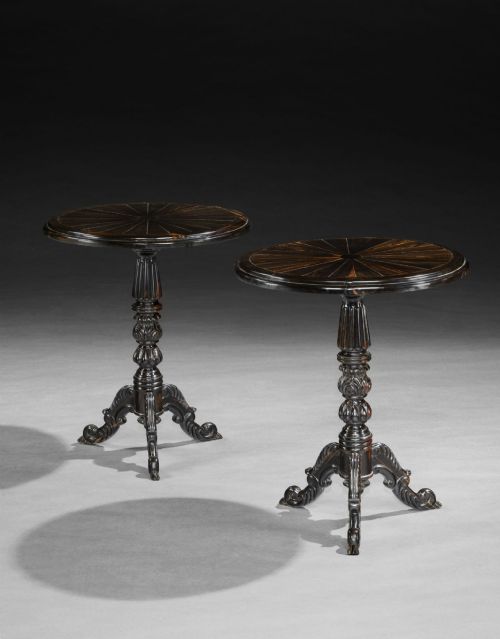
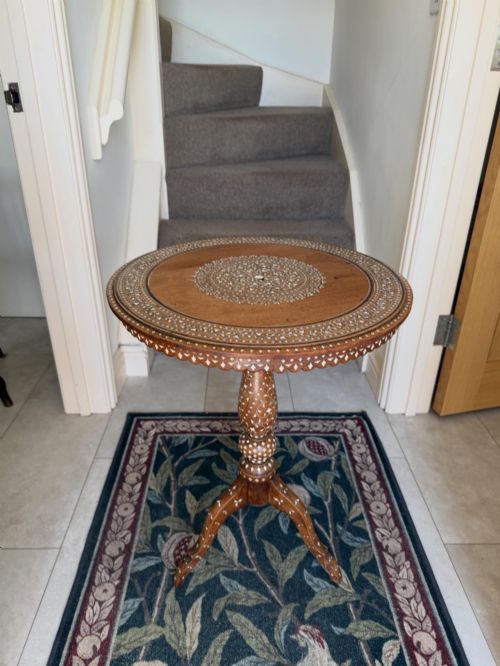
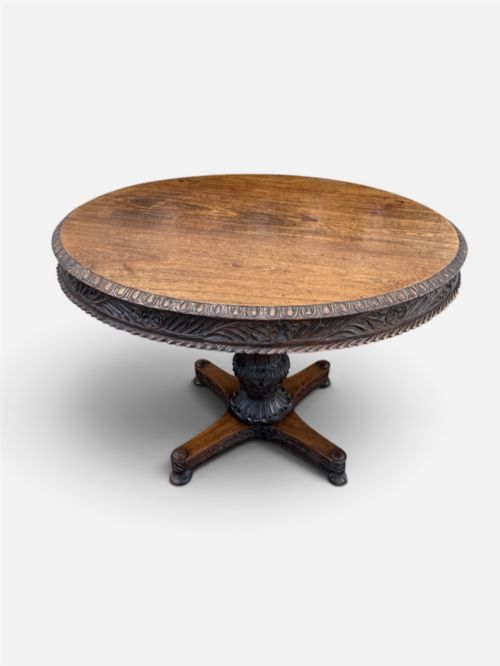
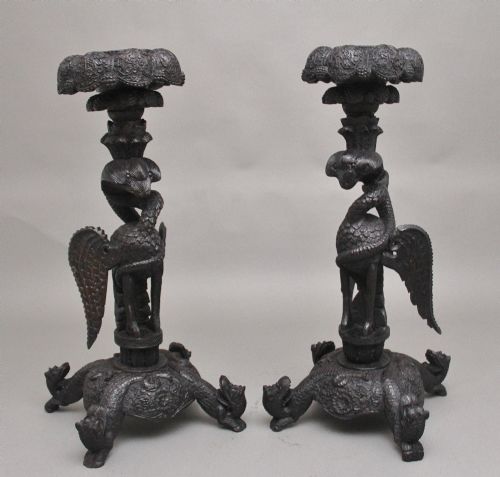
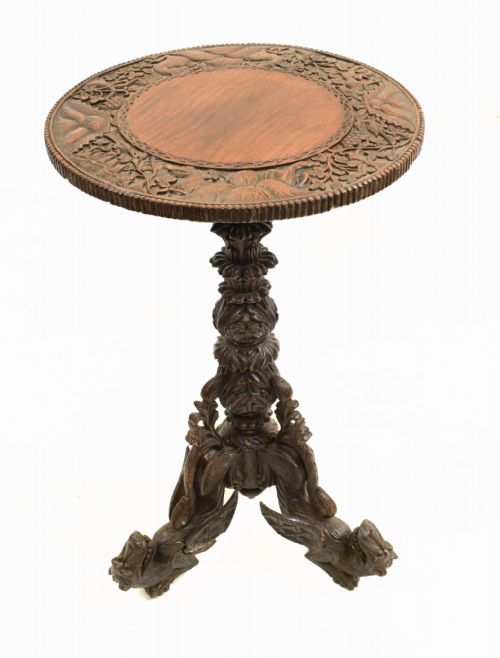
A carved anglo indian pedestal covers a range of nineteenth-century furniture built for colonial officers and export markets, taking forms such as centre tables, occasional tables, torcheres, and plant stands. The pieces span the Victorian era, the Regency period, and decades through 1900, originating from regions including India, Burma, Ceylon, and Kashmir.
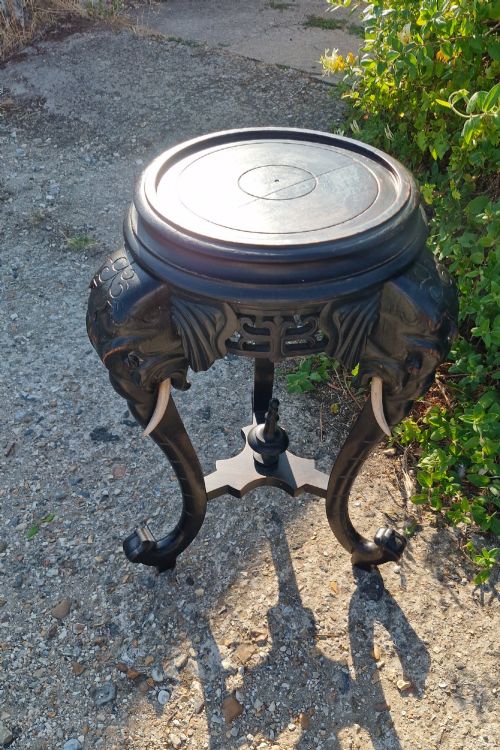
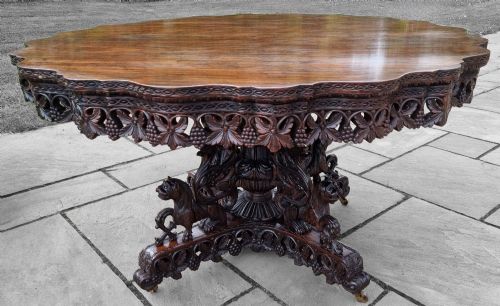
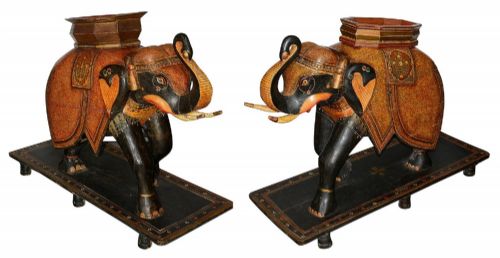
Centre tables and tilt-top occasional tables appear most frequently on this page, often supported by central pillars or tripod bases. Alongside these standard tables, buyers encounter specialised forms like teapoys, Davenport writing desks, partners desks, sideboards, and figural stands shaped as elephants and camels.
The stylistic vocabulary merges British furniture shapes with indigenous carving traditions, resulting in dense foliage, scrolling borders, and figural elements applied to familiar European forms. Regional variations emerge clearly, from the padauk work of the Bombay region to ebony pieces from Ceylon and dense floral carving from Burma.
Materials and construction
Workshops utilised dense tropical hardwoods capable of holding intricate, deep-relief carving without splintering, selecting padauk, teak, rosewood, ebony, and satinwood for their substantial weight and dark grain. These timbers were often worked in solid form rather than as veneers, allowing artisans to carve directly into the structural mass of the pedestal shafts, table tops, and friezes.
Assembly methods combined traditional British joinery with local craftsmanship, utilising central pedestals, tripod legs, and tilt-top mechanisms alongside pegged joints and occasionally brass hardware. Surface decoration extended beyond relief carving to incorporate mother of pearl inlay, painted details on wooden tusks or lacquer figures, and contrasting exotic specimen woods.
Elephant and camel tables occasionally arrive complete with painted wooden tusks and lacquered trappings, standing ready to hold tea.
Craftsmanship and design
Quality rests on the depth and crispness of the carving, distinguishing pieces where foliage and figures maintain sharp undercut details from examples with soft, shallow surface marks. The choice of timber also dictates distinction, with heavy solid padauk, ebony, and figured rosewood holding greater presence than secondary mixed hardwoods.
Proportion and structural integrity separate standard export items from superior commissions, particularly in the balance of pedestal bases and the smooth operation of tilt-top mechanisms or fitted desk interiors. The integration of specialised materials such as mother of pearl inlay or contrasting specimen woods elevates a piece above uniform carved surfaces.
The Carved Anglo Indian Pedestal Glossary
- Padauk
- A heavy tropical hardwood with a reddish-brown colour that darkens with age, frequently utilised in nineteenth-century colonial furniture. It provides a stable base for deep relief carving.
- Tilt-top
- A table construction allowing the circular or oval top to pivot vertically on the pedestal base for storage. This mechanism relies on a brass or wooden catch beneath the surface.
- Torchere
- A tall stand designed to support a lamp, candle, or decorative sculpture. These pieces feature slender carved columns rising from tripod or pedestal bases.
- Teapoy
- A small occasional table or chest originally designed for holding tea caddies. Nineteenth-century colonial examples often incorporate heavy carving and compartmented interiors.
- Specimen wood
- Furniture constructed from multiple distinct decorative timbers arranged to showcase varied grain patterns and colours. Ceylonese workshops frequently utilised this technique on occasional tables.
Carved Anglo Indian Pedestal: Frequently Asked Questions
What is a carved anglo indian pedestal table?
These pieces are nineteenth-century tables combining British furniture forms with South Asian woodworking traditions, supported by a central column rather than standard corner legs.
They were produced across India, Burma, and Ceylon during the colonial period for both domestic use and export to Britain.
How do I care for tropical hardwood?
Keep the timber away from direct heat sources and sudden temperature shifts to prevent the dense wood from splitting along the grain.
Apply a minimal amount of appropriate furniture wax occasionally to maintain the natural lustre of padauk, rosewood, or ebony.
Where were these pieces made?
Production occurred across various regional centres in the British Indian Empire, including Bombay, Hoshiarpur, and regions of Burma and Ceylon.
Each area developed distinct carving styles, utilising local timbers such as teak, satinwood, and padauk.
How do I date a piece?
Dating relies on combining the construction methods, such as screw types and joinery, with the recorded period styles and material preferences seen across nineteenth-century manufacturing.
Victorian and Regency design markers help narrow the decade of origin when combined with regional carving characteristics.