
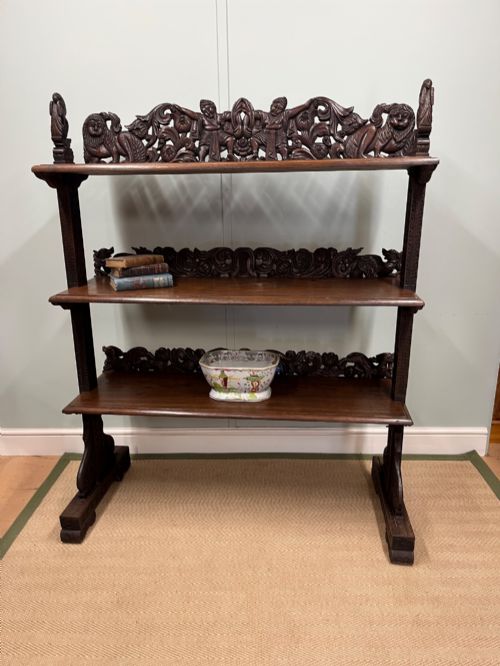


Anglo Indian Display Stand
An anglo indian display stand brings tactile colonial craftsmanship and rich timber grain directly into a room.
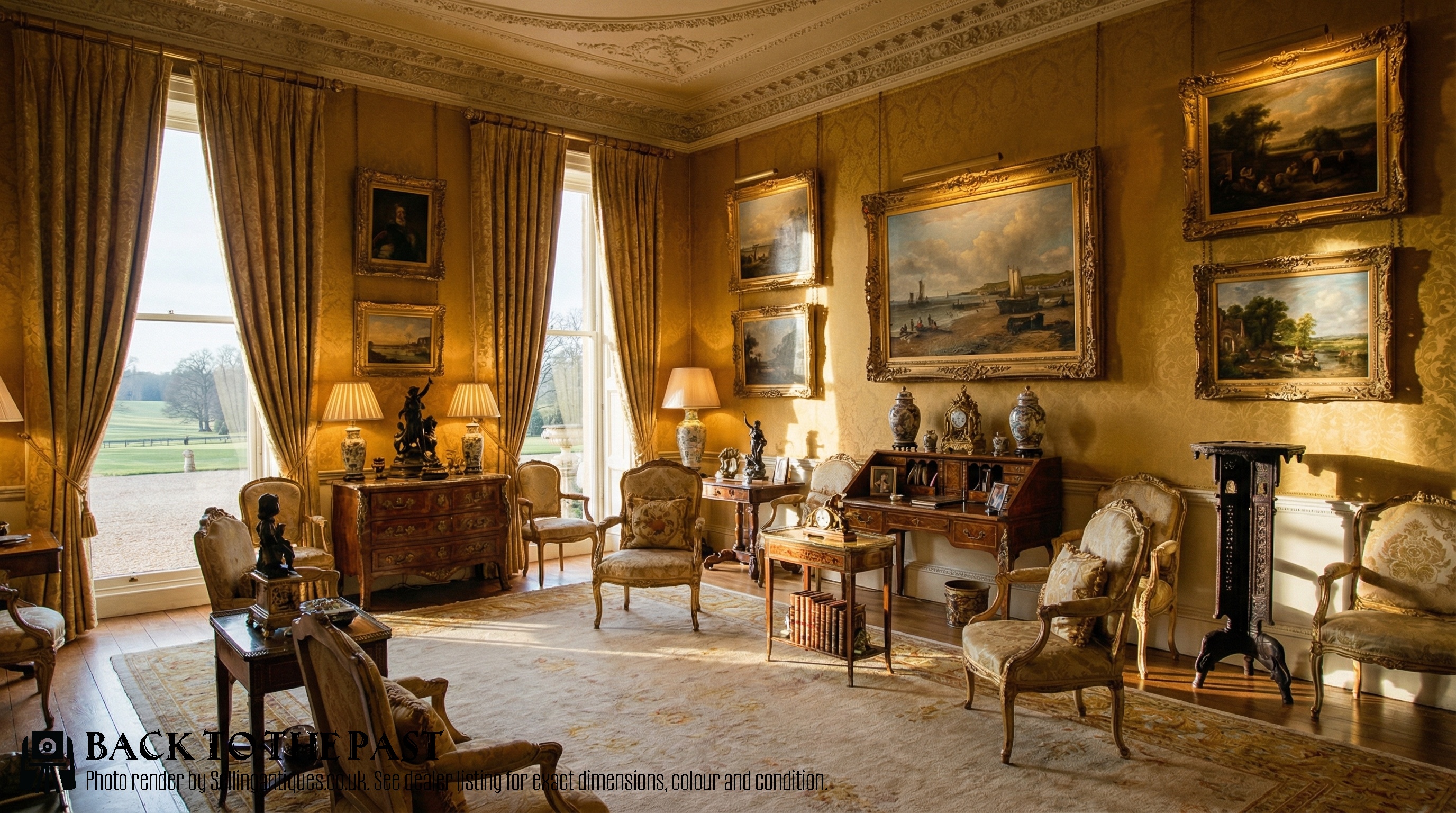
Anglo Indian Display Stand
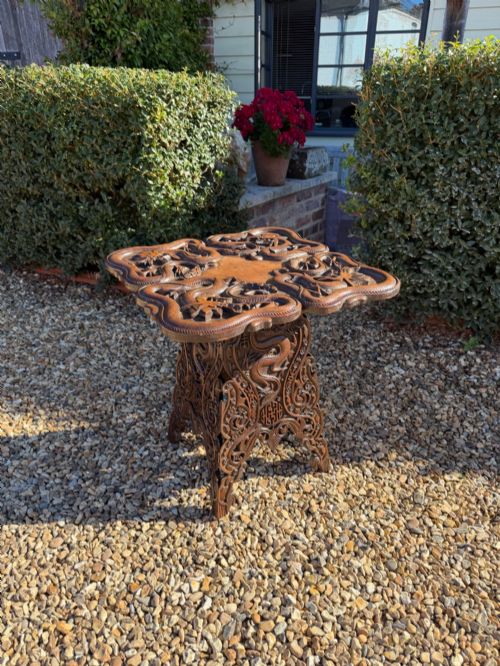
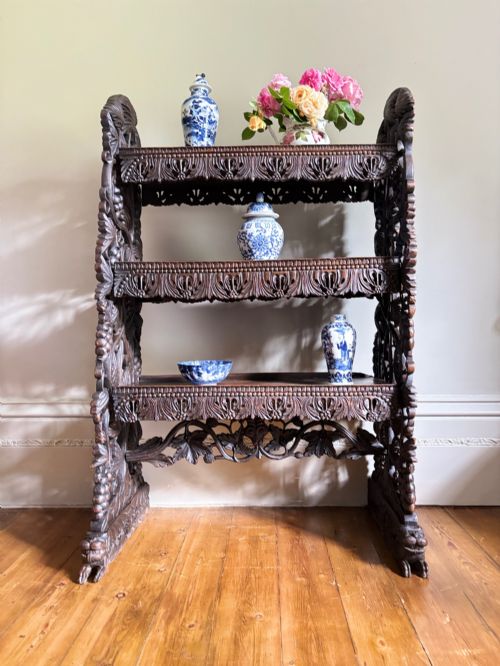
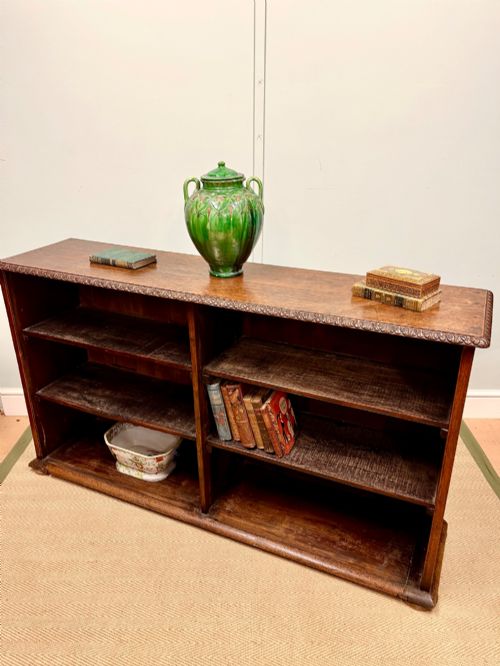
An anglo indian display stand encompasses multi-tiered whatnots, bookcases, etageres, and small occasional stands created during the nineteenth century and the Edwardian era. These pieces combine British furniture forms with traditional Indian carving traditions, resulting in distinctive display furniture designed to showcase books, ornaments, and magazines.
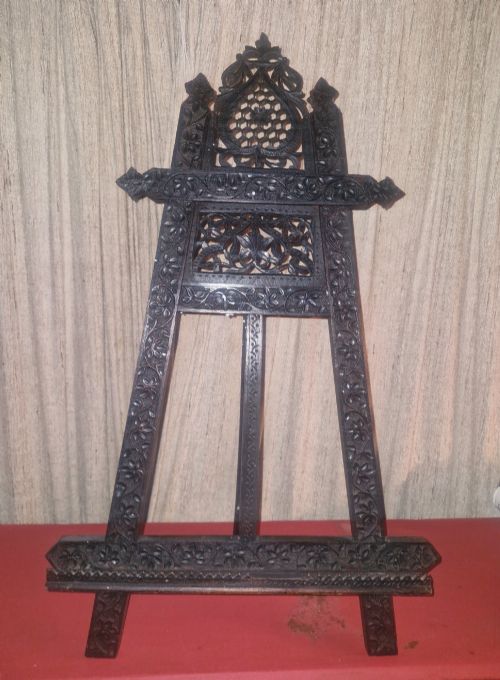
The pieces on this page span the Victorian and Edwardian periods, featuring classic forms such as three-tier buffets, corner whatnots, and picture display easels. Many adopt familiar Western layouts like waterfall open bookcases whilst retaining dense indigenous ornamentation.
Originating through colonial trade and craftsmanship, these items range from substantial padauk shelving units to delicate table-top stands. Buyers typically encounter rich timber surfaces heavily worked with floral and geometric relief carving.
How they were made
Maker workshops utilised dense tropical timbers native to the region, relying predominantly on teak, padauk, rosewood, and ebony for structural stability and deep colour. These heavy hardwoods permitted intricate hand-carving without compromising the load-bearing capacity of multiple tiers.
Decoration often involved contrasting light veneers and detailed inlay work, frequently incorporating mother of pearl and satinwood to create striking visual patterns against dark wood backgrounds. Artisans carved deep relief motifs directly into the solid timber frames of whatnots and bookcases.
Listings feature multiple timber varieties including teak, padauk, rosewood, ebony, and satinwood across various forms.
What varies in quality
The depth and crispness of the hand-carving separate standard production from superior examples, with finer pieces displaying sharp undercut foliage and crisply defined geometric borders. Lesser items rely on shallow, repetitive stamping or softer surface incision that lacks dimension.
Material selection dictates the overall presence of the piece, where dense, heavy hardwoods like ebony and figured padauk hold polish far better than generic softwoods or heavily stained alternatives. The integration of contrasting mother of pearl inlay also influences the refinement of the finished object.
The Anglo Indian Display Stand Glossary
- Etagere
- A set of open shelves for displaying small ornaments and decorative objects. These tiered units often feature slender upright supports and delicate fretwork.
- Whatnot
- A piece of furniture consisting of multiple open shelves used for storage or display. Victorian examples frequently incorporate turned columns and carved corner brackets.
- Padauk
- A heavy tropical hardwood known for its reddish-brown colour and dense grain. It provides a durable foundation for intricate colonial carving.
- Inlay
- A technique where contrasting materials are inserted into recessed cavities on a wooden surface. Mother of pearl and satinwood feature prominently in this decorative application.
Anglo Indian Display Stand: Frequently Asked Questions
How were these stands used originally?
These stands functioned primarily as decorative furniture for displaying prized possessions, books, and magazines in Victorian and Edwardian drawing rooms. Multi-tiered whatnots and etageres allowed households to exhibit ceramics and ornaments across vertical surfaces.
Smaller pieces like picture display easels and table stands were positioned on desks or occasional tables to highlight specific artwork or photographs.
Which woods are most common?
The listings feature dense tropical timbers such as teak, padauk, rosewood, and ebony. These heavy hardwoods were selected for their structural strength and rich natural tones.
Lighter contrasting woods like satinwood and decorative materials including mother of pearl appear frequently as inlay elements within the darker timber frames.
How do I date a piece?
Dating relies on stylistic markers and structural conventions associated with periods like the Victorian era, the Edwardian years, or specific decades from the nineteenth century. Regency revival influences and Arts and Crafts movement details also help place pieces within a chronological window.
Construction methods, timber preparation, and the complexity of the carving provide further clues to the age of an etagere or whatnot.
How do I style one at home?
An anglo indian display stand works well as a focal point in a living room or study, carrying books, ceramics, or botanical specimens across its open tiers. The rich timber tones complement both traditional interiors and modern minimalist spaces.
Ensure the piece is placed away from direct heat sources to protect the dense hardwoods and delicate mother of pearl inlay from drying out.