
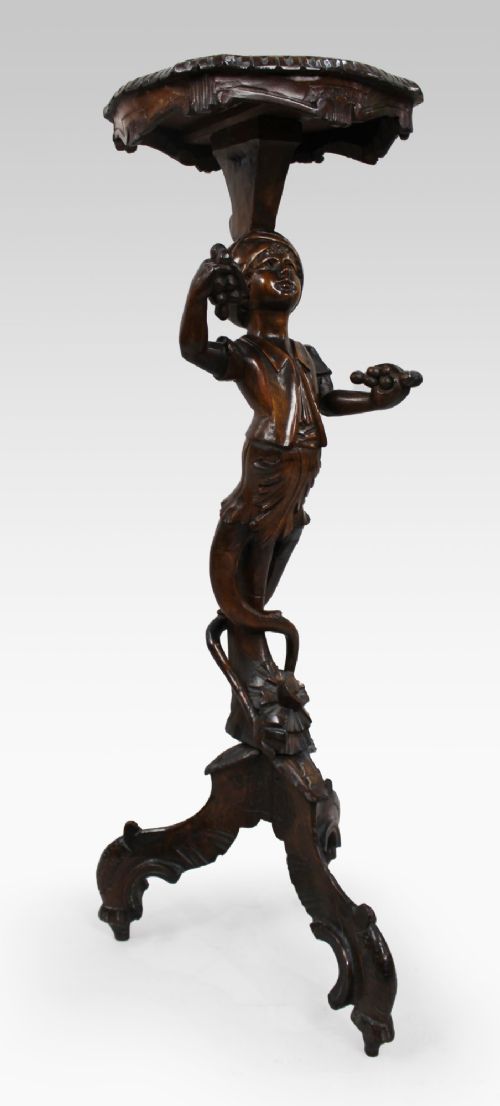

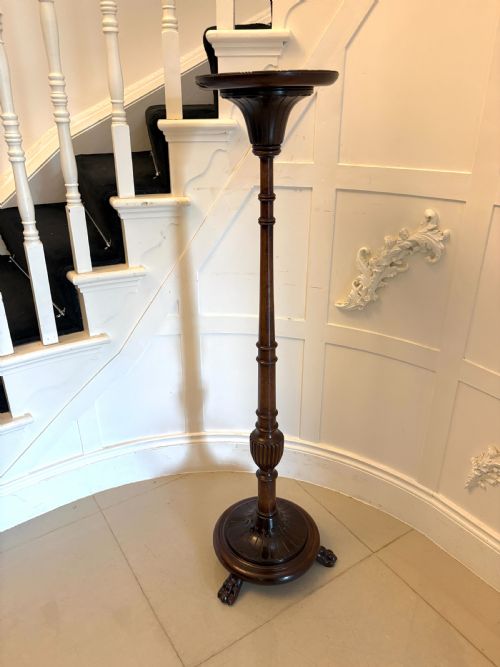


Dark Timber Torchere
A dark timber torchere elevates a display in a room, offering a carved pedestal or plant stand from the nineteenth and early twentieth centuries.
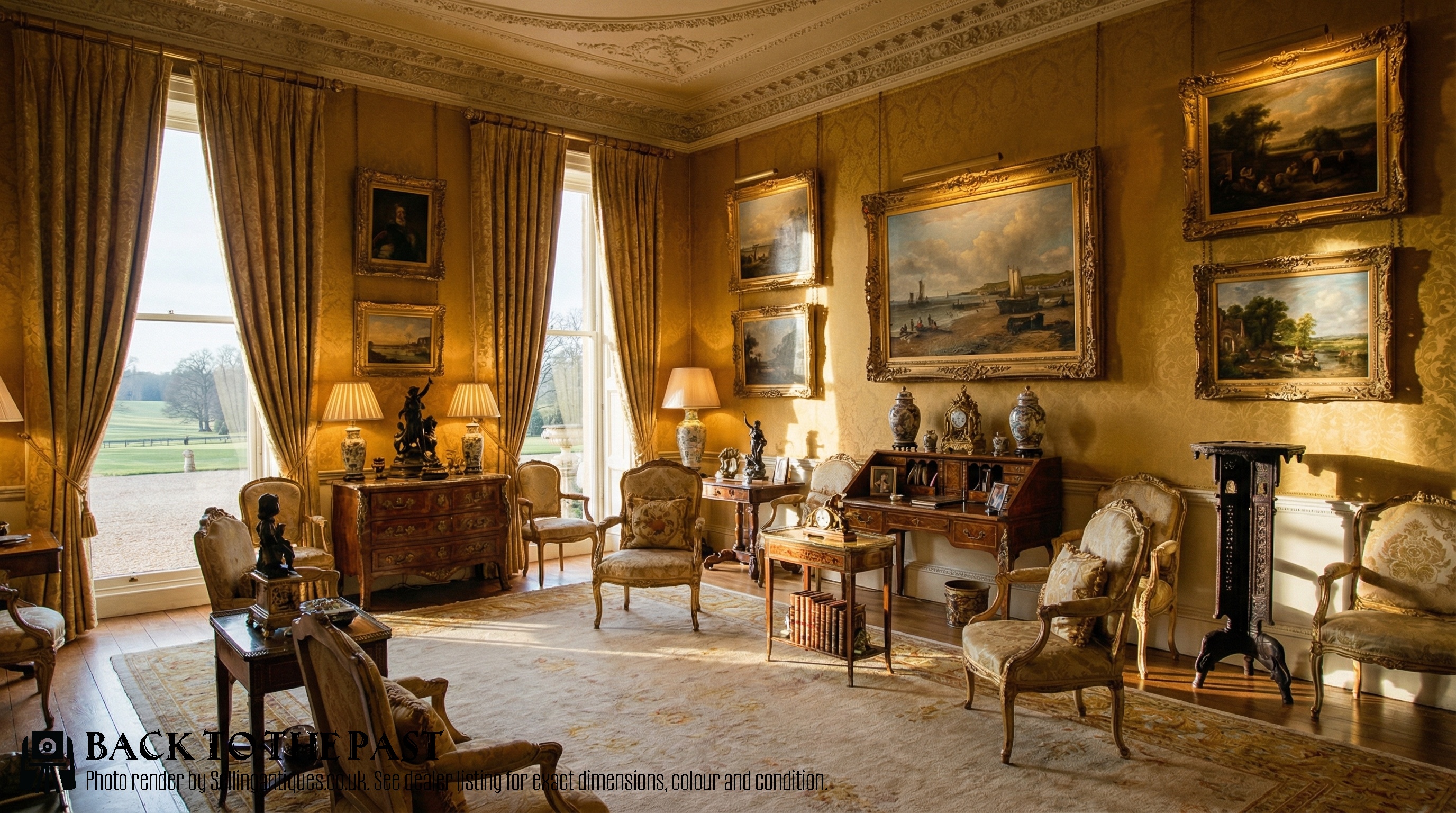
Dark Timber Torchere
A dark timber torchere is a tall stand designed to elevate plants, busts, or ornaments in a room. These pieces appear as pedestals, plant stands, and jardiniere stands across the nineteenth and early twentieth centuries.
The versions most commonly met on this page span Victorian, Art Nouveau, Art Deco, and Renaissance Revival styles. Makers from this period utilised rich timbers to create functional display columns for country houses and formal interiors.
Forms range from simple turned columns to elaborate figural supports featuring carved figures, caryatids, and console tables. Each dark timber torchere serves as a vertical focal point for displaying decorative arts.
How they were made
Craftsmen built each dark timber torchere using dense materials such as walnut, mahogany, oak, and ebonised hardwood. These woods provided the structural integrity required to support heavy figures and plants atop slender columns.
Carving defines the decoration, with artisans shaping walnut, oak, and mahogany into intricate figural motifs, caryatids, and architectural columns. Surface finishes range from natural polished grain to ebonised treatments that emulate ebony.
The inventory encompasses Venetian, Anglo-Indian, and English country house aesthetics spanning multiple historical revivals.
What varies in quality
The depth and precision of the hand carving separate standard production stands from exceptional examples. Stands featuring detailed figural work, such as caryatids or Blackamoor figures, display a higher level of artistic ambition.
The choice of timber and the stability of the central column dictate the overall build quality. Solid walnut and mahogany with well-balanced bases retain their structural integrity better than lighter hardwood alternatives.
The Dark Timber Torchere Glossary
- Torchere
- A tall ornamental stand originally designed to hold a light, now used for displaying plants or sculptures. These pieces often feature a slender column resting on a tripod or circular base.
- Caryatid
- A sculpted female figure serving as an architectural support taking the place of a column or pillar. In these pieces, the figure bears the weight of the top platform.
- Jardiniere stand
- A tall piece of furniture specifically built to hold a flower pot or plant container. These stands elevate greenery to eye level within a room.
- Ebonised
- Wood treated with a dark stain or finish to imitate the appearance of ebony. This technique was popular in nineteenth-century cabinet making for a dramatic visual effect.
- Pedestal
- A support or base for a statue, vase, or column. In this context, it functions as a standalone display unit.
Dark Timber Torchere: Frequently Asked Questions
What is a dark timber torchere used for?
These tall stands serve primarily to elevate plants, jardiniere bowls, busts, and decorative ornaments within a room. Their vertical profile draws the eye upward and makes efficient use of corner spaces.
Historically, they also functioned as torch holders or candle stands before evolving into general display furniture for country houses and parlours.
How do I date a nineteenth-century torchere?
Dating relies on identifying the prevailing stylistic influences, such as Victorian Revival, Art Nouveau, or Venetian Baroque elements. Tool marks, timber selection, and joint construction also offer clues to the manufacturing decade.
Comparing the carving style with dated examples helps narrow down whether a piece originates from the early, mid, or late nineteenth century.
Can these stands support heavy plants?
Most solid walnut, mahogany, and oak stands possess sufficient structural strength to support substantial ceramic pots and heavy ornaments. The stability depends largely on the width of the base and the condition of the central column.
It remains wise to check the weight distribution and ensure the pedestal rests evenly on the floor before placing heavy items on top.
What distinguishes a torchere from a plant stand?
A torchere traditionally implies a more decorative, slender column with classical or figural ornamentation derived from lighting supports. A plant stand can be simpler in form and built strictly for botanical display.
In practice, nineteenth-century makers used the terms interchangeably for tall display furniture of this height.