

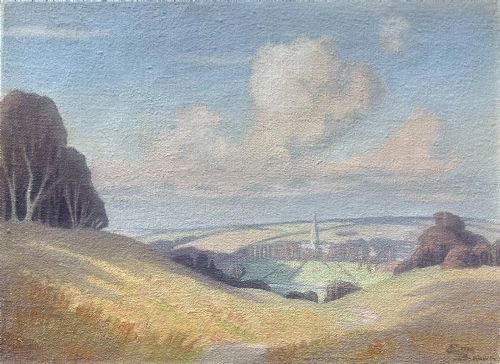
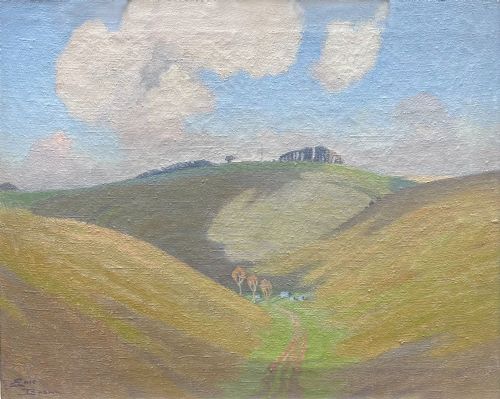
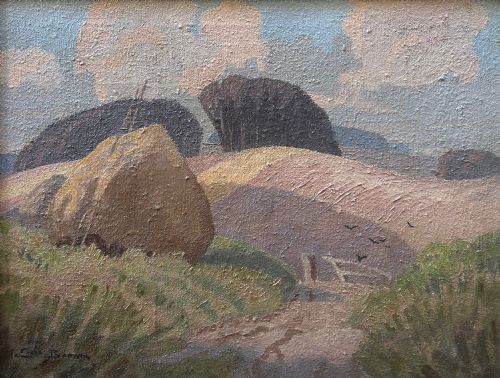
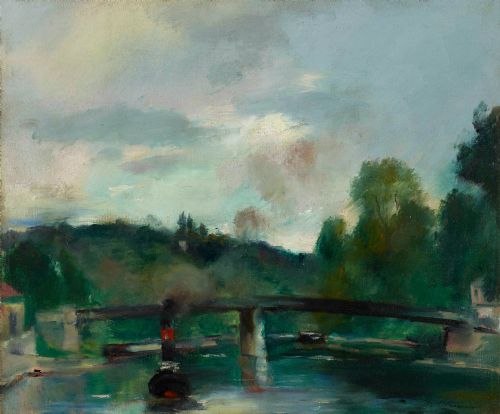
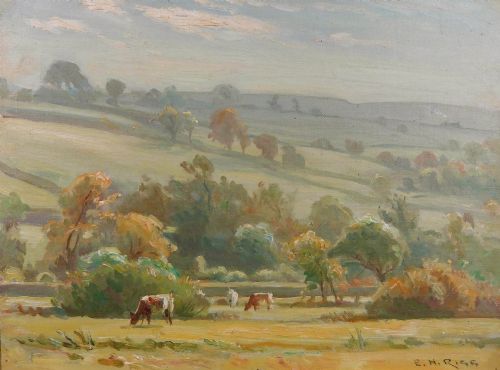
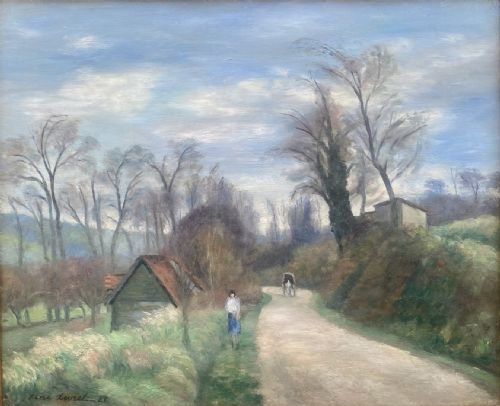

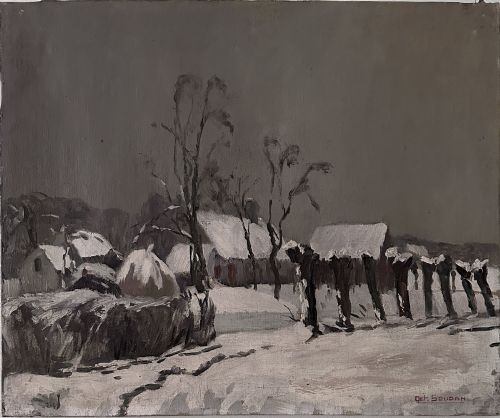
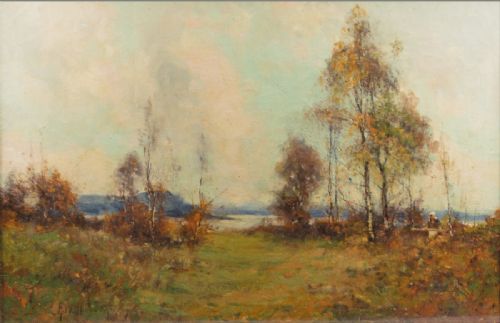


Impressionist Countryside Oil Painting
When you search for an impressionist countryside oil painting, you are looking for light captured rapidly across fields, rivers, and farms.
Impressionist Countryside Oil Painting
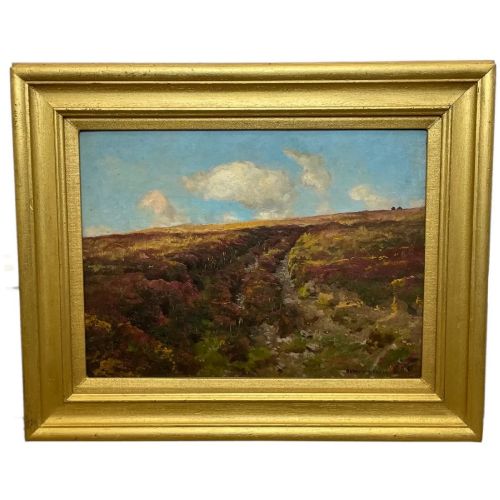
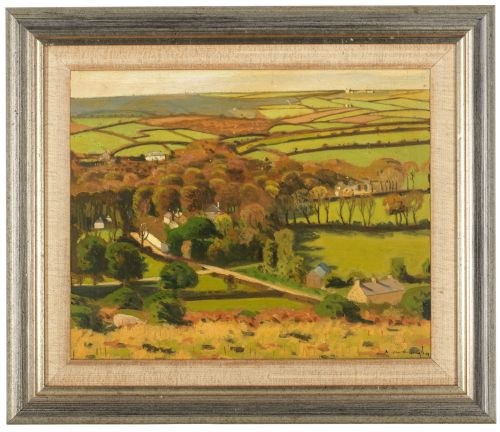
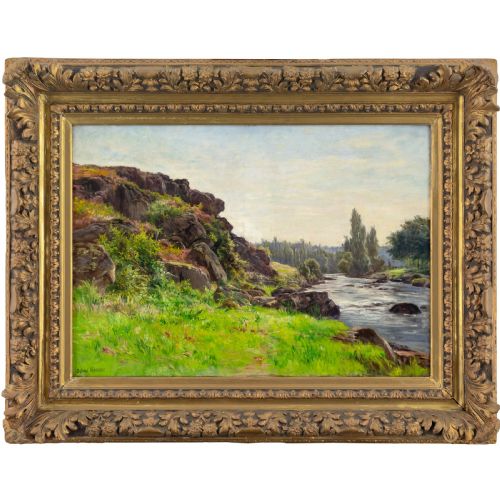
An impressionist countryside oil painting captures rural scenes through loose brushwork and direct observation of natural light. These works span from the late nineteenth century through to the mid-twentieth century, capturing rivers, farmsteads, and coastal hills.
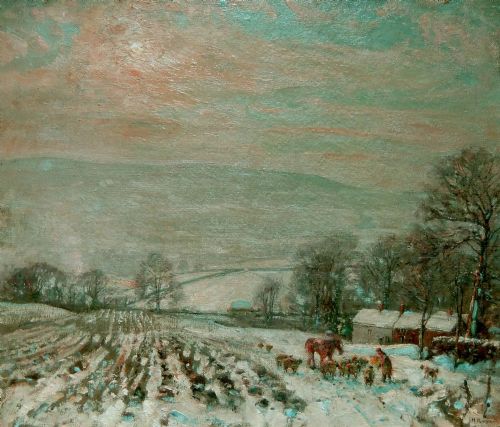
Buyers will find river valleys, winter pastures, and harvest fields rendered in oil paint, often housed in period gilt frames. These pieces reflect a sustained European and British engagement with open-air painting.
How they were made
Artists painted primarily with oil paint on stretched canvas or prepared wood panels, allowing for both textured impasto and thin washes of colour. The medium permitted painters to work quickly outdoors to catch transient effects of sunlight and weather.
Support materials range from traditional linen canvas to rigid wood panels and card, each influencing how the paint sits on the surface. Many surviving works retain their original gilt frames, which complement the tonal range of the pigment.
The physical supports recorded in current works consist of stretched canvas, wood panels, and card.
What varies in quality
Quality rests in the confidence of the brushwork and the artist's ability to structure light across a rural scene without overworking the surface. Stronger paintings demonstrate a distinct handling of atmosphere, whether depicting winter light in Wharfedale or summer shadows in Normandy.
The integrity of the physical support and the preservation of the original paint layer also distinguish superior examples. Works that maintain their unlined canvas and original pigment vibrancy command greater appreciation among collectors.
George Graham·Arthur Wardle·Herbert Royle·Robert Morson Hughes·Gabriel Mathieu·Eric Brown·Henri Ottmann·Ernest Higgins Rigg·Florence Adelina Hess·Alexander Wellwood Rattray·John Horace Hooper·Hubert Wellington·Owen Bowen·Charles Clair·Joseph Edward Hennah·Charles Walter Simpson·André Prévot-Valéri·Mario Pinetti·Reginald Grange Brundrit·William Greaves·James William Booth·Lorenzo Headley·Maud Raphael Jones·Helmut Reuter
The Impressionist Countryside Oil Painting Glossary
- Impressionism
- A nineteenth-century painting style focusing on the accurate depiction of light and its shifting qualities. Painters utilised rapid, visible brushstrokes rather than smooth, blended finishes.
- Post-Impressionism
- An extension of impressionism that rejected its limitations while continuing to use vivid colours and thick application. Artists emphasised geometric forms and expressive qualities.
- Wood Panel
- A rigid flat support made from timber used instead of canvas. Painters often applied oils directly to prepared wood surfaces during the early twentieth century.
- Impasto
- The process of applying paint thickly on a canvas so that it stands out from the surface. This technique gives a sense of physical texture to foliage, water, and earth.
- Gilt Frame
- A wooden picture frame coated with a thin layer of gold leaf or gilt paint. These frames enhance the visual depth of landscape oil paintings.
Impressionist Countryside Oil Painting: Frequently Asked Questions
How do I date an impressionist countryside oil painting?
Dating relies on stylistic evidence, artist signatures, and framing materials recorded by the maker. Nineteenth-century pieces often use heavier gilt frames, while 1930s and 1950s works lean towards modernist handling of light and rural subjects.
Examine the reverse of the canvas or wood panel for inscriptions, old gallery labels, and stamps. These clues frequently supply specific locations and years that anchor the painting in an artist's career.
Where were these landscape paintings created?
The works originate from artist colonies and rural spots across Britain, France, and Europe. Common locations include the Yorkshire Dales, Cornwall, Normandy, and various river valleys.
Painters travelled directly to these rural regions to capture local agricultural life, coastal cliffs, and seasonal changes outdoors. Their titles often record the exact village or valley depicted.
Should I reframe an antique oil painting?
Original period frames, particularly gilt ones, contribute to the historical character and aesthetic balance of the artwork. Retaining them preserves the integrity of the piece as a complete historical object.
Replacement should only occur if the current mount causes physical damage to the canvas or wood panel. Even then, sourcing a frame contemporary to the painting's period remains the preferred approach.
What is the difference between canvas and wood panel supports?
Canvas provides a flexible, textured surface woven from linen or cotton, allowing for large-scale sweeping landscapes. Wood panels offer a rigid, smooth board that resists sagging and suits smaller, direct plein-air studies.
Both materials were used concurrently throughout the nineteenth and twentieth centuries. The choice usually depended on the artist's preferred scale and whether they painted outdoors.