


Green Hill Oil Painting
A green hill oil painting brings the quiet weight of distant slopes and changing light straight into a room.
Green Hill Oil Painting
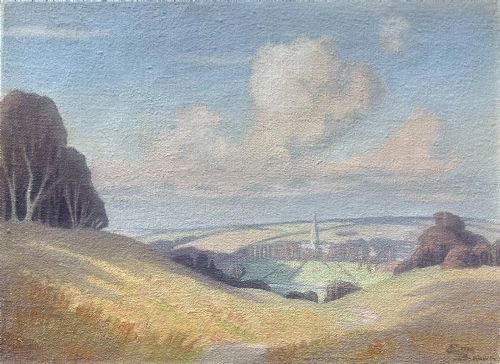
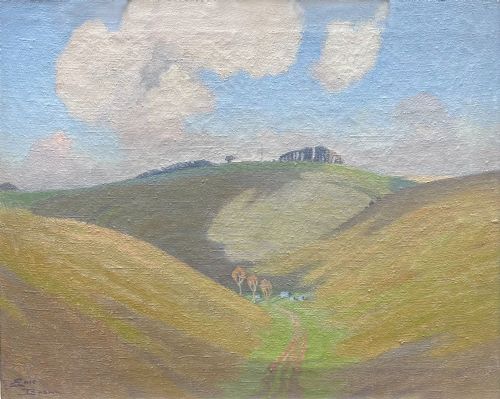
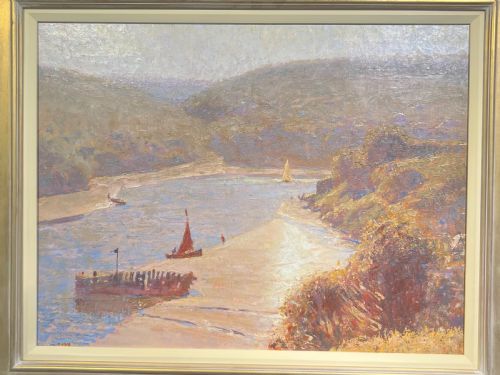
When you search for a green hill oil painting, you encounter landscapes that capture elevations, river paths, and rolling downs from various eras. The most frequent examples span the Victorian period through the mid-century, recording topography from Dorset, Shropshire, and the Mediterranean.
These works typically present pastoral views, river valleys, and coastal hills rendered in oil paint upon canvas or wood panels. Painters utilise these rural subjects to explore atmospheric conditions, distant horizons, and the changing texture of British and French countryside.
Materials and construction
The foundation of these works relies on woven canvas stretched over wooden frames or applied directly to wood panels. Artists built up the surface using oil paint, sometimes applying thick impasto layers to give texture to foliage and terrain.
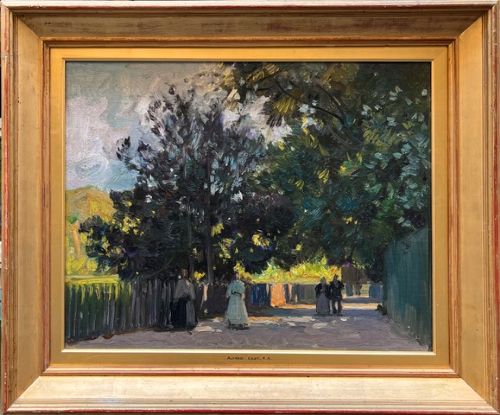
Many of these landscapes retain their original gilt wood frames, which complement the pigments of the composition. The combination of oil pigments and canvas substrate allows for enduring depth of colour across the decades.
Listings feature oil paintings on canvas and wood spanning the Victorian era, 19th century, and mid-century modern periods.
Assessing quality and execution
Quality in these landscapes rests upon the handling of light and perspective, distinguishing works with atmospheric depth from flat topographical records. The brushwork of a skilled hand conveys the natural contours of the hills and the density of the atmosphere with precision.
The integrity of the canvas and the preservation of the oil paint layers determine the longevity of the piece. Superior examples maintain their original framing and surface stability without extensive restoration.
Eric Brown·Sir Alfred East·Cecil Allan Mould·Joseph Edward Hennah·James Fry·James L Brooke·Henry Dawson·Charles Walter Radclyffe·Martin Lamotte·Edmund John Niemann·Michael Dahl·John Greenhill
The Green Hill Oil Painting Glossary
- Impasto
- Paint applied thickly to a canvas, standing out in relief from the surface. This technique adds tactile dimension to foliage and hillsides.
- Canvas
- A heavy woven fabric used as a surface for oil painting. It provides the tensile strength required for large landscape compositions.
- Gilt wood frame
- A wooden housing covered with a thin layer of gold leaf or gold-coloured pigment. These frames enhance the visual weight of the painting.
- Post-Impressionism
- An artistic movement following impressionism that emphasises symbolic content and expressive use of colour. Painters in this tradition depict landscapes with heightened emotional resonance.
Green Hill Oil Painting: Frequently Asked Questions
What periods do these landscape paintings represent?
The available works span from the nineteenth century through the Victorian and Edwardian eras into the mid-century modern period. You encounter pieces dated across the 1920s, 1930s, 1940s, and 1950s.
Earlier nineteenth-century examples sit alongside British modernism and French school landscapes, showing how artists recorded rural scenery over generations.
What regions do these paintings depict?
The subjects range across British locations such as Dorset, Shropshire, and the Medway, alongside French pastoral views and Mediterranean scenes.
Artists recorded specific geographical landmarks including river paths, valleys, and coastal hills from both domestic and continental settings.
How should I hang an oil painting?
Secure the painting to a wall using appropriate fixings matched to the weight of the canvas and its wooden frame. Position the work away from direct sunlight and steady heat sources to protect the oil pigments.
Ensure the room maintains stable humidity levels to preserve both the canvas substrate and the original wooden housing.
How do I identify the style of a landscape?
Examine the brushwork and treatment of light to determine whether a piece leans toward traditional realism, impressionism, or post-impressionism. Mid-century works often employ bolder colour palettes and simplified forms.
Signatures, framing details, and recorded dates within the titles provide further context for the artistic movement of each piece.