

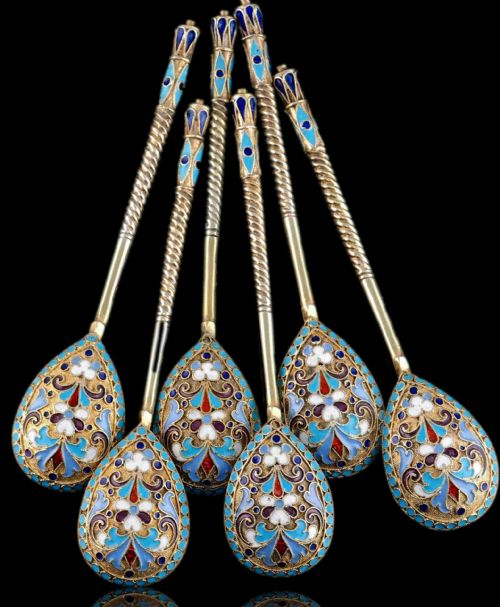


Imperial Russian Silver
Imperial Russian silver brings together high-carat gilding, intricate niello work, and vibrant cloisonné enamels that reflect the opulent tastes of the late nineteenth and early twentieth centuries.

Imperial Russian Silver
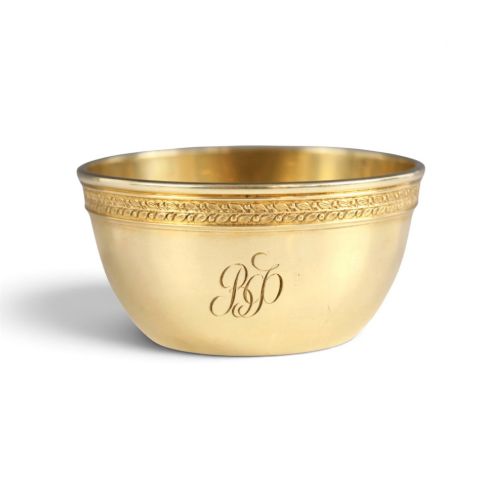
When you examine imperial russian silver, you encounter items designed for courtly dining, personal grooming, and domestic display during the final decades of the tsarist era. The selection ranges from diminutive vodka cups and niello snuff boxes to elaborate presentation bowls and cloisonné flatware.
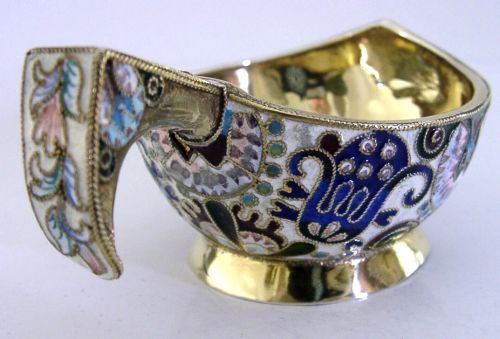
Spoons, caddy spoons, and serving pieces form a large portion of the items encountered here, frequently finished in silver-gilt and decorated with multicoloured enamel. Boxes, cigarette cases, and kovsh cups also appear regularly, often bearing Moscow or St Petersburg assay marks.
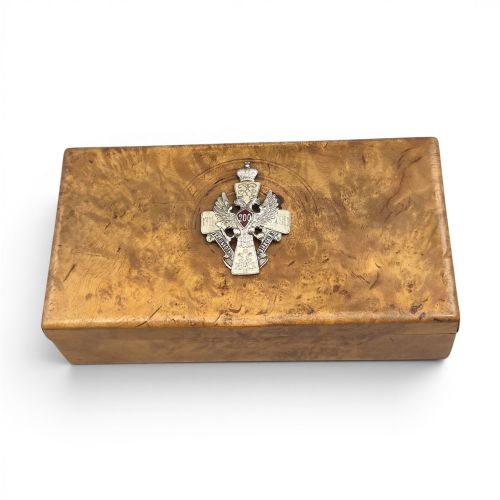
The dominant periods span the nineteenth century up to the turbulent 1910s, capturing the Russian Revival style alongside traditional imperial aesthetics. These works combine precious metals with organic materials such as Karelian birch and wood to create functional objects of substantial weight.
How imperial russian silver was made
Silversmiths utilised solid 84 zolotnik silver, the standard imperial Russian equivalent to sterling, shaping bodies through hammering and casting before applying gilding. Surfaces were frequently enriched with niello, a black metallic alloy of sulphur, silver, copper, and lead fused into engraved designs to depict architectural scenes or battle ships.
Cloisonné and champlevé enamel techniques involved soldering thin wire partitions onto the silver base to create cells, which were then filled with powdered glass pastes and fired in a kiln. Shaded enamels and translucent plique-à-jour required exceptional skill to achieve the characteristic gradient colour transitions without cracking the glass.
Imperial Russian Silver Retail Price Guide 2026
Typical asking prices for imperial russian silver among the pieces listed under this phrase on Sellingantiques today, from the lower quarter to the upper quarter. They describe what is for sale here now, not the wider market.
An officer once carried a Karelian birch box fitted with a regimental badge into the field.
What varies in quality in imperial russian silver
The precision and complexity of the enamel work dictate the standing of a piece, with multi-coloured cloisonné fields and shaded motifs representing higher workshops than simple stamped patterns. Crispness in the engraved niello lines, particularly in detailed architectural or figural scenes, reveals the proficiency of the artisan.
Attribution to documented workmasters and clear assay office marks from Moscow or St Petersburg elevate an object through verifiable provenance. The thickness of the silver-gilt layer and the integrity of the soldered wire cells similarly distinguish workshop output across spoons, boxes, and cups.
Stephan Wekeva·Dmitrii Nikolaevich Nikolaev·Aleksandr Timofeyevich Shevyakov·Vasily Agafonov·Gustav Klingert·Volkov Karp Nikit·Zverev Nikolay Nikolayevich·Ivan Khlebnikov·Rudolf Veyde·T.Botkov·Vasili Semenov·J.E. Sallman·Aleksandr Karpov
The Imperial Russian Silver Glossary
- Zolotnik
- A traditional Russian unit of mass used for assaying silver purity, where 84 zolotnik equates roughly to 875 silver fineness. This mark appears stamped alongside town and maker initials on imperial pieces.
- Niello
- A black metallic alloy used to fill engraved designs on silver surfaces, creating stark contrast against the polished metal background. Craftsmen frequently employed niello to illustrate townscapes, naval scenes, and floral motifs.
- Kovsh
- A traditional boat-shaped Russian vessel with a single flat handle, historically used for drinking mead or serving liquids. In later periods, silversmiths scaled down the kovsh form into decorative cups and miniature novelties.
- Samorodok
- A surface-finishing technique that creates a melted, nugget-like texture on solid silver or gold objects, mimicking raw native metal. This style gained popularity around the turn of the twentieth century for cigarette cases and snuff boxes.
- Plique-à-jour
- An enamelling technique where the enamel is fired in open cells without a backing metal, allowing light to shine through the transparent coloured glass like stained glass. The method demands immense control to prevent the vitreous paste from sagging during kiln firing.
Imperial Russian Silver: Frequently Asked Questions
What does an 84 mark mean?
The number 84 indicates the zolotnik standard of silver purity used in imperial Russia, which corresponds to approximately 875 parts per thousand.
This mark typically appears alongside assay master initials, a date, and a town mark such as the St Petersburg crossed anchors or the Moscow St George slaying the dragon.
How do I care for silver gilt?
Silver-gilt items feature a thin layer of gold applied over the silver base, which requires gentle handling to prevent wearing away the gold coating.
Avoid abrasive metal polishes and harsh chemical dips, using only a soft cloth and mild soapy water if cleaning is necessary.
Were these items used daily?
Many imperial Russian silver objects, including vodka cups, cigarette cases, and flatware, served functional roles in affluent households and officers' messes.
Other pieces, such as heavy presentation bowls and intricately enamelled kovsh vessels, were intended primarily for display or ceremonial presentation.
Why do some pieces have Cyrillic marks?
Maker marks and assay stamps were struck using Cyrillic initials to comply with imperial Russian manufacturing regulations enforced by state-run assay offices.
Translating these monograms helps attribute specific pieces to documented workmasters operating within workshops in Moscow, St Petersburg, and Warsaw.