


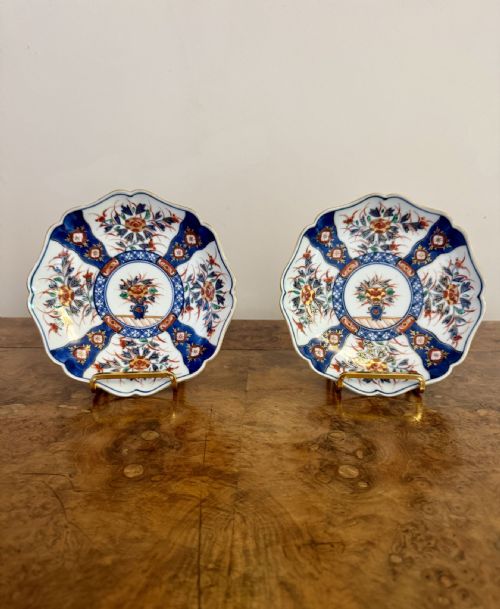
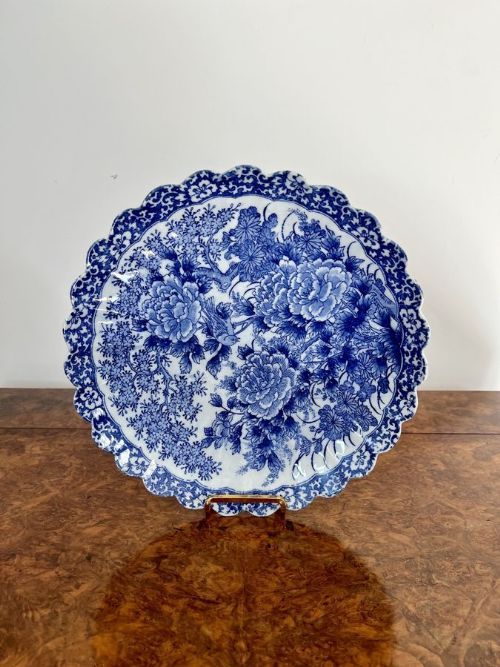


Imari Style Porcelain Plate
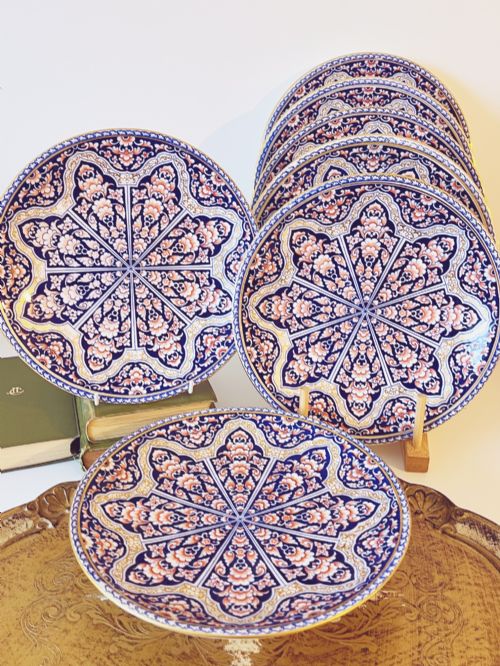
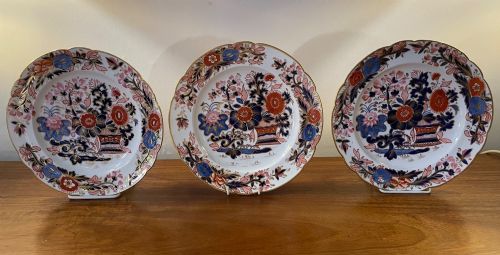
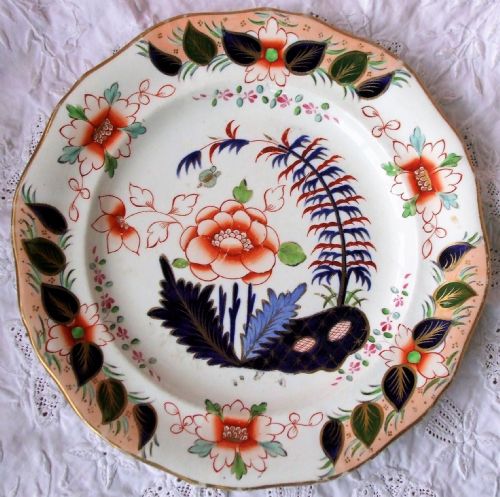
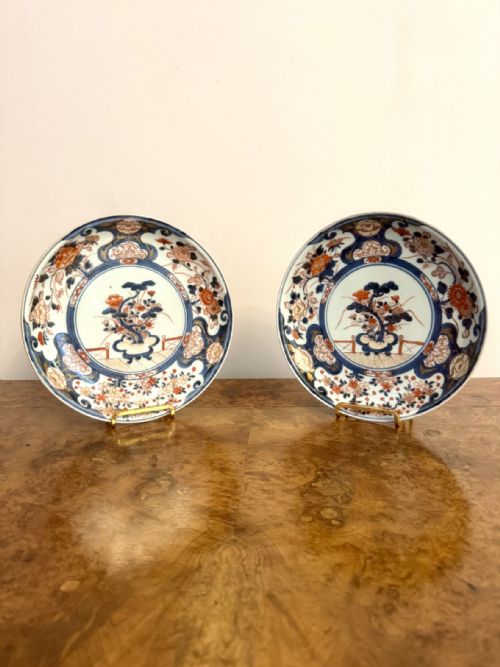
An imari style porcelain plate brings a vibrant, high-contrast palette of iron red, cobalt blue and gilt to a table or wall.
Imari Style Porcelain Plate
When you search for an imari style porcelain plate, you encounter items spanning the eighteenth, nineteenth and early twentieth centuries, originating from both Japanese kilns and European potteries inspired by them.
The selection here includes decorative chargers, dessert services, dinnerware sets and individual scalloped or hexagonal plates, displaying forms from traditional round chargers to fan-shaped and oval vessels.
Japanese Edo and Meiji pieces sit alongside English iterations from factories such as Royal Crown Derby, Worcester, and Masons, reflecting a cross-cultural dialogue in ceramic design.
How they were made
Potters shaped porcelain, bone china, ironstone and ceramic bodies before applying underglaze cobalt blue and hand-painted overglaze enamels.
Gold leaf and gilt accents were often added to the surface during subsequent firings to catch the light alongside the deep red and blue pigments.
Keep an eye out for eighteenth-century dragons sharing porcelain space with nineteenth-century cows affectionately catalogued as 'crazy'.
What varies in quality
The crispness of the hand-painted detailing and the depth of the iron red and cobalt blue pigments separate standard production ware from superior examples.
The preservation of the original gold leaf and enamel layers over centuries dictates the visual impact of the piece.
The weight and refinement of the porcelain or ironstone body, alongside the complexity of forms like scalloped or hexagonal edges, indicate the skill of the maker.
Royal Crown Derby·John Davenport of Longport·Flight Barr And Barr·Chamberlain Worcester·Mintons
The Imari Style Porcelain Plate Glossary
- Imari palette
- A decorative scheme typically combining underglaze cobalt blue, iron red, and gilt highlights. This palette originated in Japan and was subsequently adopted by European porcelain factories.
- Charger
- A large decorative plate, often measuring over thirty centimetres in diameter. These pieces were primarily designed for display on walls or sideboards rather than everyday dining.
- Ironstone
- A type of heavy, durable ceramic patented in the nineteenth century. It provides a robust alternative to porcelain while accepting complex enamel decoration.
- Armorial plate
- A dish personalised with a painted family crest or coat of arms. These were often commissioned as part of bespoke dinner services for landed families.
- Gilt
- A thin layer of gold applied to the surface of the ceramic. It provides metallic contrast to the painted enamel design.
Imari Style Porcelain Plate: Frequently Asked Questions
How do I identify a Japanese Imari piece from an English one?
Japanese pieces from the Edo and Meiji periods often utilise finer porcelain bodies with characteristic spur marks and distinct tonal variations in the blue underglaze. The brushwork tends to follow traditional Eastern botanical and geometric motifs.
English interpretations by makers like Derby or Masons utilise bone china, ironstone, or earthenware bodies. Their forms and paste compositions reflect European manufacturing standards of the Georgian and Victorian eras.
Can I use these plates for serving food?
Many nineteenth-century dinnerware sets and dessert services were designed for actual dining use. However, antique enamels and gilt highlights can be sensitive to modern detergents and abrasive scrubbing.
For pieces featuring delicate overglaze gold leaf or eighteenth-century surfaces, gentle hand washing or strictly decorative display is the safest approach to preserve the glaze.
What is the difference between a plate and a charger?
Plates are standard vessels made for holding individual portions of food during meals or dessert courses. They appear in matching sets or as single replacement items within larger services.
Chargers are substantially larger decorative plates meant to sit beneath smaller dinner plates or to hang on walls as standalone ornamental items.
How should I display an imari charger safely?
Wall display requires a secure, properly sized spring hanger that distributes the weight evenly across the rim without putting stress on the ceramic body. Rubber-coated prongs prevent scratching the glaze.
If placing the charger on a sideboard or table, use a sturdy wooden or brass stand designed to hold the specific depth and weight of heavy nineteenth-century ceramics.