







Imari Porcelain Wall Platter
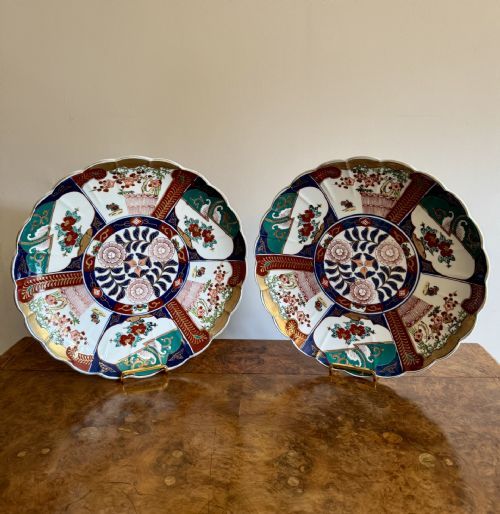
These imari porcelain wall platter examples bring rich cobalt blue and iron red decoration into a room, offering striking focal points for collectors of East Asian ceramics.
Imari Porcelain Wall Platter
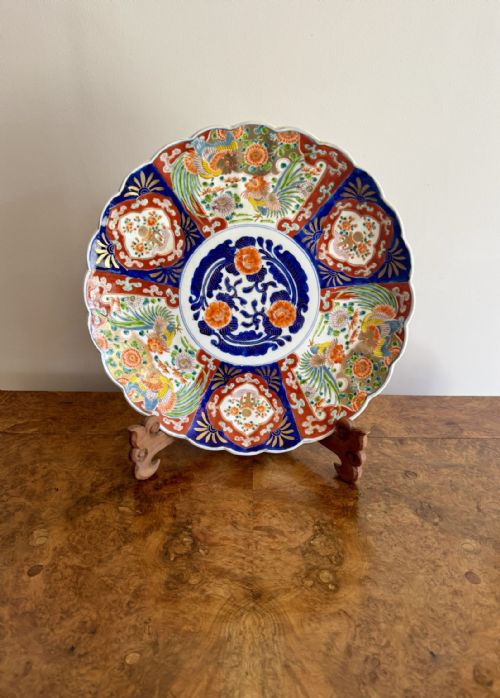
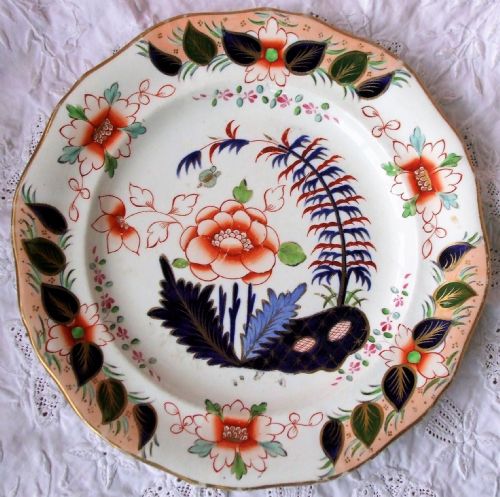
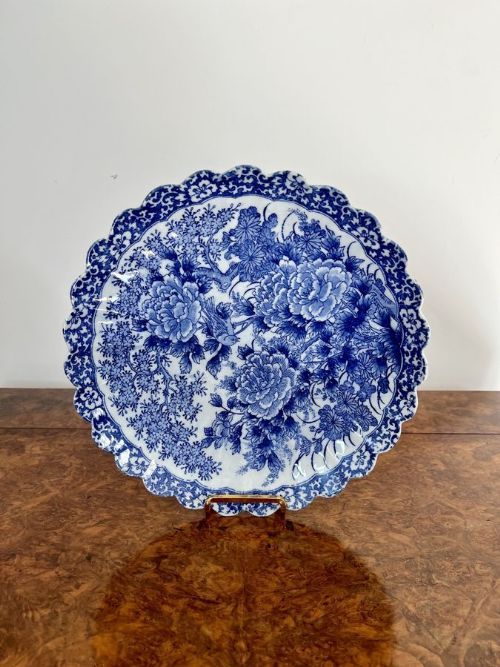
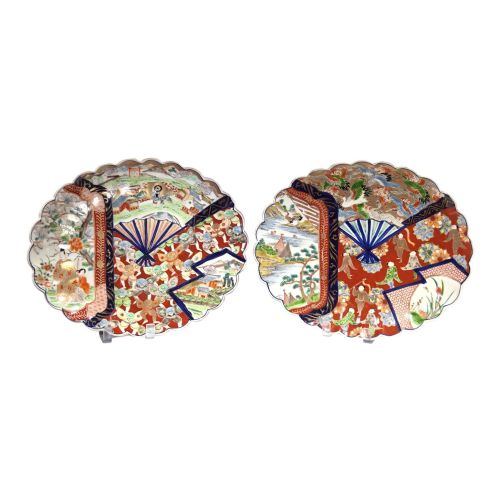
An imari porcelain wall platter typically takes the form of a large round charger or a shaped plate designed for display, originating primarily from Japanese kilns during the Edo and Meiji periods alongside select English interpretations. Buyers looking through these listings encounter substantial circular chargers and geometric plates decorated in the classic palette of underglaze blue and iron red, often highlighted with gold.
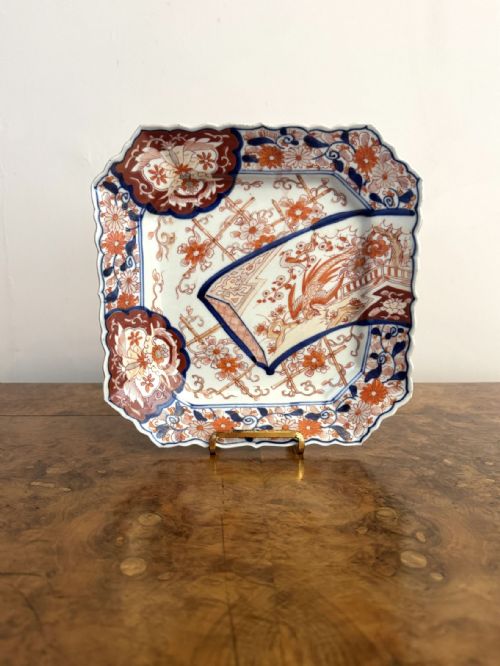
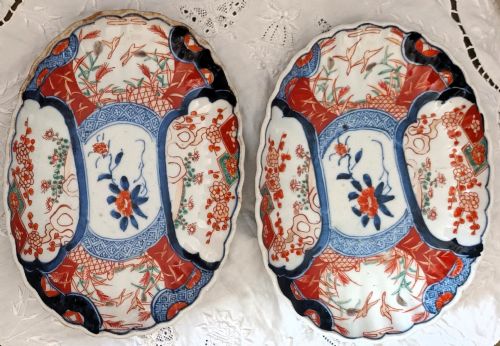
The objects span centuries of production, ranging from late seventeenth-century Edo period pieces to nineteenth-century Meiji examples and later twentieth-century items. Round chargers dominate the selections, though square, fan-shaped, octagonal, and oval dishes also appear among the decorative plates.
Materials and construction
Potters shaped ceramic and porcelain bodies by hand before applying cobalt underglaze pigments directly to the raw clay. Artisans then fired the pieces at high temperatures to set the deep blue tones beneath a clear protective glaze.
Overglaze enamels, particularly iron red and gold leaf or gilt accents, were applied during a subsequent firing stage to build up the intricate pictorial motifs. This layered technique produced the characteristic dense surface patterns seen on Japanese Arita imari wares.
Several platters secretly hide auspicious koi carp swimming beneath their brilliant red and blue borders.
Judging quality in imari ceramics
Purity of the white porcelain body and the precision of the hand-painted brushwork distinguish finer examples from standard production pieces. The depth of the cobalt blue underglaze and the crisp application of iron red and gold leaf determine the visual impact of the decoration.
Complexity in the pictorial composition also separates the work, with elaborate narrative scenes depicting figures like the Seven Lucky Gods or detailed fauna such as koi carp indicating superior craftsmanship compared to simpler geometric borders.
John Davenport of Longport
The Imari Porcelain Wall Platter Glossary
- Charger
- A large decorative plate traditionally used for ceremonial display rather than dining. These substantial pieces form the majority of wall-hung imari ceramics.
- Aka-e
- Japanese term translating to red pictures, describing wares decorated predominantly in iron red enamel. This technique forms a key component of the imari palette alongside cobalt blue.
- Edo Period
- The period in Japanese history lasting from 1603 to 1868. Pieces from this era represent earlier traditional imari manufacturing.
- Meiji Period
- The era spanning from 1868 to 1912, characterised by a surge in decorative porcelain production for export markets.
- Cobalt Underglaze
- Pigment applied to the ceramic body prior to glazing and firing. This method ensures the blue colour remains permanently sealed beneath the glass surface.
Imari Porcelain Wall Platter: Frequently Asked Questions
How do I hang a heavy imari wall platter safely?
Heavy porcelain chargers require specialist wall brackets or spring-loaded plate hangers designed to distribute the weight evenly across the entire rim.
Ensure the hanging wire or fixing is secured directly into wall studs or uses appropriate masonry plugs to prevent accidental slips.
Were these platters made for export or domestic use?
Many imari pieces created during the Meiji period were explicitly manufactured for the European and Western export markets, where Japanese aesthetics gained immense popularity.
Earlier Edo examples often served domestic Japanese functions before finding their way into international collections over subsequent centuries.
How can I tell an Edo period piece from a Meiji piece?
Edo period imari typically displays softer glaze textures and deeper, slightly muted cobalt tones resulting from earlier kiln technologies. Meiji pieces often feature sharper iron red enamels and denser, highly refined surface patterns due to industrial advancements.
What is the difference between an imari plate and a charger?
Plates generally measure under ten inches and were intended for functional or smaller-scale decorative use. Chargers measure significantly larger, often exceeding twelve inches in diameter, and function primarily as dramatic wall platters.