
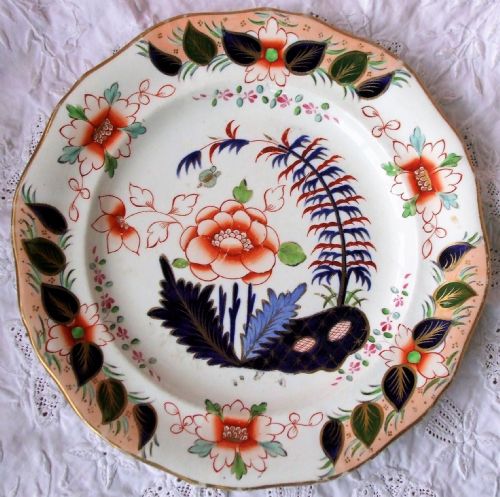


Imari Pattern Platter
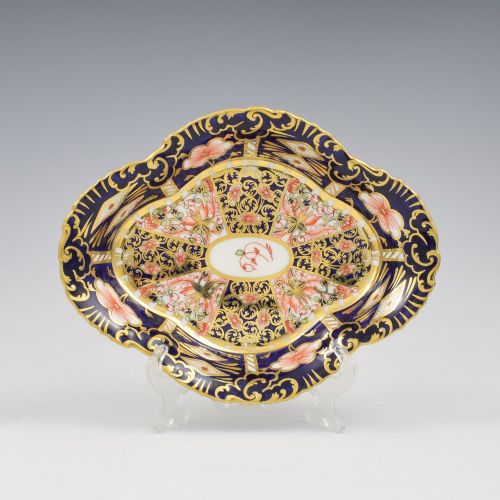
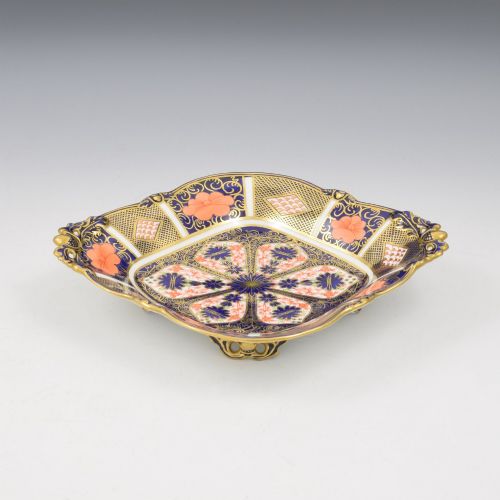
An imari pattern platter brings bold iron-red and cobalt blue decoration to the table, uniting Japanese export traditions with European ceramic artistry.
Imari Pattern Platter
When searching for an imari pattern platter, you encounter a diverse selection ranging from Japanese originals to English interpretations across several centuries. The pieces on this page span from the seventeenth century through the Victorian era, encompassing styles such as Japanese Imari, English Imari, and Victorian Chinoiserie. You will find forms including serving platters, dinnerware, decorative dishes, and octagonal porcelain plates.
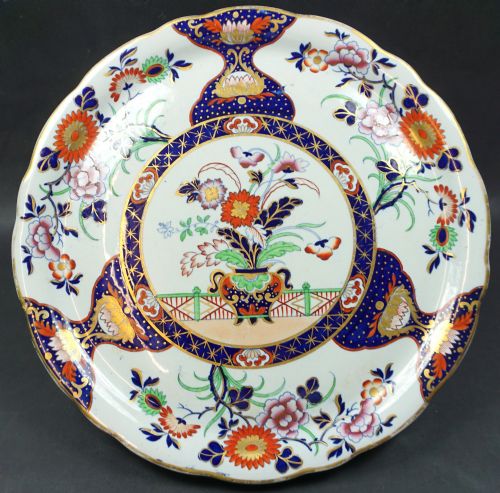
The English examples on this page demonstrate how domestic potteries adopted the palette for ironstone, porcelain, bone china, and earthenware. Potters from firms such as Hicks & Meigh, John Davenport, John Ridgway, and Mason's produced robust ironstone services and plates employing the distinct palette. Alongside these, Japanese porcelain plates from the Edo period and later represent the source traditions that inspired European makers.
Dating these items requires examining the material bodies and stylistic markers recorded in the listings, which move from seventeenth-century Japanese wares to nineteenth-century English ironstone. Whether looking at a Georgian ironstone plate or a twentieth-century Japanese piece, each object displays the characteristic interplay of cobalt, iron-red, and gilt details.
Materials and Manufacture
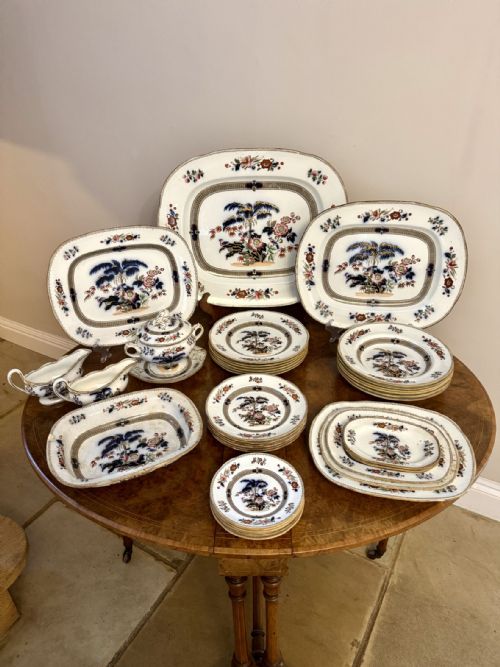
Makers constructed these pieces using porcelain, ironstone, earthenware, and bone china bodies, depending on the origin and period. Japanese examples utilise traditional porcelain clays, while English potteries relied on durable ironstone or refined ceramic bodies suited for large dinner services.
Artisans applied hand-coloured pigments under and over the glaze, combining deep cobalt blue with vibrant iron-red enamel. Many pieces incorporate gold leaf highlights to accentuate the intricate panel designs and floral motifs characteristic of the style.
Some nineteenth-century dinner services arrived with fifty-nine separate pieces, ensuring the dining table matched down to the very last ash tray.
Evaluating Quality and Execution
Quality in these platters rests upon the crispness of the underglaze cobalt painting and the precision of the overglaze enamel work. Superior examples exhibit vibrant, steady brushwork and finely registered gold leaf details that remain crisp across complex geometric and floral panels.
The stability of the ceramic body and the uniformity of the glaze also separate standard production from superior pieces. Heavier ironstone pieces demand clean moulding and even glazing, while porcelain items require fine translucency and a smooth, unblemished surface.
Hicks & Meigh·John Davenport of Longport·John Ridgway·Royal Crown Derby
The Imari Pattern Platter Glossary
- Imari
- A style of ceramic decoration originating in Japan, characterised by a palette of cobalt blue, iron-red, and gold. European potteries frequently copied these distinctive colour schemes during the eighteenth and nineteenth centuries.
- Ironstone
- A type of durable earthenware patented in the nineteenth century by English manufacturers as a robust alternative to porcelain. It formed the heavy body of many large serving dishes and dinner services.
- Edo Period
- A historical division of Japanese history lasting from seventeen hundred to eighteen sixty-eight. Porcelains produced during this era established the aesthetic foundations for export wares.
- Ashet
- A Scottish and northern English term for a large plate or platter used for serving meat at the table. These vessels are frequently found in nineteenth-century ironstone dinner services.
Imari Pattern Platter: Frequently Asked Questions
How do I date an imari pattern platter?
Dating relies on identifying the material body, such as heavy ironstone versus translucent porcelain, alongside stylistic markers. Backstamps and maker attributions further narrow the decade of production.
Early pieces often feature hand-painted underglaze blue combined with iron-red enamels, while later Victorian adaptations introduce varied transfer-printing techniques beneath the hand-applied colours.
Can I use these platters for serving food?
Most antique platters function adequately for serving dry foods, though historical ironstone and porcelain require careful handling. Hand washing preserves the delicate overglaze enamels and gold leaf.
Avoid thermal shock by keeping ironware away from microwaves and sudden temperature changes, which can stress antique glazes and nineteenth-century ceramic bodies.
What is the difference between Japanese and English Imari?
Japanese Imari pieces utilise traditional porcelain bodies with underglaze cobalt and iron-red enamels rooted in Edo period techniques. English versions adapt these aesthetic choices onto local ironstone, bone china, or earthenware.
European potteries often reinterpreted the floral and panel designs to suit domestic dining tastes, resulting in heavier vessels and distinct earthenware formulations.
Why are some pieces marked as ironstone?
Ironstone was developed in nineteenth-century England to provide a sturdy, chip-resistant alternative to expensive imported porcelain. It allowed potteries to create large, heavy dinner services and serving platters for everyday use.
The dense ceramic body absorbed glazes evenly, providing a stable surface for vibrant hand-coloured imari patterns that mirrored oriental imports.