
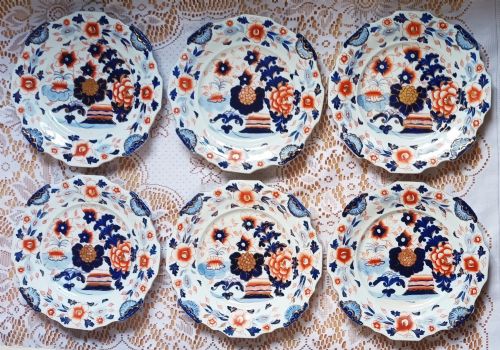


Imari Pattern Plates
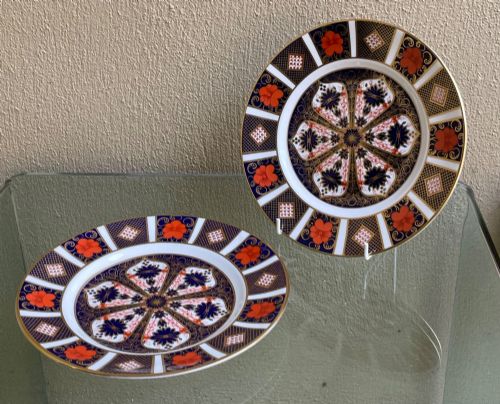
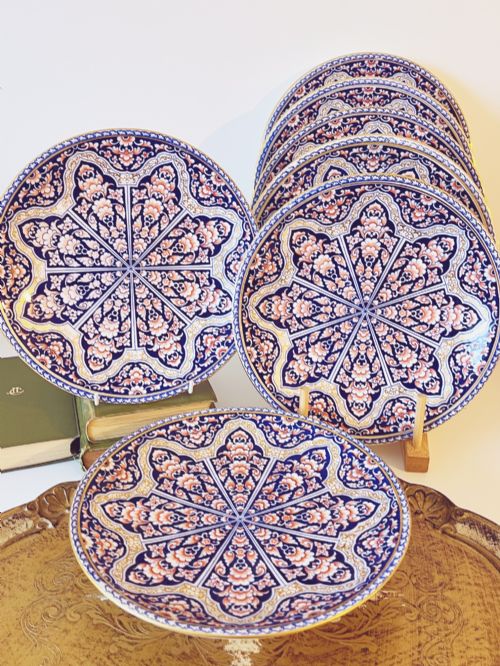
Imari pattern plates bring together rich underglaze blue, iron red, and gold leaf on porcelain or ironstone, offering bold colour for any table.
Imari Pattern Plates
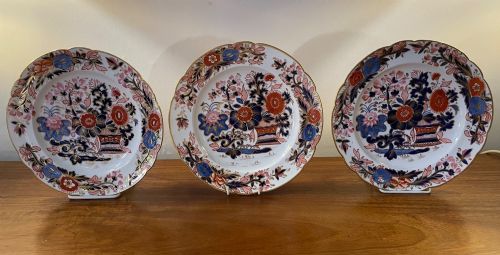
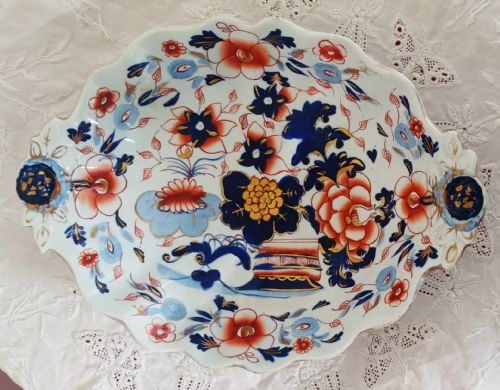
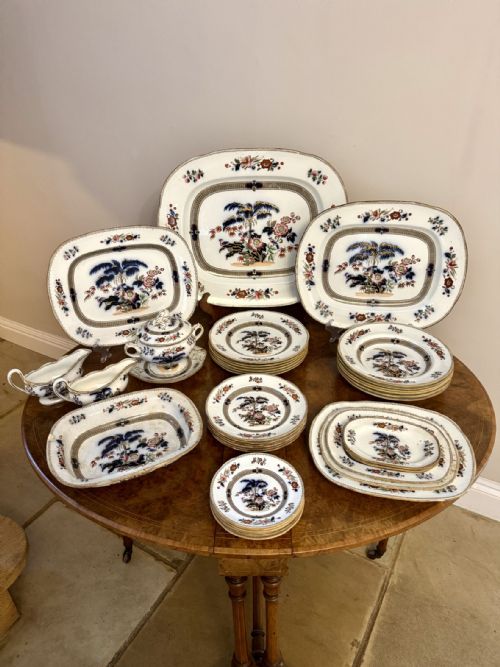
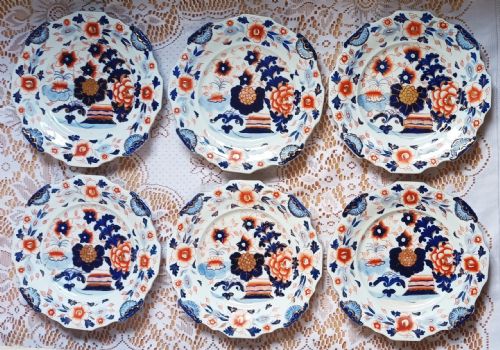
Imari pattern plates encompass both Japanese imports and English interpretations from the eighteenth and nineteenth centuries, taking the form of decorative dishes, dessert services, and dinnerware sets. These pieces range from early Japanese export ware to Georgian and Victorian ironstone and bone china services made by prominent English factories.
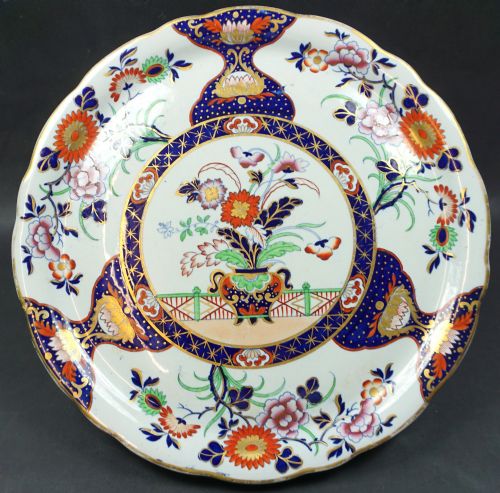
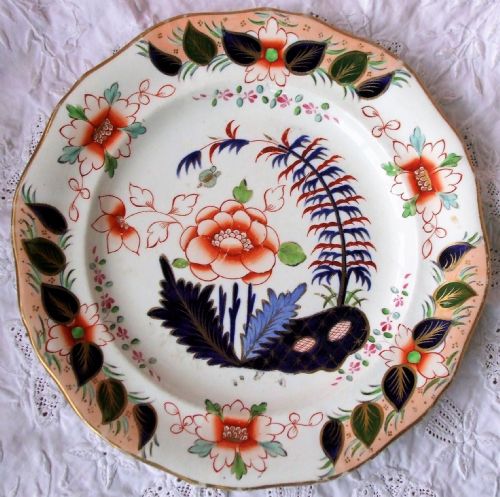
The English examples adopt the distinctive palette and motifs of their eastern counterparts while employing domestic ceramic bodies such as ironstone and porcelain. Buyers frequently encounter nineteenth-century sets alongside individual plates bearing characteristic compartmentalised designs.
Originating as export ware from Arita and subsequently copied across European potteries, these plates reflect a centuries-long exchange of taste and technique. The inventory balances authentic Japanese pieces with robust English ironstone iterations created for formal dining.
Materials and production
Makers utilised hard-paste porcelain, bone china, and heavy ironstone as the foundation for these designs, often shaping them into rounds, octagons, or scalloped edges. Ironstone provided a durable ceramic body suitable for heavy domestic service, while porcelain allowed for finer, translucent tablewares.
The characteristic decoration relies on cobalt blue painted under the glaze, complemented by overglaze iron red enamel and applied gold leaf. Additional highlights in green and black complete the palette, fixed through successive firings in a kiln.
Imari Pattern Plates Retail Price Guide 2026
Typical asking prices for imari pattern plates among the pieces listed under this phrase on Sellingantiques today, from the lower quarter to the upper quarter. They describe what is for sale here now, not the wider market.
The listings span from late seventeenth-century Arita dishes through Georgian ironstone to mid-twentieth-century bone china services.
Standards of craftsmanship
Quality rests upon the crispness of the hand-painted underglaze blue and the generous application of gold leaf and iron red enamel. Finer examples display precise brushwork within complex compartmentalised patterns rather than rushed, repetitive stencil work.
The weight, throwing of the ceramic body, and survival of the overglaze enamels without rubbing separate ordinary domestic ware from exhibition pieces. Early pieces retain a vibrancy in the red and gilt highlights that lesser or heavily used examples lose over time.
Royal Crown Derby·Hicks and Meigh·John Davenport of Longport·Flight Barr and Barr·John Ridgway·Mason·Minton
The Imari Pattern Plates Glossary
- Ironstone
- A dense, feldspathic earthenware patented in the nineteenth century for its durability. It served as a robust alternative to porcelain for heavy dinner services.
- Imari Style
- A decorative scheme imitating Japanese export wares, characterised by underglaze blue, iron red, and gilding. English potteries produced prolific variations throughout the Georgian and Victorian periods.
- Comport
- A raised dish or bowl used for serving fruit or sweetmeats as part of a dessert service. These pieces frequently match the surrounding plates in pattern.
- Kakiemon
- An asymmetric style of Japanese porcelain decoration featuring refined enamels and restrained motifs such as quails. English factories frequently copied these palettes on early bone china plates.
- Enamel
- Opaque vitreous colours applied over the fired glaze and fixed in a muffle kiln at a lower temperature. These pigments provide the characteristic red and green highlights on the finished plate.
Imari Pattern Plates: Frequently Asked Questions
How do I tell Japanese Imari from English Imari?
Japanese pieces use a true porcelain body with a characteristic sandy base ring where the item rested in the kiln. English versions typically employ ironstone, bone china, or softer earthenware.
English pieces often carry factory marks or pattern numbers impressed or printed on the reverse, whereas older Japanese exports remain unmarked.
Can I use antique Imari plates for dining?
Ironstone plates from the nineteenth century offer a robust ceramic body that handles careful daily use and washing. Fine porcelain or bone china pieces with heavy gilding require more caution.
Hand-washed care preserves the overglaze red enamel and gold leaf, which can fade in modern dishwashers.
What does a dessert service include?
A traditional dessert service comprises a collection of plates paired with larger serving vessels such as comports or low dishes. These sets were designed for the final course of a formal meal.
Individual pieces match in pattern, forming a unified display for the table.
How do I date an Imari pattern plate?
Stylistic clues, factory backstamps, and the composition of the ceramic body provide reliable dating evidence. Georgian ironstone differs noticeably in weight and glaze from later Victorian or Edwardian porcelain.
Date marks impressed into the clay by English potteries offer precise years of manufacture for specific pieces.