
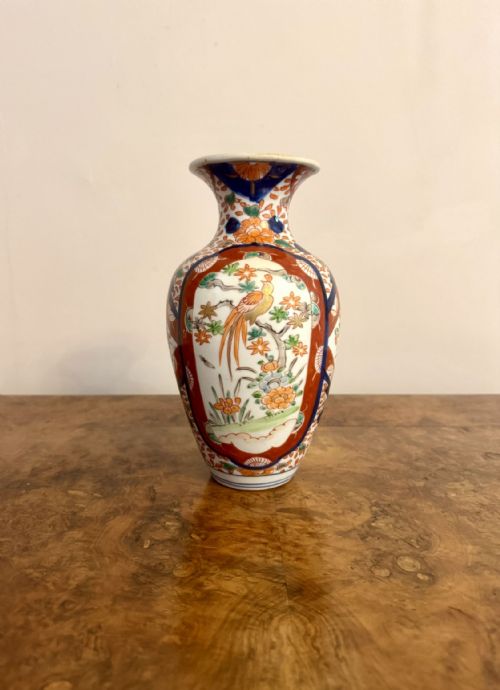


Imari Floral Porcelain Urn
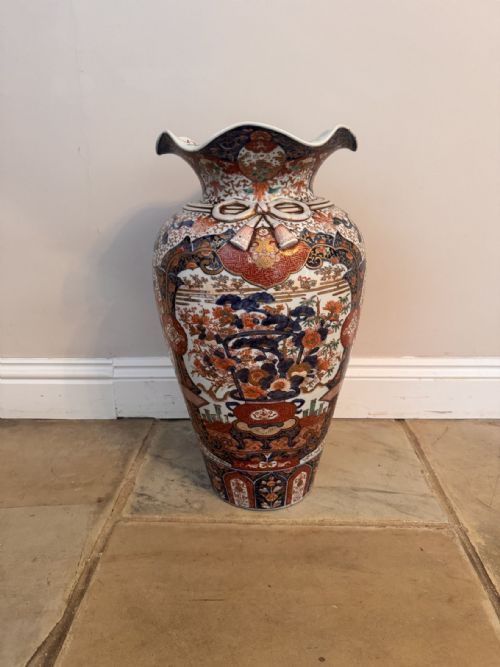
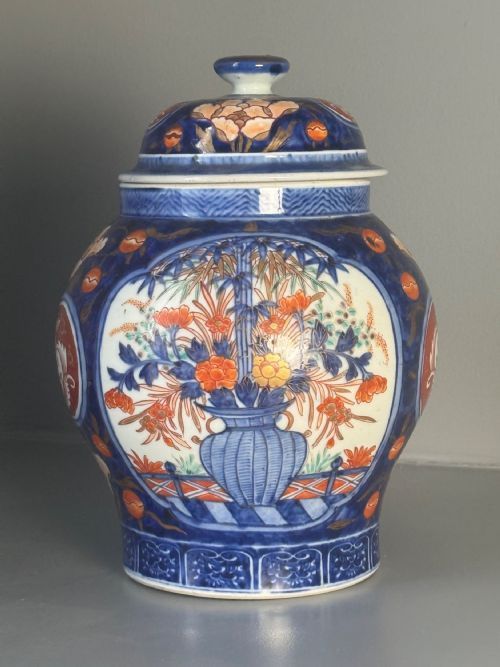
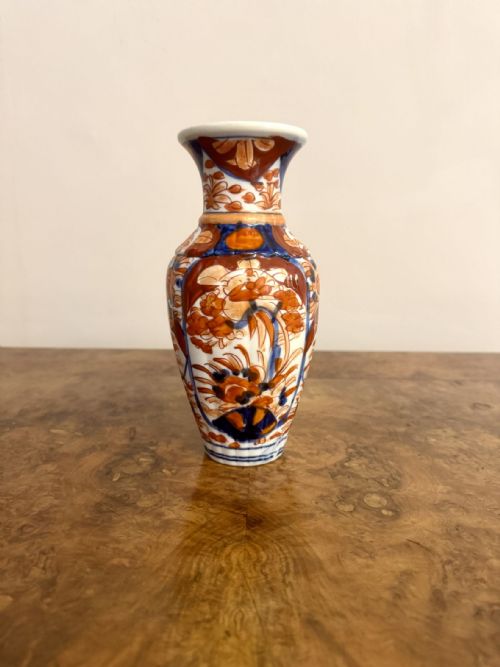
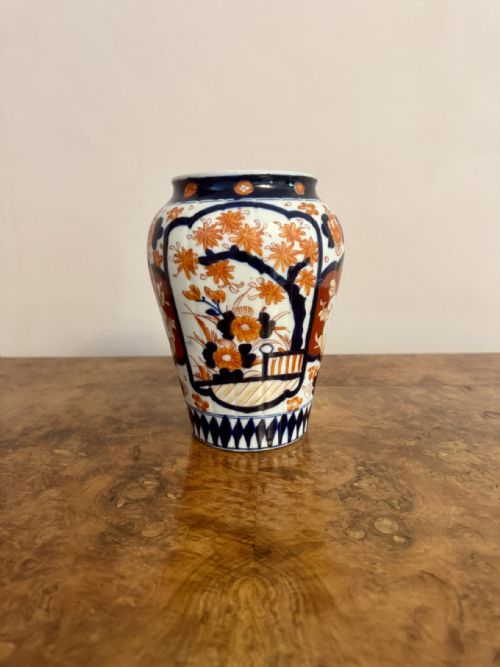
An imari floral porcelain urn brings deep cobalt blue and vibrant iron-red ironstone decoration into a room, offering a rich focal point for any interior.
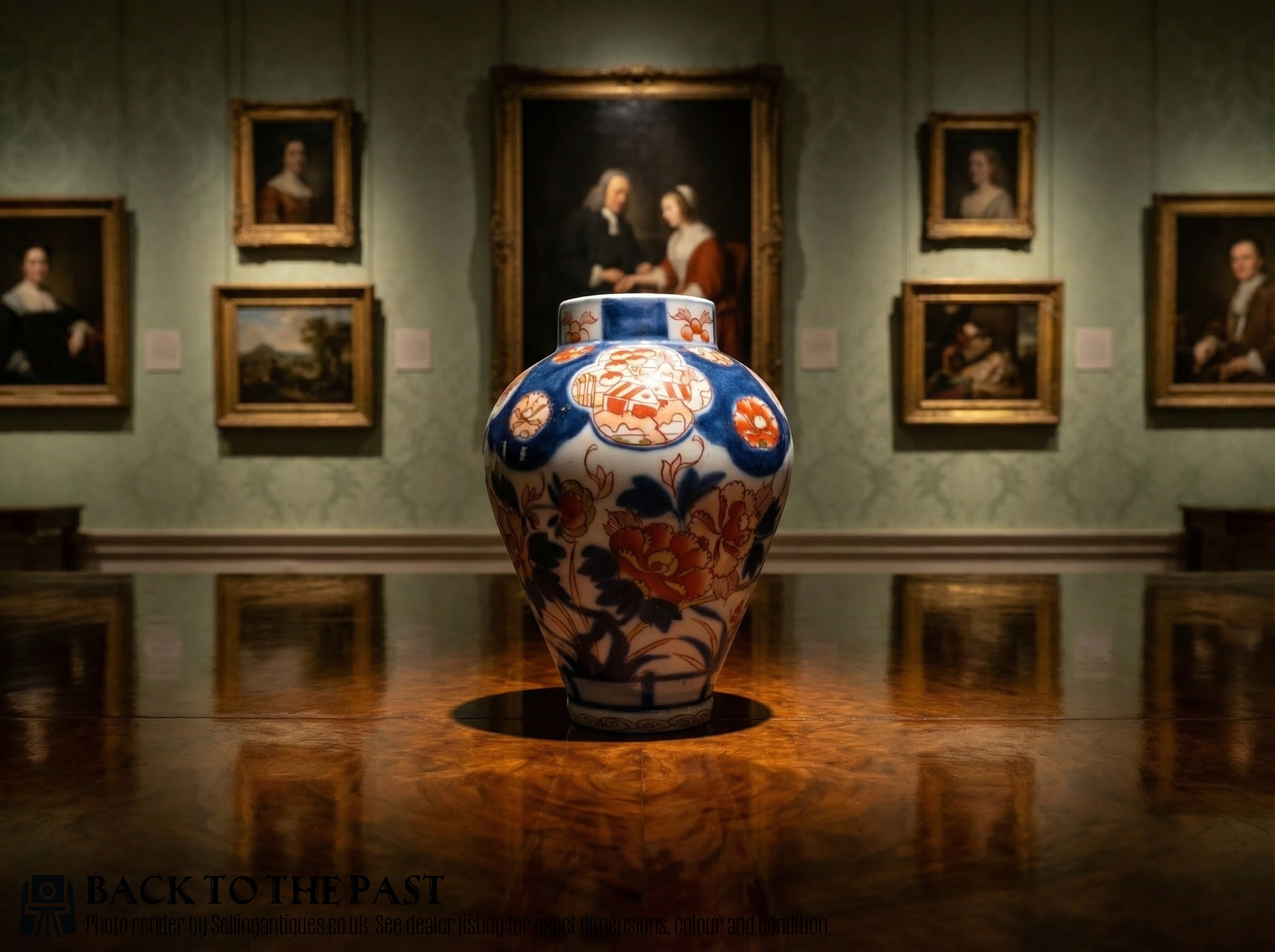
Imari Floral Porcelain Urn
When you search for an imari floral porcelain urn, you encounter heavy porcelain vessels and covered ginger jars shaped during the nineteenth century and the Edwardian era. These pieces draw heavily on Japanese Imari and Meiji period traditions, alongside occasional European interpretations like Royal Crown Derby and Samson.
You meet diverse silhouettes on this page, ranging from double gourd vases and fluted bodies to large garniture sets and lidded urns. The palette relies on cobalt blue and enamel over a white porcelain ground, often highlighted with gold leaf or gilding.
Materials and construction
Potters built these vessels using hard-paste porcelain and ironstone, shaping forms with ribbed or moulded bodies, and sometimes adding handles. The surface received underglaze cobalt blue painting combined with overglaze enamel colours.
Makers applied rich gold leaf, gilt, or gold gilding to accentuate the painted floral and geometric motifs. Transparent glaze sealed the body before final kiln firing, producing a durable vitrified finish.
Gourd-shaped vases owe their unusual silhouette to an ancient East Asian belief that double gourds trap benevolent spirits.
Evaluating the craftsmanship
Superior examples demonstrate precise brushwork in the cobalt blue and enamel details, with carefully controlled kiln temperatures that keep the colours distinct and vibrant. Lesser pieces show muddy pigment blending or hurried hand-painting.
The application of gold leaf and gilding marks the tier of a piece, where finer items retain crisp metallic highlights. Heavier potting and well-balanced lidded forms further distinguish higher grade garnitures and ginger jars.
Royal Crown Derby·Samson
The Imari Floral Porcelain Urn Glossary
- Imari palette
- A decorative colour scheme featuring cobalt blue, iron-red, and gold applied to porcelain. This palette originated in Japan and was later adopted by European potteries.
- Garniture
- A set of matching vases or urns, typically three or five pieces, designed to be displayed together on a mantelpiece or sideboard.
- Ginger jar
- A ceramic vessel with a broad body and a domed lid, originally used for storing spices and later prized as a decorative object.
- Double gourd
- A vase shaped like two stacked spheres resembling a gourd fruit, presenting an organic silhouette popular in Japanese ceramic design.
Imari Floral Porcelain Urn: Frequently Asked Questions
How do I display an urn?
Place an imari floral porcelain urn on a sturdy console table, mantelpiece, or within a cabinet where its colours can catch natural light.
Pairing a matched set or garniture across a surface creates symmetry and draws the eye to the hand-painted details.
Were these made in Japan?
Many examples originate from Japan, particularly from the Meiji period and Arita kilns, where craftsmen perfected the traditional imari style.
European factories also produced imari style pieces during the Victorian and Edwardian eras, emulating the distinctive blue and red palette.
How are lids fitted?
Lids on ginger jars and covered urns sit directly upon the rim of the vessel, often following the moulded contours of the body.
These covers were hand-thrown to match the individual vase during production, completing the silhouette of lidded forms.
What is ironstone?
Ironstone is a dense, durable type of earthenware developed in the nineteenth century to rival true porcelain.
Potters used this heavy ceramic body to create robust vases and urns capable of holding rich enamel and gilt decoration.